
In six days, Microsoft 365 went down, the FAA grounded every flight in the country, customers at Chase and Wells Fargo couldn’t get to their money, and the National Security Agency’s classified internal network went dark. On Tuesday, Nicole Perlroth, one of the best-known voices in cybersecurity, said she was answering hundreds of texts and DMs asking whether the world was ending.
Her answer, in a long post on X: “We are entering a period of unprecedented technological instability.” She called it the “vulnpocalypse.” She also said what she’s hearing doesn’t contradict the official line that most of the breakage comes from “screwy updates.”
That hedge carries the thread, and it matters for every company with a software stack. Microsoft said its nearly 24-hour outage was traced to a bug that came in with a July update to its networking gateway servers, BleepingComputer reported. The FAA’s ground stop ran more than four hours, the longest nationwide halt since the Sept. 11, 2001 shutdown, and more than 9,100 flights were canceled that Friday, according to FlightAware data cited by Fox Weather. Transportation Secretary Sean Duffy blamed “routine maintenance” by a contractor swapping copper wiring for fiber. Chase cited a “technical issue.” Apple said a faulty internal update knocked out iCloud and other customer services on Tuesday. The NSA said its network suffered a “temporary degradation” during routine maintenance. No company or agency has called any of it an attack. Most of it happened while someone was changing or fixing something.
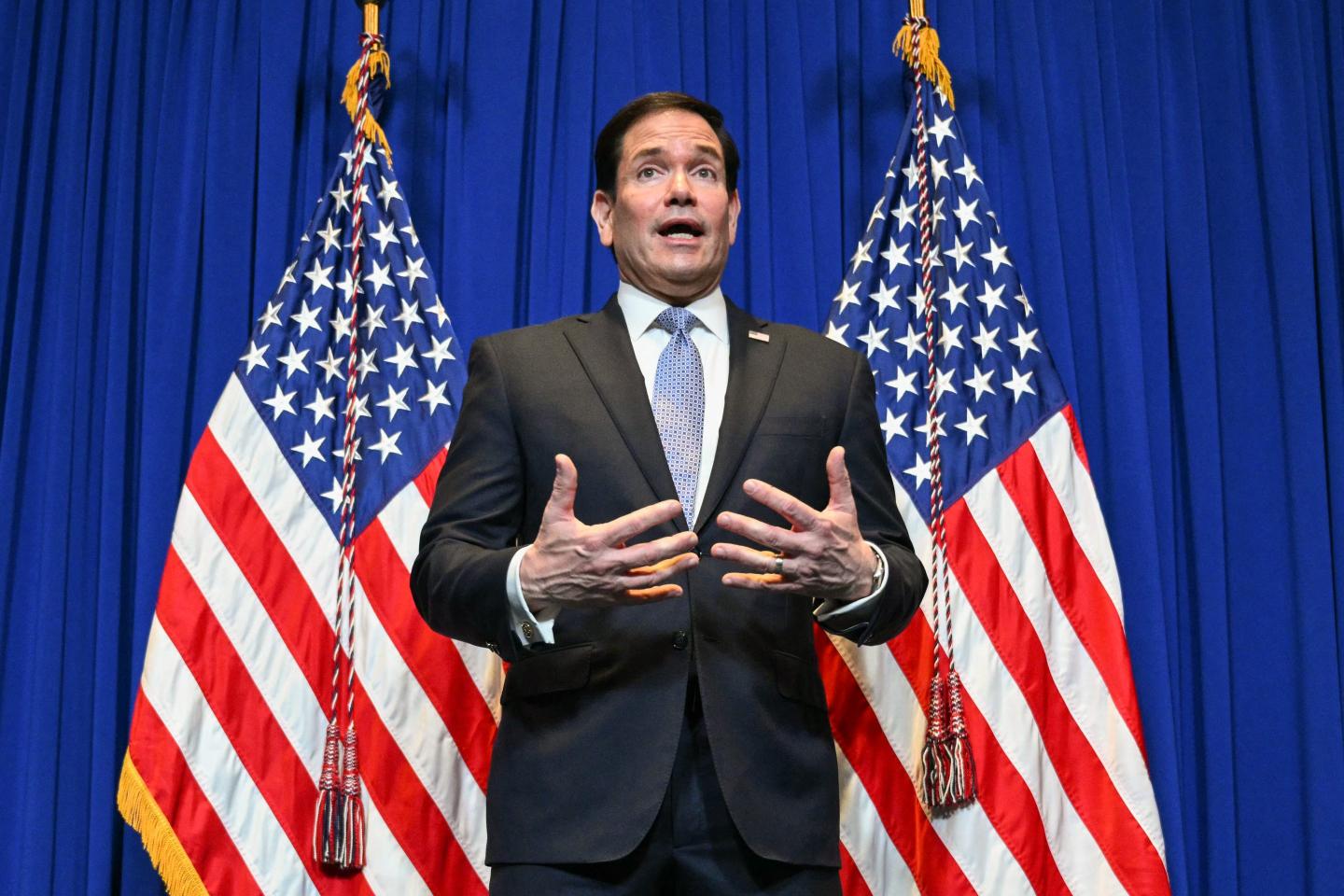
The government’s response came Wednesday from Manila. “We are not under systemic attack,” Secretary of State Marco Rubio told reporters traveling with President Donald Trump, adding that there was “zero evidence whatsoever” the disruptions were connected, according to Forbes. “Every indicator we have is that every single one of these events has an explanation or a cause,” he said. He also described the mechanism: when companies patch vulnerabilities, it can create a “short-term disruption in the way your system works.”
Trump was blunter. “It’s like when you’re big and powerful, and you have all the money. Things like that happen. It’s fine,” he told reporters.
The bug count doubled
Perlroth’s central claim is that AI is helping people find software flaws far faster than vendors can fix them. Part of that is true.
On Nov. 13, the 2026 count of published vulnerabilities, known as CVEs, passed 100,000, according to VulnCheck. That’s more than double all of 2025. A recount of the CVE Project’s records found 89,849 through October, against 39,638 in the same months last year. In October alone there were 17,049, nearly four times October 2025. IBM’s X-Force team counted a 578% jump in disclosures across Microsoft, Oracle, Chrome and Apache through September.
“There’s no denying the fact that vulnerability hunting with AI is driving a majority of what we’re seeing,” VulnCheck’s Josh Bressers told The Register.
The numbers come with caveats. CVE records don’t say whether AI found the bug, so AI’s effect can’t be separated out of the counts. IBM wrote that its data “does not establish a direct causal relationship.” The recount also found that the set of flaws flagged for urgent patching, those on CISA’s exploited list or with high exploit odds, hasn’t grown much. Its author’s line: “Twice as many CVEs does not mean twice the danger.” Perlroth’s specific claim, that high and critical vulnerabilities have tripled, isn’t something these datasets break out.
The patch treadmill
The other half of her argument is speed. Perlroth wrote that the mean time to exploit has collapsed to “negative seven days,” meaning attackers are using flaws before a fix exists. The public figures are less dramatic. VulnCheck found the median time from a CVE’s publication to exploitation fell from 120 days in 2025 to 80 in the first half of 2026. CrowdStrike found that 88% of exploitation using public proof-of-concept code happened within 48 hours of release.
Rubio and Perlroth both point at the same pipeline. More bugs means more patches. Faster exploitation means less time to test them. When a patch breaks something, customers find out before the company does. Rubio put the bank case plainly: if people can’t get into their app, “they’re going to notice that very, very quickly.”
Companies have seen this before. In July 2024, one faulty CrowdStrike update crashed more than 8.5 million Windows machines. Insurer Parametrix estimated $5.4 billion in direct losses for the Fortune 500, and said cyber insurance would cover only 10% to 20% of it. No hacker was involved.
Yale sociologist Charles Perrow had a name for this in 1984: “normal accidents,” failures that come built into complex, tightly coupled systems no one fully understands. Perlroth’s version is that “almost nobody understands end to end” the software companies now run on. Honeywell Technologies CEO Vimal Kapur told Fortune’s Innovation Forum in Detroit on Monday that 50 years of added software and infrastructure have made industrial systems too complex for humans to keep up. “What happened in the last two weeks is an example of complexity,” he said.
Perlroth called last week the “opening chapter.” The next test of the patch pipeline is already on the calendar: Microsoft’s next Patch Tuesday, Dec. 8.
Generative AI was used for research assistance and/or transcription of this article. The reporter independently reported and verified the factual claims in this article, and a human editor reviewed it before publication.