- In today’s CEO Daily: Welcome to the John Ternus era at Apple.
- The big leadership story: How long should a CEO get for a turnaround?
- The markets: Down globally at the start of September, a historically bad month for stocks.
- Plus: All the news and watercooler chat from Fortune.
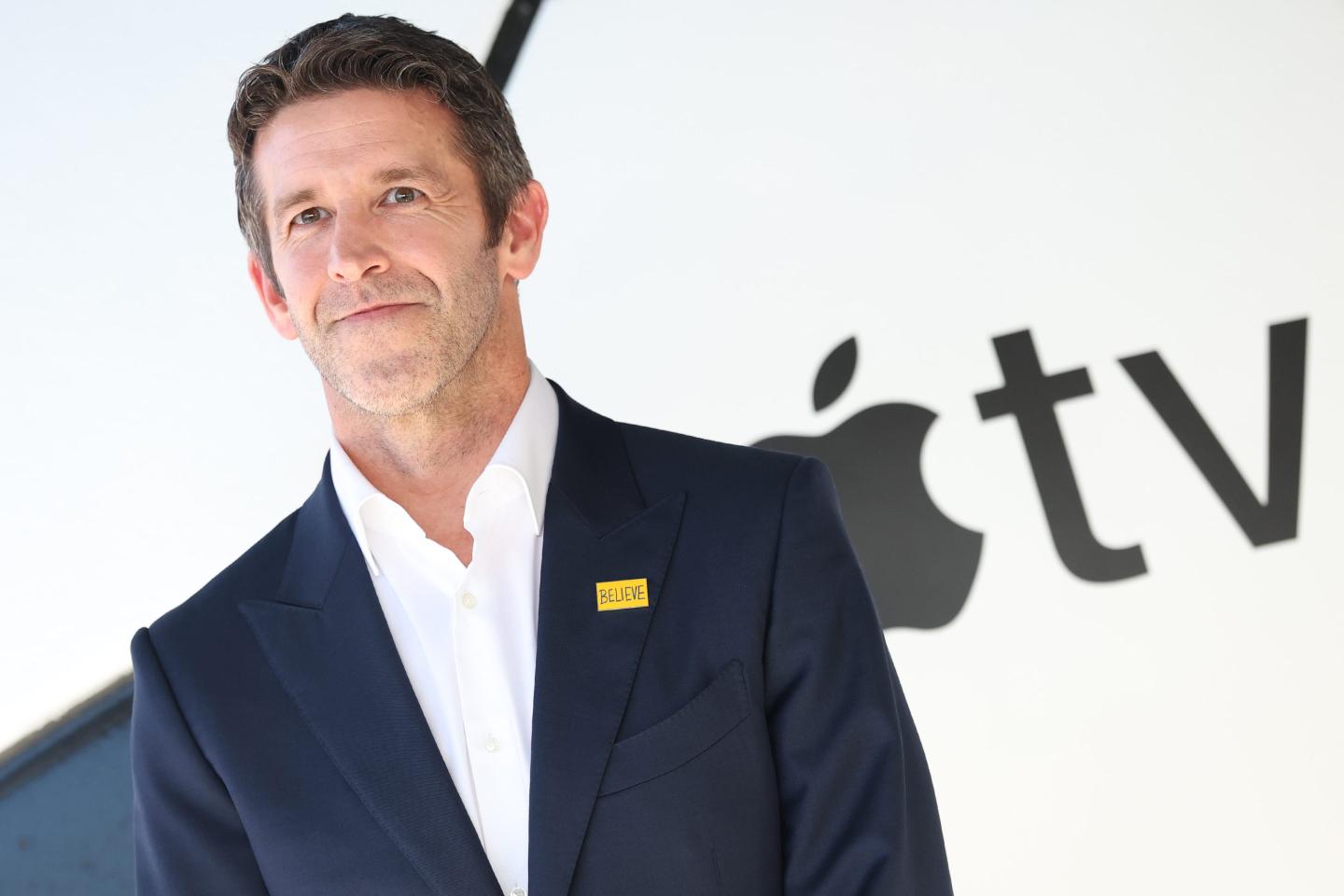
Good morning. John Ternus steps up as CEO of Apple today in one of the most public and well-chronicled succession handoffs in recent memory. My colleague Sebastian Herrera has written a great analysis of whether this low-key engineer can lead Apple to victory in the AI race. That’s a key question to track for Apple and other companies at this pivotal moment. And there are other questions to keep on the radar:
Will Apple now have two centers of power? Tim Cook wrote an emotional memo to staff yesterday, in which he thanked colleagues for bringing out the best in him and praised the “brilliant and wonderful and capable” Ternus as the perfect person to lead Apple. But Cook isn’t going away. As executive chairman, he’ll not only continue to mentor his successor but also engage with policymakers and other external stakeholders on Apple’s behalf. That’s not unusual—or even undesirable—in these tricky political times. But it can add a layer of complication for the new guy, as Bob Chapek discovered when taking over from Bob Iger at Disney in 2020. (Iger remained as executive chairman and returned to the CEO role after Chapek was ousted in 2022.) Other CEOs have privately complained to me that leading a company can be awkward when their former boss sticks around. The onus for getting that balance right will fall largely on Cook.
What problem does Apple have to fix? As Sebastian writes, “The job description for the chief executive at Apple—and the standards by which success is measured—have often been defined by the person in the role.” With the CEO title moving from a master operator (Cook’s background was in logistics and supply chain) to a master engineer with a quarter-century of experience working on Apple’s iconic devices, one might assume that Apple’s chief challenge is to reinvent its products for the AI era. But maybe the bigger challenge is to reinvent its ecosystem, and even its culture, in radical ways. Of course, expertise in one area doesn’t preclude developing or hiring expertise in another. Along with setting the vision and strategy for the company, a CEO’s main job is to create the leadership team to execute on it. Keep a close eye on who Ternus promotes or hires in key roles.
How will Ternus handle the innovator’s dilemma? Apple controls a fifth of the global smartphone market and closer to two-thirds in the premium category of devices, those that cost more than $600. As noted by Clay Christensen, the late Harvard Business School professor and coiner of the term “innovator’s dilemma,” successful companies are incentivized to focus on improving their most profitable products to the point where they often ignore or try to fight innovations that threaten to disrupt their core business. That tendency could be disastrous for Apple, which has struggled to find its footing in the AI era. Last I checked, the most popular AI assistants were owned by Google, OpenAI, and platforms other than Apple. Yes, the iPhone is still ubiquitous. BlackBerry was also a fantastic hardware maker. (I still miss that Qwerty keyboard.) Enough said.
Contact CEO Daily via Diane Brady at diane.brady@fortune.com
Top leadership news
How long should a CEO get for a turnaround?
McKinsey offers some indication of how long a company’s transformation can take. In one survey, respondents reported that roughly half of a transformation’s value was realized in the first 18 months, with the remainder coming later. Spencer Stuart’s research offers a more detailed timeline for judging a CEO’s progress. The firm describes the first year as a launch period, when new CEOs face a steep learning curve, tackle inherited problems and make decisions that can shape their tenure.
Colleges are feeling the squeeze
The U.S. graduated a record 3.9 million high school students in 2025—a peak that marks a turning point. By 2041, the country is projected to produce about 3.4 million high school graduates a year, a 13% drop. Colleges are already competing harder for students and rising costs are putting more pressure on college budgets. For schools that depend heavily on tuition to pay the bills, an empty seat means lost revenue; for the most vulnerable institutions, enough empty seats can threaten their survival.
Bitcoin is back—and so is Strategy
After a two-month dry spell, Michael Saylor’s Strategy has resumed its Bitcoin buying spree. On Monday, the world’s largest digital asset treasury announced that it had purchased $370 million worth of Bitcoin at an average price of roughly $80,300 per BTC. Strategy’s latest purchase comes amid a brief rebound in Bitcoin. After spending much of the previous 10 months in a bear market, the cryptocurrency jumped more than 23% in a single day on Aug. 21.
The markets
S&P 500 futures are down 0.49% this morning. The STOXX Europe 600 was down 0.52% in early trading. The U.K.’s FTSE 100 was down 1.06% in early trading. The Nikkei 225 is down 0.15%. South Korea’s KOSPI is up 0.23%. China’s CSI 300 was down 0.33%. Hong Kong’s Hang Seng was down 0.93%. India’s NIFTY 50 was down 0.49%. Bitcoin is at $78k.
Around the watercooler
The end of the driver’s license: Uber exec calls car ownership ‘the most inefficient asset’ and says no one will need one in 15 to 20 years by Preston Fore
We’re living in the ‘G-shaped economy’—where boomers control $90 trillion, and everyone else waits by Jason Ma
‘Just really shocking’: One of America’s top Social Security advisors is unsettled by how many people are withdrawing early by Nick Lichtenberg
Temu spent up to $962 million on ads that helped finance an army of fake creators on Meta platforms, research claims by Jim Edwards
‘Singles have become their own private investigators’: Daters are using LinkedIn to screen matches by Sarah Glodek
CEO Daily is curated and edited by Joseph Abrams, Jason Ma, Claire Zillman, and Lee Clifford.