• Home
  • Latest
  • Fortune 500
  • Finance
  • Tech
  • Leadership
  • Lifestyle
  • Rankings
  • Multimedia

Trendingnow

1

The millennial generation has split, new Fed research shows: Those over 35 are edging toward boomer-style wealth, while everyone else falls behind

2

Scott Bessent casually says the U.S. has more than $1 trillion in gold—and that it doesn’t matter for the dollar

3

Mark Cuban says he has the solution to growing income inequality, and it's to reward every employee—from CEO to janitor—with company stock

1

The millennial generation has split, new Fed research shows: Those over 35 are edging toward boomer-style wealth, while everyone else falls behind

2

Scott Bessent casually says the U.S. has more than $1 trillion in gold—and that it doesn’t matter for the dollar

3

Mark Cuban says he has the solution to growing income inequality, and it's to reward every employee—from CEO to janitor—with company stock
EconomyU.S. Department of the Treasury

Scott Bessent casually says the U.S. has more than $1 trillion in gold—and that it doesn’t matter for the dollar

Sasha Rogelberg
By
Sasha Rogelberg
Sasha Rogelberg
Reporter
Down Arrow Button Icon
Sasha Rogelberg
By
Sasha Rogelberg
Sasha Rogelberg
Reporter
Down Arrow Button Icon
July 22, 2026, 3:16 PM ET
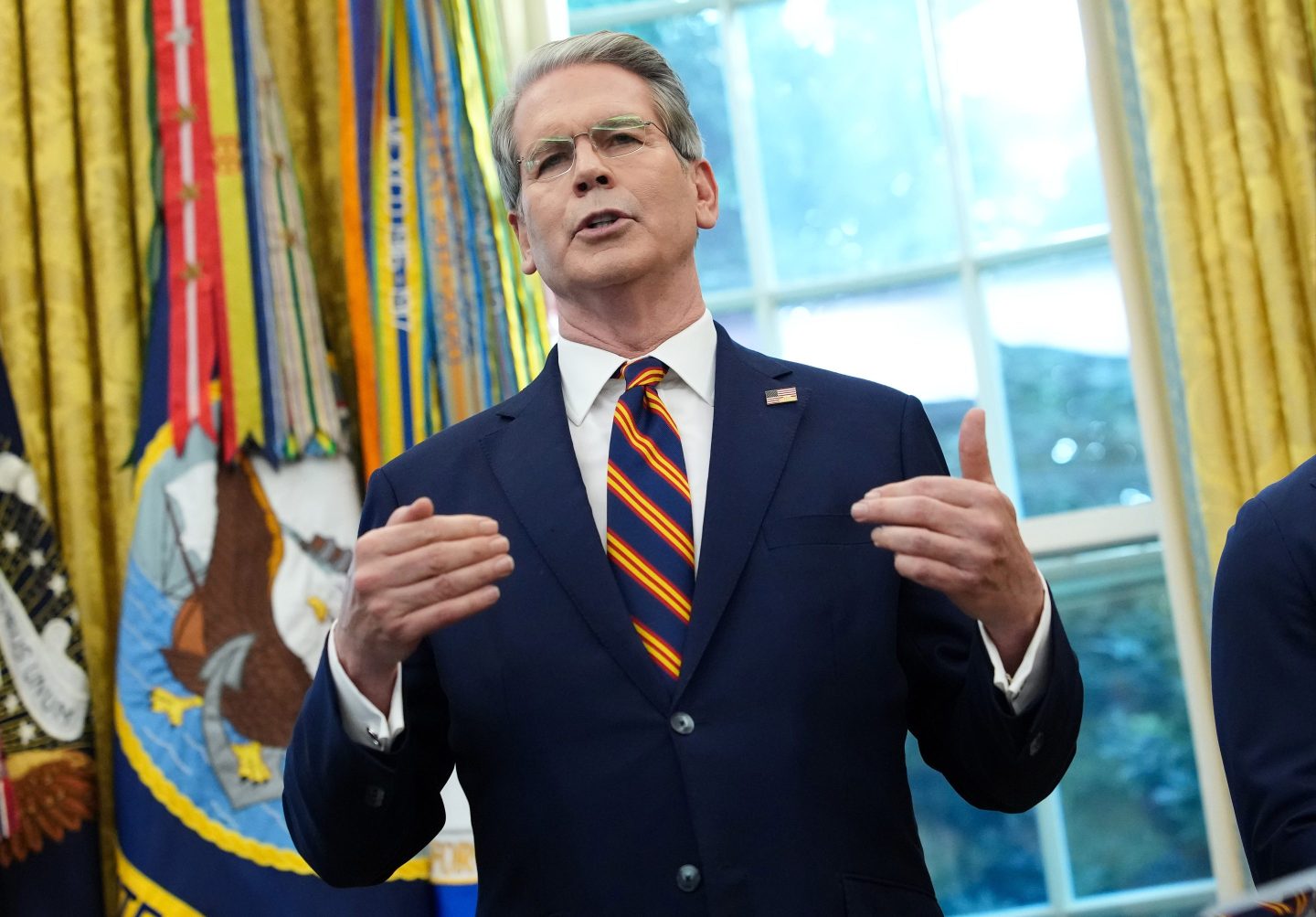
Scott Bessent speaks inside the Oval Office.
U.S. Treasury Secretary Scott Bessent confirmed all the gold in Fort Knox is "present and accounted for."Kevin Dietsch—Getty Images
Add Fortune on Google for similar content.

In May, President Donald Trump said in an interview he was eager to open the vault at Fort Knox to ensure the U.S. reserves of gold—valued at more than $600 billion—were still there.

Recommended Video

Trump was doubling down on plans he and Elon Musk, then-head of the Department of Government Efficiency (DOGE) made last year, calling on an audit of the reserves to delve into conspiracies that gold had been stolen.

Now, U.S. Treasury Secretary Scott Bessent is offering assurance the cache of gold is indeed safe and sound—but is completely inconsequential to the value of the dollar today.

“The treasurer has been to Fort Knox,” Bessent said in a recent Fox News appearance. “I am happy to say all gold is present and accounted for. The U.S. has the largest pile of gold in the world, over a trillion dollars at current market value.”

Established in 1918 in Kentucky, Fort Knox was a key military installation for the U.S. through both World Wars and the Vietnam War. The Fort Knox Bullion Depository was added years later, holding much of the U.S. gold reserves beginning in 1937. Today it holds about 147.3 million ounces, worth about $608 billion, according to the U.S. Mint. 

In its early decades, Fort Knox and the ample military security around U.S. gold reserves was symbolic of the stability of the American currency and economy after the Gold Reserve Act of 1934, which established that the U.S. dollar would be backed by the precious metal. But following then-President Richard Nixon ending the gold standard in 1971, the U.S. supply of the metal lost its primary utilitarian function, a fact Bessent made clear in his recent interview.

“We used to be backed by silver, sometimes gold, and then in the ‘70s we just went to what was called fiat currency, where you didn’t have to keep gold or silver in the vault,” Bessent said. “If any of these are still outstanding, though, the silver or gold for them is at Fort Knox waiting for them to be claimed, if so needed.​​”

Oil is the new gold

Bessent drawing attention to the U.S.’s changing relationship with gold is a reminder about how the Trump administration may be redefining the value of the dollar in the face of the world economy. The establishment of the gold standard in 1934 paved the way for the creation of the Bretton Woods System a decade later, which tethered the international monetary system to the gold standard, connecting the value of other currencies to the U.S. dollar, which was pegged to the cost of gold at $35 per ounce. By fixing other currencies to the dollar, the global economy could stabilize the value of currencies and facilitate trade.

But by the 1960s, the system was unraveling. The cost of the Vietnam War ballooned U.S. inflation, and the flood of dollars into circulation meant the U.S. was out of the necessary gold to back the influx of available cash, resulting in the overvaluation of the dollar. Other countries began to catch on to the U.S. running out of gold, with France quietly repatriating gold between 1963 and 1966 out of fear the U.S.’s increasing debt would devalue the dollar, and this accelerated Nixon ending the framework in 1971, along with it the gold standard.

Yet, history may be repeating itself. The end of the gold standard paved the way for the creation of the petrodollar, which once again tethered other currencies to the U.S. dollar, which didn’t derive its value from the price of gold, but rather from oil. In 1974, following multiple oil crises, the U.S. struck a deal with Saudi Arabia, where in exchange for Saudi Arabia selling oil in U.S. dollars alone, the U.S. would provide military aid. The deal accomplished Nixon’s goal of securing global demand for U.S. currency as oil became foundational to nearly every industry. As oil-rich countries looked for where to place their growing reserve of greenbacks, they turned to U.S. Treasuries, cementing the dollar at the center of international trade.

A new era of de-dollarization  

The gold standard and petrodollar helped stabilize global trade, but renewed geopolitical tensions may be accelerating the erosion of the dollar’s power. The dollar’s share of global foreign exchange reserves has been falling for decades, reaching a 25-year-low of 57% compared to 71% in 1999.

Following the closure of the Strait of Hormuz at the end of February, industry experts said some ships were able to pass through the chokepoint by paying in Chinese yuan, part of a trend of Gulf countries quietly diversifying trade partners and currencies following a series of sanctions that pre-dated the Trump administration. Between July 2025 and January of this year, France withdrew all 129 tons of gold it held in the Federal Reserve Bank of New York, choosing to update the reserve and store it in Paris, making $15 billion through a sale of its previous cache. French officials denied a political motive behind the move.

EBC Financial Group market analyst Sana Ur Rehman argued in a note to clients in May that France’s gold repatriation—and Canada’s similar move to create a $25 billion sovereign wealth fund to make its economy less dependent on the U.S—marks a new era of de-dollarization because it’s America’s long-established allies becoming less reliant on the U.S. currency. This is, in part, a result of tariffs and other trade uncertainties that have rocked trust in the dollar.

“These are not the actions of enemies,” Ur Rehman wrote in a note. “They are the actions of allies and partners who have watched the United States weaponize the dollar-based financial system, and have quietly concluded they need to reduce their exposure to it.”

“That shift,” Ur Rehman continued, “driven by allies rather than adversaries, is what makes the current moment different from anything in the past 80 years of dollar dominance.” 
Subscribe to Fortune Gulf Brief. Every Tuesday, this new newsletter delivers clear-eyed, authoritative intelligence on the deals, decisions, policies, and power shifts shaping one of the world’s most consequential regions, written for the people who need to act on it. Sign up here.
About the Author
Sasha Rogelberg
By Sasha RogelbergReporter
LinkedIn iconTwitter icon

Sasha Rogelberg is a reporter and former editorial fellow on the news desk at Fortune, covering retail and the intersection of business and popular culture.

See full bioRight Arrow Button Icon
Add Fortune on Google for similar content.

Latest in Economy

Finance
Lorem ipsum dolor sit amet, consectetur adipiscing elit, sed do eiusmod tempor incididunt ut labore et dolore magna aliqua. Ut enim ad minim veniam
By Fortune Editors
October 20, 2025
Finance
Lorem ipsum dolor sit amet, consectetur adipiscing elit, sed do eiusmod tempor incididunt ut labore et dolore magna aliqua. Ut enim ad minim veniam
By Fortune Editors
October 20, 2025
Finance
Lorem ipsum dolor sit amet, consectetur adipiscing elit, sed do eiusmod tempor incididunt ut labore et dolore magna aliqua. Ut enim ad minim veniam
By Fortune Editors
October 20, 2025
Finance
Lorem ipsum dolor sit amet, consectetur adipiscing elit, sed do eiusmod tempor incididunt ut labore et dolore magna aliqua. Ut enim ad minim veniam
By Fortune Editors
October 20, 2025
Finance
Lorem ipsum dolor sit amet, consectetur adipiscing elit, sed do eiusmod tempor incididunt ut labore et dolore magna aliqua. Ut enim ad minim veniam
By Fortune Editors
October 20, 2025
Finance
Lorem ipsum dolor sit amet, consectetur adipiscing elit, sed do eiusmod tempor incididunt ut labore et dolore magna aliqua. Ut enim ad minim veniam
By Fortune Editors
October 20, 2025

Most Popular

Finance
Lorem ipsum dolor sit amet, consectetur adipiscing elit, sed do eiusmod tempor incididunt ut labore et dolore magna aliqua. Ut enim ad minim veniam
By Fortune Editors
October 20, 2025
Finance
Lorem ipsum dolor sit amet, consectetur adipiscing elit, sed do eiusmod tempor incididunt ut labore et dolore magna aliqua. Ut enim ad minim veniam
By Fortune Editors
October 20, 2025
Finance
Lorem ipsum dolor sit amet, consectetur adipiscing elit, sed do eiusmod tempor incididunt ut labore et dolore magna aliqua. Ut enim ad minim veniam
By Fortune Editors
October 20, 2025
Finance
Lorem ipsum dolor sit amet, consectetur adipiscing elit, sed do eiusmod tempor incididunt ut labore et dolore magna aliqua. Ut enim ad minim veniam
By Fortune Editors
October 20, 2025
Finance
Lorem ipsum dolor sit amet, consectetur adipiscing elit, sed do eiusmod tempor incididunt ut labore et dolore magna aliqua. Ut enim ad minim veniam
By Fortune Editors
October 20, 2025
Finance
Lorem ipsum dolor sit amet, consectetur adipiscing elit, sed do eiusmod tempor incididunt ut labore et dolore magna aliqua. Ut enim ad minim veniam
By Fortune Editors
October 20, 2025
Fortune Secondary Logo
Rankings
  • 100 Best Companies
  • Fortune 500
  • Global 500
  • Fortune 500 Europe
  • Most Powerful Women
  • World's Most Admired Companies
  • See All Rankings
  • Lists Calendar
Sections
  • Finance
  • Fortune Crypto
  • Features
  • Leadership
  • Health
  • Commentary
  • Success
  • Retail
  • Mpw
  • Tech
  • Lifestyle
  • CEO Initiative
  • Asia
  • Politics
  • Conferences
  • Europe
  • Newsletters
  • Personal Finance
  • Environment
  • Magazine
  • Education
Customer Support
  • Frequently Asked Questions
  • Customer Service Portal
  • Privacy Policy
  • Terms Of Use
  • Single Issues For Purchase
  • International Print
Commercial Services
  • Advertising
  • Fortune Brand Studio
  • Fortune Analytics
  • Fortune Conferences
  • Business Development
  • Group Subscriptions
About Us
  • About Us
  • Press Center
  • Work At Fortune
  • Terms And Conditions
  • Site Map
  • About Us
  • Press Center
  • Work At Fortune
  • Terms And Conditions
  • Site Map
  • Facebook icon
  • Twitter icon
  • LinkedIn icon
  • Instagram icon
  • TikTok icon
  • YouTube icon

Latest in Economy

California Republican’s awkward pitch: vote for me even if you hate Trump
BankingElections
California Republican’s awkward pitch: vote for me even if you hate Trump
By MIchael R. Blood and The Associated PressJuly 23, 2026
3 hours ago
z
EconomyElections
Democrats decide 2026 midterm elections are the perfect time for a civil war pitting socialists against moderates
By Jill Colvin and The Associated PressJuly 23, 2026
3 hours ago
police tape
North AmericaCrime
American homicides on track for lowest level in more than a century: ‘one of the most significant public safety developments in decades’
By Safiyah Riddle and The Associated PressJuly 23, 2026
3 hours ago
t
EconomyWhite House
Trump dismissed affordability as a word ‘made up by the Democrats’ and promised oil would come ‘tumbling down’—then it hit $100 a barrel
By Nick LichtenbergJuly 23, 2026
5 hours ago
Japanese Prime Minister Sanae Takaichi and U.S. President Donald Trump sit in the Oval Office.
Economynational debt
The $39 trillion U.S. national debt isn’t as high as Japan’s and Singapore’s relative to economy size—and yet it’s still worse somehow
By Sasha RogelbergJuly 23, 2026
5 hours ago
glp
Commentaryobesity
The GLP-1 paradox: too expensive to cover, too effective to cut
By Bryan Sivak and Elina OnitskanskyJuly 23, 2026
8 hours ago

Most Popular

The millennial generation has split, new Fed research shows: Those over 35 are edging toward boomer-style wealth, while everyone else falls behind
Real Estate
The millennial generation has split, new Fed research shows: Those over 35 are edging toward boomer-style wealth, while everyone else falls behind
By Nick LichtenbergJuly 22, 2026
1 day ago
Scott Bessent casually says the U.S. has more than $1 trillion in gold—and that it doesn’t matter for the dollar
Economy
Scott Bessent casually says the U.S. has more than $1 trillion in gold—and that it doesn’t matter for the dollar
By Sasha RogelbergJuly 22, 2026
1 day ago
Mark Cuban says he has the solution to growing income inequality, and it's to reward every employee—from CEO to janitor—with company stock
Success
Mark Cuban says he has the solution to growing income inequality, and it's to reward every employee—from CEO to janitor—with company stock
By Sasha RogelbergJuly 20, 2026
3 days ago
'The man who dies rich dies disgraced': The last time America had such wealth inequality, Andrew Carnegie knew he had to give it all away
Success
'The man who dies rich dies disgraced': The last time America had such wealth inequality, Andrew Carnegie knew he had to give it all away
By Nick LichtenbergJuly 22, 2026
1 day ago
Mathematicians grapple with a ‘very rapid and very unsettling change’ as AI cracks yet another century-old problem
AI
Mathematicians grapple with a ‘very rapid and very unsettling change’ as AI cracks yet another century-old problem
By Eva RoytburgJuly 21, 2026
2 days ago
Despite a $156 million contract, Knicks star Jalen Brunson still calls his parents for financial advice any time he makes a big purchase
Success
Despite a $156 million contract, Knicks star Jalen Brunson still calls his parents for financial advice any time he makes a big purchase
By Emma BurleighJuly 21, 2026
2 days ago

© 2026 Fortune Media IP Limited. All Rights Reserved. Use of this site constitutes acceptance of our Terms of Use and Privacy Policy | CA Notice at Collection and Privacy Notice | Do Not Sell/Share My Personal Information
FORTUNE is a trademark of Fortune Media IP Limited, registered in the U.S. and other countries. FORTUNE may receive compensation for some links to products and services on this website. Offers may be subject to change without notice.