• Home
  • Latest
  • Fortune 500
  • Finance
  • Tech
  • Leadership
  • Lifestyle
  • Rankings
  • Multimedia

Trendingnow

1

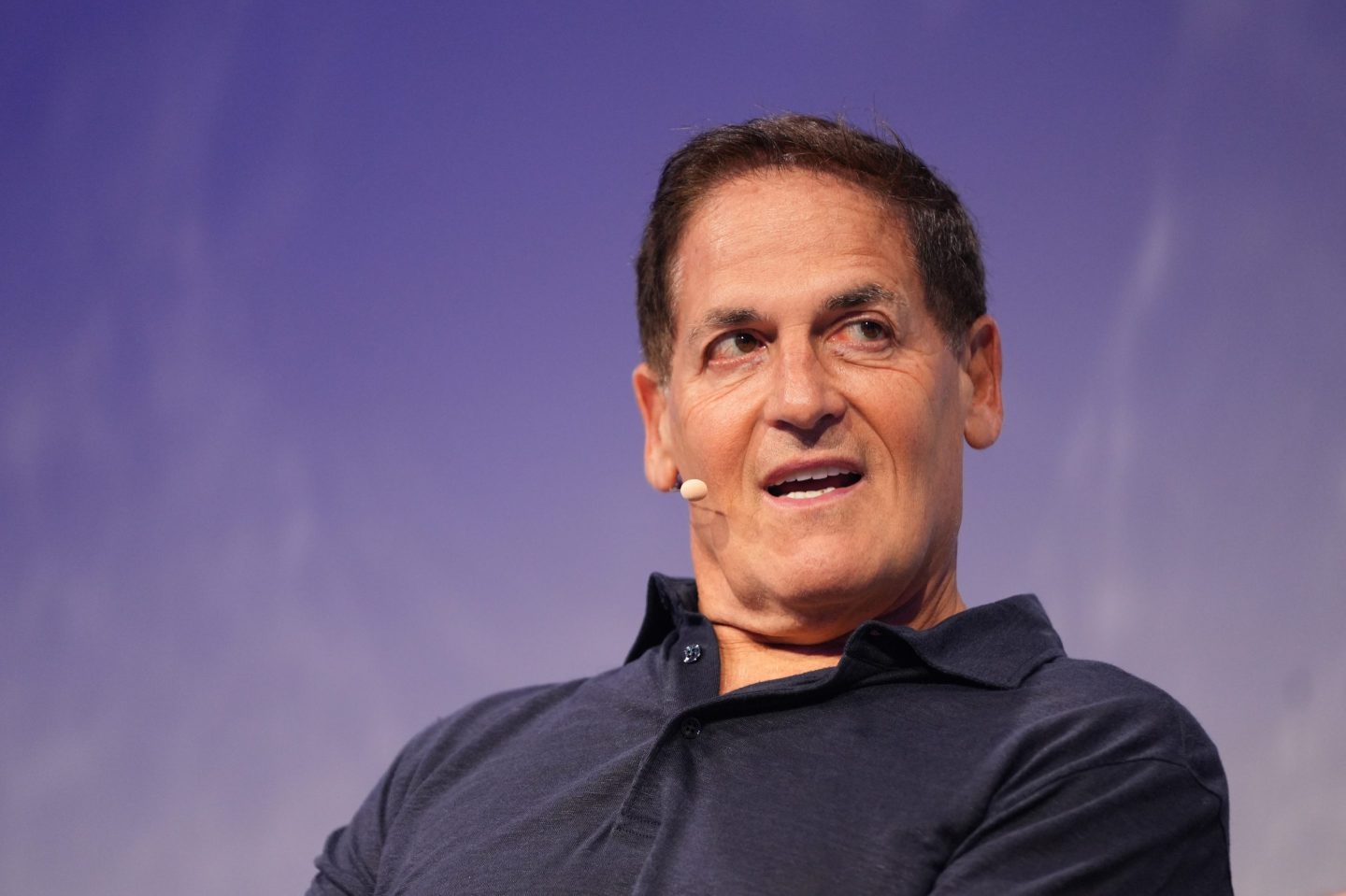
Mark Cuban says he has the solution to growing income inequality, and it's to reward every employee—from CEO to janitor—with company stock

2

‘I want to die broke’: Billionaire philanthropist Denny Sanford dies after giving away $4 billion

3

'Dr. Doom' Nouriel Roubini says we're headed for universal basic income or 'some form of socialism' as AI revolutionizes work—He calls that optimistic

1

Mark Cuban says he has the solution to growing income inequality, and it's to reward every employee—from CEO to janitor—with company stock

2

‘I want to die broke’: Billionaire philanthropist Denny Sanford dies after giving away $4 billion

3

'Dr. Doom' Nouriel Roubini says we're headed for universal basic income or 'some form of socialism' as AI revolutionizes work—He calls that optimistic
CommentaryCareers

I built a Fortune 1000 career most people wouldn’t walk away from. Then I did

By
Christine Lentz
Christine Lentz
Down Arrow Button Icon
By
Christine Lentz
Christine Lentz
Down Arrow Button Icon
May 29, 2026, 7:30 AM ET
lentz
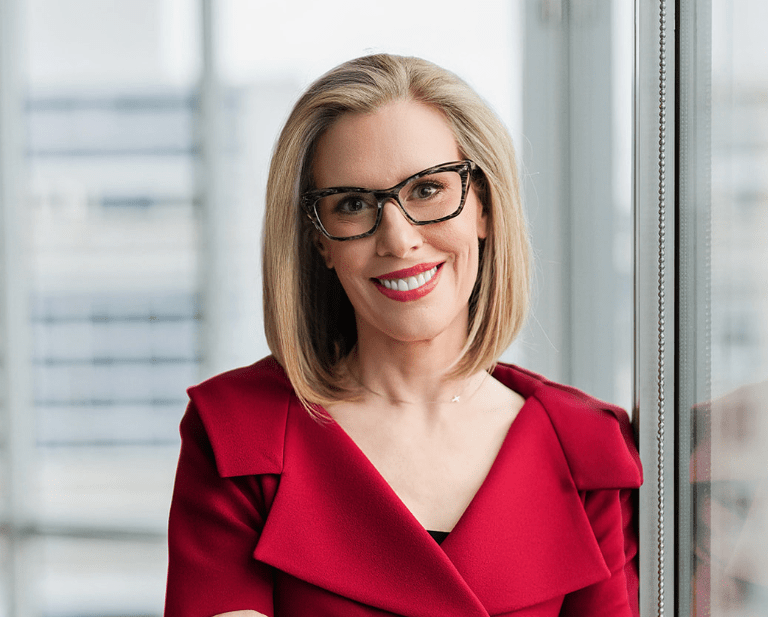
Christine Lentz.courtesy of Christine Lentz
Add Fortune on Google for similar content.

In my late 20s, like many ambitious young professionals who grew up believing they could build anything they put their mind to, I started my own technology consulting company.`

Recommended Video

Over five years, I poured everything I had into building it. We landed impressive clients, grew to 45 employees, and built a culture I was deeply proud of.

Then the 2008 financial crisis hit.

When I saw the economy starting to shift, I tried pivoting the business toward areas I believed would be more insulated from the downturn, including government contracting work designed to support small businesses. But eventually even those opportunities started disappearing. I remember realizing that one of the very strategies I’d relied on to help us survive was no longer viable.

That was the moment I knew we weren’t going to make it.

With no VC or private equity backing and no network of advisors helping me navigate a financial crisis, I found myself figuring out how to unwind the company while simultaneously having honest conversations with my employees whose livelihoods depended on it. It was incredibly humbling.

After it was over, I took the first real vacation I’d had in years. When I came home, I sat down with my dad, a Vietnam combat veteran who’s always been a grounding force in my life, and explained how devastated I felt losing something I’d poured my heart and soul into building.

He listened patiently, smiled, and said, “Honey, at least nobody’s shooting at you.”

We both laughed, but the perspective stayed with me.

As painful as that chapter was, I realized something important. I hadn’t lost my ability to work. I hadn’t lost my experience, my resilience, or the knowledge I’d gained building and then unwinding a company through crisis.

I started thinking about what skill sets I didn’t have that might’ve better prepared me for what I’d been through. Strategic foresight and anticipatory risk were at the top. I realized while I’d learned how to build a business, I hadn’t yet learned how large organizations architect resilience at scale or navigate uncertainty before it becomes a crisis.

So instead of immediately starting another company, I made a decision to start over inside corporate America and intentionally learn everything I’d missed the first time around.

I joined a Fortune 1000 critical internet infrastructure provider as a contract project manager and became a full-time employee a year later. I approached the role with the same ownership mentality I’d developed as an entrepreneur, raising my hand for problems nobody else wanted to solve. 

Eventually, that work ethic and constant desire to learn led me into executive leadership, where among other responsibilities I became Chief of Staff to the CEO. For many professionals, reaching the top levels of a multibillion-dollar company is the finish line. Earlier in my career, I probably would’ve said the same thing.

But then something unexpected happened.

I realized I’d reached a point where there was nowhere left for me to grow.

The Career Ceiling Nobody Warns You About

We hear a lot about executives leaving senior leadership positions because of burnout or work-life balance. Those are real concerns, but there’s another reason people walk away from positions they’ve spent decades chasing that we don’t talk about enough. Sometimes the growth trajectory simply stops.

Research from McKinsey’s 2025 Women in the Workplace report found employees become significantly less likely to see opportunities for advancement at senior levels as leadership pathways narrow. The higher you climb, the fewer opportunities exist for meaningful upward movement.

After rebuilding my career, I found myself facing a reality I hadn’t anticipated. The challenge and steep learning curve that had fueled me for years started disappearing. I realized there was nowhere left for me to grow in the way that energized me most.

That realization forced me to confront a difficult truth. I could stay in a position I’d already proven I could do, or I could leave the comfort of what I’d built behind and step into the unknown in pursuit of new growth.

Having already lived through one major career reinvention and not just survived, but thrived because of it, I chose the latter.

The Jobs Nobody Wants Are Usually the Ones That Change Your Career

One of the most valuable lessons I learned rebuilding my career was this. The opportunities that accelerate your growth are rarely the ones everyone else is competing for.

I built my career by volunteering for the projects nobody wanted to touch. If there was a messy operational challenge or a cross-functional initiative with no clear ownership, I raised my hand to lead it.

Part of that came from my entrepreneurial urge to solve problems when they arose, and that mindset ended up becoming a significant differentiator. According to LinkedIn’s 2025 Workplace Learning Report, adaptability and problem solving remain two of the most in-demand leadership capabilities as organizations navigate technological disruption and economic uncertainty.

What surprised me most was that the less glamorous assignments often created the greatest visibility and growth. Those projects gave me exposure across operations, engineering, governance, risk, and strategy. They taught me how businesses actually function under pressure, not just how they’re supposed to function on paper.

Over time, those uncomfortable assignments became the very experiences that carried me into executive leadership.

Pressure Doesn’t Build Leaders. It Reveals Them.

When people talk about high-pressure environments, the conversation usually centers around stress and burnout, but pressure also reveals the quality of leadership already operating under the surface.

Leading inside critical internet infrastructure and information security meant operating in environments where trust and reliability were paramount and needed to be monitored constantly. Every cyber breach announcement or regulatory shift created pressure spikes that demanded immediate action and disciplined decision making.

Early in my career, I thought strong leadership meant matching the intensity of the moment. Over time, I learned the opposite was true. The best leaders aren’t the loudest people in the room during uncertainty. They’re the calmest.

PwC’s 2025 Global CEO Survey found that leaders increasingly view adaptability, resilience, and trust-building as critical leadership traits in environments defined by disruption and uncertainty.

Pressure taught me that leadership isn’t tested during stable periods. It’s tested when things become unclear, uncomfortable, or unpredictable. That’s when your values either hold steady or disappear entirely.

And ironically, the more pressure I experienced throughout my career, the less afraid I became of it. In fact, I learned to thrive under pressure by developing the skills needed to operate within it while maintaining clarity, integrity, and sound judgment when the stakes were high.

Earlier this year, I made the difficult decision to leave the executive role I’d spent most of my career working toward. Not because I was running from pressure, but because I still wanted to grow.

Looking back now, I realize the financial crisis taught me something long before I fully understood it. No title, company, or chapter of your life lasts forever. But your ability to adapt, learn, and rebuild travels with you wherever you go.

For most of my career, I thought success was about reaching the top. Now, I’ve come to realize that, at least for me, it’s about having the courage to keep evolving once you get there.

The opinions expressed in Fortune.com commentary pieces are solely the views of their authors and do not necessarily reflect the opinions and beliefs of Fortune.

About the Author
By Christine Lentz
See full bioRight Arrow Button Icon
Add Fortune on Google for similar content.

Latest in Commentary

Finance
Lorem ipsum dolor sit amet, consectetur adipiscing elit, sed do eiusmod tempor incididunt ut labore et dolore magna aliqua. Ut enim ad minim veniam
By Fortune Editors
October 20, 2025
Finance
Lorem ipsum dolor sit amet, consectetur adipiscing elit, sed do eiusmod tempor incididunt ut labore et dolore magna aliqua. Ut enim ad minim veniam
By Fortune Editors
October 20, 2025
Finance
Lorem ipsum dolor sit amet, consectetur adipiscing elit, sed do eiusmod tempor incididunt ut labore et dolore magna aliqua. Ut enim ad minim veniam
By Fortune Editors
October 20, 2025
Finance
Lorem ipsum dolor sit amet, consectetur adipiscing elit, sed do eiusmod tempor incididunt ut labore et dolore magna aliqua. Ut enim ad minim veniam
By Fortune Editors
October 20, 2025
Finance
Lorem ipsum dolor sit amet, consectetur adipiscing elit, sed do eiusmod tempor incididunt ut labore et dolore magna aliqua. Ut enim ad minim veniam
By Fortune Editors
October 20, 2025
Finance
Lorem ipsum dolor sit amet, consectetur adipiscing elit, sed do eiusmod tempor incididunt ut labore et dolore magna aliqua. Ut enim ad minim veniam
By Fortune Editors
October 20, 2025

Most Popular

Finance
Lorem ipsum dolor sit amet, consectetur adipiscing elit, sed do eiusmod tempor incididunt ut labore et dolore magna aliqua. Ut enim ad minim veniam
By Fortune Editors
October 20, 2025
Finance
Lorem ipsum dolor sit amet, consectetur adipiscing elit, sed do eiusmod tempor incididunt ut labore et dolore magna aliqua. Ut enim ad minim veniam
By Fortune Editors
October 20, 2025
Finance
Lorem ipsum dolor sit amet, consectetur adipiscing elit, sed do eiusmod tempor incididunt ut labore et dolore magna aliqua. Ut enim ad minim veniam
By Fortune Editors
October 20, 2025
Finance
Lorem ipsum dolor sit amet, consectetur adipiscing elit, sed do eiusmod tempor incididunt ut labore et dolore magna aliqua. Ut enim ad minim veniam
By Fortune Editors
October 20, 2025
Finance
Lorem ipsum dolor sit amet, consectetur adipiscing elit, sed do eiusmod tempor incididunt ut labore et dolore magna aliqua. Ut enim ad minim veniam
By Fortune Editors
October 20, 2025
Finance
Lorem ipsum dolor sit amet, consectetur adipiscing elit, sed do eiusmod tempor incididunt ut labore et dolore magna aliqua. Ut enim ad minim veniam
By Fortune Editors
October 20, 2025
Fortune Secondary Logo
Rankings
  • 100 Best Companies
  • Fortune 500
  • Global 500
  • Fortune 500 Europe
  • Most Powerful Women
  • World's Most Admired Companies
  • See All Rankings
  • Lists Calendar
Sections
  • Finance
  • Fortune Crypto
  • Features
  • Leadership
  • Health
  • Commentary
  • Success
  • Retail
  • Mpw
  • Tech
  • Lifestyle
  • CEO Initiative
  • Asia
  • Politics
  • Conferences
  • Europe
  • Newsletters
  • Personal Finance
  • Environment
  • Magazine
  • Education
Customer Support
  • Frequently Asked Questions
  • Customer Service Portal
  • Privacy Policy
  • Terms Of Use
  • Single Issues For Purchase
  • International Print
Commercial Services
  • Advertising
  • Fortune Brand Studio
  • Fortune Analytics
  • Fortune Conferences
  • Business Development
  • Group Subscriptions
About Us
  • About Us
  • Press Center
  • Work At Fortune
  • Terms And Conditions
  • Site Map
  • About Us
  • Press Center
  • Work At Fortune
  • Terms And Conditions
  • Site Map
  • Facebook icon
  • Twitter icon
  • LinkedIn icon
  • Instagram icon
  • TikTok icon
  • YouTube icon
Christine Lentz is a senior executive with two decades of experience building governance frameworks, risk management, and operational architecture for critical global systems. She helps organizations create clarity, maintain trust, and execute effectively inside complex, regulated environments.

Latest in Commentary

k
Commentarypower
What I keep hearing from Fortune 500 CEOs: ‘We have no idea what we’re actually paying for power’
By Kiran BhatrajuJuly 21, 2026
6 hours ago
Bolt CEO Ryan Breslow
CommentaryHuman resources
The CEO who fired HR was right. About the wrong thing.
By KeyAnna SchmiedlJuly 21, 2026
6 hours ago
ford
Commentary250 Years of Innovation
Alliance for America’s Skilled Trades: Skilled trades shaped America’s past. Here’s how they can build America’s future
By Jim Farley, Linda Hubbard, Bayo Ogunlesi and Ruth PoratJuly 21, 2026
7 hours ago
Sumeet Agrawal is VP of Product Management (Data, AI Governance & Context Engineering for Agentic Systems) at Salesforce.
CommentaryAI agents
Salesforce VP on the leaky AI pipeline: why cheaper tokens won’t fix enterprise AI
By Sumeet AgrawalJuly 20, 2026
1 day ago
japan
CommentaryJapan
Japan’s monetary conundrum — why the yen hit a 40-year low as interest rates hit a 31-year high
By Steve H. Hanke and John GreenwoodJuly 20, 2026
1 day ago
ryan
CommentaryLeadership
I’ve interviewed 700 leaders. The ones outsourcing their thinking to AI lose their best people first
By Ryan HawkJuly 20, 2026
1 day ago

Most Popular

Mark Cuban says he has the solution to growing income inequality, and it's to reward every employee—from CEO to janitor—with company stock
Success
Mark Cuban says he has the solution to growing income inequality, and it's to reward every employee—from CEO to janitor—with company stock
By Sasha RogelbergJuly 20, 2026
23 hours ago
‘I want to die broke’: Billionaire philanthropist Denny Sanford dies after giving away $4 billion
Success
‘I want to die broke’: Billionaire philanthropist Denny Sanford dies after giving away $4 billion
By Sydney LakeJuly 20, 2026
1 day ago
'Dr. Doom' Nouriel Roubini says we're headed for universal basic income or 'some form of socialism' as AI revolutionizes work—He calls that optimistic
AI
'Dr. Doom' Nouriel Roubini says we're headed for universal basic income or 'some form of socialism' as AI revolutionizes work—He calls that optimistic
By Jason MaJuly 18, 2026
3 days ago
Current price of silver as of Monday, July 20, 2026
Personal Finance
Current price of silver as of Monday, July 20, 2026
By Joseph HostetlerJuly 20, 2026
1 day ago
It’s not just Taco Bell lettuce and possible glass in Pillsbury rolls: Food and drink recall events reached a 6-year year-over-year high
Retail
It’s not just Taco Bell lettuce and possible glass in Pillsbury rolls: Food and drink recall events reached a 6-year year-over-year high
By Sasha RogelbergJuly 20, 2026
1 day ago
The Treasury is walking a tightrope on U.S. debt by relying so much on short-term rates that are at the mercy of a suddenly very hawkish Fed
Economy
The Treasury is walking a tightrope on U.S. debt by relying so much on short-term rates that are at the mercy of a suddenly very hawkish Fed
By Jason MaJuly 20, 2026
1 day ago

© 2026 Fortune Media IP Limited. All Rights Reserved. Use of this site constitutes acceptance of our Terms of Use and Privacy Policy | CA Notice at Collection and Privacy Notice | Do Not Sell/Share My Personal Information
FORTUNE is a trademark of Fortune Media IP Limited, registered in the U.S. and other countries. FORTUNE may receive compensation for some links to products and services on this website. Offers may be subject to change without notice.