• Home
  • Latest
  • Fortune 500
  • Finance
  • Tech
  • Leadership
  • Lifestyle
  • Rankings
  • Multimedia
Commentary250 Years of Innovation

For 250 years, America didn’t just invent the future—it built it. That connection is breaking. Here’s how to restore it

By
Eric Kutcher
Eric Kutcher
,
Shubham Singhal
Shubham Singhal
,
Olivia White
Olivia White
, and
Scott Blackburn
Scott Blackburn
Down Arrow Button Icon
By
Eric Kutcher
Eric Kutcher
,
Shubham Singhal
Shubham Singhal
,
Olivia White
Olivia White
, and
Scott Blackburn
Scott Blackburn
Down Arrow Button Icon
May 13, 2026, 8:30 AM ET
250
US and UK flags fly near a flag celebrating the United States' 250th anniversary of independence ahead of the state visit of Britain's King Charles III and Britain's Queen Camilla in Washington, DC, on April 27, 2026. Ken Cedeno / AFP via Getty Images

For 250 years, America has done something no other country has managed at comparable scale: it has not merely invented the future, it has built it. Many of the foundations of modern life are distinctly American. 

Recommended Video

By our count, Americans created or supported 76 of the 100 most important inventions of the past 250 years, from the telegraph and the electric grid to the airplane, the transistor, the personal computer, and generative AI. But invention has never been the whole story. America’s enduring strength has been reinvention: reshaping its economy around each geopolitical development and technological leap, turning discovery into industrial power, prosperity, and global influence. The railroad era, the GI Bill, the internet—each was a moment when America did not merely lead in ideas but mobilized the institutions, infrastructure, and workforce needed to scale them.

As the country approaches its 250th anniversary, that cycle—from invention to reinvention—is under strain in ways that have no clear precedent. The question for the next 250 years is whether America can close the gap between what it discovers and what it builds, before others do it first.

But invention has never been the whole story. America’s enduring strength has been reinvention—reshaping its economy around each geopolitical development and technological leap, turning discovery into industrial power, prosperity, and global influence. As the country approaches its 250th anniversary, the question is whether it can reinvent itself again, and quickly, as the connection between breakthrough ideas and industrial capacity once again becomes central to growth.
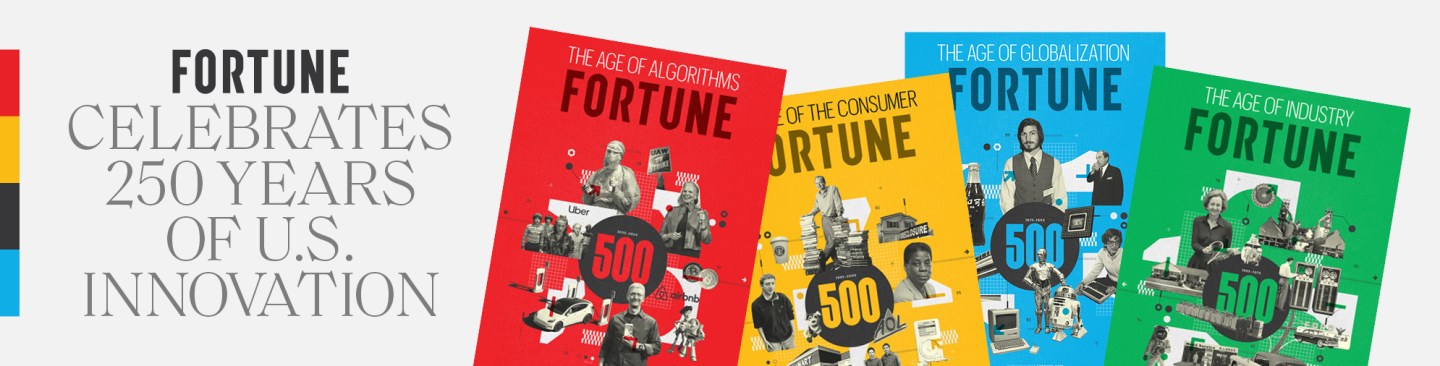
At each key turning point, American inventions have been followed by industrial transformation. The rapid build-out of railroads and mass production powered the rise of an industrial economy. In the 20th century, federal research funding and world-class universities fostered inventions that turned the United States into a scientific superpower. Personal computers and the internet gave rise to a digital economy built on software, networks, and global information flows. Growth has been sparked by new ideas, but nurtured by the institutions, infrastructure, and workforce systems that allowed those ideas to scale.

To compete in tomorrow’s economy, the United States must reinforce its historical connection between innovation and physical industry—it must once again reinvent its economy around new ideas around emerging technologies that will anchor tomorrow’s economyand that are tightly bound to physical systems. Artificial intelligence relies on vast data centers and reliable power. Robotics must be embedded in advanced manufacturing systems. Biotechnology requires scaled lab space and biomanufacturing capacity. Clean energy depends on grid expansion, storage, materials processing, and transmission. Even incipient technologies like quantum computing rely on specialized fabrication and precision engineering. These future-critical systems blend software with hardware and physical infrastructure.

Today, the United States’ capacity to reinvent is under strain. American firms still lead global markets and remain at the forefront of AI and advanced technologies. But the critical connection between invention and production has weakened. Manufacturing capacity has dispersed abroad. The U.S.’ share of global manufacturing output has declined from 45% to 11% today—a peak reached in the 1950s. The most advanced semiconductors are largely fabricated in Taiwan and South Korea. Processing of critical minerals and rare earth elements is highly concentrated in mainland China.

In the next wave of technological competition, the current disconnect between invention and production could mean ceding both economic value and competitive advantage. Countries that integrate research, production, and deployment of new technologies will be better positioned to capture their economic and strategic benefits. Leadership will depend as much on energy capacity, skilled labor, and supply chain resilience as on laboratory breakthroughs.

Three areas will determine whether ideas become industries.

Talent—educating, and welcoming, the world’s most cutting-edge creative thinkers. Advances in artificial intelligence promise productivity gains, but those gains will also require technical capability across the workforce. Expanding engineering and advanced manufacturing pipelines, improving K-12 education, and maintaining access to global talent will determine how widely new technologies spread. Earlier generations met comparable challenges with institutional innovations such as land-grant colleges and the GI Bill. A similar expansion of capacity is needed now.

Physical capacity—previous eras of growth were powered by large-scale infrastructure projects that opened new economic corridors. The same is required today. Grid bottlenecks, aging transport systems, and slow project approvals are constraining expansion just as demand for power and advanced facilities ramps up. Permitting delays alone have become a significant drag—we estimate that as much as $1.5 trillion in infrastructure capital expenditure is currently tied up in federal review processes. Modernized grids, expanded generation capacity, and faster build timelines are prerequisites for scaling emerging industries.

Resilience—concentrated production in critical sectors has exposed vulnerabilities during geopolitical tensions and supply shocks. Strengthening domestic capacity in key industries, while diversifying supply chains with trusted partners, would reduce that risk. The goal is not isolation but reliability under pressure.

The United States is starting from a position of strength: deep capital markets, a culture of entrepreneurship, leading research institutions, and a track record of adaptation. But other major powers are investing heavily in industrial depth. Technology cycles are accelerating. And energy, security, and economic policy are increasingly intertwined.

The inventions defining the next era, in artificial intelligence, advanced manufacturing, energy, and biotechnology, are already emerging from American laboratories and firms. The United States must scale them, and reap the benefits at home, or watch others do it. Invention alone won’t determine who owns the next century—the ability to build it will.

The opinions expressed in Fortune.com commentary pieces are solely the views of their authors and do not necessarily reflect the opinions and beliefs of Fortune.

Join us at the Fortune Workplace Innovation Summit May 19–20, 2026, in Atlanta. The next era of workplace innovation is here—and the old playbook is being rewritten. At this exclusive, high-energy event, the world’s most innovative leaders will convene to explore how AI, humanity, and strategy converge to redefine, again, the future of work. Register now.
About the Authors
By Eric Kutcher
See full bioRight Arrow Button Icon
By Shubham Singhal
See full bioRight Arrow Button Icon
By Olivia White
See full bioRight Arrow Button Icon
By Scott Blackburn
See full bioRight Arrow Button Icon

Latest in Commentary

Finance
Lorem ipsum dolor sit amet, consectetur adipiscing elit, sed do eiusmod tempor incididunt ut labore et dolore magna aliqua. Ut enim ad minim veniam
By Fortune Editors
October 20, 2025
Finance
Lorem ipsum dolor sit amet, consectetur adipiscing elit, sed do eiusmod tempor incididunt ut labore et dolore magna aliqua. Ut enim ad minim veniam
By Fortune Editors
October 20, 2025
Finance
Lorem ipsum dolor sit amet, consectetur adipiscing elit, sed do eiusmod tempor incididunt ut labore et dolore magna aliqua. Ut enim ad minim veniam
By Fortune Editors
October 20, 2025
Finance
Lorem ipsum dolor sit amet, consectetur adipiscing elit, sed do eiusmod tempor incididunt ut labore et dolore magna aliqua. Ut enim ad minim veniam
By Fortune Editors
October 20, 2025
Finance
Lorem ipsum dolor sit amet, consectetur adipiscing elit, sed do eiusmod tempor incididunt ut labore et dolore magna aliqua. Ut enim ad minim veniam
By Fortune Editors
October 20, 2025
Finance
Lorem ipsum dolor sit amet, consectetur adipiscing elit, sed do eiusmod tempor incididunt ut labore et dolore magna aliqua. Ut enim ad minim veniam
By Fortune Editors
October 20, 2025

Most Popular

Finance
Lorem ipsum dolor sit amet, consectetur adipiscing elit, sed do eiusmod tempor incididunt ut labore et dolore magna aliqua. Ut enim ad minim veniam
By Fortune Editors
October 20, 2025
Finance
Lorem ipsum dolor sit amet, consectetur adipiscing elit, sed do eiusmod tempor incididunt ut labore et dolore magna aliqua. Ut enim ad minim veniam
By Fortune Editors
October 20, 2025
Finance
Lorem ipsum dolor sit amet, consectetur adipiscing elit, sed do eiusmod tempor incididunt ut labore et dolore magna aliqua. Ut enim ad minim veniam
By Fortune Editors
October 20, 2025
Finance
Lorem ipsum dolor sit amet, consectetur adipiscing elit, sed do eiusmod tempor incididunt ut labore et dolore magna aliqua. Ut enim ad minim veniam
By Fortune Editors
October 20, 2025
Finance
Lorem ipsum dolor sit amet, consectetur adipiscing elit, sed do eiusmod tempor incididunt ut labore et dolore magna aliqua. Ut enim ad minim veniam
By Fortune Editors
October 20, 2025
Finance
Lorem ipsum dolor sit amet, consectetur adipiscing elit, sed do eiusmod tempor incididunt ut labore et dolore magna aliqua. Ut enim ad minim veniam
By Fortune Editors
October 20, 2025
Fortune Secondary Logo
Rankings
  • 100 Best Companies
  • Fortune 500
  • Global 500
  • Fortune 500 Europe
  • Most Powerful Women
  • World's Most Admired Companies
  • See All Rankings
  • Lists Calendar
Sections
  • Finance
  • Fortune Crypto
  • Features
  • Leadership
  • Health
  • Commentary
  • Success
  • Retail
  • Mpw
  • Tech
  • Lifestyle
  • CEO Initiative
  • Asia
  • Politics
  • Conferences
  • Europe
  • Newsletters
  • Personal Finance
  • Environment
  • Magazine
  • Education
Customer Support
  • Frequently Asked Questions
  • Customer Service Portal
  • Privacy Policy
  • Terms Of Use
  • Single Issues For Purchase
  • International Print
Commercial Services
  • Advertising
  • Fortune Brand Studio
  • Fortune Analytics
  • Fortune Conferences
  • Business Development
  • Group Subscriptions
About Us
  • About Us
  • Press Center
  • Work At Fortune
  • Terms And Conditions
  • Site Map
  • About Us
  • Press Center
  • Work At Fortune
  • Terms And Conditions
  • Site Map
  • Facebook icon
  • Twitter icon
  • LinkedIn icon
  • Instagram icon
  • Pinterest icon

Eric Kutcher is a Senior Partner and McKinsey & Company's Chair of North America.

Shubham Singhal is a Senior Partner and Chair of the McKinsey Global Institute.

Olivia White is a Senior Partner and a Director of the McKinsey Global Institute.

Scott Blackburn is a Senior Partner at McKinsey & Company.

They are coauthors of At 250, sustaining America’s competitive edge.


Latest in Commentary

250
Commentary250 Years of Innovation
For 250 years, America didn’t just invent the future—it built it. That connection is breaking. Here’s how to restore it
By Eric Kutcher, Shubham Singhal, Olivia White and Scott BlackburnMay 13, 2026
3 hours ago
zach
CommentaryApps
I spent 8 years building Google Sheets. Now I think apps are on their way out
By Zach LloydMay 13, 2026
3 hours ago
frazier
Commentaryaging
Your grandma should be using AI. really
By Kevin FrazierMay 13, 2026
3 hours ago
jeff
CommentaryPsychology
Imposter syndrome used to be a lie. AI made it true
By Jeffrey Sanchez-BurksMay 13, 2026
3 hours ago
turner
CommentaryMedia
Ted Turner built the original infinite scroll. The attention economy is running on his playbook 
By Nick LichtenbergMay 12, 2026
20 hours ago
klein
CommentarySoftware
SAP CEO: the AI race is being fought in the wrong place 
By Christian KleinMay 12, 2026
1 day ago

Most Popular

The Bezos family just donated $100 million to help achieve one of Mayor Zohran Mamdani’s top campaign promises
Politics
The Bezos family just donated $100 million to help achieve one of Mayor Zohran Mamdani’s top campaign promises
By Jake AngeloMay 12, 2026
19 hours ago
Nearly 50,000 Lake Tahoe residents have to find a new power source after their energy source looks to redirect lines to data centers
Travel & Leisure
Nearly 50,000 Lake Tahoe residents have to find a new power source after their energy source looks to redirect lines to data centers
By Catherina GioinoMay 12, 2026
22 hours ago
U.S. hotels are calling the World Cup a 'non-event' and 80% warn bookings are falling short of expectations, report finds
North America
U.S. hotels are calling the World Cup a 'non-event' and 80% warn bookings are falling short of expectations, report finds
By Sasha RogelbergMay 12, 2026
1 day ago
Forget U.S. debt, China's total borrowing is in 'a league of its own'—much worse and deteriorating faster, analyst says
Economy
Forget U.S. debt, China's total borrowing is in 'a league of its own'—much worse and deteriorating faster, analyst says
By Jason MaMay 11, 2026
2 days ago
It’s not just Canadian tourists snubbing U.S. cities. Business leaders are cancelling more trips to America as geopolitical tensions continue
North America
It’s not just Canadian tourists snubbing U.S. cities. Business leaders are cancelling more trips to America as geopolitical tensions continue
By Sasha RogelbergMay 12, 2026
20 hours ago
Anthropic’s Daniela Amodei says entrepreneurs should go on vacation to road test potential cofounders—if they’re a drain, they’re ‘the wrong choice’
Success
Anthropic’s Daniela Amodei says entrepreneurs should go on vacation to road test potential cofounders—if they’re a drain, they’re ‘the wrong choice’
By Emma BurleighMay 12, 2026
1 day ago

© 2026 Fortune Media IP Limited. All Rights Reserved. Use of this site constitutes acceptance of our Terms of Use and Privacy Policy | CA Notice at Collection and Privacy Notice | Do Not Sell/Share My Personal Information
FORTUNE is a trademark of Fortune Media IP Limited, registered in the U.S. and other countries. FORTUNE may receive compensation for some links to products and services on this website. Offers may be subject to change without notice.