
Good morning. On Fortune’s radar today:
- Fed is breaking Econ 101’s golden rule, BofA warns.
- Markets: “Blown past expectations.”
- U.K.’s Starmer clings on as his MPs revolt.
- Iran vows to make U.S. taxpayers feel the pain.
- Tech bloodbath: 118,000 jobs gone in 2026.
- Forget your office ping-pong — meet the Wimbledon of work.
Quick note: Subscribe to the forthcoming Fortune Gulf Brief. Every Tuesday, this new newsletter will deliver clear-eyed, authoritative intelligence on the deals, decisions, policies, and power shifts shaping one of the world’s most consequential regions, written for the people who need to act on it. Sign up here.
THE MARKETS
Q1 earnings have “blown past expectations”
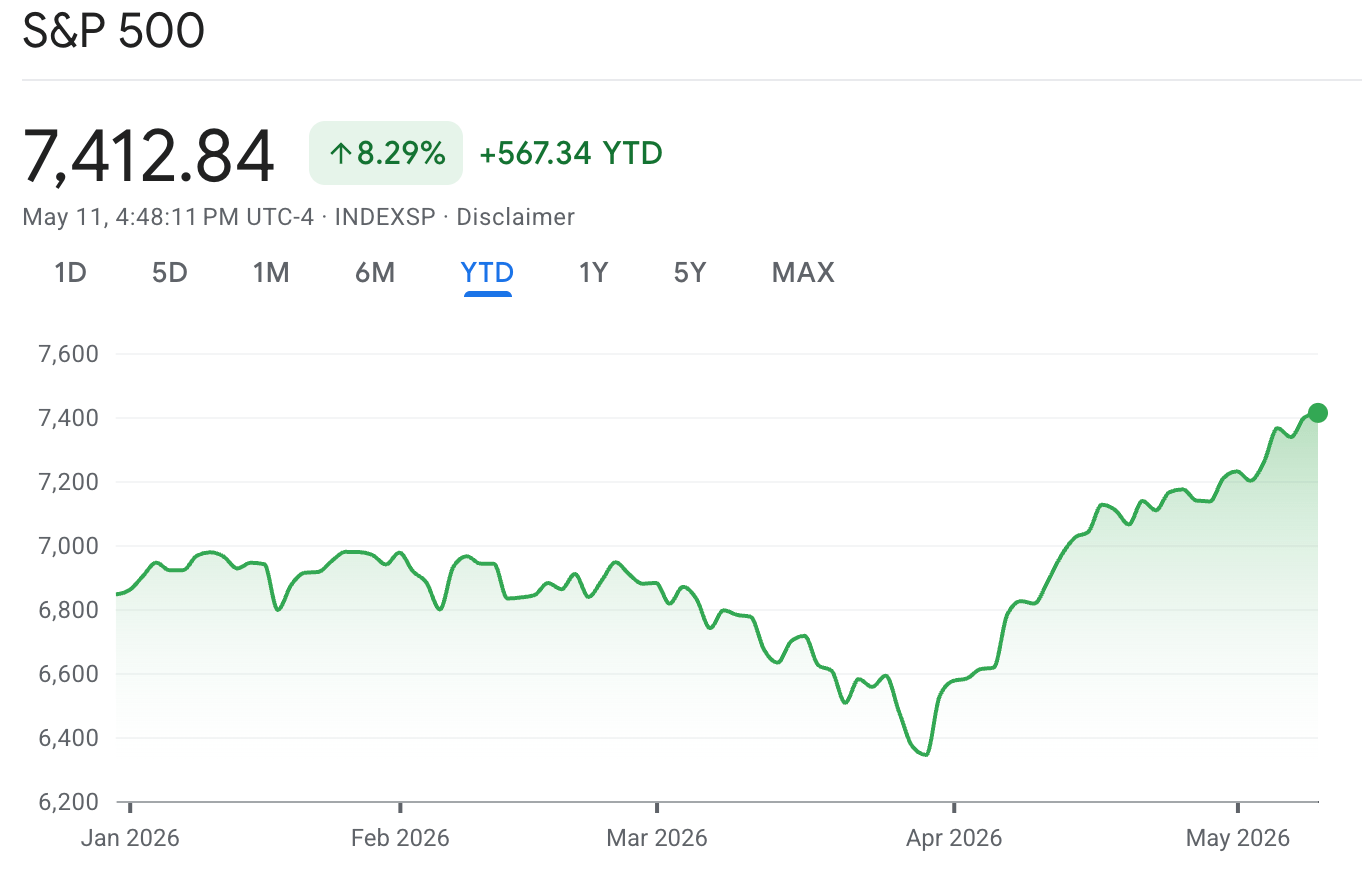
- S&P 500 futures were down 0.36% this morning. The index rose 0.19% yesterday to a new record high of 7,412.84.
- In Europe, the Stoxx 600 was down 0.77% in early trading and the U.K.’s FTSE 100 was down 0.54% before lunch.
- Asia: South Korea’s KOSPI lost 2.29%. Japan’s Nikkei 225 was up 0.52%. India’s Nifty 50 declined 1.92%. China’s CSI 300 was flat.
- Brent crude was $107 a barrel this morning, up from a low of $102 yesterday.
- Bitcoin was $80.9K.
Why does the S&P 500 keep hitting new highs even though the world is at war and oil is above $100 per barrel? To misquote former U.K. Prime Minister Harold Macmillan, “Results, dear boy, results.” The index has delivered a blockbuster set of Q1 earnings. With 86% of companies reporting, “64% of companies beat both EPS and sales expectations, nearly 20 percentage points ahead of the historical average of 42% since 2001,” according to Savita Subramanian of Bank of America. The “1Q26 earnings season has blown past expectations,” she said in a note.
It was the sixth straight quarter in which the index had delivered EPS gains of 5% or more, according to Ohsung Kwon and his colleagues at Wells Fargo.
ONE BIG THING
U.K.’s Starmer clings on despite rebellion aimed at forcing him out
In a fast-moving situation that is changing by the minute, U.K. Prime Minister Keir Starmer this morning said he would face down a rebellion from his own members of parliament and stay on in No.10 Downing Street. More than 70 of his Labour Party MPs have demanded he leave office, after their party lost nearly 1,500 seats in local elections last week. However, the party’s rules require 20% of the parliamentary party—81 MPs—to demand his resignation before a leadership election can be forced.
“The Labour Party has a process for challenging a leader and that has not been triggered,” Starmer said this morning. “The country expects us to get on with governing. That is what I am doing and what we must do as a cabinet.”
The number of MPs moving against Starmer has been changing by the minute and it is possible that Starmer may be forced out as soon as today. Alternatively, he may stay on in a grueling civil war within his own party.
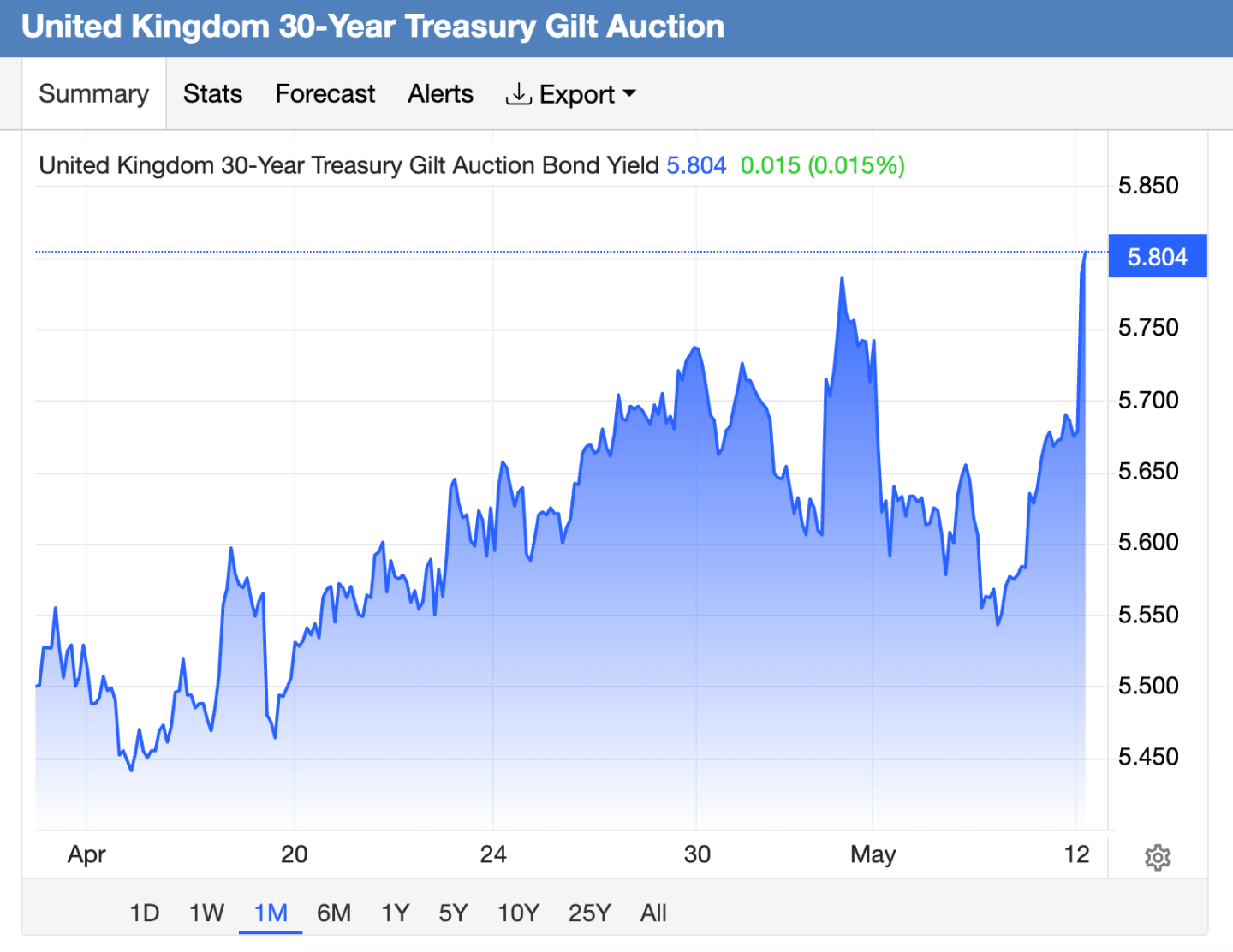
Investors sold U.K. government bonds. The yield on the 30-year “gilt” bond spiked up to over 5.8% on Tuesday, from 5.54% on May 8—a relatively sharp rise in the risk premium. The yield is now the highest it has been for more than 10 years. The pound fell against the dollar, too.
THE ECONOMY
The Fed is “meaningfully deviating from the most standard policy rule,” Bank of America warns
We will get a new readout of U.S. consumer price inflation at 8:30 a.m. New York time today and analysts are guessing the number will be something like 3.7%, up from 3.3% the month before. Crucially, that would place inflation above the Fed’s current base interest rate, 3.5%.
On that basis, Wall Street is waking up to the fact that it is looking less likely that President Trump will get the interest rate cuts he wants from the Fed.
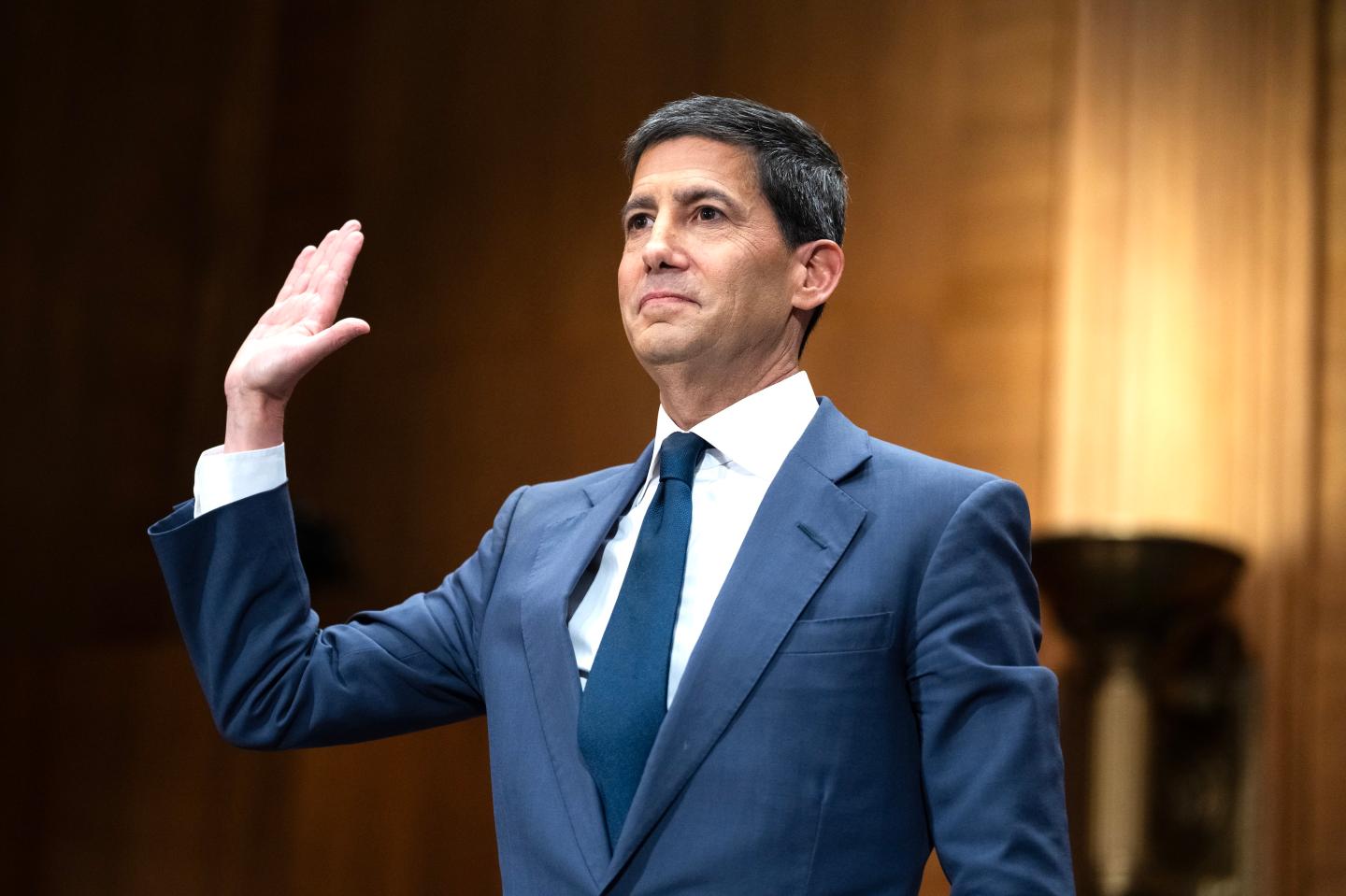
Jerome Powell’s last day as chairman is on Friday, and he will give way to Kevin Warsh. While Warsh hasn’t literally promised a rate cut to Trump, he kinda-sorta didn’t not promise one either. Warsh’s problem is that the data just isn’t shaping up in a way that warrants a cut. Quite the opposite.
Yesterday, the Fed Funds Futures market was pricing a “hold” as a 95.8% probability. If the CPI number comes in hot, expect that to change quickly toward a hike.
Some Wall Street analysts are arguing that a hike is increasingly likely, given that unemployment is modest. Mark Cabana and his team at Bank of America note that the Fed is in danger of ignoring an Economics 101 guideline for fighting inflation: The Taylor rule. This rule states that when inflation is higher than the target rate (which is 2%), the Fed interest rate should be higher still, and moving upward faster than inflation.
But right now, the Fed is behind where Taylor says it needs to be. The “Fed is choosing to look through tariff and commodity inflation, expecting both will roll off by late '26. Even if they do fall, standard Taylor still implies a [Fed funds] target of 4.0% at the end of '26. Fed is meaningfully deviating from the most standard policy rule,” Cabana says.
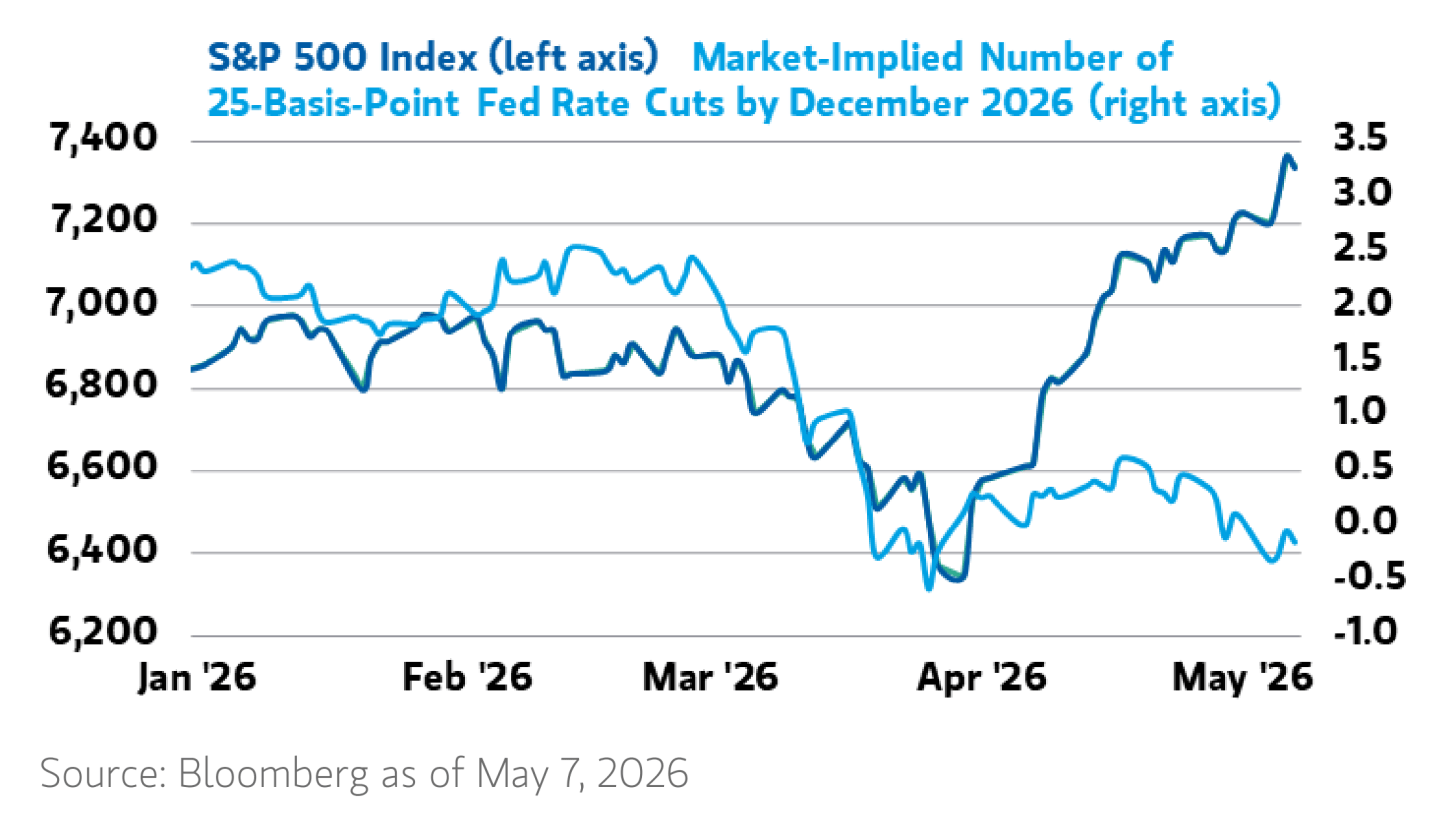
At Morgan Stanley, Lisa Shalett’s team observes that the S&P and future rate-cut expectations tend to be correlated. The higher stocks go, the more cuts the markets expect the Fed to deliver. But that relationship has recently broken down. “We are not convinced that this disconnect can persist for long,” they said in a note to clients.
And even if Warsh doesn’t hike, he won’t cut either, per Goldman Sachs’ David Mericle. Mericle thinks the Fed will stay on hold until the war is over: “We are pushing back the final two 25bp Fed rate cuts in our forecast by one quarter to December 2026 and March 2027,” he said in a note yesterday.
THE WAR
Iran vows economic pain for the U.S. as Trump considers new missile strikes
President Trump is considering a return to more military action against Iran after he rejected Tehran’s most recent proposal to end the war as “garbage.” Two U.S. officials told Axios that Trump was leaning toward more bombing, rather than forcing open the Strait of Hormuz. "He will tune them up a bit," one anonymous source said. "I think we all know where this is going," the other told Axios.
Iran’s parliamentary speaker, Mohammad Bagher Ghalibaf, promised on X to cause economic pain for American taxpayers if Iran’s rights aren’t respected. “There is no alternative but to accept the rights of the Iranian people as laid out in the 14-point proposal. Any other approach will be completely inconclusive; nothing but one failure after another. The longer they drag their feet, the more American taxpayers will pay for it,” he said.
The two sides are stuck in a stalemate, according to the Wall Street Journal. Iran is increasingly confident that it can both withstand further bombing and keep the Strait of Hormuz closed. The U.S. is successfully enforcing its side of the blockade, but only a handful of ships have left the Gulf since “Project Freedom” began.
- A second wave of Iran energy shocks is about to hit Asia and the wider world. Why aren’t markets reacting? - Angelica Ang
- Japanese snack maker Calbee's packages go black and white amid Iran war ink crunch - Nikkei
MORE FROM FORTUNE
Exclusive: White Circle raises $11 million to stop AI models from going rogue in the workplace - Beatrice Nolan
U.S. hotels are calling the World Cup a ‘non-event’ and 80% warn bookings are falling short of expectations, report finds - Sasha Rogelberg
Jensen Huang’s message to electricians and plumbers: ‘This is your time,’ as AI buildout leads to soaring demand for skilled trades - Tristan Bove
Trump Mobile quietly rewrote its fine print to say the gold Trump phone may never be made, a year after taking $100 deposits - Marco Quiroz-Gutierrez
CHART OF THE DAY
The 20-year housing hangover behind Starmer's woes
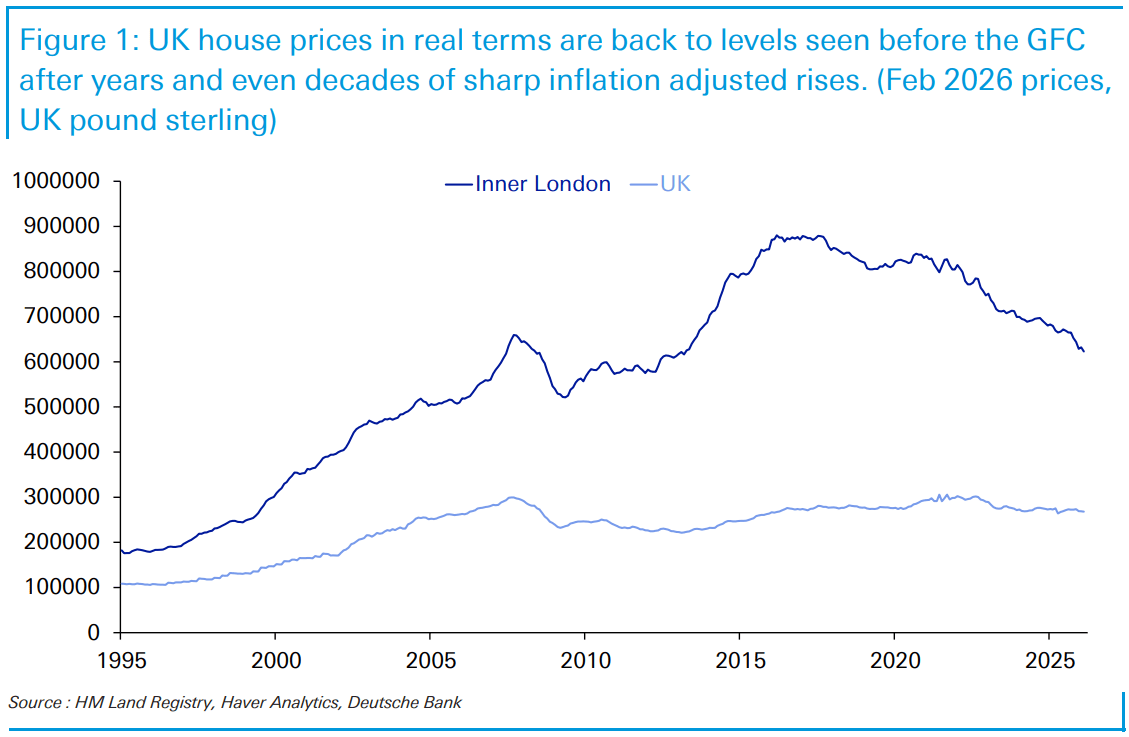
Why are the British so unhappy with Keir Starmer’s government? This chart from Deutsche Bank posits a theory: In the post-Great Financial Crisis period, a huge amount of British wealth was gained via real estate. “For years, if not decades, house price growth significantly outstripped inflation, creating wealth, confidence, and high consumer spending,” Jim Reid at Deutsche Bank said in a note. But “real house prices are now generally back to levels seen before the GFC, a 20-year period of going nowhere. If an economy that prospered with ever higher property prices suddenly hits a brick wall, it’s likely to have economic and political implications.”
NUMBER OF THE DAY
118,000
The number of tech jobs eliminated globally in 2026 so far, according to data compiled by TradingPlatforms. “If the pace continues, total layoffs in the technology sector could exceed 340,000 by December—significantly more than in 2025,” the company says. As Fortune has noted previously, it does look as if AI is eating jobs in tech.
THE FRONT PAGES TODAY
Trump invites Elon Musk, Tim Cook, Larry Fink and other CEOs to join China trip for Xi summit - CNBC
Trump and Rubio's escalating rhetoric show a Cuba invasion could be imminent - Axios
JPMorgan and the delicate art of paying off employees - WSJ
China earns $500 million an hour from exports supercharged by AI - Bloomberg
China increasingly views Trump’s America as an empire in decline - NYT
Soccer fans warned of 36% spike in ticket fraud ahead of World Cup 2026: ‘Incredibly convincing’ - NY Post
ONE MORE THING
Your office ping-pong competition is nothing compared to this
Last month, nearly 300 Montage International employees packed into the ballroom of the company’s Deer Valley, Utah, hotel, dressed in their Wimbledon-inspired best. After grabbing strawberries and cream, they filed into stadium seats, eyes fixed on a ping-pong table where former Olympians served as referees for the company’s biennial Compass Cup tournament. Many of the luxury hotel company’s 7,000 employees had played their way through local brackets before the top players were flown to Deer Valley for the finals, Fortune’s Kristin Stoller reports.
Why is the company going to such lengths for what is, basically, a fancy internal table tennis tournament? Jason Herthel, Montage International’s president and COO, said it bonds employees to the company: Hospitality turnover can hover around 70%; at Montage, it’s closer to 25%, he said.