• Home
  • Latest
  • Fortune 500
  • Finance
  • Tech
  • Leadership
  • Lifestyle
  • Rankings
  • Multimedia

Trendingnow

1

'Dr. Doom' Nouriel Roubini says we're headed for universal basic income or 'some form of socialism' as AI revolutionizes work—He calls that optimistic

2

Power companies are using eminent domain to seize land for data centers as 70% of Americans say not in my backyard

3

Red Lobster’s 37-year-old CEO waited tables before joining the C-suite—he says it was a crash course in managing ‘difficult people and situations’

1

'Dr. Doom' Nouriel Roubini says we're headed for universal basic income or 'some form of socialism' as AI revolutionizes work—He calls that optimistic

2

Power companies are using eminent domain to seize land for data centers as 70% of Americans say not in my backyard

3

Red Lobster’s 37-year-old CEO waited tables before joining the C-suite—he says it was a crash course in managing ‘difficult people and situations’
EnvironmentWeather and forecasting

A rare ‘super’ El Niño is looking more likely. Here’s what to expect

By
Brian K. Sullivan
Brian K. Sullivan
and
Bloomberg
Bloomberg
Down Arrow Button Icon
By
Brian K. Sullivan
Brian K. Sullivan
and
Bloomberg
Bloomberg
Down Arrow Button Icon
May 31, 2026, 4:49 PM ET
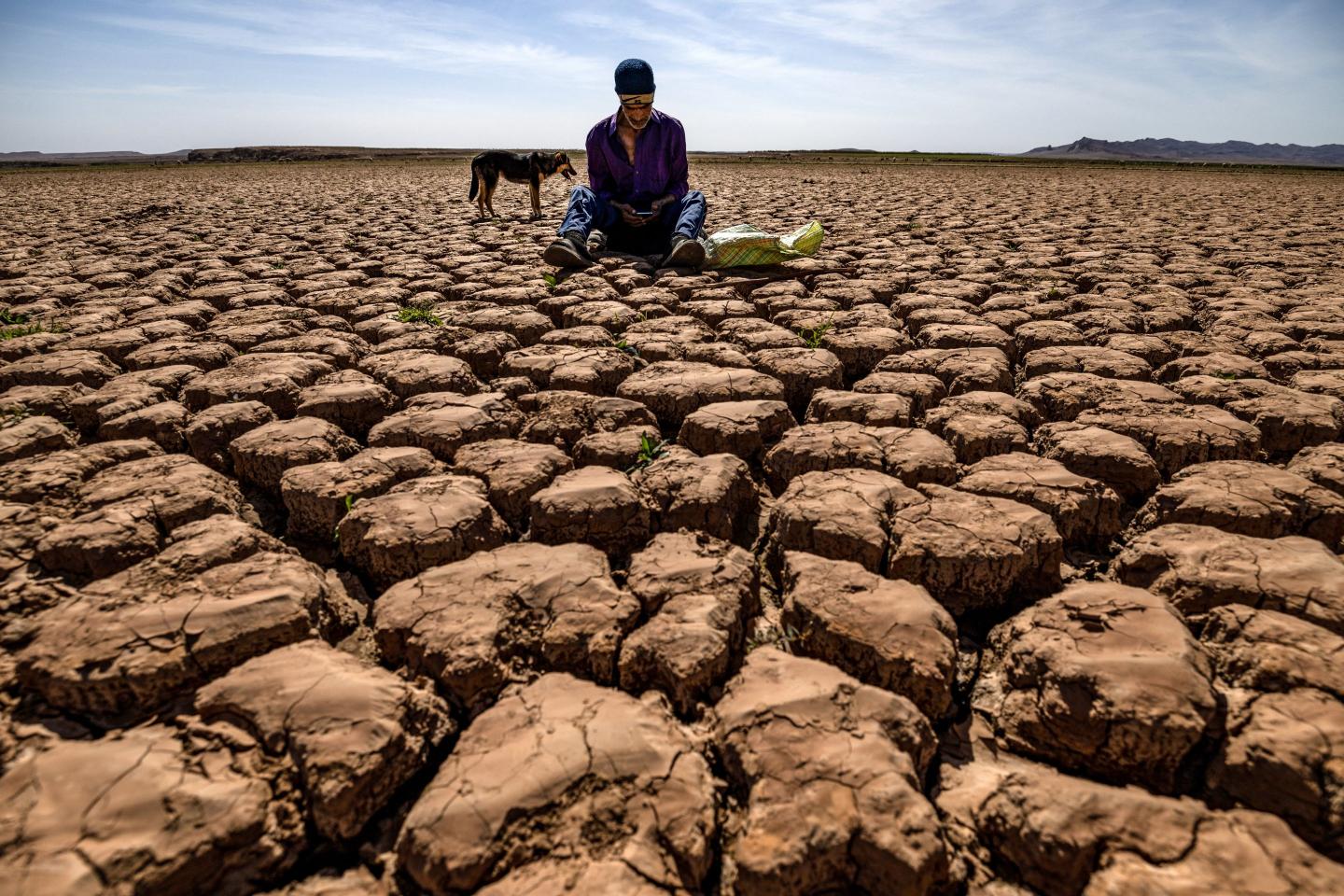
A shepherd checks his mobile phones sitting on cracked earth at al-Massira dam in Ouled Essi Masseoud village, some 140 kilometres (85 miles) south of Casablanca, on March 6, 2024.
A shepherd checks his mobile phones sitting on cracked earth at al-Massira dam in Ouled Essi Masseoud village, some 140 kilometres (85 miles) south of Casablanca, on March 6, 2024. FADEL SENNA/AFP via Getty Images
Add Fortune on Google for similar content.

A cyclical weather phenomenon that can drive flooding in one continent and drought in another looks increasingly likely to emerge this year.

Recommended Video

El Niño occurs when the atmosphere reacts to a sustained warming of Pacific Ocean surface temperatures above normal levels. The water has been rapidly heating up in recent months, and the odds of El Niño forming by the end of July have climbed to 82%, according to the US Climate Prediction Center.

The looming El Niño could be particularly powerful. There’s a 67% chance it may evolve into a strong or very strong event — what’s informally known as a “Super El Niño” — heading into 2027.

While El Niño originates in the Pacific, its impact stretches across continents, rippling through crop and energy markets. Its return would come at a tricky time for the global economy, which is already contending with an energy crunch, fertilizer shortages and inflationary pressures due to the war in the Middle East.

What is El Niño? 

El Niño was first observed in the 1600s by Peruvian fishermen, who noticed that Pacific waters were unusually warm around Christmas time in some years. They named this naturally occurring phenomenon “El Niño de Navidad” in reference to the Christ Child.

During El Niño, trade winds that normally blow east-to-west and push warm Pacific water toward Asia begin to weaken or even reverse direction. It’s unclear what triggers this shift, but it results in warm water drifting toward the Americas, heating large parts of the central and eastern Pacific Ocean. The extra warmth changes the atmosphere above the sea. Storm tracks shift and rainfall patterns move.

How often does El Niño occur? 

There’s no fixed timetable for when El Niño emerges. It typically appears every two to seven years and varies in strength and duration. The last event was in 2023-2024.

El Niño is part of a larger Pacific climate cycle known as the El Niño-Southern Oscillation, or ENSO. The cycle swings between El Niño, its cooler counterpart La Niña and a neutral phase in between. During La Niña, the east-to-west trade winds become stronger, pushing warm water further west and resulting in a cooler-than-usual eastern Pacific.

The immense size of the Pacific Ocean, which covers around a third of the planet’s surface, gives ENSO an outsized influence on global weather. While similar climate patterns exist in the Atlantic and Indian oceans, they don’t have the same reach. El Niño and La Niña events usually peak between December and January, although their effects can linger for months.

What is a “Super El Niño”?

El Niño is identified by monitoring the temperature levels in the Pacific Ocean, most commonly in a region known as Niño 3.4. The threshold for El Niño used by the US National Oceanic and Atmospheric Administration (NOAA), is when the sea surface temperature exceeds the long-term average by at least 0.5C (0.9F) for five consecutive overlapping three-month periods. For a strong El Niño, the temperature difference must be at least 1.5C; for a very strong El Niño it must reach at least 2C.

“Super El Niño” isn’t an official term used by forecasters such as NOAA and the World Meteorological Organization. It’s been popularized this year as a very strong El Niño looks to be on the cards. 

Very strong El Niños are rare. There have only been around a handful since 1950 and the last one was in 2015-2016. Severe weather events are more likely to occur when there’s a stronger El Niño, but they’re not guaranteed.

How is the weather affected by El Niño?

The heat that El Niño slowly releases from the Pacific Ocean into the atmosphere often pushes global temperatures to new highs. Scientists expect 2027 to be one of the hottest years on record, potentially dethroning 2024, which came in 1.5C above the pre-industrial average, according to NOAA.

El Niño doesn’t hit every region in the same way. The effects typically materialize in the tropics first, before spreading across Australia, Asia, the Americas and Africa.

Australia, southeast Asia, the northern US and Canada usually become hotter and drier, making them more prone to drought and wildfires. India can experience disruptions to monsoon rainfall. The southern US, Chile, Argentina and parts of East Africa frequently experience wetter conditions and a greater risk of flooding.

The Atlantic hurricane season often becomes quieter during El Niño years because increased wind shear — a sudden change in wind speed or direction — tears apart developing storms. The hurricanes that do form could still be highly destructive, but a lower frequency could reduce the harm to communities and infrastructure and limit disruption to oil and gas assets in the Gulf of Mexico.

There are usually around 14 named Atlantic storms from June through November — storms are given names when their wind speeds reach 39 miles (63 kilometers) per hour. NOAA expects there to be only eight to 14 this time around, in part due to El Niño. 

By contrast, typhoon activity across the Pacific tends to increase during El Niño years. The warmer water provides more fuel for these tropical storms, meaning Asia could face increased risk of typhoon damage.

Why do the changes from El Niño matter?

El Niño is one of the world’s most closely watched climate signals because it offers clues about storms, drought risk, crop yields and energy demand months in advance.

Utilities use ENSO forecasts to gauge demand for heating and cooling. Higher temperatures boost electricity consumption for air conditioning. This can strain power grids and trigger blackouts. Less rainfall reduces output from hydroelectric dams.

Commodity traders watch for threats to crops, mining operations, oil and gas production and shipping routes. Drought can lower water levels in the Panama Canal, which connects the Atlantic and Pacific oceans, slowing cargo traffic through one of the world’s busiest shipping bottlenecks.

El Niño can have both positive and negative effects but the global economic losses have historically outweighed the regional benefits. Scientists at Dartmouth College looked at the lingering five-year fallout from El Niños and estimated that the 1997-1998 event led to $5.7 trillion in lost gross domestic product globally.

How does El Niño affect food production?

Some crops benefit from El Niño. Higher rainfall in California, for example, is good for avocado and almond yields. However, many staples, including rice, wheat, palm oil, coffee and sugar, are produced in areas likely to face drier and hotter conditions. 

Beyond the impact on land, El Niño can disrupt ocean fisheries. The warm Pacific water flowing eastward keeps a lid on cooler, nutrient-rich water ascending to the sea surface, resulting in fewer phytoplankton for fish to eat. Some fish, such as anchovies off the coast of Peru, may seek cooler, deeper water, making them harder to catch, while tropical species may venture to areas that are normally too cold.

Lower crop harvests, smaller fishing hauls and livestock casualties from extreme weather can threaten global food security and push up prices.

Is climate change affecting El Niño?

Scientists are still debating how climate change may influence the frequency and intensity of El Niño. Earlier models predicted that the natural phenomenon might become more common as the planet warmed. Yet much of the 21st century has instead been dominated by La Niña conditions, underscoring how much scientists still don’t understand about the ENSO cycle.

There are also concerns about overestimating El Niños and underestimating La Niñas as the oceans get hotter, given that they’re typically determined by measuring anomalous warmth compared with preceding decades.

There is growing agreement that a hotter world can intensify many of El Niño’s impacts. Higher temperatures can worsen drought in already dry regions, while warmer air holds more moisture, which can make downpours heavier during storms.

Subscribe to Fortune Gulf Brief. Every Tuesday, this new newsletter delivers clear-eyed, authoritative intelligence on the deals, decisions, policies, and power shifts shaping one of the world’s most consequential regions, written for the people who need to act on it. Sign up here.
About the Authors
By Brian K. Sullivan
See full bioRight Arrow Button Icon
By Bloomberg
See full bioRight Arrow Button Icon
Add Fortune on Google for similar content.

Latest in Environment

Finance
Lorem ipsum dolor sit amet, consectetur adipiscing elit, sed do eiusmod tempor incididunt ut labore et dolore magna aliqua. Ut enim ad minim veniam
By Fortune Editors
October 20, 2025
Finance
Lorem ipsum dolor sit amet, consectetur adipiscing elit, sed do eiusmod tempor incididunt ut labore et dolore magna aliqua. Ut enim ad minim veniam
By Fortune Editors
October 20, 2025
Finance
Lorem ipsum dolor sit amet, consectetur adipiscing elit, sed do eiusmod tempor incididunt ut labore et dolore magna aliqua. Ut enim ad minim veniam
By Fortune Editors
October 20, 2025
Finance
Lorem ipsum dolor sit amet, consectetur adipiscing elit, sed do eiusmod tempor incididunt ut labore et dolore magna aliqua. Ut enim ad minim veniam
By Fortune Editors
October 20, 2025
Finance
Lorem ipsum dolor sit amet, consectetur adipiscing elit, sed do eiusmod tempor incididunt ut labore et dolore magna aliqua. Ut enim ad minim veniam
By Fortune Editors
October 20, 2025
Finance
Lorem ipsum dolor sit amet, consectetur adipiscing elit, sed do eiusmod tempor incididunt ut labore et dolore magna aliqua. Ut enim ad minim veniam
By Fortune Editors
October 20, 2025

Most Popular

Finance
Lorem ipsum dolor sit amet, consectetur adipiscing elit, sed do eiusmod tempor incididunt ut labore et dolore magna aliqua. Ut enim ad minim veniam
By Fortune Editors
October 20, 2025
Finance
Lorem ipsum dolor sit amet, consectetur adipiscing elit, sed do eiusmod tempor incididunt ut labore et dolore magna aliqua. Ut enim ad minim veniam
By Fortune Editors
October 20, 2025
Finance
Lorem ipsum dolor sit amet, consectetur adipiscing elit, sed do eiusmod tempor incididunt ut labore et dolore magna aliqua. Ut enim ad minim veniam
By Fortune Editors
October 20, 2025
Finance
Lorem ipsum dolor sit amet, consectetur adipiscing elit, sed do eiusmod tempor incididunt ut labore et dolore magna aliqua. Ut enim ad minim veniam
By Fortune Editors
October 20, 2025
Finance
Lorem ipsum dolor sit amet, consectetur adipiscing elit, sed do eiusmod tempor incididunt ut labore et dolore magna aliqua. Ut enim ad minim veniam
By Fortune Editors
October 20, 2025
Finance
Lorem ipsum dolor sit amet, consectetur adipiscing elit, sed do eiusmod tempor incididunt ut labore et dolore magna aliqua. Ut enim ad minim veniam
By Fortune Editors
October 20, 2025
Fortune Secondary Logo
Rankings
  • 100 Best Companies
  • Fortune 500
  • Global 500
  • Fortune 500 Europe
  • Most Powerful Women
  • World's Most Admired Companies
  • See All Rankings
  • Lists Calendar
Sections
  • Finance
  • Fortune Crypto
  • Features
  • Leadership
  • Health
  • Commentary
  • Success
  • Retail
  • Mpw
  • Tech
  • Lifestyle
  • CEO Initiative
  • Asia
  • Politics
  • Conferences
  • Europe
  • Newsletters
  • Personal Finance
  • Environment
  • Magazine
  • Education
Customer Support
  • Frequently Asked Questions
  • Customer Service Portal
  • Privacy Policy
  • Terms Of Use
  • Single Issues For Purchase
  • International Print
Commercial Services
  • Advertising
  • Fortune Brand Studio
  • Fortune Analytics
  • Fortune Conferences
  • Business Development
  • Group Subscriptions
About Us
  • About Us
  • Press Center
  • Work At Fortune
  • Terms And Conditions
  • Site Map
  • About Us
  • Press Center
  • Work At Fortune
  • Terms And Conditions
  • Site Map
  • Facebook icon
  • Twitter icon
  • LinkedIn icon
  • Instagram icon
  • Pinterest icon

Latest in Environment

Infantino’s 60,000-mile World Cup odyssey — the FIFA chief’s whopping private jet trips don’t even include the funeral in Qatar
Travel & LeisureAir Travel
Infantino’s 60,000-mile World Cup odyssey — the FIFA chief’s whopping private jet trips don’t even include the funeral in Qatar
By Rio Yamat and The Associated PressJuly 19, 2026
17 hours ago
phone
EnvironmentMarketing
Why Friday afternoon is the worst time to shop online — and marketers know the window when your guard is down
By Matthew Pittman and The ConversationJuly 19, 2026
22 hours ago
data
AIData centers
Power companies are using eminent domain to seize land for data centers as 70% of Americans say not in my backyard
By Aaron Walayat and The ConversationJuly 19, 2026
23 hours ago
heat
EnvironmentHeat
Europe’s lack of preparation for the brutal heat wave this year killed an extra 10,000 people, records show
By The Associated PressJuly 17, 2026
3 days ago
phila
Environmentclimate
‘We shouldn’t be playing the game’: athletes sound off as smoke chokes U.S. sports
By The Associated PressJuly 17, 2026
3 days ago
cars
EnvironmentAutos
Over 120 million car trips, study finds speeding only saved drivers 54 seconds on average
By Alexa St. John and The Associated PressJuly 16, 2026
4 days ago

Most Popular

'Dr. Doom' Nouriel Roubini says we're headed for universal basic income or 'some form of socialism' as AI revolutionizes work—He calls that optimistic
AI
'Dr. Doom' Nouriel Roubini says we're headed for universal basic income or 'some form of socialism' as AI revolutionizes work—He calls that optimistic
By Jason MaJuly 18, 2026
1 day ago
Power companies are using eminent domain to seize land for data centers as 70% of Americans say not in my backyard
AI
Power companies are using eminent domain to seize land for data centers as 70% of Americans say not in my backyard
By Aaron Walayat and The ConversationJuly 19, 2026
23 hours ago
Red Lobster’s 37-year-old CEO waited tables before joining the C-suite—he says it was a crash course in managing ‘difficult people and situations’
Success
Red Lobster’s 37-year-old CEO waited tables before joining the C-suite—he says it was a crash course in managing ‘difficult people and situations’
By Preston ForeJuly 19, 2026
1 day ago
Indeed chief economist: Aging Baby Boomers are America's real labor problem, not AI
Commentary
Indeed chief economist: Aging Baby Boomers are America's real labor problem, not AI
By Svenja GudellJuly 18, 2026
2 days ago
Iran just crossed Trump's red line for resuming all-out war as fighting continues to escalate with no end in sight
Middle East
Iran just crossed Trump's red line for resuming all-out war as fighting continues to escalate with no end in sight
By Jason MaJuly 18, 2026
1 day ago
A decade after the ‘Godfather of AI’ said radiologists were obsolete, their salaries are up to $571K and demand is growing fast
AI
A decade after the ‘Godfather of AI’ said radiologists were obsolete, their salaries are up to $571K and demand is growing fast
By Marco Quiroz-GutierrezJuly 19, 2026
18 hours ago

© 2026 Fortune Media IP Limited. All Rights Reserved. Use of this site constitutes acceptance of our Terms of Use and Privacy Policy | CA Notice at Collection and Privacy Notice | Do Not Sell/Share My Personal Information
FORTUNE is a trademark of Fortune Media IP Limited, registered in the U.S. and other countries. FORTUNE may receive compensation for some links to products and services on this website. Offers may be subject to change without notice.