
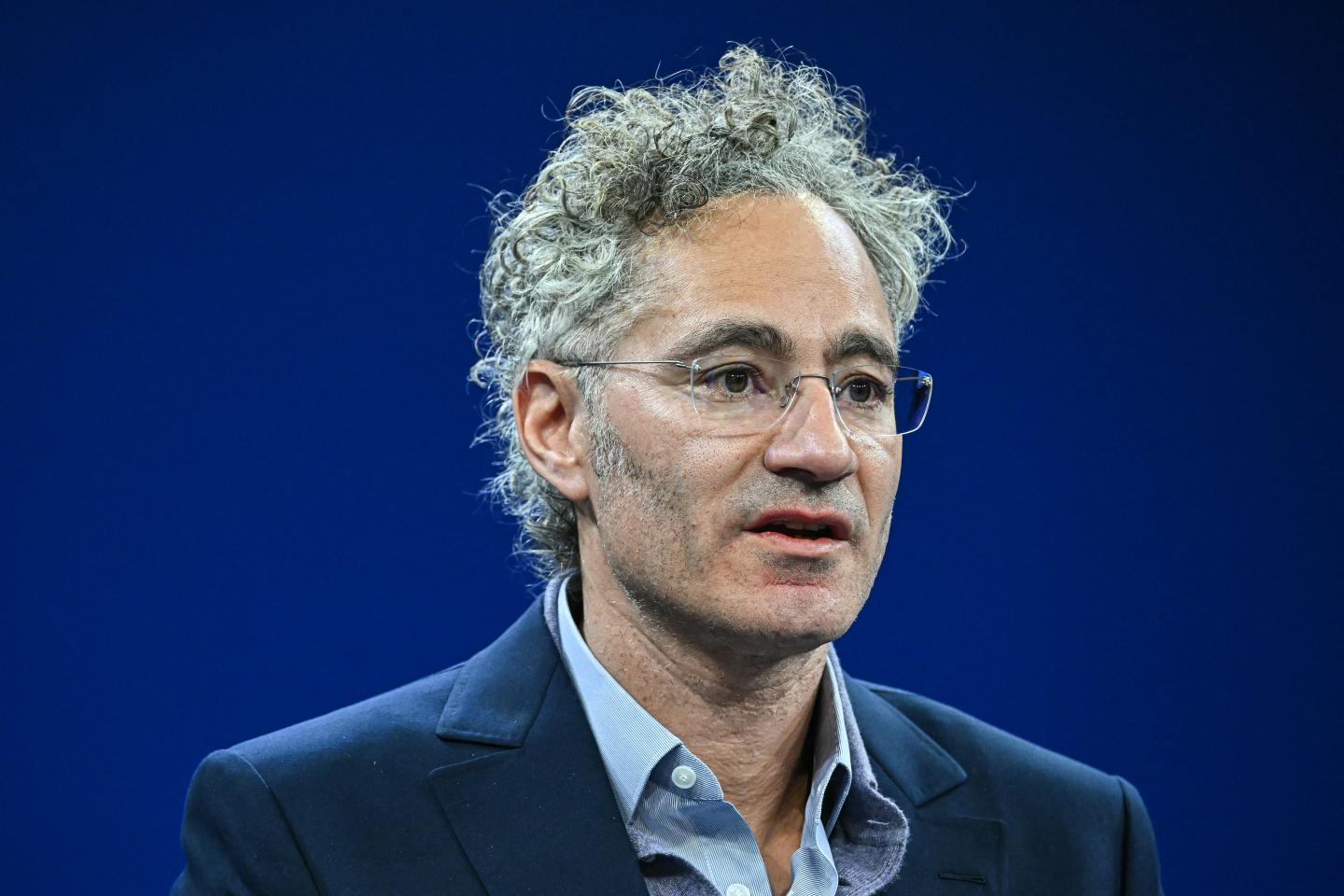
Good morning. Have you heard what Apoorva Mehta is up to?
The Instacart cofounder, 39, has launched Abundance, a hedge fund that he intends to run entirely using AI agents. (And I mean run: The agents will have final say.)
So far the AI is running with training wheels. Some stock-picking strategies have come solely from the machine, while others were developed with assistance from the fund’s 10-person team.
Will Abundance beat the market? As they say in the gym: No pain, no gain.
Today’s tech news below. —Andrew Nusca
P.S. Good stuff from colleague Nick Gordon about the push and pull from China that awaits incoming Apple CEO John Ternus.
Want to send thoughts or suggestions to Fortune Tech? Drop a line here.
Palantir staff question company’s commitment to civil liberties
There’s little doubt that Americans are questioning the White House in the wake of its use of force at home and abroad.
Half of Americans say Trump’s immigration actions are too aggressive, per a recent Politico poll, and just two in five Americans support the Trump administration's strikes on Iran, according to a new Reuters/Ipsos poll.
But what about the employees of the tech firms working with the federal government? Surely they’re more on board than the average American, right?
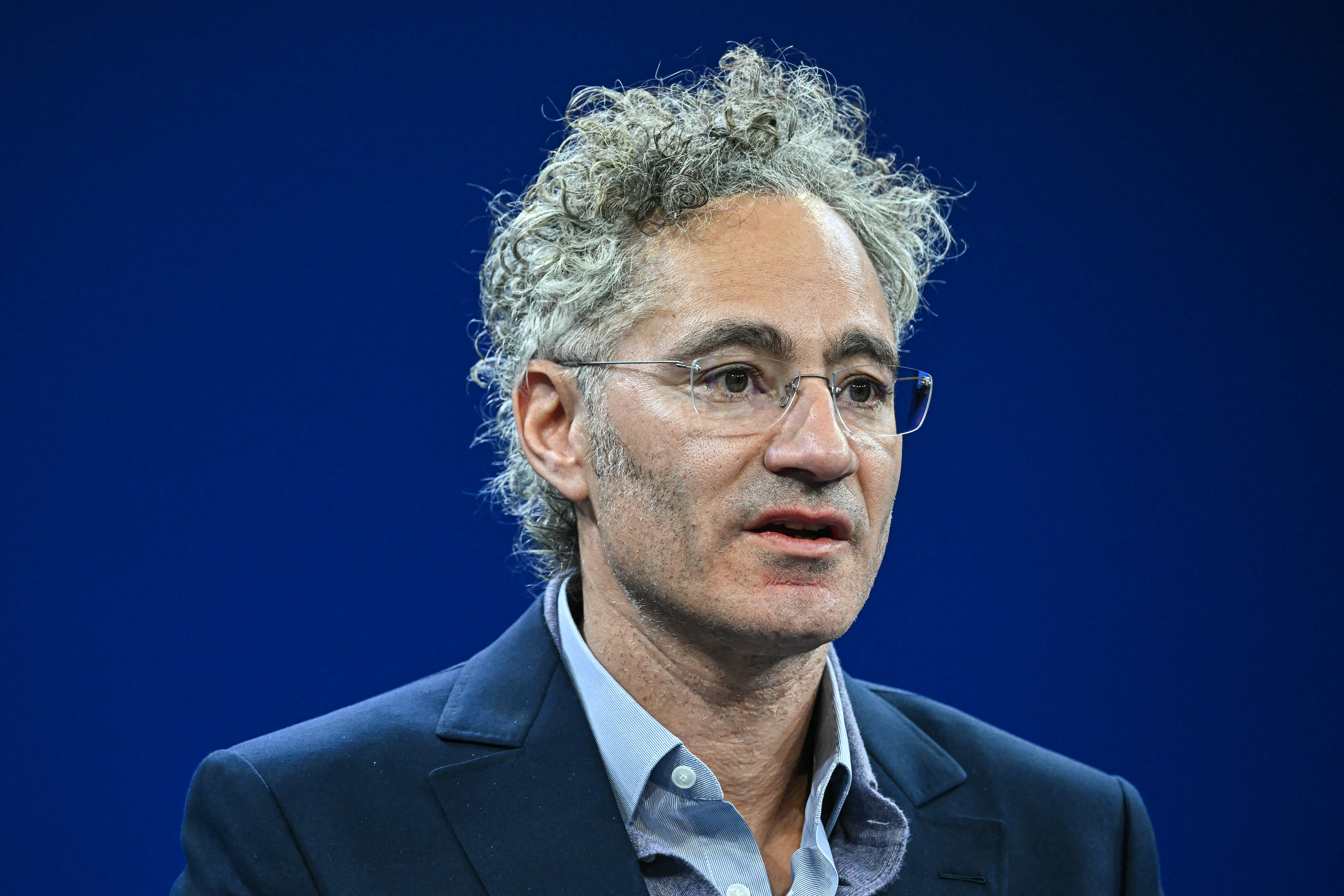
Wrong, according to a new Wired report about Alex Karp-led Palantir. As the company touts its support of U.S. forces across the political spectrum, internal communications reportedly reveal a widening divide as Palantir—which sells data analytics tools—embraces an administration that has taken an aggressive stance on, well, everything.
“We need an understanding of our involvement here,” one employee reportedly wrote on Slack after federal immigration agents shot and killed Minneapolis nurse Alex Pretti.
“Were we involved, and are doing anything to stop a repeat if we were?” another employee reportedly asked in the wake of the Feb. 28 missile strike on an Iranian elementary school.
Palantir staffers told Wired that the secretive company—which has consistently welcomed criticism from within—has lately met feedback in internal channels with “philosophical soliloquies and redirection” as CEO Karp promotes his book calling for a reinstatement of the draft, among other things.
“We were supposed to be the ones who were preventing a lot of these abuses,” a former employee told the publication, adding: “We seem to be enabling them.” —AN
Engineer receives 10 years in prison for stealing TSMC data
A court in Taiwan is sending several people to jail in a high-profile trade secrets case involving TSMC, the world’s largest contract chip manufacturer, and an equipment supplier, Japan’s Tokyo Electron.
Five people—former TSMC and Tokyo Electron engineer Chen Li-ming, three former TSMC employees, and one former Tokyo Electron employee—received prison sentences of up to 10 years.
The domestic arm of Tokyo Electron was also fined $5 million.
In August 2025, Chen was charged with unlawfully obtaining trade secrets in an attempt to help Tokyo Electron win more business from TSMC.
Those trade secrets pertained to TSMC’s 2-nanometer chip production process, which that company describes as “the most advanced technology in the semiconductor industry in terms of both density and energy efficiency.”
Taiwan’s National Security Act was amended in 2022 to include specific protections for “national core technologies” in an attempt to curtail the loss of intellectual property to foreign countries including China.
The TSMC-TEL lawsuit is the first brought under the reinforced law. —AN
ASML scrambles to meet AI chip demand
Speaking of computer chips: Have you heard of the Dutch chip equipment maker ASML?
Not exactly a household name, I’ll grant you that. But if it’s a smart idea to watch the chipmakers who supply the leading AI companies to better understand what’s going on in the AI market, it’s an even smarter idea to watch the equipment manufacturers who supply the AI chipmakers.
ASML takes a turn in the pages of the Wall Street Journal as it scrambles to meet—what else?—”an industrywide surge in demand.”
The company enjoys a near-monopoly on its complicated machines, called Extreme Ultraviolet (EUV) lithography systems and used for the highest density (7nm and below) chips. They’re not to be confused with Deep Ultraviolet (DUV) systems, which are used for lower resolution, higher volume chips (e.g. automotive and Internet of Things).
That means there’s a great deal of pressure for ASML to keep up with contract chip giant TSMC as it meets AI infrastructure spending commitments from Amazon, Google, Meta, and Microsoft.
So far, ASML believes it can meet customer demand. It will manufacture “at least 60” of its EUV machines this year, an uptick from the 48 it sold in 2025, and “at least 80” in 2027, according to the Journal.
But it won’t be easy. “ASML’s high-end lithography machines are roughly the size of a school bus and are among the most complex devices humans have ever created,” the Journal writes, adding: “The machines take months to assemble and are built using components from hundreds of different suppliers.” Ah, well. —AN
More tech
—OpenAI’s new principles include a pledge to “resist the potential of this technology to consolidate power in the hands of the few.”
—Gadgets everyone’s obsessing about: Tin Can’s landline-inspired Wi-Fi phone.
—An amateur using AI solved a 60-year-old math problem. Significance? Unclear.
—Google controls 25% of global AI compute, Epoch AI estimates.
—A new tech unicorn: Japan’s Genki Robotics, which focuses on the humanoid variety.
—Podcaster Dwarkesh Patel: “A mix of rationalist clarity, libertarian inclination, and a rosy outlook on the technological future.”
—Meet Andon Market, the first retail boutique run by an AI agent.