
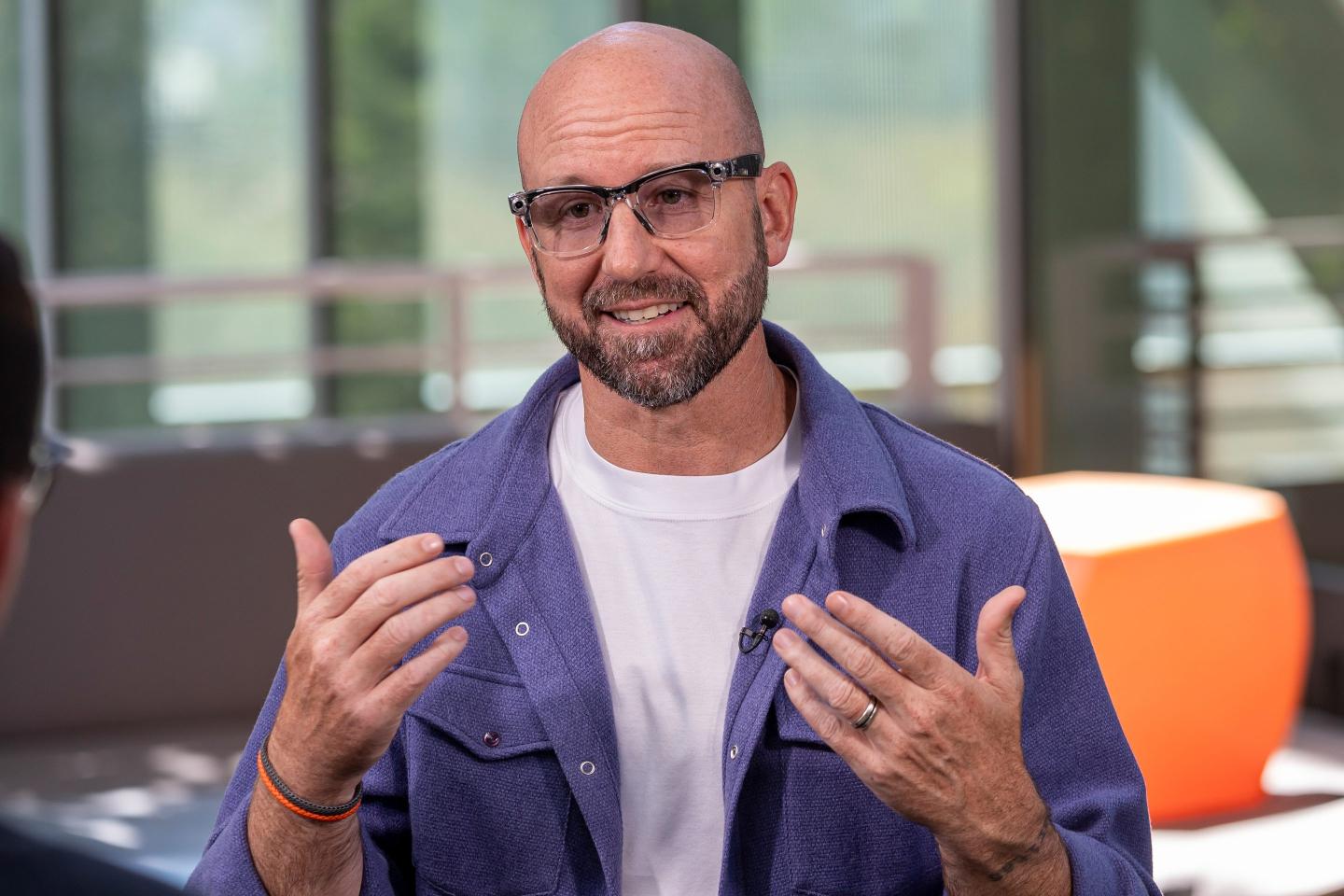
CEOs and workers alike struggle with intense pressure from unmanageable workloads, mounting job responsibilities, and lofty business expectations. However, Meta’s chief technology officer, Andrew Bosworth, is good at keeping his cool amid the heat in leading the $1.69 trillion business; if anything, stress is a helpful cue rather than a debilitating feeling.
“I don’t feel stressed out that often,” Bosworth recently said during an “ask me anything” session he hosted on his Instagram. “It happens to me four or five times a year.”
Upon identifying the source of his stress, the Meta exec narrows in on his “trigger”: feeling too busy on the job when there are bigger-picture issues he needs to focus on. Whenever the tasks ramp up and his schedule is stretched thin, he worries that he won’t have ample time to do the “important work.” In that way, the executive’s spiked cortisol acts as a tip-off that he should hit the reset button.
“When I start to experience the stress, that’s a useful signal for me,” Bosworth explained. “What is the important work that, if you dedicated the time to it, you would be okay? And how do we reprioritize the urgent stuff that’s being noisy?”
The Meta CTO said he mitigates his stress by working out, doing deep breathing exercises, and spending more time with his wife and kids. And he’s not the only one coping with pressures of the corner office.
How business executives cope with the stress of the job
Stress comes with the territory of being an executive, so leaders have developed their own routines to handle the intensity of the job.
Four Seasons Hotels and Resorts CEO Alejandro Reynal makes fitness a priority in handling the pressure of leading the billion-dollar luxury hotel chain. He jump-starts his days with an early morning workout, and combats burnout by taking time to find calm before the office grind.
“Routine helps me stay grounded: I start my mornings early, exercise or run on the beach, have breakfast with my family, and take a few quiet moments before the day begins,” Reynal told the Harvard Business Review last year. “Most stress fades when you reconnect with purpose—and remember that what we do is about people, not pressure.”
Meanwhile Ivan Espinosa, CEO of $8.25 billion Japanese car giant Nissan, decompresses from the job by jamming out with his band and hitting the tennis courts each weekend. Reconnecting to himself through music and exercise helps settle his nerves.
“How do I manage stress? Well, I try to continue being myself,” Espinosa said in a recent interview with the Wall Street Journal.
“So I like to play tennis on the weekends. If I can’t, I play golf. And I also am a musician,” he continued. “I like to play the drums, so I have a band; every now and then we get together, and we play for a while. This helps me [stay] real and … true to myself.”
Amazon founder Jeff Bezos manages strain in a completely different way: by confronting his anxieties head-on. The entrepreneur worth $274 billion wards off stress by getting the hard part out of the way—whether it requires sending an email, or picking up the phone to smooth things out.
“Stress primarily comes from not taking action over something that you can have some control over,” Bezos told the Academy of Achievement in 2001. “I find as soon as I identify it, and make the first phone call, or send off the first email message, or whatever it is that we’re going to do to start to address that situation—even if it’s not solved—the mere fact that we’re addressing it dramatically reduces any stress that might come from it.”