• Home
  • Latest
  • Fortune 500
  • Finance
  • Tech
  • Leadership
  • Lifestyle
  • Rankings
  • Multimedia
CommentaryManufacturing

Tariffs alone won’t save American manufacturing — here’s what actually will

By
Johan "Kip" Eideberg
Down Arrow Button Icon
By
Johan "Kip" Eideberg
Down Arrow Button Icon
April 18, 2026, 5:00 AM ET

Johan "Kip" Eideberg is Senior Vice President, Government & Industry Relations at Association of Equipment Manufacturers.

trump
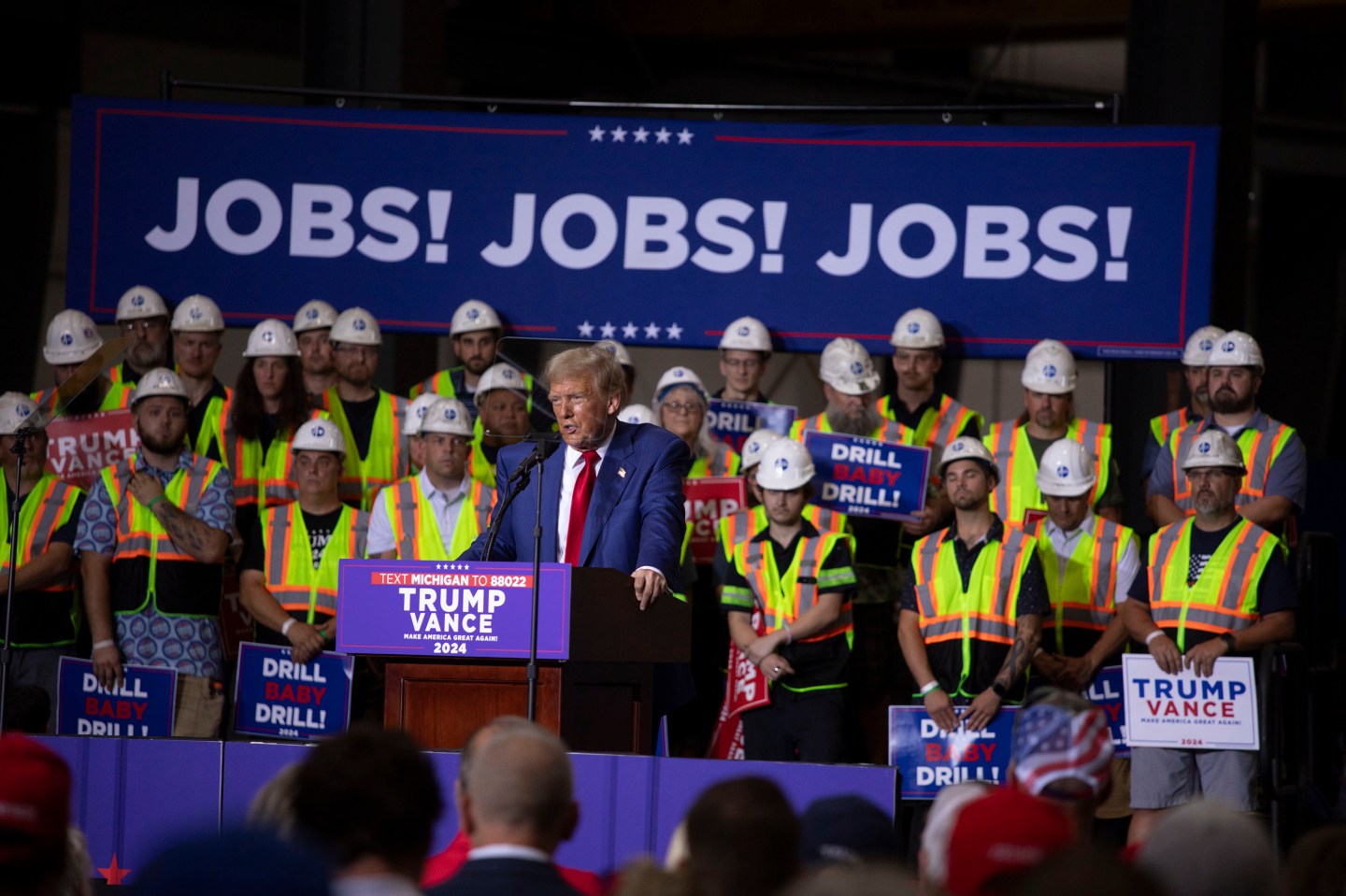
Donald Trump speaks about the economy, inflation, and manufacturing during a campaign event at Alro Steel on August 29, 2024 in Potterville, Michigan. Bill Pugliano/Getty Images

As this year’s State of the Union made clear, President Trump places manufacturing — and tariffs — at the center of his economic agenda. Even with the Supreme Court striking down the IEEPA tariffs, other tariffs, including Section 232 tariffs on steel and aluminum, are here to stay. In fact, last week the United States Trade Representative announced the initiation of its first investigation under Section 301 of the Trade Act of 1974 with the stated aim of replacing the IEEPA tariff regime.

Recommended Video

President Trump’s goal of ushering in the greatest manufacturing era in American history remains intact, but the fatal flaw of the administration’s current tariff strategy is that it is making it more expensive to manufacture in America.

Trump allies, including Oren Cass at American Compass, argue that tariffs and reshoring are essential to securing supply chains and rebuilding America’s manufacturing base. Cass recently told the Financial Times that tariffs are strategic levers to restore industrial capacity. Michael Lind, in his essay “So What If Tariffs Are Taxes?”, portrays tariffs as a public good that can reassert national control over markets. Robert Lighthizer, Trump’s former trade representative, defends tariffs as central to safeguarding U.S. manufacturing. These arguments carry populist appeal, but they falter when confronted with the economics of manufacturing and the realities of global supply chains.

Cass and Lind suggest that reshoring can be accomplished swiftly. But the equipment manufacturing industry, which I advocate on behalf of, demonstrates otherwise. Supply chains are vast, intricate, and global. Companies operate on multi-year investment cycles, and suppliers cannot be uprooted overnight. Attempting to force rapid reshoring risks bottlenecks, shortages, and inefficiencies that weaken U.S. equipment manufacturers rather than strengthen them. The Trump administration has wisely provided glide paths for industries facing regulatory changes; reshoring requires similar patience, not blunt instruments.

Tariffs, meanwhile, raise the cost of U.S. manufacturing. Steel and aluminum tariffs, along with levies on derivative components, have already inflated input costs for American equipment manufacturers. The United States is already the highest-cost producer of heavy equipment globally, and additional tariffs only exacerbate this disadvantage. Cass and Lind argue that tariffs level the playing field, but in practice they make U.S.-made equipment less competitive both at home and abroad. Lighthizer’s defense of tariffs as a bulwark against globalization ignores a fundamental reality: higher costs erode competitiveness.

Export competitiveness suffers as well. Higher input costs make U.S. goods less attractive in foreign markets, forcing manufacturers to either absorb losses or relocate production abroad to remain competitive. This dynamic undermines the President’s vision of global manufacturing leadership and his claim to be the “Affordability President.” Cass, Lind, and Lighthizer frame tariffs as tools to reduce deficits, but in practice they risk expanding them by driving production offshore.

Even if reshoring could be swiftly accomplished through tariffs — a premise many economists dispute — expanding domestic manufacturing capacity runs into a more fundamental constraint: the nation’s workforce. The U.S. manufacturing sector is already struggling to fill open positions. As of late 2025, between 394,000 and 449,000 manufacturing jobs remain unfilled nationwide, according to U.S. Department of Labor and Federal Reserve data. In equipment manufacturing specifically, vacancies remain high, with more than 85,000 job openings. A Deloitte study forecasts a shortfall of 2.1 million manufacturing workers by 2030 — a gap large enough to cost the U.S. economy as much as $1 trillion in lost output.

This looming deficit is driven in part by accelerating retirements among Baby Boomers and Generation X, who make up a disproportionate share of today’s skilled industrial workforce. Compounding the challenge, current and anticipated immigration policies are shrinking the pool of available workers at precisely the moment labor demand is rising. With immigration now the primary driver of growth in the working-age population, these declines significantly constrain labor supply across industrial sectors. It will take far more than tariffs to rebuild domestic manufacturing. Meaningful increases in workforce availability — through training, retention, workforce participation strategies, and immigration reforms — are essential before the U.S. can fill today’s job openings, let alone the additional labor required to support large-scale reshoring.

President Trump’s vision of industrial strength can be realized through investment in innovation, workforce development, and critical new infrastructure. Advanced manufacturing technologies, automation, and national energy dominance can give U.S. equipment manufacturers a decisive edge. Expanding apprenticeships, vocational training, and STEM education will ensure a skilled and growing workforce ready for modern industry. Modernizing ports, rail, and digital infrastructure will reduce logistical costs and enhance supply chain efficiency. Strategic partnerships with allies can diversify supply chains without resorting to blunt tariffs. These measures align with President Trump’s goals while avoiding the pitfalls of Cass, Lind, and Lighthizer’s protectionism.

President Trump is right to champion manufacturing as the backbone of American strength. But tariffs and forced reshoring are costly detours. Global supply chains cannot be redirected overnight. Tariffs raise input costs, and higher costs erode American competitiveness domestically and abroad. Cass, Lind, and Lighthizer offer patriotic rhetoric, but their solutions undermine the very industries they seek to protect. To truly make American manufacturing great again, the administration should double down on building strength through competitiveness, not barriers.

The opinions expressed in Fortune.com commentary pieces are solely the views of their authors and do not necessarily reflect the opinions and beliefs of Fortune.


Join us at the Fortune Workplace Innovation Summit May 19–20, 2026, in Atlanta. The next era of workplace innovation is here—and the old playbook is being rewritten. At this exclusive, high-energy event, the world’s most innovative leaders will convene to explore how AI, humanity, and strategy converge to redefine, again, the future of work. Register now.
About the Author
By Johan "Kip" Eideberg
See full bioRight Arrow Button Icon

Latest in Commentary

Finance
Lorem ipsum dolor sit amet, consectetur adipiscing elit, sed do eiusmod tempor incididunt ut labore et dolore magna aliqua. Ut enim ad minim veniam
By Fortune Editors
October 20, 2025
Finance
Lorem ipsum dolor sit amet, consectetur adipiscing elit, sed do eiusmod tempor incididunt ut labore et dolore magna aliqua. Ut enim ad minim veniam
By Fortune Editors
October 20, 2025
Finance
Lorem ipsum dolor sit amet, consectetur adipiscing elit, sed do eiusmod tempor incididunt ut labore et dolore magna aliqua. Ut enim ad minim veniam
By Fortune Editors
October 20, 2025
Finance
Lorem ipsum dolor sit amet, consectetur adipiscing elit, sed do eiusmod tempor incididunt ut labore et dolore magna aliqua. Ut enim ad minim veniam
By Fortune Editors
October 20, 2025
Finance
Lorem ipsum dolor sit amet, consectetur adipiscing elit, sed do eiusmod tempor incididunt ut labore et dolore magna aliqua. Ut enim ad minim veniam
By Fortune Editors
October 20, 2025
Finance
Lorem ipsum dolor sit amet, consectetur adipiscing elit, sed do eiusmod tempor incididunt ut labore et dolore magna aliqua. Ut enim ad minim veniam
By Fortune Editors
October 20, 2025

Most Popular

Finance
Lorem ipsum dolor sit amet, consectetur adipiscing elit, sed do eiusmod tempor incididunt ut labore et dolore magna aliqua. Ut enim ad minim veniam
By Fortune Editors
October 20, 2025
Finance
Lorem ipsum dolor sit amet, consectetur adipiscing elit, sed do eiusmod tempor incididunt ut labore et dolore magna aliqua. Ut enim ad minim veniam
By Fortune Editors
October 20, 2025
Finance
Lorem ipsum dolor sit amet, consectetur adipiscing elit, sed do eiusmod tempor incididunt ut labore et dolore magna aliqua. Ut enim ad minim veniam
By Fortune Editors
October 20, 2025
Finance
Lorem ipsum dolor sit amet, consectetur adipiscing elit, sed do eiusmod tempor incididunt ut labore et dolore magna aliqua. Ut enim ad minim veniam
By Fortune Editors
October 20, 2025
Finance
Lorem ipsum dolor sit amet, consectetur adipiscing elit, sed do eiusmod tempor incididunt ut labore et dolore magna aliqua. Ut enim ad minim veniam
By Fortune Editors
October 20, 2025
Finance
Lorem ipsum dolor sit amet, consectetur adipiscing elit, sed do eiusmod tempor incididunt ut labore et dolore magna aliqua. Ut enim ad minim veniam
By Fortune Editors
October 20, 2025
Fortune Secondary Logo
Rankings
  • 100 Best Companies
  • Fortune 500
  • Global 500
  • Fortune 500 Europe
  • Most Powerful Women
  • Future 50
  • World’s Most Admired Companies
  • See All Rankings
Sections
  • Finance
  • Fortune Crypto
  • Features
  • Leadership
  • Health
  • Commentary
  • Success
  • Retail
  • Mpw
  • Tech
  • Lifestyle
  • CEO Initiative
  • Asia
  • Politics
  • Conferences
  • Europe
  • Newsletters
  • Personal Finance
  • Environment
  • Magazine
  • Education
Customer Support
  • Frequently Asked Questions
  • Customer Service Portal
  • Privacy Policy
  • Terms Of Use
  • Single Issues For Purchase
  • International Print
Commercial Services
  • Advertising
  • Fortune Brand Studio
  • Fortune Analytics
  • Fortune Conferences
  • Business Development
  • Group Subscriptions
About Us
  • About Us
  • Editorial Calendar
  • Press Center
  • Work At Fortune
  • Diversity And Inclusion
  • Terms And Conditions
  • Site Map
  • About Us
  • Editorial Calendar
  • Press Center
  • Work At Fortune
  • Diversity And Inclusion
  • Terms And Conditions
  • Site Map
  • Facebook icon
  • Twitter icon
  • LinkedIn icon
  • Instagram icon
  • Pinterest icon

Latest in Commentary

trump
CommentaryZoom
The U.S. has a $282 billion trade surplus you’ve never heard of — and it’s at risk
By Josh KallmerApril 19, 2026
1 day ago
benioff
CommentarySalesforce
AI’s next act: how Salesforce is turning efficiency gains into revenue
By Keith Ferrazzi and Wendy SmithApril 18, 2026
2 days ago
trump
CommentaryWhite House
Trump has already endorsed the Monroe Doctrine. Now he needs to endorse the Truman Doctrine
By Robert HormatsApril 18, 2026
2 days ago
trump
CommentaryManufacturing
Tariffs alone won’t save American manufacturing — here’s what actually will
By Johan "Kip" EidebergApril 18, 2026
2 days ago
hormuz
CommentaryIran
With Hormuz under strain, a trade corridor built for resilience faces a real-world test
By Angela Chitkara and Samantha SuttonApril 17, 2026
3 days ago
broker
CommentarySoftware
The 3 forces quietly dismantling the business model that made enterprise software fabulously profitable
By Michael Jacobides and Stefano PuntoniApril 17, 2026
3 days ago

Most Popular

Thousands of CEOs admit AI had no impact on employment or productivity—and it has economists resurrecting a paradox from 40 years ago
AI
Thousands of CEOs admit AI had no impact on employment or productivity—and it has economists resurrecting a paradox from 40 years ago
By Sasha RogelbergApril 19, 2026
23 hours ago
Markets shudder as Strait of Hormuz starts resembling a combat zone. 'We're prepared to subject you to disabling fire'
Energy
Markets shudder as Strait of Hormuz starts resembling a combat zone. 'We're prepared to subject you to disabling fire'
By Jason MaApril 19, 2026
14 hours ago
Elon Musk bans résumés and cover letters in hiring for his chip team. These are the 3 bullet points he’s looking for instead
Future of Work
Elon Musk bans résumés and cover letters in hiring for his chip team. These are the 3 bullet points he’s looking for instead
By Jake AngeloApril 19, 2026
23 hours ago
'We should absolutely be concerned about non-college-educated men today': higher rents, living at home, falling out of the labor market
Economy
'We should absolutely be concerned about non-college-educated men today': higher rents, living at home, falling out of the labor market
By Catherina GioinoApril 18, 2026
2 days ago
The explosion of U.S. debt is wiping out the 'safety premium' of Treasury bonds, and time is running out for an orderly fiscal solution, IMF warns
Economy
The explosion of U.S. debt is wiping out the 'safety premium' of Treasury bonds, and time is running out for an orderly fiscal solution, IMF warns
By Jason MaApril 19, 2026
18 hours ago
The $6 billion Vatican Bank was beset by scandals, disastrous investments—and ties to the Mafia. How Pope Francis tried to fix it
Banking
The $6 billion Vatican Bank was beset by scandals, disastrous investments—and ties to the Mafia. How Pope Francis tried to fix it
By Marco Quiroz-GutierrezApril 18, 2026
2 days ago

© 2026 Fortune Media IP Limited. All Rights Reserved. Use of this site constitutes acceptance of our Terms of Use and Privacy Policy | CA Notice at Collection and Privacy Notice | Do Not Sell/Share My Personal Information
FORTUNE is a trademark of Fortune Media IP Limited, registered in the U.S. and other countries. FORTUNE may receive compensation for some links to products and services on this website. Offers may be subject to change without notice.