• Home
  • Latest
  • Fortune 500
  • Finance
  • Tech
  • Leadership
  • Lifestyle
  • Rankings
  • Multimedia
EnergyIran

Why no nation is truly ‘energy independent’ while the Strait of Hormuz remains closed

Jordan Blum
By
Jordan Blum
Jordan Blum
Editor, Energy
Down Arrow Button Icon
Jordan Blum
By
Jordan Blum
Jordan Blum
Editor, Energy
Down Arrow Button Icon
April 16, 2026, 3:03 AM ET
hormuz
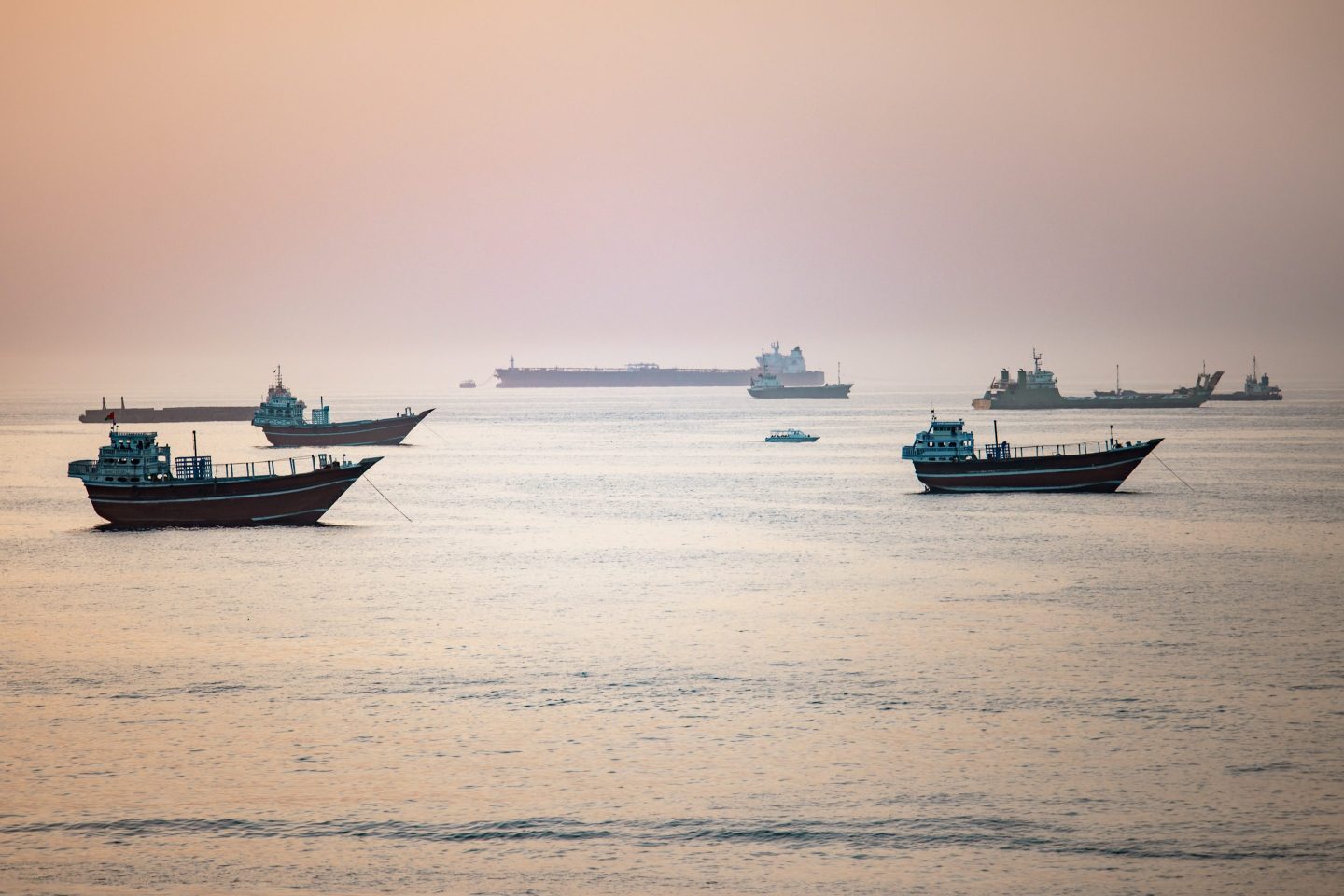
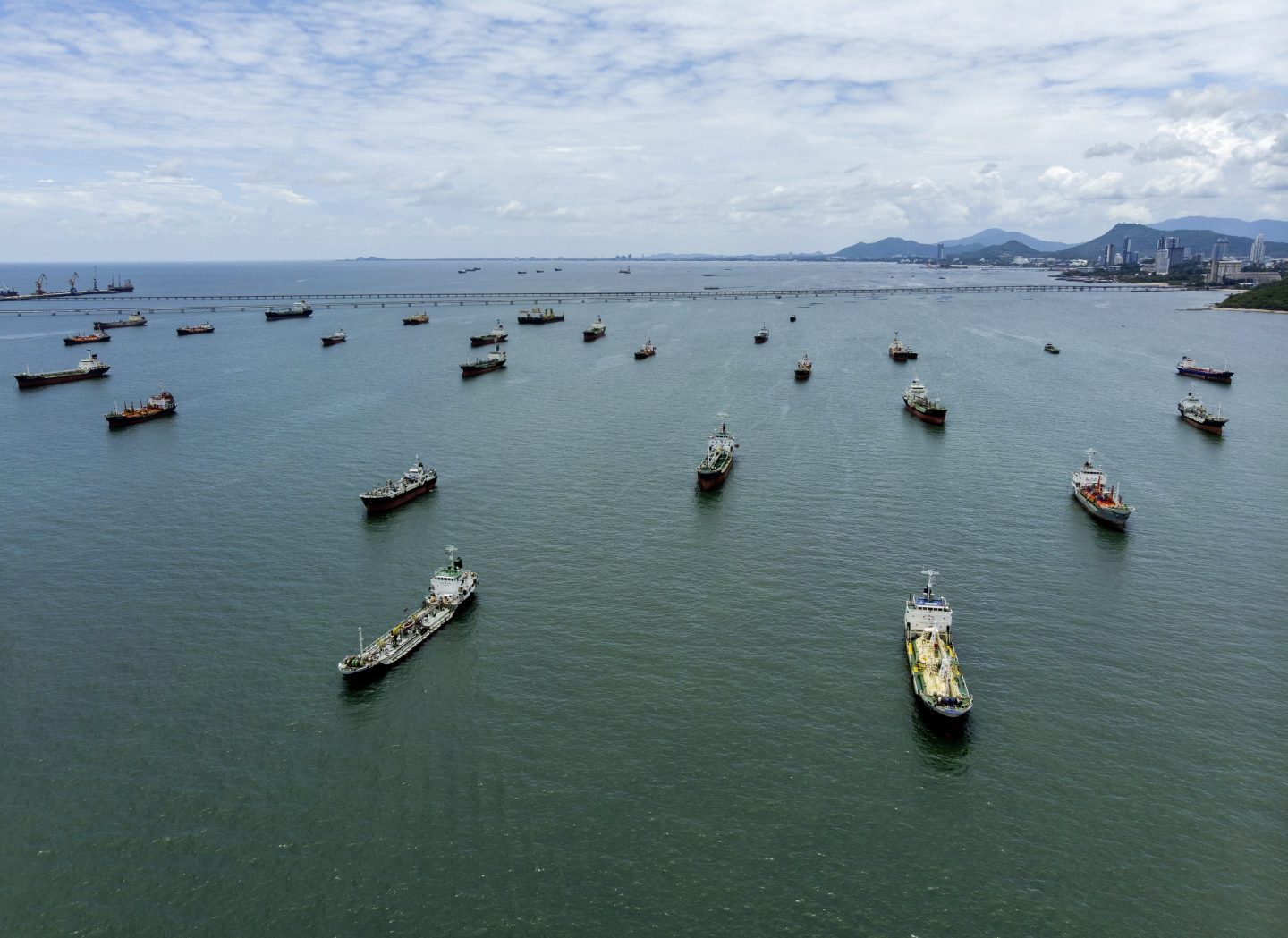
Oil tankers and gas tankers were affected by the closure of the Strait of Hormuz, leading to a global energy crisis stemming from the war in the Middle East.Getty Images

Marine traffic leaving the Middle East has again dropped from a trickle to barely a drip. This comes after a decision by the U.S. to blockade Iran’s ports in response to threats by Iran to attack energy exports it hadn’t approved leaving the critical Straight of Hormuz chokepoint.

Recommended Video

As Asia struggles with energy shortages that now threaten to spread to Europe, the U.S., meanwhile, remains bountifully supplied with almost record-high crude oil and natural gas production, leading President Donald Trump and others to tout the nation’s “energy independence.” Less than 3% of U.S. oil consumption typically comes from the Middle East—near an all-time low.

So why have gasoline, diesel, and jet fuel prices continued to spike? The U.S. average price for a gallon of regular unleaded gasoline is $4.11 as of April 15, according to AAA. That’s up 50% from a January low of $2.73. California, partially dependent on Asian fuel imports, spiked to $5.88 per gallon. For diesel, the national average is $5.64 a gallon.

“The problem is that oil is a global commodity. We may have plenty of oil—there’s no shortage of U.S. oil—but energy independence is somewhat of a fallacy,” said Jim Wicklund, veteran oil analyst and managing director at the PPHB energy investment firm. “We still have to pay the going world price. It’s a global price.”

The U.S. may be much more “energy secure” than the Arab oil embargoes of the 1970s, but it isn’t independent, Wicklund told Fortune. And the U.S. still imports a little more oil—largely from Canada, Mexico, and Venezuela—than it ships out.

The U.S. doesn’t have nearly enough surplus oil to fill the Middle Eastern void, Wicklund said, and U.S. oil drilling and production has only ticked up slightly since the war began.

There is growing talk of countries “hoarding oil” and restricting exports, said Arjun Murti, energy macro and policy partner at the Veriten research and investment firm. For the U.S., though, a hoarding strategy doesn’t appear that viable. That’s because the country must import heavier grades of crude oil for local refineries, and export excess lighter oil produced domestically, while U.S refineries need to export surplus gasoline and diesel or risk decreasing their operations.

“The instinct on politicians will be to restrict exports, but there’s the need to trade all of this stuff globally to match up supply and demand,” Murti told Fortune. “You can’t restrict your way to lower prices. You need the trade.”

The good news for the U.S. is that supply shortages almost certainly won’t occur because of its world-leading domestic production volumes. “The risk to us is inflation, and any hit to the global economy ultimately is a risk to our economy,” Murti said.

In the meantime, U.S. energy exports are on the rise, with combined crude oil and refined petroleum products exports hitting an all-time high of 12.7 million barrels a day for the week that ended April 10. The exports spike is driven largely by the increasing drawdown of barrels from the U.S. Strategic Petroleum Reserve, which commenced in late March.

Benchmark oil prices are hovering above $90 per barrel—much higher than the roughly $60 price tag at the beginning of the year, but down since the ceasefire began on rising market optimism.

But it’s important to realize that the European and U.S. benchmarks, Brent and WTI, respectively, are futures contracts largely for oil trading. The front-month contract for Brent oil is for June barrels, while WTI—West Texas Intermediate—is still on the May contract until it settles April 21 and rolls over to June.

The barrels already set for physical delivery in the coming days and weeks, such as dated Brent, are selling for closer to $120—a historic gap between physical and futures prices.

“All these prices are linked globally. If prices go up somewhere, they go up everywhere,” Murti said.
Getty Images

Reaching a critical juncture

The growing problem is that—more than halfway through a two-week ceasefire in Iran—all the surplus oil and gas storage and waterborne shipments are running dry after a six-week-long supply shock.

“We’re getting to that critical point where higher flows of oil and refined products and other stuff—fertilizer and helium—are going to have to resume in greater quantities, or we run into the risk of a more severe hit to the global economy,” Murti said.

Wicklund said we’re less than two months from a “global recession” if the strait isn’t reopened before then. “I’m hopeful, but the situation has changed, and I think it’s gotten more dangerous,” Wicklund said, with the ceasefire being so tenuous and demands from both sides seemingly far apart.

By the end of May, the world enters into seasonal energy demand increases, including the busy summer driving season.

On April 15, the White House reiterated that it feels good about a potential deal. The leadership of the United Arab Emirates and Iran are talking, which could represent progress after Iran bombed the UAE and other neighbors. Likewise, Israel and Lebanon began discussing a ceasefire. But nothing is concrete.

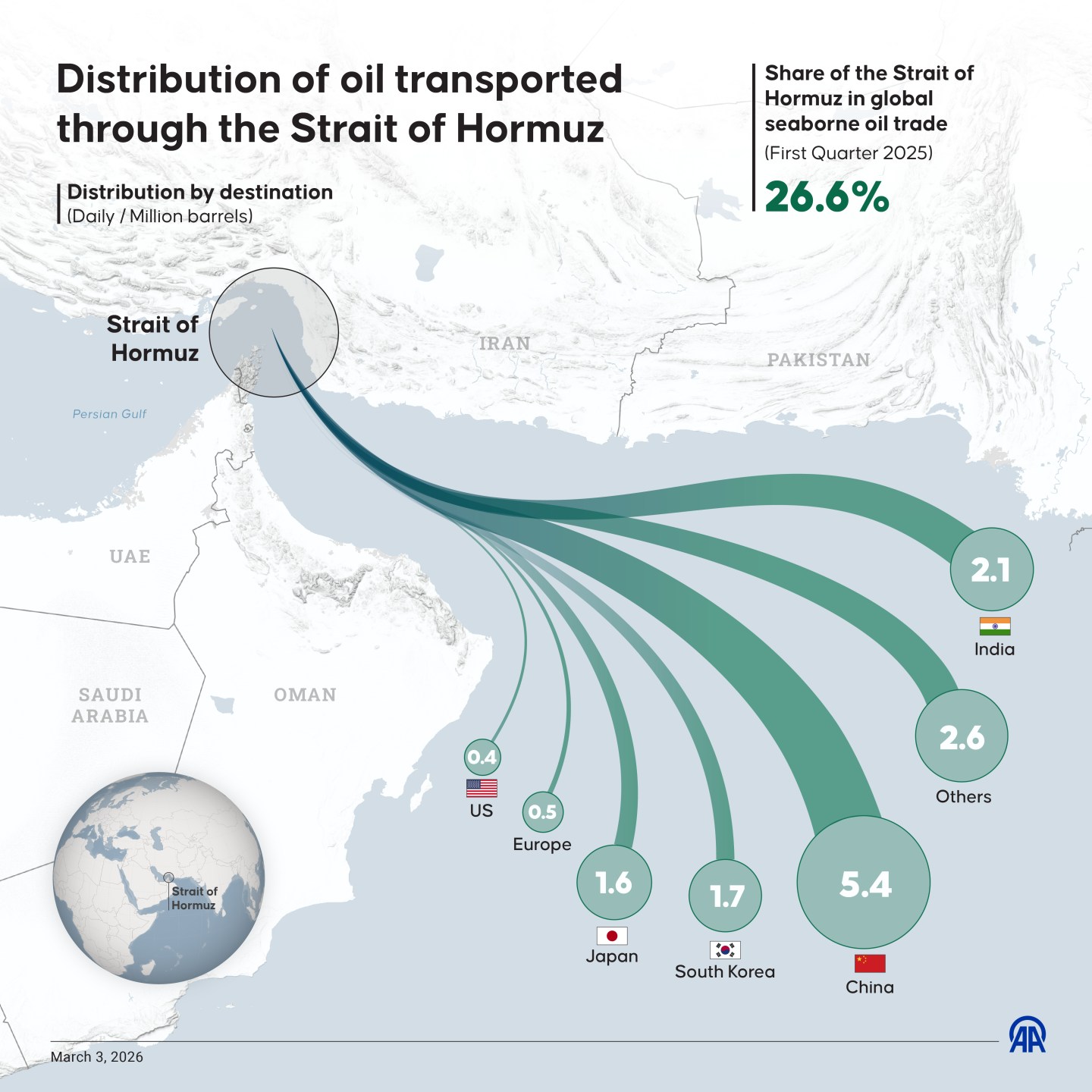
In the meantime, U.S. Treasury Secretary Scott Bessent said the U.S. is pushing to freeze the funds of Iranian leaders in the banks of neighboring Gulf states, and that countries buying Iranian oil could face secondary sanctions. Tensions could rise with China since nearly all Iranian crude heads there.

For marine vessels nearing the Strait of Hormuz, the U.S. Navy is issuing this message: “Do not attempt to breach the blockade. Vessels will be boarded for interdiction and seizure transiting to or form an Iranian port. Turn around and prepare to be boarded. If you do not comply with this blockade, we will use force. The whole of the United States Navy is ready to force compliance.”

Several vessels have crossed the strait this week, but few have exited the broader Arabian Sea where the U.S. blockade is set up, largely preventing escapes into the Indian Ocean.

Ana Subasic, a trade risk analyst for Kpler, the intelligence firm that tracks marine vessels, said none of the Iranian oil tankers have entered the ocean since the U.S. blockade commenced.

“A lot of them have stopped. None have gone through,” Subasic told Fortune on April 15, noting that the situation remains “very fluid.”

“There are no new attacks, but there also are no new Iranian loadings, so that’s a significant signal the blockade is working,” Subasic said of this no-fighting, but no-oil ceasefire limbo.

The most notable vessel thus far, the Rich Starry tanker, an oil and chemicals tanker carrying methanol bound for China, originally did a U-turn away from the strait on April 13 as the blockade began, then turned around and passed through the strait on April 14, but then turned around yet again after leaving the strait as it met the U.S. blockade, Subasic said. That adds up to three U-turns in just over 24 hours for the tanker.

Some container ships—not carrying energy products—have exited the region, and the U.S. continues to insist the blockade is only for vessels leaving Iranian ports. That said, most other tankers are avoiding the strait for fear of being targeted by Iranian attacks. Hundreds remain trapped within the Persian Gulf.

And, even if the war ends soon, energy prices will remain elevated at least through the end of the year as supply chain disruptions are resolved, Wicklund said.

“There will be a risk premium for a while, and it will be reflected in global oil prices,” he said.
The Fortune 500 Innovation Forum will convene Fortune 500 executives, U.S. policy officials, top founders, and thought leaders to help define what’s next for the American economy, Nov. 16-17 in Detroit. Apply here.
About the Author
Jordan Blum
By Jordan BlumEditor, Energy

Jordan Blum is the Energy editor at Fortune, overseeing coverage of a growing global energy sector for oil and gas, transition businesses, renewables, and critical minerals.

See full bioRight Arrow Button Icon

Latest in Energy

Finance
Lorem ipsum dolor sit amet, consectetur adipiscing elit, sed do eiusmod tempor incididunt ut labore et dolore magna aliqua. Ut enim ad minim veniam
By Fortune Editors
October 20, 2025
Finance
Lorem ipsum dolor sit amet, consectetur adipiscing elit, sed do eiusmod tempor incididunt ut labore et dolore magna aliqua. Ut enim ad minim veniam
By Fortune Editors
October 20, 2025
Finance
Lorem ipsum dolor sit amet, consectetur adipiscing elit, sed do eiusmod tempor incididunt ut labore et dolore magna aliqua. Ut enim ad minim veniam
By Fortune Editors
October 20, 2025
Finance
Lorem ipsum dolor sit amet, consectetur adipiscing elit, sed do eiusmod tempor incididunt ut labore et dolore magna aliqua. Ut enim ad minim veniam
By Fortune Editors
October 20, 2025
Finance
Lorem ipsum dolor sit amet, consectetur adipiscing elit, sed do eiusmod tempor incididunt ut labore et dolore magna aliqua. Ut enim ad minim veniam
By Fortune Editors
October 20, 2025
Finance
Lorem ipsum dolor sit amet, consectetur adipiscing elit, sed do eiusmod tempor incididunt ut labore et dolore magna aliqua. Ut enim ad minim veniam
By Fortune Editors
October 20, 2025

Most Popular

Finance
Lorem ipsum dolor sit amet, consectetur adipiscing elit, sed do eiusmod tempor incididunt ut labore et dolore magna aliqua. Ut enim ad minim veniam
By Fortune Editors
October 20, 2025
Finance
Lorem ipsum dolor sit amet, consectetur adipiscing elit, sed do eiusmod tempor incididunt ut labore et dolore magna aliqua. Ut enim ad minim veniam
By Fortune Editors
October 20, 2025
Finance
Lorem ipsum dolor sit amet, consectetur adipiscing elit, sed do eiusmod tempor incididunt ut labore et dolore magna aliqua. Ut enim ad minim veniam
By Fortune Editors
October 20, 2025
Finance
Lorem ipsum dolor sit amet, consectetur adipiscing elit, sed do eiusmod tempor incididunt ut labore et dolore magna aliqua. Ut enim ad minim veniam
By Fortune Editors
October 20, 2025
Finance
Lorem ipsum dolor sit amet, consectetur adipiscing elit, sed do eiusmod tempor incididunt ut labore et dolore magna aliqua. Ut enim ad minim veniam
By Fortune Editors
October 20, 2025
Finance
Lorem ipsum dolor sit amet, consectetur adipiscing elit, sed do eiusmod tempor incididunt ut labore et dolore magna aliqua. Ut enim ad minim veniam
By Fortune Editors
October 20, 2025
Fortune Secondary Logo
Rankings
  • 100 Best Companies
  • Fortune 500
  • Global 500
  • Fortune 500 Europe
  • Most Powerful Women
  • Future 50
  • World’s Most Admired Companies
  • See All Rankings
Sections
  • Finance
  • Fortune Crypto
  • Features
  • Leadership
  • Health
  • Commentary
  • Success
  • Retail
  • Mpw
  • Tech
  • Lifestyle
  • CEO Initiative
  • Asia
  • Politics
  • Conferences
  • Europe
  • Newsletters
  • Personal Finance
  • Environment
  • Magazine
  • Education
Customer Support
  • Frequently Asked Questions
  • Customer Service Portal
  • Privacy Policy
  • Terms Of Use
  • Single Issues For Purchase
  • International Print
Commercial Services
  • Advertising
  • Fortune Brand Studio
  • Fortune Analytics
  • Fortune Conferences
  • Business Development
  • Group Subscriptions
About Us
  • About Us
  • Editorial Calendar
  • Press Center
  • Work At Fortune
  • Diversity And Inclusion
  • Terms And Conditions
  • Site Map
  • About Us
  • Editorial Calendar
  • Press Center
  • Work At Fortune
  • Diversity And Inclusion
  • Terms And Conditions
  • Site Map
  • Facebook icon
  • Twitter icon
  • LinkedIn icon
  • Instagram icon
  • Pinterest icon

Latest in Energy

Current price of oil as of April 16, 2026
Personal FinanceOil
Current price of oil as of April 16, 2026
By Joseph HostetlerApril 16, 2026
49 minutes ago
Photo: Oil tanker.
EconomyMarkets
Peace talks are back on while the U.S. plays cat-and-mouse with rogue ships in the Strait of Hormuz
By Jim EdwardsApril 16, 2026
3 hours ago
A person wearing a red hat has their hand on a gas pump.
EnergyOil Prices
Oil prices may be falling, but for the wrong reason: a ‘demand destruction’ throttling global consumption, report finds
By Sasha RogelbergApril 16, 2026
6 hours ago
hormuz
EnergyIran
Why no nation is truly ‘energy independent’ while the Strait of Hormuz remains closed
By Jordan BlumApril 16, 2026
6 hours ago
strait
EnergyIran
Iran and the U.S. live in 2 different worlds, law of the sea expert says—and both of those are different from most maritime law
By Elizabeth Mendenhall and The ConversationApril 15, 2026
17 hours ago
U.S. President Donald Trump waves to the media after walking off of Air Force One at Miami International Airport on April 11, 2026 in Miami, Florida.
PoliticsIran
Trump says the Iran war is ‘very close to over’—despite no deal, a live blockade, and threats mounting
By Eva RoytburgApril 15, 2026
21 hours ago

Most Popular

Jeff Bezos pledged $10 billion for climate change. With the 2030 clock ticking, his wife, Lauren Sánchez Bezos, is leading the charge to spend it
Environment
Jeff Bezos pledged $10 billion for climate change. With the 2030 clock ticking, his wife, Lauren Sánchez Bezos, is leading the charge to spend it
By Fortune EditorsApril 15, 2026
22 hours ago
Billionaire philanthropist MacKenzie Scott has donated again—a week after gifting millions to a college, she's just given $70 million to Meals on Wheels America
Success
Billionaire philanthropist MacKenzie Scott has donated again—a week after gifting millions to a college, she's just given $70 million to Meals on Wheels America
By Fortune EditorsApril 13, 2026
3 days ago
Current price of oil as of April 15, 2026
Personal Finance
Current price of oil as of April 15, 2026
By Fortune EditorsApril 15, 2026
1 day ago
Economists warned California not to raise the minimum wage to $20. They were wrong in almost every way so far, another economist says
Economy
Economists warned California not to raise the minimum wage to $20. They were wrong in almost every way so far, another economist says
By Fortune EditorsApril 15, 2026
1 day ago
The billionaire Anthropic cofounder who majored in literature says knowing how to ask the right questions beats knowing how to code
Success
The billionaire Anthropic cofounder who majored in literature says knowing how to ask the right questions beats knowing how to code
By Fortune EditorsApril 14, 2026
2 days ago
Palantir CEO says working at his $316 billion software company is better than a degree from Harvard or Yale: ‘No one cares about the other stuff’
Success
Palantir CEO says working at his $316 billion software company is better than a degree from Harvard or Yale: ‘No one cares about the other stuff’
By Fortune EditorsApril 14, 2026
2 days ago

© 2026 Fortune Media IP Limited. All Rights Reserved. Use of this site constitutes acceptance of our Terms of Use and Privacy Policy | CA Notice at Collection and Privacy Notice | Do Not Sell/Share My Personal Information
FORTUNE is a trademark of Fortune Media IP Limited, registered in the U.S. and other countries. FORTUNE may receive compensation for some links to products and services on this website. Offers may be subject to change without notice.