
• Home
  • Latest
  • Fortune 500
  • Finance
  • Tech
  • Leadership
  • Lifestyle
  • Rankings
  • Multimedia

Trendingnow

1

'The golden years are not golden': Boomers are hoarding most of America's wealth and power because they're terrified of outliving their money

2

I've sold property on California's Central Coast for decades. The buyers chasing ranch and winery estates are after more than a lifestyle

3

Gen Zers are arriving to college unable to even read a sentence—professors warn it could lead to a generation of anxious and lonely graduates

1

'The golden years are not golden': Boomers are hoarding most of America's wealth and power because they're terrified of outliving their money

2

I've sold property on California's Central Coast for decades. The buyers chasing ranch and winery estates are after more than a lifestyle

3

Gen Zers are arriving to college unable to even read a sentence—professors warn it could lead to a generation of anxious and lonely graduates
BankingIran

Jamie Dimon defends the U.S. war on Iran—and warns it’s pushing the economy into uncharted territory

Nick Lichtenberg
By
Nick Lichtenberg
Nick Lichtenberg
Business Editor
Down Arrow Button Icon
Nick Lichtenberg
By
Nick Lichtenberg
Nick Lichtenberg
Business Editor
Down Arrow Button Icon
April 6, 2026, 12:11 PM ET
dimon
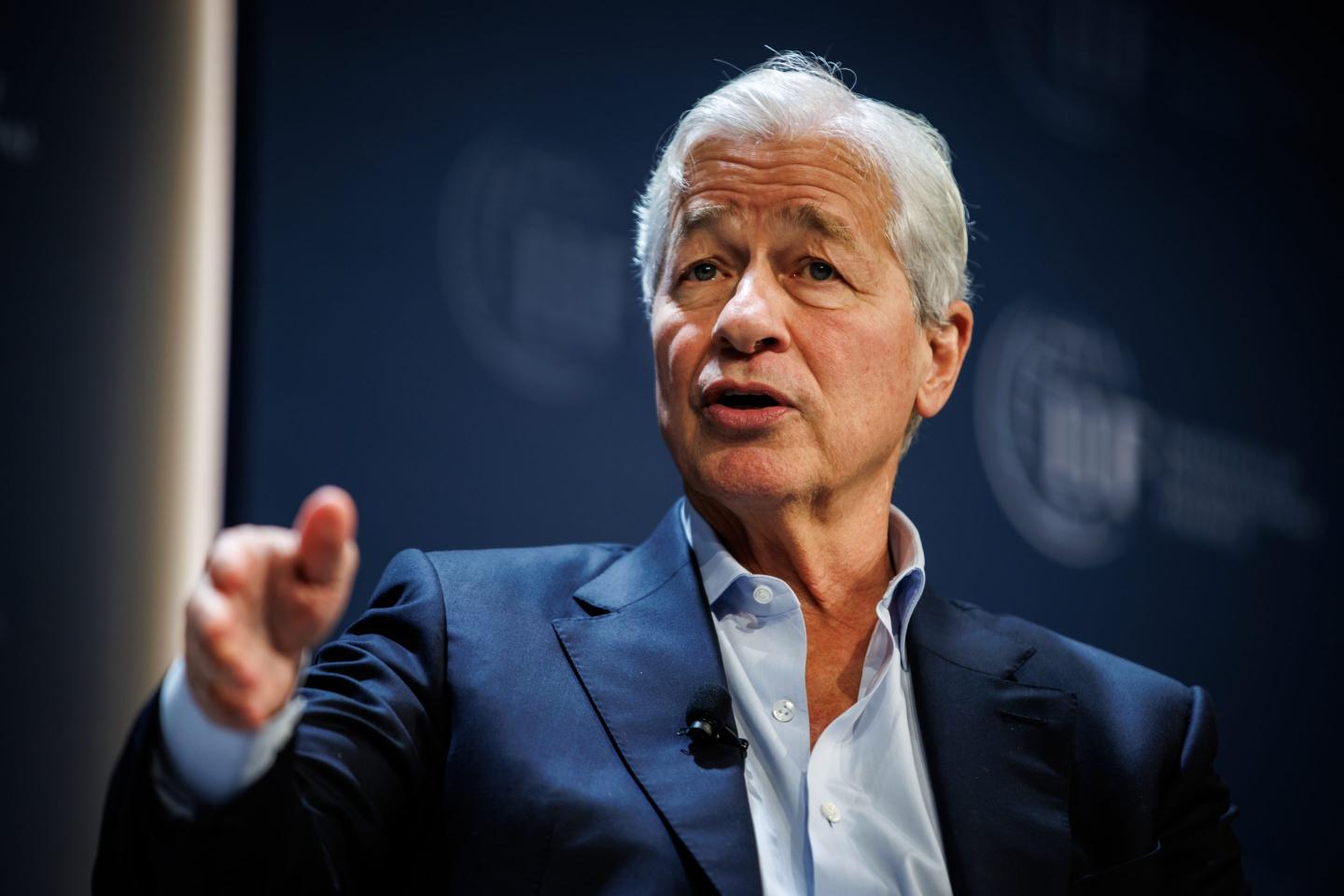
Jamie Dimon, CEO of JPMorgan Chase, in October 2025. Samuel Corum—Bloomberg/Getty Images

Jamie Dimon has never been one to soften a warning. In his annual letter to JPMorgan Chase shareholders, released Monday, the most influential banker in the world offered a full-throated, if measured, defense of the U.S. war on Iran, even as he made clear that the conflict is driving the global economy into genuinely uncharted territory. Dimon’s warnings have been growing in alarm on geopolitics since the outbreak of the Ukraine war in 2022, and on dire economic threats since 2024, and this year’s edition somehow marries both of them.

Recommended Video

In 2022, Dimon invoked Ukraine as a potential catalyst for the “restructuring of the global order.” In 2023, he was consumed by the Silicon Valley Bank (SVB) crisis, warning that its repercussions would be felt “for years to come.” In 2024, he issued his most economically alarming letter yet, warning of stickier inflation, unprecedented liquidity drains, and interest rates “higher than markets expect.” Each year brought a new crisis to center stage. This year is different: The U.S. is an active combatant in an ongoing war, and Dimon isn’t looking away.

“The ongoing war in Ukraine, the conflict between Iran and both the United States and Israel, and other major hostilities across the globe should permanently dispel the illusion that the world is safe,” he wrote. It is a sentence that lands differently than his prior warnings—less a forecast of what might go wrong, more a reckoning with what already has.

Dimon’s case for the war

On Iran specifically, Dimon made his position unambiguous. This is not, in his view, a war of choice. He has been building this argument publicly for weeks: In a widely watched interview with Axios earlier this month, he pushed back on that notion, questioning why the Western world had for so long tolerated a regime with, in his words, its “throat on the Strait of Hormuz” and a pattern of “killing people around the world for 45-plus years.”

In Monday’s letter, that argument gets its fullest airing yet. The Iranian threat, Dimon wrote, needed to be dealt with “urgently if Iran ever acquires a nuclear ballistic missile”—calling nuclear proliferation “the gravest threat to the future of mankind.” To be sure, he acknowledged, “time will tell whether the current war in Iran achieves our short-term and long-term objectives in the region and at what cost,” but in the short term, the cost looks to be quite high indeed, and not just for the U.S.

The economic toll

Dimon was unflinching about the economic toll of the war, even less than two months into hostilities. The war, he warned, is generating “the potential for significant ongoing oil and commodity price shocks, along with the reshaping of global supply chains, which may lead to stickier inflation and ultimately higher interest rates than markets currently expect.” The ripple effects extend well beyond energy: “It’s not just energy—it’s commodity products that are byproducts of oil and gas, like fertilizer and helium. And given our complex global supply chains, countries are experiencing disruptions in shipbuilding, food, and farming, among others.”

He is far from alone in that assessment. Larry Fink, who runs BlackRock, the world’s largest asset manager, has warned that oil reaching $150 a barrel—a plausible scenario if the conflict drags on—would trigger “a stark and steep recession,” while flagging the same agricultural and fertilizer supply-chain vulnerabilities that Dimon identified. Goldman Sachs, meanwhile, has put hard numbers behind the warnings: Its economists cut their U.S. growth forecast and raised their recession risk to 30% under a prolonged conflict scenario, while revising December 2026 PCE (personal consumption expenditures) inflation up to 3.1%, and their Brent crude forecast to $98—up roughly 40% from last year’s average. Morgan Stanley has flagged a compounding risk: wartime defense spending piling onto already elevated U.S. debt, pushing long-term Treasury yields higher and creating “a potential headwind for stock and bond markets alike.”

Not everyone is alarmed

Ed Yardeni has maintained a bullish year-end S&P 500 target and suggested recession risk could ease once there is clarity that the conflict is winding down—representing the faction of investors trying to look past the war rather than fully price it in. Goldman Sachs CEO David Solomon, for his part, has stayed carefully in the analyst lane, saying markets are focused on whether the conflict will “affect economic growth and activity,” more of a wait-and-see approach.

A resilient economy with real vulnerabilities

The stakes, in Dimon’s telling, could not be higher. “The outcome of current geopolitical events,” he wrote, “may very well be the defining factor in how the future global economic order unfolds.” Then again, he added, it may not be.

The broader economic picture that the CEO painted is one of resilience shadowed by real vulnerability. Consumers are still spending, he noted, but “with some recent weakening.” The U.S. economy has been propped up by “large amounts of government deficit spending and past stimulus,” he cautioned—a foundation that looks less solid when oil shocks and trade disruptions are pushing costs in the wrong direction. High asset prices, he added, “create additional risk if anything goes wrong.”

Despite those warnings, Dimon has not abandoned hope for the war’s outcome. He told Axios that he hopes it turns out well “and that somehow we get peace in the Middle East permanently,” pointing to alignment between the U.S., Israel, Saudi Arabia, and the UAE as giving the campaign a higher chance of achieving long-term stability. His letter echoed that sentiment: “We sincerely hope these global conflicts are properly resolved and that one day all of Europe and the Middle East will attain long-term stability and prosperity.”

What Dimon is describing, taken together, is a world in active transition—one where the post–Cold War assumptions of open supply chains, low inflation, and relative geopolitical stability are being dismantled in real time. “We must deal with the world we have,” he wrote, “and strive for the one we want.”

JPMorgan posted $57 billion in net income in 2025, down from $58.5 billion the year before. Dimon was careful not to confuse his firm’s resilience with immunity. “We cannot confidently predict the outcome of current events,” he wrote, “and our company is not immune to their ultimate effects.”

For this story, Fortune journalists used generative AI as a research tool. An editor verified the accuracy of the information before publishing.

Subscribe to Fortune Gulf Brief. Every Tuesday, this new newsletter delivers clear-eyed, authoritative intelligence on the deals, decisions, policies, and power shifts shaping one of the world’s most consequential regions, written for the people who need to act on it. Sign up here.
About the Author
Nick Lichtenberg
By Nick LichtenbergBusiness Editor
LinkedIn icon

Nick Lichtenberg is business editor and was formerly Fortune's executive editor of global news.

See full bioRight Arrow Button Icon

Latest in Banking

Finance
Lorem ipsum dolor sit amet, consectetur adipiscing elit, sed do eiusmod tempor incididunt ut labore et dolore magna aliqua. Ut enim ad minim veniam
By Fortune Editors
October 20, 2025
Finance
Lorem ipsum dolor sit amet, consectetur adipiscing elit, sed do eiusmod tempor incididunt ut labore et dolore magna aliqua. Ut enim ad minim veniam
By Fortune Editors
October 20, 2025
Finance
Lorem ipsum dolor sit amet, consectetur adipiscing elit, sed do eiusmod tempor incididunt ut labore et dolore magna aliqua. Ut enim ad minim veniam
By Fortune Editors
October 20, 2025
Finance
Lorem ipsum dolor sit amet, consectetur adipiscing elit, sed do eiusmod tempor incididunt ut labore et dolore magna aliqua. Ut enim ad minim veniam
By Fortune Editors
October 20, 2025
Finance
Lorem ipsum dolor sit amet, consectetur adipiscing elit, sed do eiusmod tempor incididunt ut labore et dolore magna aliqua. Ut enim ad minim veniam
By Fortune Editors
October 20, 2025
Finance
Lorem ipsum dolor sit amet, consectetur adipiscing elit, sed do eiusmod tempor incididunt ut labore et dolore magna aliqua. Ut enim ad minim veniam
By Fortune Editors
October 20, 2025

Most Popular

Finance
Lorem ipsum dolor sit amet, consectetur adipiscing elit, sed do eiusmod tempor incididunt ut labore et dolore magna aliqua. Ut enim ad minim veniam
By Fortune Editors
October 20, 2025
Finance
Lorem ipsum dolor sit amet, consectetur adipiscing elit, sed do eiusmod tempor incididunt ut labore et dolore magna aliqua. Ut enim ad minim veniam
By Fortune Editors
October 20, 2025
Finance
Lorem ipsum dolor sit amet, consectetur adipiscing elit, sed do eiusmod tempor incididunt ut labore et dolore magna aliqua. Ut enim ad minim veniam
By Fortune Editors
October 20, 2025
Finance
Lorem ipsum dolor sit amet, consectetur adipiscing elit, sed do eiusmod tempor incididunt ut labore et dolore magna aliqua. Ut enim ad minim veniam
By Fortune Editors
October 20, 2025
Finance
Lorem ipsum dolor sit amet, consectetur adipiscing elit, sed do eiusmod tempor incididunt ut labore et dolore magna aliqua. Ut enim ad minim veniam
By Fortune Editors
October 20, 2025
Finance
Lorem ipsum dolor sit amet, consectetur adipiscing elit, sed do eiusmod tempor incididunt ut labore et dolore magna aliqua. Ut enim ad minim veniam
By Fortune Editors
October 20, 2025
Fortune Secondary Logo
Rankings
  • 100 Best Companies
  • Fortune 500
  • Global 500
  • Fortune 500 Europe
  • Most Powerful Women
  • World's Most Admired Companies
  • See All Rankings
  • Lists Calendar
Sections
  • Finance
  • Fortune Crypto
  • Features
  • Leadership
  • Health
  • Commentary
  • Success
  • Retail
  • Mpw
  • Tech
  • Lifestyle
  • CEO Initiative
  • Asia
  • Politics
  • Conferences
  • Europe
  • Newsletters
  • Personal Finance
  • Environment
  • Magazine
  • Education
Customer Support
  • Frequently Asked Questions
  • Customer Service Portal
  • Privacy Policy
  • Terms Of Use
  • Single Issues For Purchase
  • International Print
Commercial Services
  • Advertising
  • Fortune Brand Studio
  • Fortune Analytics
  • Fortune Conferences
  • Business Development
  • Group Subscriptions
About Us
  • About Us
  • Press Center
  • Work At Fortune
  • Terms And Conditions
  • Site Map
  • About Us
  • Press Center
  • Work At Fortune
  • Terms And Conditions
  • Site Map
  • Facebook icon
  • Twitter icon
  • LinkedIn icon
  • Instagram icon
  • Pinterest icon

Latest in Banking

Trump says Fed rate increase would be wrong ahead of Warsh debut
EconomyFederal Reserve
Trump says Fed rate increase would be wrong ahead of Warsh debut
By Tony Czuczka, Jennifer A. Dlouhy and BloombergJune 7, 2026
10 hours ago
Jamie Dimon in a New York skyscraper.
SuccessFortune 500
These 12 Fortune 500 companies have survived wars, crashes, and over 200 years of U.S. history
By Preston ForeJune 6, 2026
2 days ago
College Ave Private Student Loans review
Personal FinanceLoans
College Ave Private Student Loans review
By Joseph HostetlerJune 5, 2026
2 days ago
Elon Musk holding a glass of wine.
BankingSpaceX
Jamie Dimon called Elon Musk the ‘Edison of our time’ as JPMorgan hosted SpaceX’s $75 billion IPO road show—and even invited Musk’s mom
By Tristan BoveJune 5, 2026
2 days ago
rate
Real Estatemortgage rates
The deficit climbing by $3.4 trillion is keeping your mortgage rate at 6.48% — not the Fed
By Michael J. Highfield and The ConversationJune 5, 2026
3 days ago
Top CD rates from major banks June 5, 2026: Chase CDs, Bank of America CDs, Citibank CDs, and more
Personal FinanceCertificates of Deposit (CDs)
Top CD rates from major banks on June 5, 2026: Chase CDs, Bank of America CDs, Citibank CDs, and more
By Joseph HostetlerJune 5, 2026
3 days ago

Most Popular

'The golden years are not golden': Boomers are hoarding most of America's wealth and power because they're terrified of outliving their money
Economy
'The golden years are not golden': Boomers are hoarding most of America's wealth and power because they're terrified of outliving their money
By Nick LichtenbergJune 7, 2026
17 hours ago
I've sold property on California's Central Coast for decades. The buyers chasing ranch and winery estates are after more than a lifestyle
Commentary
I've sold property on California's Central Coast for decades. The buyers chasing ranch and winery estates are after more than a lifestyle
By Lindsey HarnJune 6, 2026
2 days ago
Gen Zers are arriving to college unable to even read a sentence—professors warn it could lead to a generation of anxious and lonely graduates
Success
Gen Zers are arriving to college unable to even read a sentence—professors warn it could lead to a generation of anxious and lonely graduates
By Preston ForeJune 7, 2026
15 hours ago
AI CEOs from OpenAI, Anthropic, and Microsoft set aside their rivalry to warn Congress AI is making it too easy to design and create bioweapons
AI
AI CEOs from OpenAI, Anthropic, and Microsoft set aside their rivalry to warn Congress AI is making it too easy to design and create bioweapons
By Marco Quiroz-GutierrezJune 5, 2026
3 days ago
The Strait of Hormuz is more open than previously thought as the U.S. shoots down Iranian drones threatening ships and provides 'naval overwatch'
Energy
The Strait of Hormuz is more open than previously thought as the U.S. shoots down Iranian drones threatening ships and provides 'naval overwatch'
By Jason MaJune 6, 2026
1 day ago
Trump stunned as stocks fall on great jobs report. Barclays explains why ‘we are entering the warning zone'
Big Tech
Trump stunned as stocks fall on great jobs report. Barclays explains why ‘we are entering the warning zone'
By Eva RoytburgJune 7, 2026
12 hours ago

© 2026 Fortune Media IP Limited. All Rights Reserved. Use of this site constitutes acceptance of our Terms of Use and Privacy Policy | CA Notice at Collection and Privacy Notice | Do Not Sell/Share My Personal Information
FORTUNE is a trademark of Fortune Media IP Limited, registered in the U.S. and other countries. FORTUNE may receive compensation for some links to products and services on this website. Offers may be subject to change without notice.