As the Transportation and Infrastructure Committee prepares to reauthorize surface transportation programs before the September 2026 deadline, lawmakers face a critical test of their ability to separate political theater from policy substance. Furthermore, three years after the East Palestine derailment, the Railway Safety Act of 2025 remains under consideration and may become a part of the reauthorization. This week, it was reintroduced. This is a critical juncture for the safety and standard of living for the American public.
However, inclusion of the bill would be a mistake: Its proposed regulations would do little to improve rail safety but it would divert an enormous amount of freight from rail to trucks, which represents a much greater safety risk for Americans.
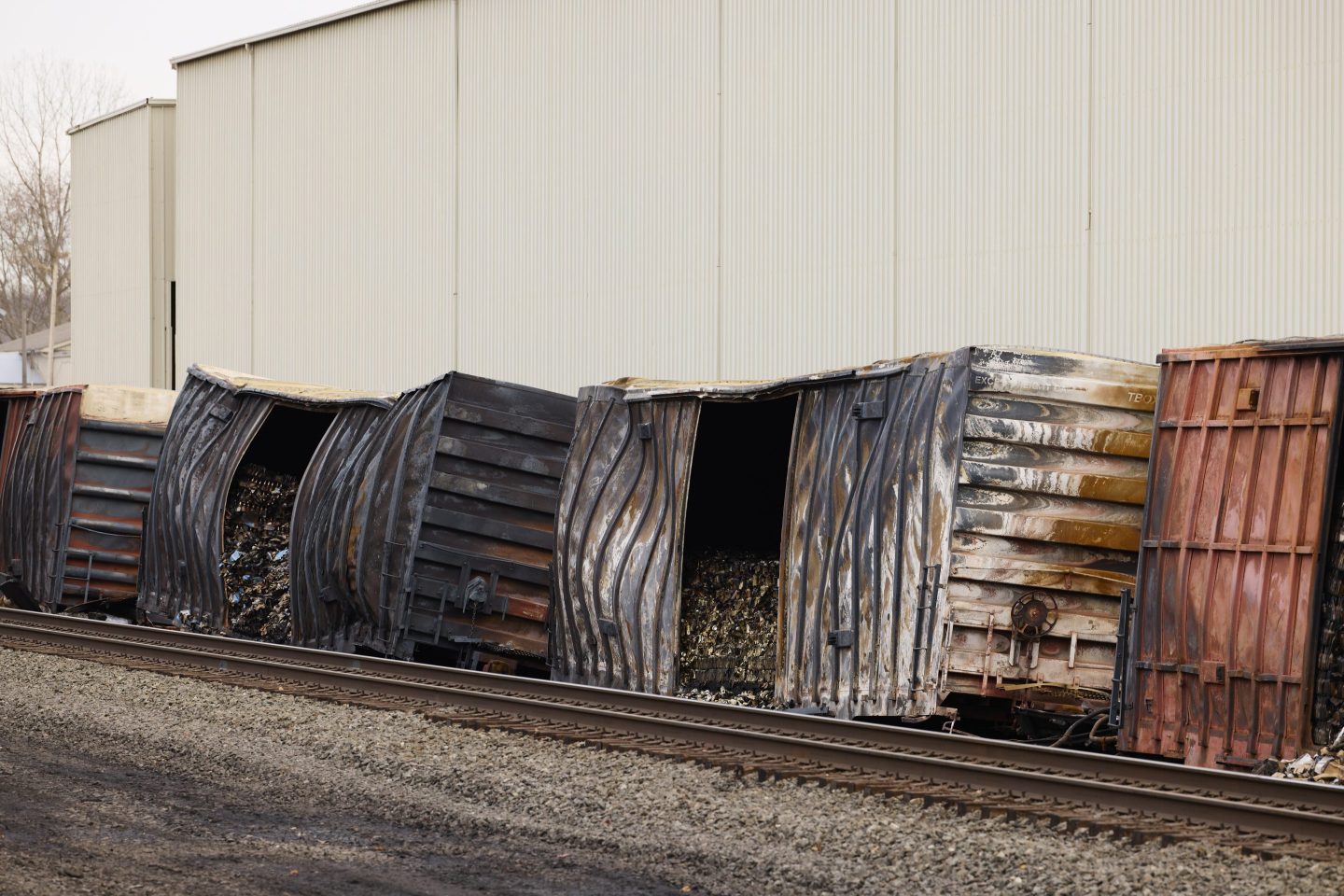
The impetus for the Rail Safety Act comes from a 2023 derailment of a Norfolk Southern train carrying vinyl chloride derailed near East Palestine, Ohio. The spill forced the evacuation of 2,000 people and left them–and other nearby residents–concerned about their potential chemical exposure. The company agreed to a $600 million settlement to residents affected by the derailment and must pay for all costs associated with a complete remediation of the affected area.
While no one should minimize the inconvenience and concern that the accident created for the residents of East Palestine, having a regulatory agenda determined by a single incident rather than the totality of the data would be a grievous error that would ultimately degrade the safety of freight transportation.
Rail safety, by virtually every measure, has been steadily improving for decades—with derailments down 44% since 2000 according to Federal Railroad Administration data.
For example, the Railway Safety Act requires the rail industry to invest approximately two billion dollars to address wheel bearing failures, the cause of the East Palestine derailment. But faulty wheel bearings cause just 5% of all derailments. This is clearly a knee-jerk reaction and ignorant of actual risks.
In the 50 years that the Bureau of Transportation Statistics has collected data on fatalities by mode, trucks have caused nearly 30,000 deaths, while rail has caused less than 500—less than 2% of the deaths caused by trucks.
More recently, in 2023, the year of the East Palestine incident, there were 961 truck-related fatalities, while fatalities due to train operations totaled just five. To make matters more vivid, the 961 number measured by BTS is only the truck occupant deaths: A total of 5,375 people perished in truck-related accidents that year, meaning that non-truck occupant deaths outweigh truck drivers by over four to one.
The wildly disproportionate risk that an American will be killed by a truck versus a train is not getting better: there have already been 286 fatalities involving trucks in 2026.
Despite this disparity no one in Congress has proposed a “Truck Safety Act” or deigned to hold hearings on the matter, and Congress may end up enacting legislation that will effectively increase the number of trucks on the road.
This disparity matters because transportation modes do not exist in isolation. The Federal Railroad Administration itself calls U.S. freight rail the safest in the world and has set record safety performance in 2025; but when regulations make rail shipping more expensive, shippers respond rationally by moving freight to far more dangerous trucks. Every percentage point shift from rail to truck increases overall risk to the public.
Trucks generate seven times more particulate matter and greenhouse gases than trains. Their contribution to road congestion costs the U.S. economy over $100 billion a year, trucks are to blame for 90% of road deterioration. Rail is the far superior option by every metric, yet the federal government continues its war on rail, which is our country’s saving grace for moving freight. The fundamental question for Congress as it considers the surface transportation reauthorization is whether the proposed responses to a single accident would make Americans safer overall. It would do just the opposite – it would cause thousands of truck-based deaths.
The opinions expressed in Fortune.com commentary pieces are solely the views of their authors and do not necessarily reflect the opinions and beliefs of Fortune.