• Home
  • Latest
  • Fortune 500
  • Finance
  • Tech
  • Leadership
  • Lifestyle
  • Rankings
  • Multimedia
EnergyMiddle East

The war in Iran could lead to a ‘guaranteed global recession’ because of one chokepoint that is crucial to the world economy, analyst says

By
Tristan Bove
Tristan Bove
Contributing Reporter
Down Arrow Button Icon
By
Tristan Bove
Tristan Bove
Contributing Reporter
Down Arrow Button Icon
March 2, 2026, 1:32 PM ET
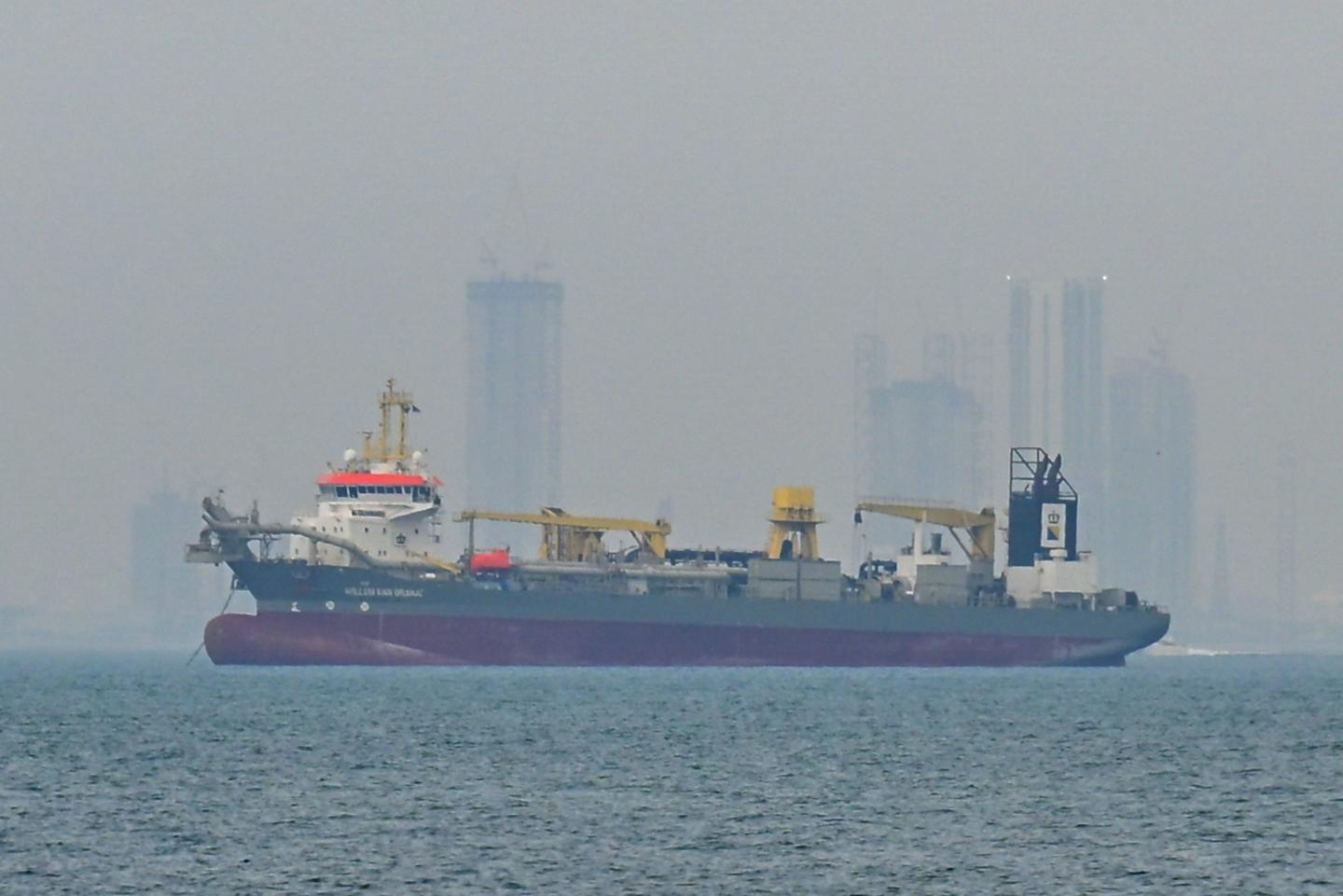
A commercial ship anchored off the coast of Dubai.
A commercial ship anchored off the coast of Dubai, near the Strait of Hormuz.Stringer/Anadolu/Getty Images

On Sunday, a day after U.S. and Israeli forces began raining missiles across Iran, an oil tanker docked off the coast of Oman burst into flames. The same day, maritime tracking organizations announced tankers were targeted by more projectiles in the waters north of the Arabian Peninsula.

Recommended Video

Experts say these attacks are opening up a front of the war that could have massive repercussions. A large portion of the world’s energy supply traverses these waters, and for each day attacks happen and fewer ships take the risk of navigating there, the world gets a little bit closer to an economic crisis. 

Oman sits at the bottom of the Strait of Hormuz, a key maritime traffic route that links countries in the Persian Gulf, like Iran, to the rest of the world. On normal days, around 20 million barrels of oil, or approximately 20% of the world’s liquid petroleum, passes through the strait, which is less than 30 miles across at its narrowest point. In a moment of regional instability, the seafaring passageway can quickly turn into a strategic chokepoint, and its effects are already rippling out on a global scale.

Renewed conflict in Iran, and the regime’s reprisal attacks across the Middle East, have thrust the strait back to the center of recession fears, as analysts warn that even a partial or prolonged disruption of petroleum supply could shock the world economy into contraction. Now, with the weekend’s attacks, experts are warning that triple-digit crude oil prices could be the least of the world’s concerns. If the strait stays shut down long enough, it could amount to an assured hit for the global economy. 

“A prolonged closure of the Strait of Hormuz is a guaranteed global recession,” Bob McNally, founder of consultancy group Rapidan Energy and a former energy advisor to George W. Bush’s White House, told CNBC Saturday.

It’s not just oil. Around one fifth of globally traded liquefied natural gas moved through the Strait of Hormuz in 2024, according to the Energy Information Administration, making it one of the most critical nodes in the world’s energy system. Tanker‑tracking data show that Saudi Arabia alone shipped about 5.5 million barrels per day through the strait in 2024. With about 38% of total crude oil flowing through, the passage is essential for Gulf exporters. While workarounds do exist, including existing pipelines that crisscross their way through the Arabian Peninsula, their limited capacity would struggle to make up for flows that would be lost in a full closure of the strait, leaving the global market particularly susceptible to any sustained disruption.

While the Islamic Republic has yet to forcefully close the strait, the sentiment has already done quite a bit of legwork. On Saturday, the Iranian military warned that passage through the strait was “unsafe,” according to local news reports affiliated with Iran’s Revolutionary Guard. By the end of the day, ship traffic through the strait was down 70% compared with the day prior, the New York Times reported. 

Global fallout

A prolonged pause to shipments would shock the global economy. Last summer, after a brief conflict also involving the U.S., Israel, and Iran threatened to shut the strait down, the Oxford Institute for Energy Studies modeled the impact of a potential closure lasting more than a year, finding that 15% of global liquefied natural gas supply would be wiped out, with Europe, China, India, and Japan hit the hardest in terms of lost imports.

Oil prices have skyrocketed as a result of the instability. Brent crude, a global pricing benchmark for most internationally traded crude oil, jumped as much as 13% on Monday to $86 a barrel, and analysts warn that attacks on energy infrastructure in the Gulf or an extended closure could bring it to $100 or higher. The last time oil prices were that high was in 2022, after Russia’s invasion of Ukraine resulted in sweeping international sanctions targeting Russian petroleum exports. Prices have remained below $80 for the past year.

Most banks and analysts frame the possibility of even higher oil prices or a forced closure of the strait as a small risk, for now. Citigroup, for instance, put the chance of a $120 barrel of oil at only 20% in a Monday note. Analysts have also noted the logistical difficulties Iran would face in ordering and maintaining a closure of the strait, including U.S. naval superiority in the region and the risks the regime would run of losing allies by cutting off energy supply. The threat of closure also isn’t new for the Islamic Republic, which has threatened to close the strait multiple times in the past, but never fully followed through.

In an analysis by energy consultancy Wood Mackenzie, researchers noted that the nearest historical analogue would be the 1970s, when an oil supply crisis sparked downturns in several countries around the world. Unlike that period, however, the world is now much less reliant on oil, the analysts noted. To create a similar scale of global economic crisis, they wrote, oil prices would need to reach around $200 a barrel.

Such a cut to global supply, and the accompanying risk to the world economy, would likely be unpalatable even in the U.S., the Wood Mackenzie analysts added.

“A sustained conflict that significantly limits transit via the Strait of Hormuz, elevates oil and LNG prices, and weakens an already fragile global economy presents a considerable political risk for the U.S,” they wrote. “A sharp, negative reaction in global financial markets could prompt the Trump administration to look for an off-ramp and de-escalate.”

The Fortune 500 Innovation Forum will convene Fortune 500 executives, U.S. policy officials, top founders, and thought leaders to help define what’s next for the American economy, Nov. 16-17 in Detroit. Apply here.
About the Author
By Tristan BoveContributing Reporter
LinkedIn iconTwitter icon
See full bioRight Arrow Button Icon

Latest in Energy

Finance
Lorem ipsum dolor sit amet, consectetur adipiscing elit, sed do eiusmod tempor incididunt ut labore et dolore magna aliqua. Ut enim ad minim veniam
By Fortune Editors
October 20, 2025
Finance
Lorem ipsum dolor sit amet, consectetur adipiscing elit, sed do eiusmod tempor incididunt ut labore et dolore magna aliqua. Ut enim ad minim veniam
By Fortune Editors
October 20, 2025
Finance
Lorem ipsum dolor sit amet, consectetur adipiscing elit, sed do eiusmod tempor incididunt ut labore et dolore magna aliqua. Ut enim ad minim veniam
By Fortune Editors
October 20, 2025
Finance
Lorem ipsum dolor sit amet, consectetur adipiscing elit, sed do eiusmod tempor incididunt ut labore et dolore magna aliqua. Ut enim ad minim veniam
By Fortune Editors
October 20, 2025
Finance
Lorem ipsum dolor sit amet, consectetur adipiscing elit, sed do eiusmod tempor incididunt ut labore et dolore magna aliqua. Ut enim ad minim veniam
By Fortune Editors
October 20, 2025
Finance
Lorem ipsum dolor sit amet, consectetur adipiscing elit, sed do eiusmod tempor incididunt ut labore et dolore magna aliqua. Ut enim ad minim veniam
By Fortune Editors
October 20, 2025

Most Popular

Finance
Lorem ipsum dolor sit amet, consectetur adipiscing elit, sed do eiusmod tempor incididunt ut labore et dolore magna aliqua. Ut enim ad minim veniam
By Fortune Editors
October 20, 2025
Finance
Lorem ipsum dolor sit amet, consectetur adipiscing elit, sed do eiusmod tempor incididunt ut labore et dolore magna aliqua. Ut enim ad minim veniam
By Fortune Editors
October 20, 2025
Finance
Lorem ipsum dolor sit amet, consectetur adipiscing elit, sed do eiusmod tempor incididunt ut labore et dolore magna aliqua. Ut enim ad minim veniam
By Fortune Editors
October 20, 2025
Finance
Lorem ipsum dolor sit amet, consectetur adipiscing elit, sed do eiusmod tempor incididunt ut labore et dolore magna aliqua. Ut enim ad minim veniam
By Fortune Editors
October 20, 2025
Finance
Lorem ipsum dolor sit amet, consectetur adipiscing elit, sed do eiusmod tempor incididunt ut labore et dolore magna aliqua. Ut enim ad minim veniam
By Fortune Editors
October 20, 2025
Finance
Lorem ipsum dolor sit amet, consectetur adipiscing elit, sed do eiusmod tempor incididunt ut labore et dolore magna aliqua. Ut enim ad minim veniam
By Fortune Editors
October 20, 2025
Fortune Secondary Logo
Rankings
  • 100 Best Companies
  • Fortune 500
  • Global 500
  • Fortune 500 Europe
  • Most Powerful Women
  • World's Most Admired Companies
  • See All Rankings
  • Lists Calendar
Sections
  • Finance
  • Fortune Crypto
  • Features
  • Leadership
  • Health
  • Commentary
  • Success
  • Retail
  • Mpw
  • Tech
  • Lifestyle
  • CEO Initiative
  • Asia
  • Politics
  • Conferences
  • Europe
  • Newsletters
  • Personal Finance
  • Environment
  • Magazine
  • Education
Customer Support
  • Frequently Asked Questions
  • Customer Service Portal
  • Privacy Policy
  • Terms Of Use
  • Single Issues For Purchase
  • International Print
Commercial Services
  • Advertising
  • Fortune Brand Studio
  • Fortune Analytics
  • Fortune Conferences
  • Business Development
  • Group Subscriptions
About Us
  • About Us
  • Press Center
  • Work At Fortune
  • Terms And Conditions
  • Site Map
  • About Us
  • Press Center
  • Work At Fortune
  • Terms And Conditions
  • Site Map
  • Facebook icon
  • Twitter icon
  • LinkedIn icon
  • Instagram icon
  • Pinterest icon

Latest in Energy

donald trump
EconomyIran
You had a miserable 2025 because of tariff inflation. The Iran war will be even worse, top economist says
By Jake AngeloMay 5, 2026
5 hours ago
Current price of oil as of May 5, 2026
Personal FinanceOil
Current price of oil as of May 5, 2026
By Joseph HostetlerMay 5, 2026
9 hours ago
crane
Commentaryclean energy
Clean energy’s winning argument is the one it refuses to make
By David CraneMay 5, 2026
11 hours ago
Supermicro’s earnings call today takes place amid a probe that could be ‘fatal’ for the company
Big TechMarkets
Supermicro’s earnings call today takes place amid a probe that could be ‘fatal’ for the company
By Jim EdwardsMay 5, 2026
12 hours ago
Top U.S. oil producer declares ‘green’ light on drilling for more oil amid Iran war
Energycrude oil
Top U.S. oil producer declares ‘green’ light on drilling for more oil amid Iran war
By Jordan BlumMay 4, 2026
24 hours ago
‘You could say the ceasefire has ceased’: Iran is back on Wall Street’s radar as oil prices spike 6%
EnergyIran
‘You could say the ceasefire has ceased’: Iran is back on Wall Street’s radar as oil prices spike 6%
By Eva RoytburgMay 4, 2026
1 day ago

Most Popular

Diary of a CEO founder says he hired someone with 'zero' work experience because she 'thanked the security guard by name' before the interview
Success
Diary of a CEO founder says he hired someone with 'zero' work experience because she 'thanked the security guard by name' before the interview
By Emma BurleighMay 3, 2026
2 days ago
Current price of silver as of Monday, May 4, 2026
Personal Finance
Current price of silver as of Monday, May 4, 2026
By Joseph HostetlerMay 4, 2026
1 day ago
Clean energy's winning argument is the one it refuses to make
Commentary
Clean energy's winning argument is the one it refuses to make
By David CraneMay 5, 2026
11 hours ago
America got rich and got sad. A top economist says 2020 broke something that hasn't healed
Economy
America got rich and got sad. A top economist says 2020 broke something that hasn't healed
By Nick LichtenbergMay 3, 2026
2 days ago
Current price of gold as of May 4, 2026
Personal Finance
Current price of gold as of May 4, 2026
By Danny BakstMay 4, 2026
1 day ago
America is lucky it’s no longer a manufacturing powerhouse—it’s what’s protecting the U.S. economy from the worst of the oil shock, top economist says
Economy
America is lucky it’s no longer a manufacturing powerhouse—it’s what’s protecting the U.S. economy from the worst of the oil shock, top economist says
By Sasha RogelbergMay 4, 2026
1 day ago

© 2026 Fortune Media IP Limited. All Rights Reserved. Use of this site constitutes acceptance of our Terms of Use and Privacy Policy | CA Notice at Collection and Privacy Notice | Do Not Sell/Share My Personal Information
FORTUNE is a trademark of Fortune Media IP Limited, registered in the U.S. and other countries. FORTUNE may receive compensation for some links to products and services on this website. Offers may be subject to change without notice.