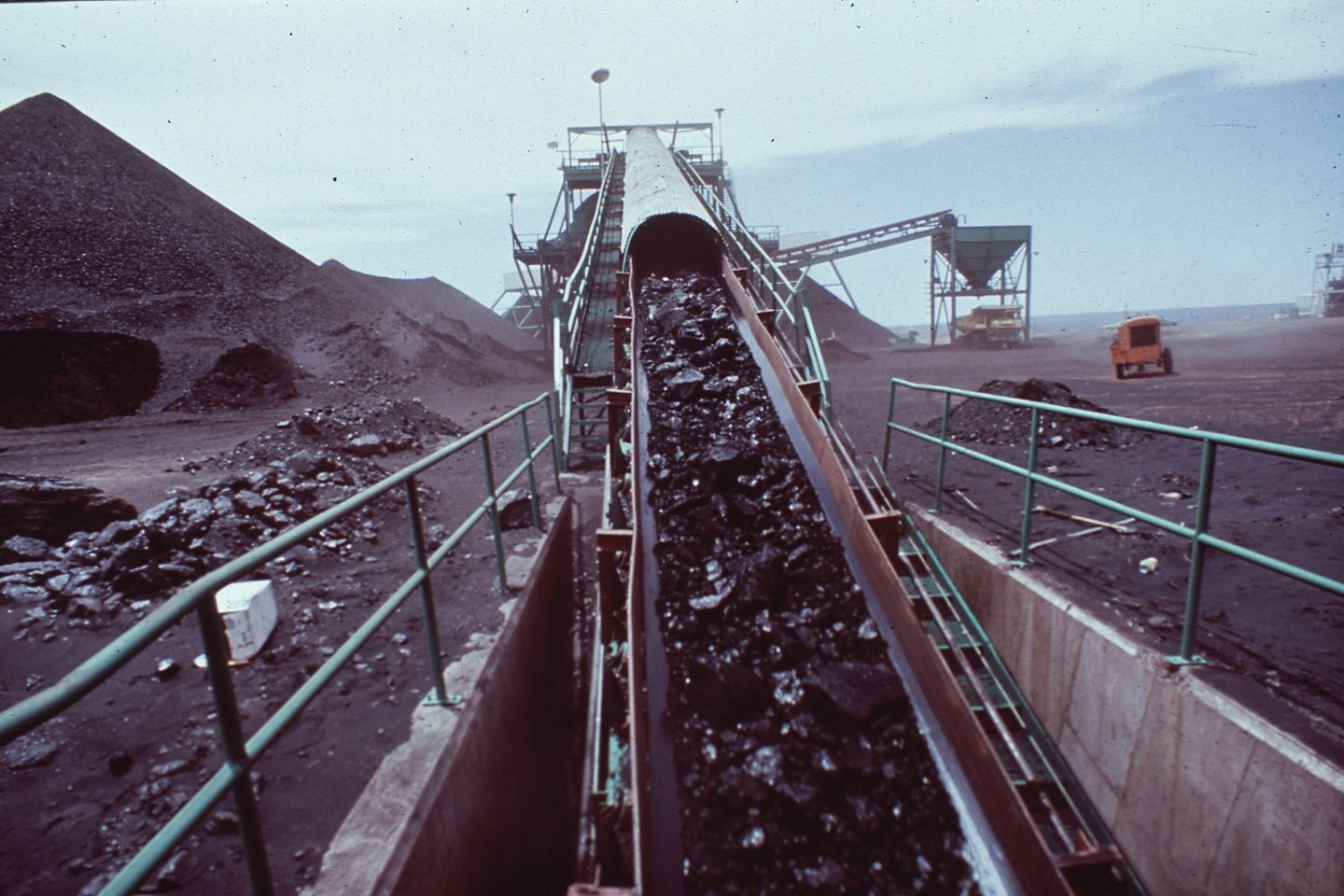
In 1978, the United States, under President Jimmy Carter, was coming back to coal following the decade’s oil and gas crises. That was despite a slew of scientific studies “coalescing to suggest that the environmental cost of any large-scale reversion to a coal-based economy could be dangerously high,” as Fortune’s Tom Alexander explained.
In a feature for the magazine, Alexander incisively framed the competing priorities that led to the national move in practical and political terms: “In the trade-off between energy and environmental quality, energy usually gets the benefit of the doubt. After all, what’s the use of ultra-pure air if your home is cold or your job has vanished? … Nobody has ever denied that use of coal inevitably invokes environmental penalties, but these penalties are usually accepted as a bearable cost of assuring the nation a secure source of energy.”
Almost a half century later, as the coal-friendly Trump administration officially rescinds the scientific finding that climate change endangers human health and the environment, Alexander’s concerns about this approach remain urgent: Why would the country continue investing in coal-fired factories and power plants, despite mounting evidence that coal smoke was a dangerous pollutant; that “the notched profiles and flattened peaks of large sections of central Appalachia will probably rank among mankind’s most enduring marks upon the planet”; and that miners’ lives were being lost both from mining accidents and the dreaded “black lung disease”?
And, Alexander explained back in 1978, a brand-new concern was beginning to worry policy makers: “Some disturbing measurements of accumulating carbon dioxide in the atmosphere pose an urgent need to clarify the implications of the trend, lest a worldwide commitment to heavy coal use—a big contributor to the buildup—trigger irreversible changes in the world’s climate.”
We know now that this buildup of CO2 has indeed caused irreversible climate change, even if many in the Trump administration dismiss it as a “hoax”: The planet has warmed some 2.5 degrees Fahrenheit since the beginning of the industrial age, and scientists expect an average additional warming of around 4.7 degrees by the end of the century. As Alexander wrote in his prescient article, “with the immense invoice of known and hidden costs that come with coal, including some that we can only guess at, a prudent civilization would hold its consumption of coal to a minimum.”
Coal is no longer a growth industry in the U.S. As Fortune’s Jordan Blum wrote this week, “Coal represented more than 50% of U.S. electricity generation in 2000, and it’s down to just under 17% today.” But President Donald Trump, who was recently awarded the industry’s “Undisputed Champion of Coal Award,” seems intent upon bringing it back, as Blum reported: “On Feb. 11, Trump ordered the Defense Department to sign power contracts with coal plants, while authorizing more than $525 million in federal funds for the expansion and upgrades of coal plants.”