• Home
  • Latest
  • Fortune 500
  • Finance
  • Tech
  • Leadership
  • Lifestyle
  • Rankings
  • Multimedia
CommentaryLeadership

What happened at Davos was a warning to CEOs: their companies are designed for a world that no longer exists

By
Ram Charan
Ram Charan
Down Arrow Button Icon
By
Ram Charan
Ram Charan
Down Arrow Button Icon
February 3, 2026, 6:30 AM ET
Ram Charan is an adviser to CEOs and boards and author of the forthcoming book China’s 90% Model. 
trump
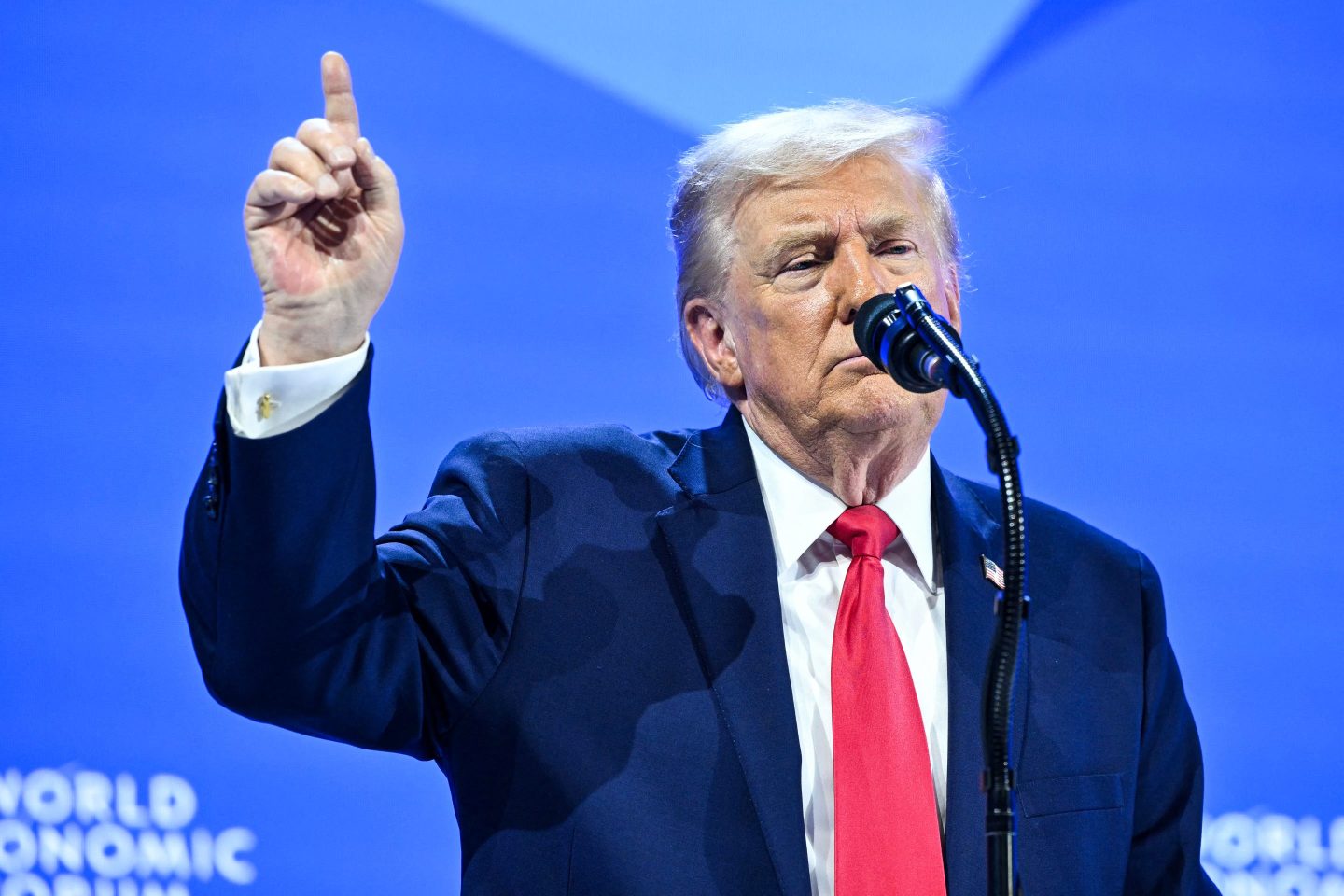
US President Donald Trump gestures as he delivers a special address during the World Economic Forum (WEF) annual meeting in Davos on January 21, 2026. The World Economic Forum takes place in Davos from January 19 to January 23, 2026.Mandel NGAN / AFP via Getty Images

What happened at Davos this year was not simply a message for presidents and prime ministers. It was a warning for chief executives. The World Economic Forum has long served as a venue for diplomatic signaling, but this time the implications landed squarely in the boardroom. 

Recommended Video

At Davos, Canadian prime minister Mark Carney warned that the “post–Cold War rules-based international order” is no longer holding, and that countries must “take on the world as it is, not the world we wish to see.” That admonition applies even more forcefully to CEOs. Their corporate strategies built for yesterday’s order are now exposed to risks they no longer control. 

For three decades, American multinationals operated on a quiet assumption: that geopolitics would remain largely external to commercial decision-making. That assumption survived the 1990s and 2000s even as cracks appeared in the global trading system. Today, it is not merely outdated but dangerous. What companies are experiencing is not a sudden rupture, but the accumulated effect of trends that have been visible for years. What is striking is how many firms remain organised as if those trends never mattered.

Davos crystallised a shift that can no longer be dismissed as diplomatic theatre. Europe and Canada are deepening economic engagement with China, and China is actively reciprocating. This is happening as the United States uses tariffs, industrial policy and explicit reciprocity to make clear that economic alignment will no longer be inherited by default. It will be negotiated, enforced and revisited. 

Our allies are not rejecting the United States. They’re hedging. Their response is a rational adjustment to a world in which trade, technology and capital are explicit instruments of state power. China did not arrive at this position by accident. Under Xi Jinping, Beijing has systematically reduced its dependence on Western goodwill while building asymmetric leverage across industrial capacity, critical inputs and market access. Europe and Canada were not treated as adversaries; they were treated as strategic options. Once Washington stopped pretending the old system still functioned, those options became more valuable.

The data reinforces what the rhetoric now confirms. More than half of America’s goods trade deficit is with allies, not China. China, meanwhile, remains Europe’s largest or second-largest trading partner, with bilateral trade measured in the hundreds of billions of dollars. These patterns are not transitional. They are structural. Allies moving closer to China are not engaging a neutral market actor; they are engaging a mercantilist system designed to absorb demand while exporting overcapacity. For American companies, the consequence is not only competitive pressure abroad but a steady erosion of industrial strength at home.

The central challenge for CEOs is not tariffs or export controls in isolation. It is strategic mismatch. Most American multinationals are still designed for a world of stable alliances, predictable currencies and relatively frictionless capital flows. That world no longer exists. Yet organisational structures, incentive systems and growth targets continue to assume it does. Strategy, in too many firms, remains backward-looking — anchored in nostalgia rather than feasibility.

Western multinational corporations must now redesign for a world in which alignment is fluid, currencies are volatile and allies do not move in lockstep. That requires decisions that many firms have deferred for too long.

First, CEOs must build scenarios that assume some allies will continue edging toward China’s economic orbit. This is no longer an academic exercise. Leaders must model both growth opportunities and structural risks as trade patterns realign: competing across many smaller markets rather than a handful of scale markets; detecting Chinese export pressure in fragmented quantities where subsidies and price aggression are hardest to see; operating across multiple volatile currencies rather than relying on dollar-centric assumptions; and redesigning organisations so unfiltered market intelligence reaches the top. Above all, it demands relentless focus on cost, productivity and relevance. Products must compete with Chinese offerings after accounting for currency depreciation and state support, not before.

Second, companies must decide clearly where to play — and where not to play. With Xi exercising direct control over China’s supply chains, ambiguity is no longer a strategy. Selectivity is. Firms that delay hard choices will be outmanoeuvred by those that make them early.

Third, CEOs must reset goals to what is feasible rather than familiar. Growth targets built on yesterday’s assumptions will destroy capital tomorrow. Discipline now matters more than optimism.

Fourth, capital generation and allocation must be reconsidered from first principles. In which currencies will profits be earned? What buffers are required against political and financial shocks? These are no longer technical questions for finance teams alone; they are core strategic judgements.

Fifth, sunk costs must be confronted honestly. Footprints will shrink. Facilities will close. Delay only raises the eventual price.

Finally, geopolitical judgement must move out of government-affairs silos and into the CEO’s office and the boardroom. This requires a genuine war-room mentality. Geopolitical exposure now shapes growth trajectories, margin durability and corporate valuation. It is strategy.

Many allies accumulating reserves today do so on the back of open American markets. That openness is no longer unconditional, nor is it infinite. Davos made that clear — not just to governments, but to anyone responsible for allocating capital and setting direction.

My argument is not about ideology. It is an argument about adaptation. The companies that decide to do so now will continue to grow. Those that do not will discover that alignment risk compounds faster than financial risk ever did.

The opinions expressed in Fortune.com commentary pieces are solely the views of their authors and do not necessarily reflect the opinions and beliefs of Fortune.

Join us at the Fortune Workplace Innovation Summit May 19–20, 2026, in Atlanta. The next era of workplace innovation is here—and the old playbook is being rewritten. At this exclusive, high-energy event, the world’s most innovative leaders will convene to explore how AI, humanity, and strategy converge to redefine, again, the future of work. Register now.
About the Author
By Ram Charan
See full bioRight Arrow Button Icon

Latest in Commentary

Finance
Lorem ipsum dolor sit amet, consectetur adipiscing elit, sed do eiusmod tempor incididunt ut labore et dolore magna aliqua. Ut enim ad minim veniam
By Fortune Editors
October 20, 2025
Finance
Lorem ipsum dolor sit amet, consectetur adipiscing elit, sed do eiusmod tempor incididunt ut labore et dolore magna aliqua. Ut enim ad minim veniam
By Fortune Editors
October 20, 2025
Finance
Lorem ipsum dolor sit amet, consectetur adipiscing elit, sed do eiusmod tempor incididunt ut labore et dolore magna aliqua. Ut enim ad minim veniam
By Fortune Editors
October 20, 2025
Finance
Lorem ipsum dolor sit amet, consectetur adipiscing elit, sed do eiusmod tempor incididunt ut labore et dolore magna aliqua. Ut enim ad minim veniam
By Fortune Editors
October 20, 2025
Finance
Lorem ipsum dolor sit amet, consectetur adipiscing elit, sed do eiusmod tempor incididunt ut labore et dolore magna aliqua. Ut enim ad minim veniam
By Fortune Editors
October 20, 2025
Finance
Lorem ipsum dolor sit amet, consectetur adipiscing elit, sed do eiusmod tempor incididunt ut labore et dolore magna aliqua. Ut enim ad minim veniam
By Fortune Editors
October 20, 2025

Most Popular

Finance
Lorem ipsum dolor sit amet, consectetur adipiscing elit, sed do eiusmod tempor incididunt ut labore et dolore magna aliqua. Ut enim ad minim veniam
By Fortune Editors
October 20, 2025
Finance
Lorem ipsum dolor sit amet, consectetur adipiscing elit, sed do eiusmod tempor incididunt ut labore et dolore magna aliqua. Ut enim ad minim veniam
By Fortune Editors
October 20, 2025
Finance
Lorem ipsum dolor sit amet, consectetur adipiscing elit, sed do eiusmod tempor incididunt ut labore et dolore magna aliqua. Ut enim ad minim veniam
By Fortune Editors
October 20, 2025
Finance
Lorem ipsum dolor sit amet, consectetur adipiscing elit, sed do eiusmod tempor incididunt ut labore et dolore magna aliqua. Ut enim ad minim veniam
By Fortune Editors
October 20, 2025
Finance
Lorem ipsum dolor sit amet, consectetur adipiscing elit, sed do eiusmod tempor incididunt ut labore et dolore magna aliqua. Ut enim ad minim veniam
By Fortune Editors
October 20, 2025
Finance
Lorem ipsum dolor sit amet, consectetur adipiscing elit, sed do eiusmod tempor incididunt ut labore et dolore magna aliqua. Ut enim ad minim veniam
By Fortune Editors
October 20, 2025
Rankings
  • 100 Best Companies
  • Fortune 500
  • Global 500
  • Fortune 500 Europe
  • Most Powerful Women
  • Future 50
  • World’s Most Admired Companies
  • See All Rankings
Sections
  • Finance
  • Leadership
  • Success
  • Tech
  • Asia
  • Europe
  • Environment
  • Fortune Crypto
  • Health
  • Retail
  • Lifestyle
  • Politics
  • Newsletters
  • Magazine
  • Features
  • Commentary
  • Mpw
  • CEO Initiative
  • Conferences
  • Personal Finance
  • Education
Customer Support
  • Frequently Asked Questions
  • Customer Service Portal
  • Privacy Policy
  • Terms Of Use
  • Single Issues For Purchase
  • International Print
Commercial Services
  • Advertising
  • Fortune Brand Studio
  • Fortune Analytics
  • Fortune Conferences
  • Business Development
About Us
  • About Us
  • Editorial Calendar
  • Press Center
  • Work At Fortune
  • Diversity And Inclusion
  • Terms And Conditions
  • Site Map
  • Facebook icon
  • Twitter icon
  • LinkedIn icon
  • Instagram icon
  • Pinterest icon

Most Popular

placeholder alt text
Economy
'I just don't have a good feeling about this': Top economist Claudia Sahm says the economy quietly shifted and everyone's now looking at the wrong alarm
By Eleanor PringleJanuary 31, 2026
3 days ago
placeholder alt text
Future of Work
Ford CEO has 5,000 open mechanic jobs with up to 6-figure salaries from the shortage of manually skilled workers: 'We are in trouble in our country'
By Marco Quiroz-GutierrezJanuary 31, 2026
3 days ago
placeholder alt text
Success
In 2026, many employers are ditching merit-based pay bumps in favor of ‘peanut butter raises’
By Emma BurleighFebruary 2, 2026
22 hours ago
placeholder alt text
Big Tech
The Chan Zuckerberg Initiative cut 70 jobs as the Meta CEO’s philanthropy goes all in on mission to 'cure or prevent all disease'
By Sydney LakeFebruary 1, 2026
2 days ago
placeholder alt text
Personal Finance
Current price of silver as of Monday, February 2, 2026
By Joseph HostetlerFebruary 2, 2026
1 day ago
placeholder alt text
Economy
Musk’s fantasy for a future where work is optional just got more real: U.K. minister calls for universal basic income to cushion AI-related job losses
By Sasha RogelbergFebruary 1, 2026
2 days ago

© 2026 Fortune Media IP Limited. All Rights Reserved. Use of this site constitutes acceptance of our Terms of Use and Privacy Policy | CA Notice at Collection and Privacy Notice | Do Not Sell/Share My Personal Information
FORTUNE is a trademark of Fortune Media IP Limited, registered in the U.S. and other countries. FORTUNE may receive compensation for some links to products and services on this website. Offers may be subject to change without notice.


Latest in Commentary

EuropeLetter from London
Oracle billionaire Larry Ellison’s next big bet: Redefining how long–and how well–we live
By Kamal AhmedFebruary 3, 2026
21 minutes ago
davos
CommentaryCareers
While elites debate geopolitics, Americans are rethinking college in the search for economic mobility
By Ed MitzenFebruary 3, 2026
1 hour ago
american dream
CommentaryCapitalism
We need more capitalists, not necessarily more capitalism
By Seth Levine and Elizabeth MacBrideFebruary 3, 2026
2 hours ago
pretti
CommentaryLeadership
What should business leaders say about Alex Pretti’s death?
By Deepak MalhotraFebruary 3, 2026
2 hours ago
trump
CommentaryLeadership
What happened at Davos was a warning to CEOs: their companies are designed for a world that no longer exists
By Ram CharanFebruary 3, 2026
4 hours ago
dewar
CommentaryLeadership
The AI adoption story is haunted by fear as today’s efficiency programs look like tomorrow’s job cuts. Leaders need to win workers’ trust
By Carolyn DewarFebruary 1, 2026
2 days ago