It was the end of November when Steve Davis, president of Elon Musk’s $5.6 billion tunneling startup Boring Company, got on X for a livestream discussion with a former news broadcaster to chat about the tunnel project Boring Company is trying to begin in Nashville.
The 90-minute discussion that followed was extraordinary—not for anything specific that Davis said, but simply for the fact that he was saying something. The Boring Co., like Musk’s other companies, prides itself on shunning the mainstream media. It ignores questions from journalists. It doesn’t even have a public relations department. Davis, a close ally and longtime “fixer” for Musk, has a reputation for avoiding speaking engagements, and rarely surfaces in public.
And yet, here he was sitting down for a live conversation with an ex-TV reporter; Weeks later, Davis personally escorted a Las Vegas Review Journal reporter on a rare tour of the tunnels Boring Co. is constructing under the city; he also rode in a Tesla with a YouTuber in January, enthusiastically pointing out items of interest as they travelled through the completed section of tunnel known as the Las Vegas Loop.
Davis’ sudden zeal for the publicity circuit, after a decade of silence, is as baffling as it is unexpected.
“We’re not transparent enough, so we’re glad that you’re here,” Davis told the Las Vegas reporter on the tunnel tour this month.
The timing may not be coincidental. As Fortune first reported, the Boring Co. was recently fined for dumping wastewater into Las Vegas manholes, and an investigation into firefighters getting burned in its tunnels led a member of Congress to demand Nevada’s Governor for more transparency. In Nashville, where Boring Company plans to start its next project, a Metro Council member has tried to introduce legislation opposing the Loop project that has received wide support from her peers, and a group calling themselves the “Big Dumb Hole Coalition” has surfaced to oppose the project.
But for close observers of the Elon-verse, the Boring Co. shift in tactics raises a bigger question about the mindset driving one of the world’s most powerful, and disruptive, collections of companies: Is the media blitz a temporary concession in the interest of damage control, or a more fundamental recognition of the limits of Musk’s “go direct” strategy?
‘Can’t hide forever’
While no less ambitious than Musk’s Neuralink brain chip startup or his SpaceX rocket company, the Boring Company—which hopes to eventually build “hyperloop” tunnels in which autonomous vehicles whip around at speeds of over 100 miles per hour—has moved at a more incremental pace. Roughly a decade since its founding, Boring Co. has opened only a 4-mile stretch of tunnel in Las Vegas, with human drivers chauffeuring tourists between two resorts and the Convention Center at speeds of 35 miles per hour. Potential projects in California, Illinois, Texas, Florida, and Maryland have all fizzled out. —whether because they lost political momentum, or didn’t get through environmental assessments.
“I think they’ve realized based on failures on other projects that they need to be more proactive on messaging,” says a former Boring Company employee, who spoke on condition of anonymity for fear of retaliation. (The embrace of the media has its limits though—Davis and The Boring Co did not respond to Fortune’s interview requests for this story).
Ultimately, Boring Co. projects are public transportation projects, which are notoriously difficult as they necessitate buy-in from all kinds of stakeholders, ranging from land owners to elected politicians, to technical experts and emergency responders. Not to mention the people who will be utilizing the system: city residents. That requires outreach.
Boring Company launched a bimonthly blog in Nashville, where it wants to build a 25-mile network of tunnels. Company representative Tyler Fairbanks recently spoke at a Nevada State Board of Regents meeting to emphasize that safety was a priority for the company.
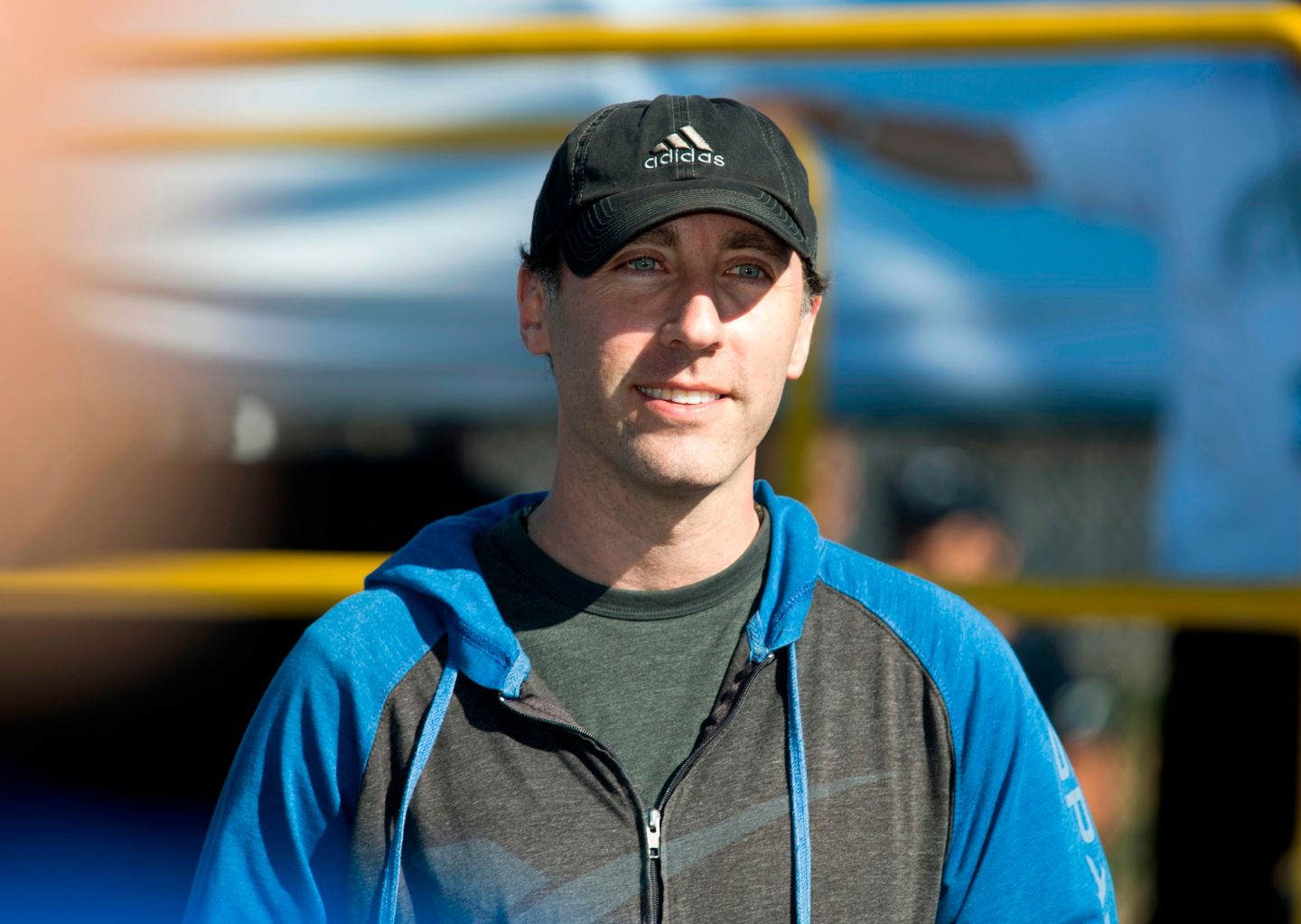
The main face of the media charm offensive, however, is Davis, the mid-40s Boring Co. president.
Davis may rarely emerge in public, but he is prolific within Musk’s web of companies and passion projects. An early SpaceX engineer, Musk recruited Davis to help him cut costs at X shortly after he purchased it in 2022. And, last year, during Musk’s stint in the White House, Musk roped in Davis to help run his Department of Government Efficiency.
Davis has said little publicly about any of it. He gave a rare interview on Fox News with several members of the DOGE team last year, though he wouldn’t even confirm his role within the agency, saying only that he was “part of the DOGE team.” More than a decade ago, he spoke with Ashlee Vance for his biography, Elon Musk, and his work at SpaceX (and his frozen yogurt restaurant, Mr. Yogato) were featured in a 2-minute Voices of America video in 2012.
His peers have described him as a hands-on manager—looming in various text threads with Boring Company employees and personally making requests and speaking with regulators and government officials about permitting delays—and have said he can be ruthless and occasionally insensitive, as Fortune has previously reported.
As he makes more public appearances, people are getting a better sense of his personality. While he is a somewhat awkward presenter, Davis was energetic, comfortable, and enthusiastic during the tour with the Tesla podcaster. He glowed up when discussing the “Hyperloop Plaza” in Bastrop, Tex., the plaza for employees where Boring Company’s R&D facility is, and where Davis says he has lunch every day when he’s there.
But while Davis’ efforts may make him and the company feel more approachable, the company will also need to deliver results for such public efforts to work, says Len Sherman, an adjunct professor at Columbia Business School. “They made claims, and now are continuing to make claims to be the new face of urban mobility,” Sherman says. “And there’s absolutely positively nothing I’ve seen that even comes close to delivering proof that’s something that people should believe in.”
Even so, Sherman said he was glad to see Boring Company starting to engage more with the public, and said he hopes Davis will agree to speak with people who will ask him difficult questions.
“In the long run, they can’t hide forever,” Sherman says.