• Home
  • Latest
  • Fortune 500
  • Finance
  • Tech
  • Leadership
  • Lifestyle
  • Rankings
  • Multimedia
PoliticsWhite House

Trump’s erratic, chaotic shifts in strategy follow a long tradition. Here’s what to know about the ‘Madman Theory’ of politics

By
Andrew Latham
Andrew Latham
and
The Conversation
The Conversation
Down Arrow Button Icon
By
Andrew Latham
Andrew Latham
and
The Conversation
The Conversation
Down Arrow Button Icon
January 26, 2026, 11:21 AM ET
trump
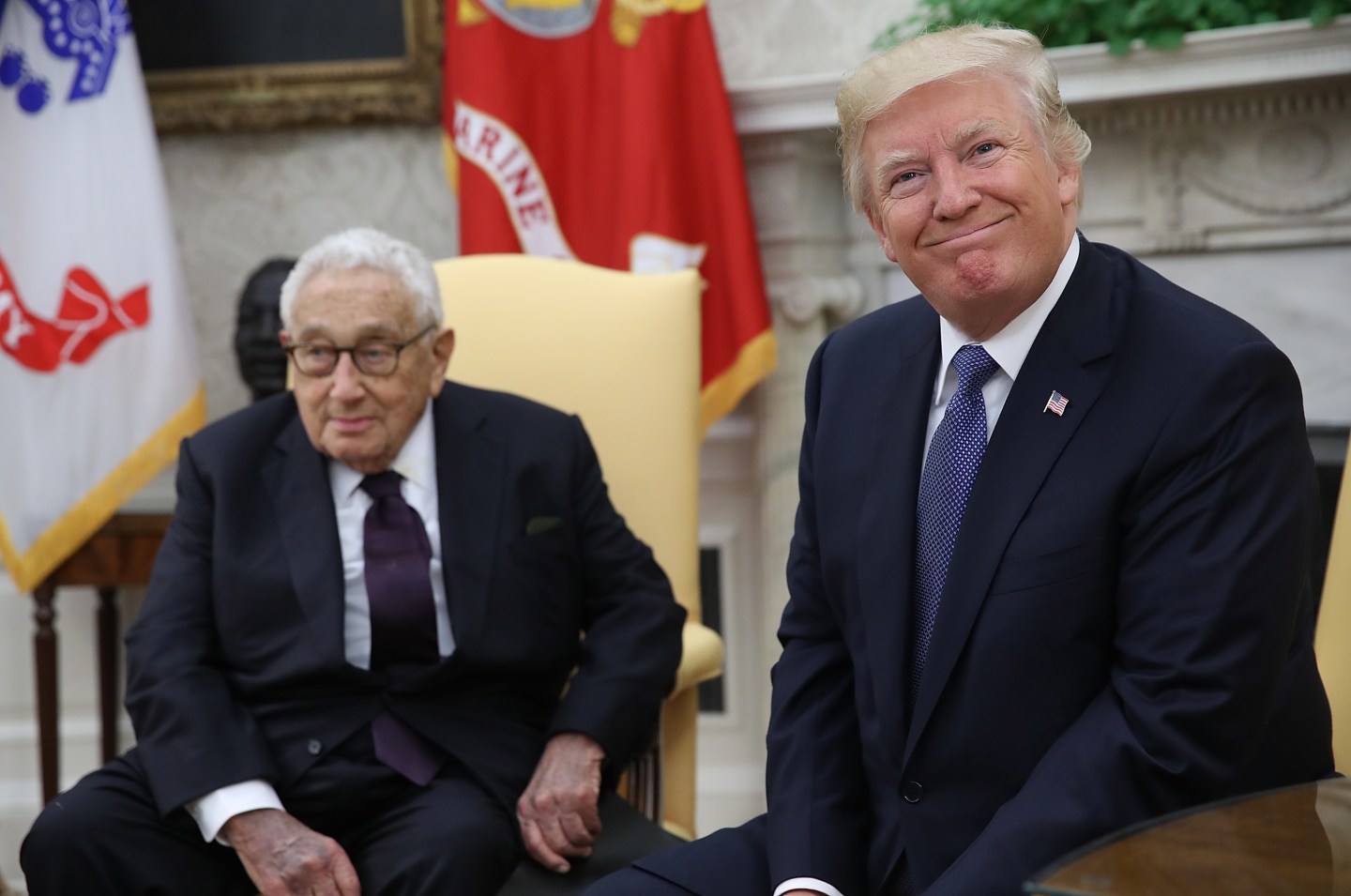
President Donald Trump in 2017 with one of the architects of the Nixon "Madman Theory," Henry Kissinger.Win McNamee/Getty Images

Tariffs are on, until they are not. Military force is an option … and then it’s off the table.

Recommended Video

Erratic behavior and unpredictability is having a moment in foreign policy circles. In the White House and elsewhere, it is seemingly being viewed as a strategic asset rather than a weakness.

But it is far from a new strategy. Wild threats, sudden policy reversals and intentionally confusing language have long been used to keep adversaries off balance and gain leverage.

In fact, the concept has its own name in international relations: “madman theory.” As outlined by Cold War strategists Daniel Ellsberg and Thomas Schelling, it holds that projecting a readiness to take extreme action can shape an opponent’s calculations by heightening fears of escalation.

While the theory was meant to be explanatory, in the sense that observers used it to explain apparently irrational behavior, it has sometimes been used in a prescriptive way, as an approach consciously adopted by leaders.

The 3 conditions for madman success

The madman theory has historical roots going back to Machiavelli, but it is most closely associated with Richard Nixon, who, as incoming president, reportedly used the term to explain his approach to trying to force North Vietnam’s surrender in the Vietnam War.

Historians see evidence of the theory’s limited applicability in episodes such as Nixon’s 1969 placing of the U.S. military on nuclear alert, which appeared to have reinforced Soviet caution even if it did not bring about an end of the Vietnam War.
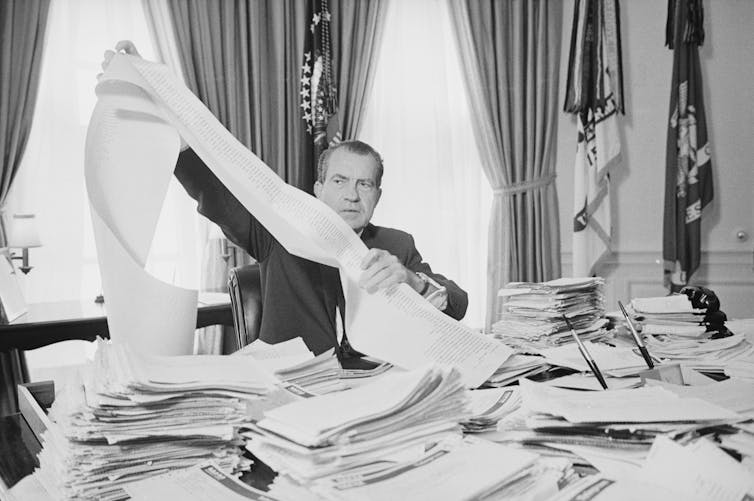
A man holds a long scroll of paper.
President Richard Nixon is closely associated with the ‘madman theory.’ Bettmann/Getty Images

The theory was more applicable in Nixon’s era because of three background conditions that were in place.

The first was information scarcity. During the Cold War, signals traveled more slowly than they do today and through narrow channels. Messages were filtered by professional diplomats, intelligence analysts and military officers.

Ambiguity could be sustained. A country’s leader could appear possibly unhinged without being instantly decoded, contextualized or publicly dissected. “Madman” signaling depended on this controlled opacity.

The second condition was a stable adversary with a shared notion of risk. Nixon’s gambit worked, when it worked at all, because Soviet leaders were deeply conservative risk managers operating inside a rigid hierarchy. They feared miscalculation because they believed it could lead to the Soviet Union’s fall — or at least their fall within it.

The third condition was credibility built through restraint elsewhere. The madman pose only works if it is exceptional. Nixon appeared dangerous to adversaries precisely because the American system normally appeared controlled. His apparent erratic behavior was exceptional in a context of bureaucratic orderliness.

But the world of those three conditions is gone.

Threats today are tweeted, clipped, reframed, leaked, mocked and talked about in real time. Unpredictability doesn’t have time to breathe public fear into existence. Rather, it can devolve into noise.

And nations such as Iran, Russia and China operate in a world they already regard as unstable and unjust. Volatility does not frighten them; it is the environment they expect. In such conditions, apparent irrationality can invite probing, hedging or reciprocal escalation.

Meanwhile, erratic behavior is no longer exceptional or unexpected.

Many a madman would struggle today

Unpredictability only works if it’s strategic rather than designed on the fly. Trump has blustered, contradicted himself publicly, ramped-up rhetorically and then backed down, mostly without receiving obvious concessions.

The more this happens, the more predictability he creates about unpredictability.

And once unpredictability becomes expected, it loses its coercive force.

This dynamic is evident in Trump’s handling of both Iran and Greenland. In the Iranian case, pressure — including military strikes — has been applied without clearly defining where escalation would end.

With Greenland, coercive threats aimed at an ally only strained NATO without producing compliance.

In neither instance did unpredictability translate into durable leverage. Instead, it generated uncertainty about objectives and limits.
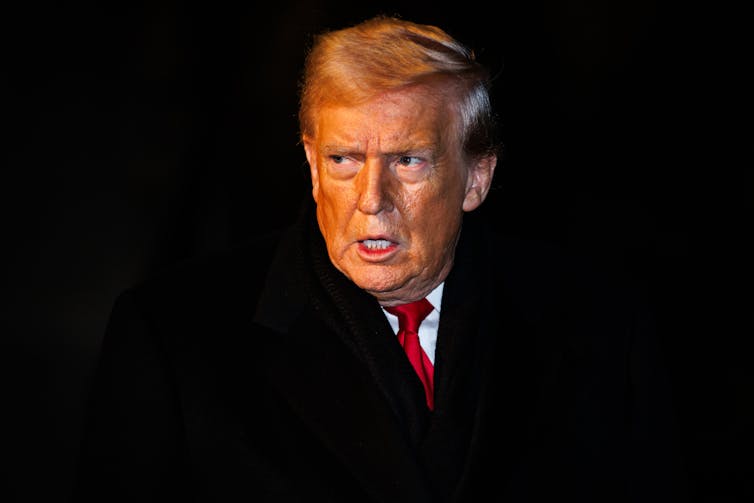
A man in a suit and red tie stands.
Is Donald Trump’s unpredictability becoming predictable? Samuel Corum/Getty Images

A bigger problem for any leader wishing to adopt a madman strategy is that today’s international order and media ecosystem are more inured to volatility. Threats no longer freeze opponents into caution.

Friendly nations hedge their bets. For example, faced with U.S. threats over tariffs, India strengthened ties with China.

Meanwhile, enemies test boundaries. Russia, for example, has treated Trump’s ambiguous signaling on Ukraine as little more than a green-light for it to continue its campaign to conquer the Donbas region.

Does the madman have a future?

There are still limited circumstances in which ambiguity can serve a strategic purpose.

Limited uncertainty about specific responses can reinforce deterrence by keeping adversaries cautious. U.S. strategic ambiguity toward Taiwan, for example, leaves it unclear whether Washington would intervene militarily in the case of an attack by Beijing, discouraging the locking of any side into automatic escalation.

That part of the madman approach remains effective. But what no longer works is volatility untethered from clear objectives and visible limits.

The madman theory was built for a rigid, rule-bound world. It is least effective precisely where today’s politics feels most chaotic.

This article is part of a series explaining foreign policy terms commonly used but rarely explained.

Andrew Latham, Professor of Political Science, Macalester College

This article is republished from The Conversation under a Creative Commons license. Read the original article.


The Conversation

Join us at the Fortune Workplace Innovation Summit May 19–20, 2026, in Atlanta. The next era of workplace innovation is here—and the old playbook is being rewritten. At this exclusive, high-energy event, the world’s most innovative leaders will convene to explore how AI, humanity, and strategy converge to redefine, again, the future of work. Register now.
About the Authors
By Andrew Latham
See full bioRight Arrow Button Icon
By The Conversation
See full bioRight Arrow Button Icon

Latest in Politics

Finance
Lorem ipsum dolor sit amet, consectetur adipiscing elit, sed do eiusmod tempor incididunt ut labore et dolore magna aliqua. Ut enim ad minim veniam
By Fortune Editors
October 20, 2025
Finance
Lorem ipsum dolor sit amet, consectetur adipiscing elit, sed do eiusmod tempor incididunt ut labore et dolore magna aliqua. Ut enim ad minim veniam
By Fortune Editors
October 20, 2025
Finance
Lorem ipsum dolor sit amet, consectetur adipiscing elit, sed do eiusmod tempor incididunt ut labore et dolore magna aliqua. Ut enim ad minim veniam
By Fortune Editors
October 20, 2025
Finance
Lorem ipsum dolor sit amet, consectetur adipiscing elit, sed do eiusmod tempor incididunt ut labore et dolore magna aliqua. Ut enim ad minim veniam
By Fortune Editors
October 20, 2025
Finance
Lorem ipsum dolor sit amet, consectetur adipiscing elit, sed do eiusmod tempor incididunt ut labore et dolore magna aliqua. Ut enim ad minim veniam
By Fortune Editors
October 20, 2025
Finance
Lorem ipsum dolor sit amet, consectetur adipiscing elit, sed do eiusmod tempor incididunt ut labore et dolore magna aliqua. Ut enim ad minim veniam
By Fortune Editors
October 20, 2025

Most Popular

Finance
Lorem ipsum dolor sit amet, consectetur adipiscing elit, sed do eiusmod tempor incididunt ut labore et dolore magna aliqua. Ut enim ad minim veniam
By Fortune Editors
October 20, 2025
Finance
Lorem ipsum dolor sit amet, consectetur adipiscing elit, sed do eiusmod tempor incididunt ut labore et dolore magna aliqua. Ut enim ad minim veniam
By Fortune Editors
October 20, 2025
Finance
Lorem ipsum dolor sit amet, consectetur adipiscing elit, sed do eiusmod tempor incididunt ut labore et dolore magna aliqua. Ut enim ad minim veniam
By Fortune Editors
October 20, 2025
Finance
Lorem ipsum dolor sit amet, consectetur adipiscing elit, sed do eiusmod tempor incididunt ut labore et dolore magna aliqua. Ut enim ad minim veniam
By Fortune Editors
October 20, 2025
Finance
Lorem ipsum dolor sit amet, consectetur adipiscing elit, sed do eiusmod tempor incididunt ut labore et dolore magna aliqua. Ut enim ad minim veniam
By Fortune Editors
October 20, 2025
Finance
Lorem ipsum dolor sit amet, consectetur adipiscing elit, sed do eiusmod tempor incididunt ut labore et dolore magna aliqua. Ut enim ad minim veniam
By Fortune Editors
October 20, 2025
Rankings
  • 100 Best Companies
  • Fortune 500
  • Global 500
  • Fortune 500 Europe
  • Most Powerful Women
  • Future 50
  • World’s Most Admired Companies
  • See All Rankings
Sections
  • Finance
  • Leadership
  • Success
  • Tech
  • Asia
  • Europe
  • Environment
  • Fortune Crypto
  • Health
  • Retail
  • Lifestyle
  • Politics
  • Newsletters
  • Magazine
  • Features
  • Commentary
  • Mpw
  • CEO Initiative
  • Conferences
  • Personal Finance
  • Education
Customer Support
  • Frequently Asked Questions
  • Customer Service Portal
  • Privacy Policy
  • Terms Of Use
  • Single Issues For Purchase
  • International Print
Commercial Services
  • Advertising
  • Fortune Brand Studio
  • Fortune Analytics
  • Fortune Conferences
  • Business Development
About Us
  • About Us
  • Editorial Calendar
  • Press Center
  • Work At Fortune
  • Diversity And Inclusion
  • Terms And Conditions
  • Site Map
  • Facebook icon
  • Twitter icon
  • LinkedIn icon
  • Instagram icon
  • Pinterest icon

Latest in Politics

Middle EastIran
Trump says regime change in Iran that ousts Islamic clerics ‘would be the best thing that could happen’ as another carrier heads to Mideast
By Konstantin Toropin, Aamer Madhani, Jon Gambrell and The Associated PressFebruary 13, 2026
2 hours ago
Donald Trump shrugs as he stands behind the podium in the White House briefing room.
North AmericaTariffs and trade
90% of Trump’s tariffs are paid for by American consumers and companies, New York Fed says
By Sasha RogelbergFebruary 13, 2026
6 hours ago
data center
PoliticsData centers
Politicians scramble on data centers after putting their voters on the hook for Big Tech’s job-killing AI efforts
By Marc Levy and The Associated PressFebruary 13, 2026
12 hours ago
cook
LawMedia
Trump’s FTC chief says he’s not the ‘speech police,’ but reality has too liberal a bias on Apple News app
By The Associated PressFebruary 13, 2026
12 hours ago
costco
Workplace CultureDEI
Costco defied Trump’s DEI directive as Target and Walmart scaled back. Business is booming
By Nick LichtenbergFebruary 13, 2026
12 hours ago
President Donald Trump speaks to the media wearing a hat that reads, "Trump Was Right About Everything!," during a visit to The People's House: A White House Experience August 22, 2025 in Washington, DC.
PoliticsDonald Trump
We’ve probably already seen ‘peak Trump,’ says Pimco, with the Oval Office now constrained by courts and midterms
By Eleanor PringleFebruary 13, 2026
14 hours ago

Most Popular

placeholder alt text
Economy
Some folks on Wall Street think yesterday’s U.S. jobs number is ‘implausible’ and thus due for a downward correction
By Jim EdwardsFebruary 12, 2026
2 days ago
placeholder alt text
Economy
‘Nothing short of self-sabotage’: Watchdog warns about national debt setting new record in just 4 years
By Tristan BoveFebruary 11, 2026
2 days ago
placeholder alt text
Success
Ex–Google exec says degrees in law and medicine are a waste of time because they take so long to complete that AI will catch up by graduation
By Preston ForeFebruary 11, 2026
2 days ago
placeholder alt text
Crypto
Bitcoin reportedly sent to wallet associated with Nancy Guthrie’s ransom letter providing potential clue in investigation
By Carlos GarciaFebruary 11, 2026
2 days ago
placeholder alt text
Commentary
Something big is happening in AI — and most people will be blindsided
By Matt ShumerFebruary 11, 2026
2 days ago
placeholder alt text
North America
‘I gave another girl to Kimbal’: Inside Jeffrey Epstein’s honey-trap plan targeting Elon Musk through his brother
By Eva Roytburg and Jessica MathewsFebruary 13, 2026
10 hours ago

© 2026 Fortune Media IP Limited. All Rights Reserved. Use of this site constitutes acceptance of our Terms of Use and Privacy Policy | CA Notice at Collection and Privacy Notice | Do Not Sell/Share My Personal Information
FORTUNE is a trademark of Fortune Media IP Limited, registered in the U.S. and other countries. FORTUNE may receive compensation for some links to products and services on this website. Offers may be subject to change without notice.