In an era in which homeownership feels increasingly further out of reach, one real estate CEO is trying to dispel the idea homeownership is the true American Dream.
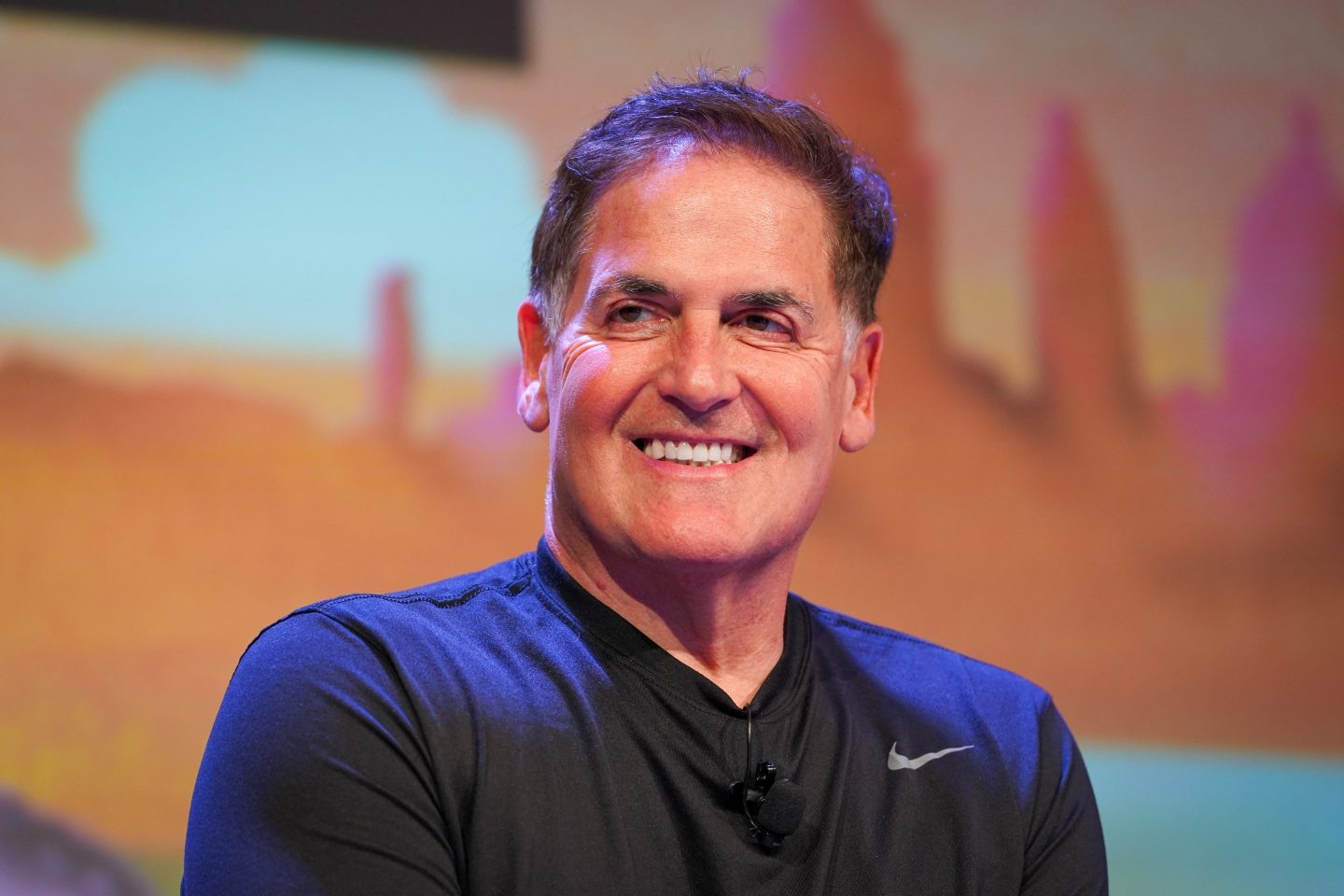
“I think it was a slogan created by banks to create interest income on home loans,” Ryan Serhant, founder and CEO of real estate referral network Serhant, said in an interview published by The CEO Series. “It’s like student debt. Everyone needs to go to college. It was a device to create interest payments on student debt.”
But U.S. mortgage history would beg to differ, although Serhant would have a case for thinking the American Dream is more difficult to achieve because of current housing market conditions.
Serhant, 41, started in real estate in 2008 at Nest Seekers International, where he rose through the ranks to become executive vice president. His breakout came on Bravo’s Million Dollar Listing New York from 2012–2021, where he built a bicoastal team handling luxury sales across New York, Los Angeles, Miami, and the Hamptons. In 2020 he launched Serhant, which he calls a “Brokerage 3.0,” emphasizing AI tools and education through platforms like SellIt.com. By early 2025, his firm hit $1 billion in sales within 35 days, including a record $200 million deal he closed mid-flight to Miami. Serhant is now also the star of Netflix’s Owning Manhattan.
Even considering his own success is marked by major real estate transactions, Serhant argued in his interview that homeownership is simply hard to achieve for some Americans. Home prices have surged more than 40% since the start of the pandemic, and mortgage rates remain stubbornly high, in the 6% range. This is particularly frustrating for people who want to buy homes because they can vividly remember the sub-3% mortgage rates of the pandemic era. Meanwhile, the average age of a first-time homebuyer also jumped to a record-breaking 40 in 2025, underscoring just how hard it’s been for younger Americans to break into the housing market.
“The historically low share of first-time buyers underscores the real-world consequences of a housing market starved for affordable inventory,” Jessica Lautz, deputy chief economist and vice president of research at the National Association of Realtors, said in a statement. “The share of first-time buyers in the market has contracted by 50% since 2007—right before the Great Recession.”
While Serhant claims the American Dream was just a slogan created by banks to encourage more Americans to buy a home, it was not created by banks, and the modern mortgage system was a federal government innovation. But the idea did come out of a period when capitalism’s survival was not guaranteed, from the economic destiny of the U.S. to the individual version of what that looked like: the Great Depression and the 1930s.
Historical foundation of the American Dream
Mortgages have been a part of American history ever since the Revolution—but they looked very different from how they do today. In early America (during the 1700s and 1800s), mortgage terms were much shorter, usually in the five- to 10-year range instead of the 30-year loans we see today. Plus, banks would typically finance only about 50% of the loan, meaning the other half would be a down payment.
A Great Depression–era foreclosure crisis during the 1930s prompted New Deal solutions from President Franklin Delano Roosevelt, including the 1933 creation of the Home Owners’ Loan Corporation, which refinanced distressed loans with longer terms and lower rates. The Home Owners’ Loan Act was also passed to “provide emergency relief with respect to home mortgage indebtedness, to refinance home mortgages, to extend relief to the owners occupied by them and who are unable to amortize their debt elsewhere.” The 1934 Federal Housing Administration then insured private mortgages, cutting down payments to 10% and starting 20-year and 30-year amortizing loans to help slash defaults.
The coinage “American Dream” was nearly synonymous, popularized by James Truslow Adams’s 1931 Epic of America. His definition was “that dream of a land in which life should be better and richer and fuller for everyone, with opportunity for each according to ability or achievement.” Within a few years, the FHA started insuring longer-term mortgages (30 years) and slashed down payments to just 10% of a home’s price. So no, banks didn’t create the American Dream linkage to goose mortgage interest payments; it just sort of happened during a period when economic activity collapsed and faith in capitalism itself was hanging in the balance. The triumphant decades afterward did, however, enshrine wealth building through real estate as a cornerstone of Truslow Adams’s vision.
After World War II, the 1944 GI Bill enabled zero-down home purchases for veterans, which led to an 18-percentage-point jump in ownership rates, also fueled by suburban booms and Fannie Mae’s 1938 secondary market liquidity. Freddie Mac also started handling conventional loans in the 1970s amid soaring rates. All of these changes not only romanticized homes as a major engine for growing personal wealth—they also fueled the baby boom and the peak of what Fortune founder Henry Luce himself called “the American century.”
Then, many years later, the 2008 crash came, resulting in more stringent lending standards and also representing a break with the ever-climbing momentum of every American being a homeowner. While the FHA’s 30-year fixed-rate mortgage at first made it easier for more Americans to afford to buy a home, homeownership peaked in the pre–Great Recession days, at 69% in 2004, and has not returned to that level since. That year, President George W. Bush announced a range of policies promoting what he called “the ownership society,” stating his belief that “homeownership is the cornerstone of America’s vibrant communities and benefits individual families by building stability and long-term financial security.”
On a wider basis, the 2008 crash shattered the illusion of homeownership as the way to prosperity when millions of foreclosures occurred, and builders halted projects, leading to the shortage of roughly 2 million homes currently afflicting the market. This means that not only is it more difficult to obtain a mortgage in the first place, but also the “lock-in effect” keeps many Americans from selling their homes for fear of losing their low rate, while many aspiring homeowners are simply locked out.
While this confluence of factors means that homeownership has been pushed further out of reach, especially for younger generations, it doesn’t mean the American Dream of homeownership was just an illusion created by banks.
Generational hurdles for getting a mortgage
Current homeownership rates are roughly 65%, but younger generations still show signs of struggle in obtaining a mortgage. First-time homebuyers make up just 21% of buyers, according to NAR, because they’re squeezed by inventory shortages and costs exceeding one-third of income.
High mortgage rates, low supply, and economic uncertainty lock out young buyers, spurring multigenerational living and longer periods of renting. Other housing experts have said renting for a longer period of time may not be such a bad thing though, considering the ballooning hidden costs associated with homeownership.
“If your goal is to become financially independent at a young age, you probably don’t want to go buy a house—but it’s a very controversial thing to say,” JL Collins told The Diary of a CEO podcast in an episode published Jan. 12.
Collins, the bestselling author of Pathfinders and The Simple Path to Wealth, said his reasoning is buying a home “dramatically inflate[s]” your cost of living. Although mortgage payments and rent payments could be similar on paper, owning a home ends up costing more in the long run and comes with unexpected expenses—often referred to as the “hidden costs” of homeownership, like insurance, repairs, and updates.
“You’re going to wind up with a house that’s going to be a burden,” Collins argued. “You are not buying it from a position of strength. You are stretching to buy it. You are borrowing the most money a bank’s willing to give you.”