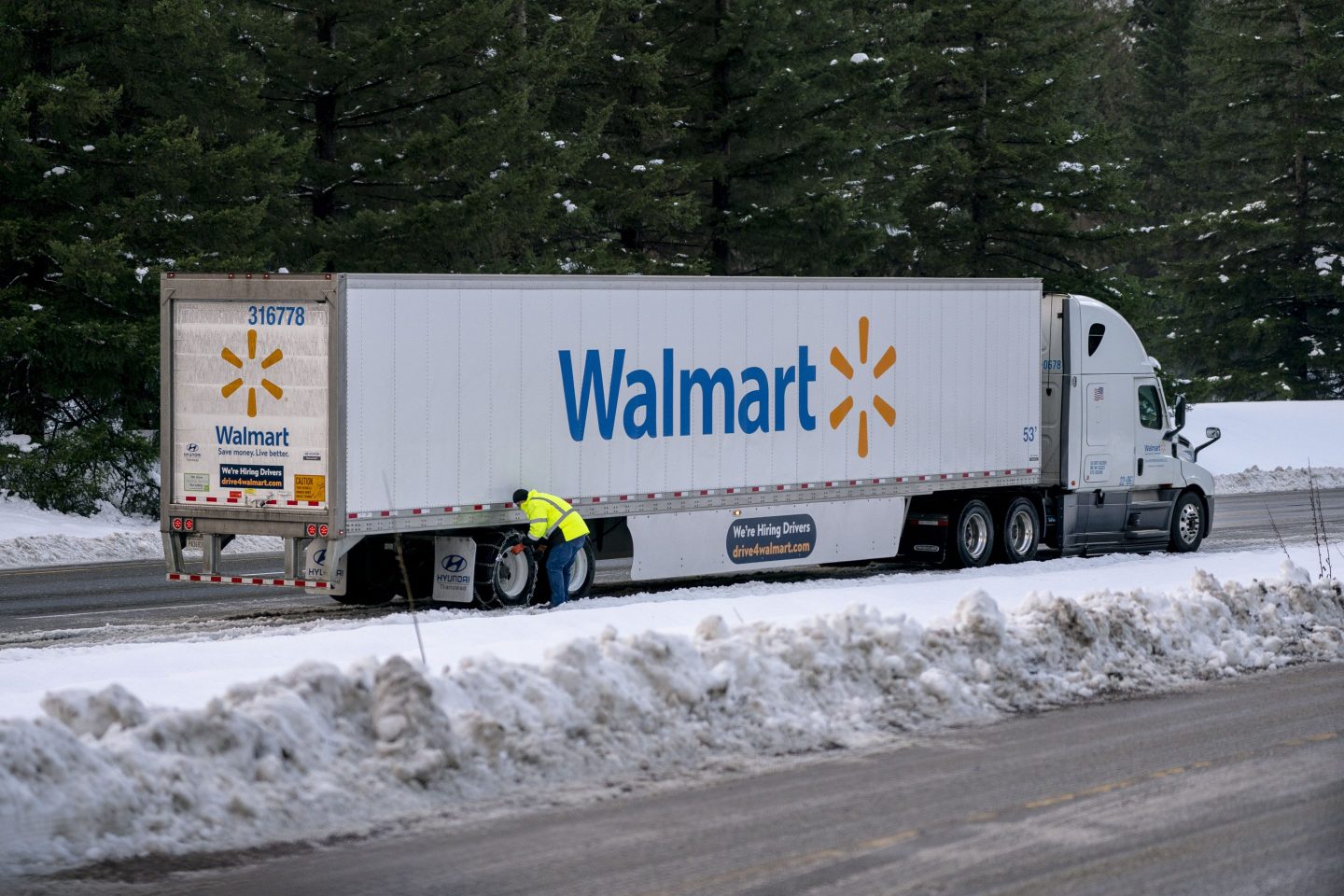
From a meteorological perspective, the winter storm sweeping across the country this weekend is a supply chain disruption in its own right: A high-pressure system from the north is smashing into a low-pressure system from the south, belting large swaths of the US with heavy snow, sleet, and freezing rain.
While the snarl in the upper atmosphere could trickle down to the real supply chain on the ground, some retailers are taking steps to anticipate the impact of the storm and position their products accordingly.
Walmart, for instance, is employing AI-powered technology to forecast demand shifts based on historical weather data.
“By utilizing advanced forecasting models and our simulation platform, we can anticipate shifts in demand and dynamically reroute essential supplies,” Indira Uppuluri, SVP of supply chain technology at Walmart, told Retail Brew.
Storm chasers: Ahead of the storm, Walmart used anticipatory inventory staging to place storm-related supplies such as ice melt and water where they are needed several days earlier than was previously possible without the use of artificial intelligence. In addition, hundreds of thousands of perishable and dry goods bound for impacted facilities were rerouted to secondary distribution centers to secure against disruptions.
The company used a simulation platform to replicate its middle-mile network and virtually test different scenarios requiring realignments. During the actual storm, the AI-driven system helps the company optimize routes for what it calls “jump trailers,” mobile units pre-stocked with essentials.
This kind of forward thinking is key when it comes to winter storms, as consumers start changing their behavior well ahead of the first snowflakes.
Evan Gold, EVP of global partnerships and alliances at Planalytics, which helps retailers plan for weather events, told Retail Brew that an uptick in need-based purchases is happening right now as shoppers prepare to “hunker down,” with sales of heaters, blankets, ice melt, and shovels, to name a few, rising 50%– 500%.
This report was originally published by Retail Brew.