Welcome to Eye on AI, with AI reporter Sharon Goldman. In this edition…OpenAI’s first commercial hire takes a VC role…Apple is developing an AI-powered wearable pin…In a new ‘acquihire,’ Google nabs top talent from voice AI startup Hume…OpenAI announces company reorganization with former Thinking Machines cofounder Barret Zeph overseeing enterprise push.
When Aliisa Rosenthal began her role as OpenAI’s head of sales in June 2022, the company’s first commercial hire, there were only a couple of sales reps—and not much to sell. She wasn’t even sure the company would find the right product-market fit to launch successful commercial products.
ChatGPT, of course, arrived six months later. Almost overnight, OpenAI went from a research lab with a developer audience to one of the most recognizable companies in the world. Rosenthal spent much of the rest of her time there growing her team as fast as she could, ultimately overseeing a go-to-market organization of more than 300 people.
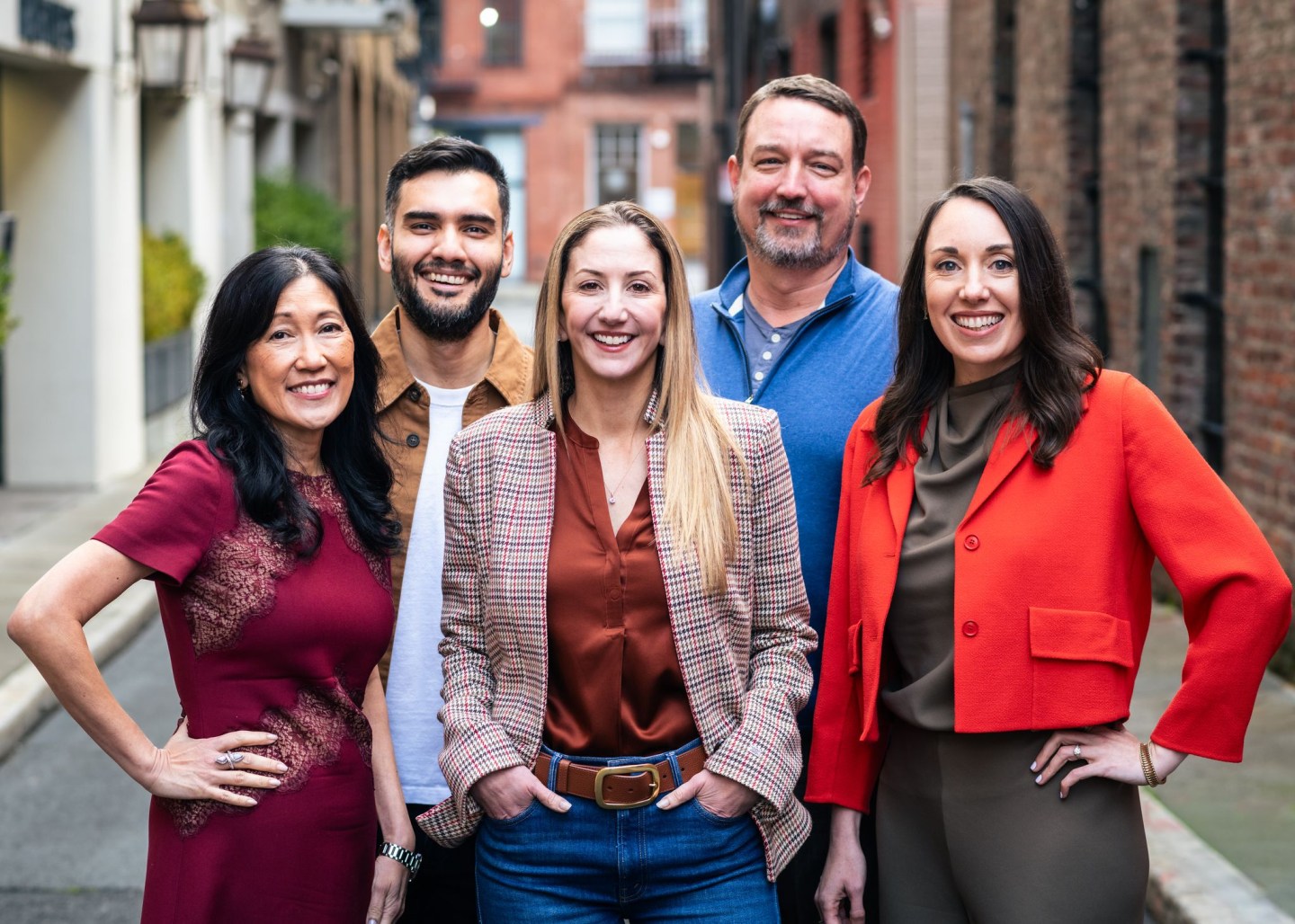
As the company grew, however, Rosenthal realized she was ready to go small again—this time in the world of venture capital. After taking a break this summer, she announced this week that she has joined Acrew Capital as a general partner, helping its companies “navigate pricing, GTM, AI-native sales, and the commercial decisions that determine what actually scales.”
“OpenAI was one of the most inspiring companies I’ve ever been a part of,” she said. “But as the company and my team grew, my work really shifted away from the research and the technical problem-solving that energized me.” By the time she left, she noted, the sales team was physically in a different building from product and engineering.
“I found myself missing that proximity with builders and experiments and hard technical decisions,” she said. “I wanted to realign my work with that passion.”
When I spoke with Rosenthal in early 2024, she described that passion as deeply tied to OpenAI’s mission of distributing the benefits of safe artificial general intelligence—what the company defines as “highly autonomous systems that outperform humans at most economically valuable work.” At the time, she said she saw her team as less about making money and more as “AGI sherpas” (complete with a special sherpa emoji used internally), helping customers and users navigate a once-in-a-generation technological shift.
I asked whether she still sees herself that way. “Honestly, I do,” she said. “The thing about everyone selling an AI product right now is you’re not just selling a tool. You’re selling a brand new technology that is scary, that’s different, that people don’t understand.”
That means overcoming fear and uncertainty, she explained. “Almost half of the sale is getting your buyers and users comfortable with: ‘What is happening under the hood?’ ‘What’s happening to my data?’ ‘Can I trust the system?’”
After meeting with thousands of companies while at OpenAI, Rosenthal says she’s now ready to help founders navigate that new AI buying process. And she believes there is still enormous room for startups to succeed—even in an era dominated by behemoths like OpenAI, Anthropic, and Big Tech giants like Google.
“There is so much opportunity in enterprise applications—the green space is so large,” she said. “Yes, OpenAI will go after some of it. I don’t think OpenAI can go after all of it. OpenAI is both a consumer and an enterprise company. It’s unlikely they can really cover the entire enterprise application ecosystem.”
She points to her earliest days at OpenAI as evidence of how much of the landscape remains up for grabs. “When I joined, it was really just developers using our product. It was hard to navigate,” she recalled. “In my second week, I sat down with our COO, Brad Lightcap, and I said, ‘Why don’t we have an application?’ And his response was, ‘Should we?’”
Six months later, OpenAI launched ChatGPT—and everything changed.
“It was fascinating to see how that shifted OpenAI into something the C-suite could understand,” she said. “I’m really bought into the idea of making AI understandable. I’m very bought into the application layer. The more we can make this technology approachable and navigable, the more it will be adopted—and the more successful companies will be.”
With that, here’s more AI news.
Sharon Goldman
sharon.goldman@fortune.com
@sharongoldman
FORTUNE ON AI
The pioneer behind Google Gemini is tackling an even bigger challenge—using AI to ‘solve’ disease – by Allie Garfinkle
AI drug startup Insilico Medicine launches an AI ‘gym’ to help models like GPT and Qwen be good at science – by Nicolas Gordon
The Walmart C-suite reshuffle shows how the retailer sees itself now: as a tech company – by Phil Wahba
Anthropic rewrites Claude’s guiding principles—and entertains the idea that its AI might have ‘some kind of consciousness or moral status’ – by Beatrice Nolan
Jamie Dimon says government should have power to intervene in AI-driven mass layoffs – by Ruth Umoh
NeurIPS, one of the world’s top academic AI conferences, accepted research papers with 100+ AI-hallucinated citations, new report claims – by Sharon Goldman
AI IN THE NEWS
Apple is developing an AI-powered wearable pin. According to The Information, Apple is quietly developing an AI-powered wearable pin about the size of an AirTag, equipped with multiple cameras, microphones, a speaker, and wireless charging. The device—still in early stages and not guaranteed to ship—could debut as soon as 2027, with Apple aiming to manufacture as many as 20 million units at launch in an unusually aggressive move driven by competitive pressure from OpenAI and Meta. The pin would let Apple square off against OpenAI’s planned AI hardware and Meta’s already-on-the-market smart glasses, while fitting into a broader pipeline of AI-first products at Apple, including sensor-rich AirPods, smart glasses, security cameras, and a home device with a robotic base. If it arrives, the pin would mark Apple’s clearest bet yet on ambient, always-on AI as a new consumer interface.
In a new 'acquihire,' Google nabs top talent from voice AI startup Hume. Wired reported that Google DeepMind is bringing on the CEO and several top engineers from Hume AI—a startup focused on emotionally intelligent voice interfaces—under a new licensing agreement, underscoring how central voice is becoming to the future of AI. Financial terms weren’t disclosed, and Hume says it will continue supplying its technology to other frontier labs, but the move signals a broader industry bet that understanding a user’s emotions through speech will be key to making AI assistants more useful and human-like. Hume, which has raised $74 million, expects to generate $100 million in revenue in 2026 by helping AI labs tune models into more capable voice helpers.
OpenAI announces company reorganization with former Thinking Machines cofounder Barret Zoph overseeing enterprise push. OpenAI is reshuffling its leadership as it pushes harder into enterprise AI, tapping Barret Zoph—the Thinking Machines Lab cofounder who rejoined the company last week amid controversy—to lead its effort to sell AI products to businesses, according to a memo from CEO of applications Fidji Simo that was seen by The Information. As part of a broader reorganization, the article says OpenAI is moving to a “general manager” structure for products including ChatGPT, enterprise, Codex, and advertising, aimed at tightening the feedback loop between research, product, and engineering. COO Brad Lightcap will step back from leading product and engineering for enterprise but continue running OpenAI’s commercial functions. Vijaye Raji, OpenAI’s CTO of applications, will lead advertising, according to the memo.
EYE ON AI NUMBERS
60%
That’s how many workers are now equipped with sanctioned AI tools by their employers, according to the new Deloitte 2026 State of AI in the Enterprise report, based on a survey of more than 3,200 business leaders in 24 countries. It’s a sign, according to Deloitte, that AI is shifting from pilots and experimentation to enterprise scaling.
However, when it comes to AI agents, organizations have a long way to go: Only 21% of have robust governance or oversight in place for AI agents, according to the report, and only 23% of companies already use AI agents today. However, the report predicts that 74% will do so within two years. And the number firms not using agents at all is expected to drop from 25% to just 5%.
AI CALENDAR
Jan. 19-23: World Economic Forum, Davos, Switzerland.
Jan. 20-27: AAAI Conference on Artificial Intelligence, Singapore.
Feb. 10-11: AI Action Summit, New Delhi, India.
March 2-5: Mobile World Congress, Barcelona, Spain.
March 16-19: Nvidia GTC, San Jose, Calif.
April 6-9: HumanX, San Francisco.