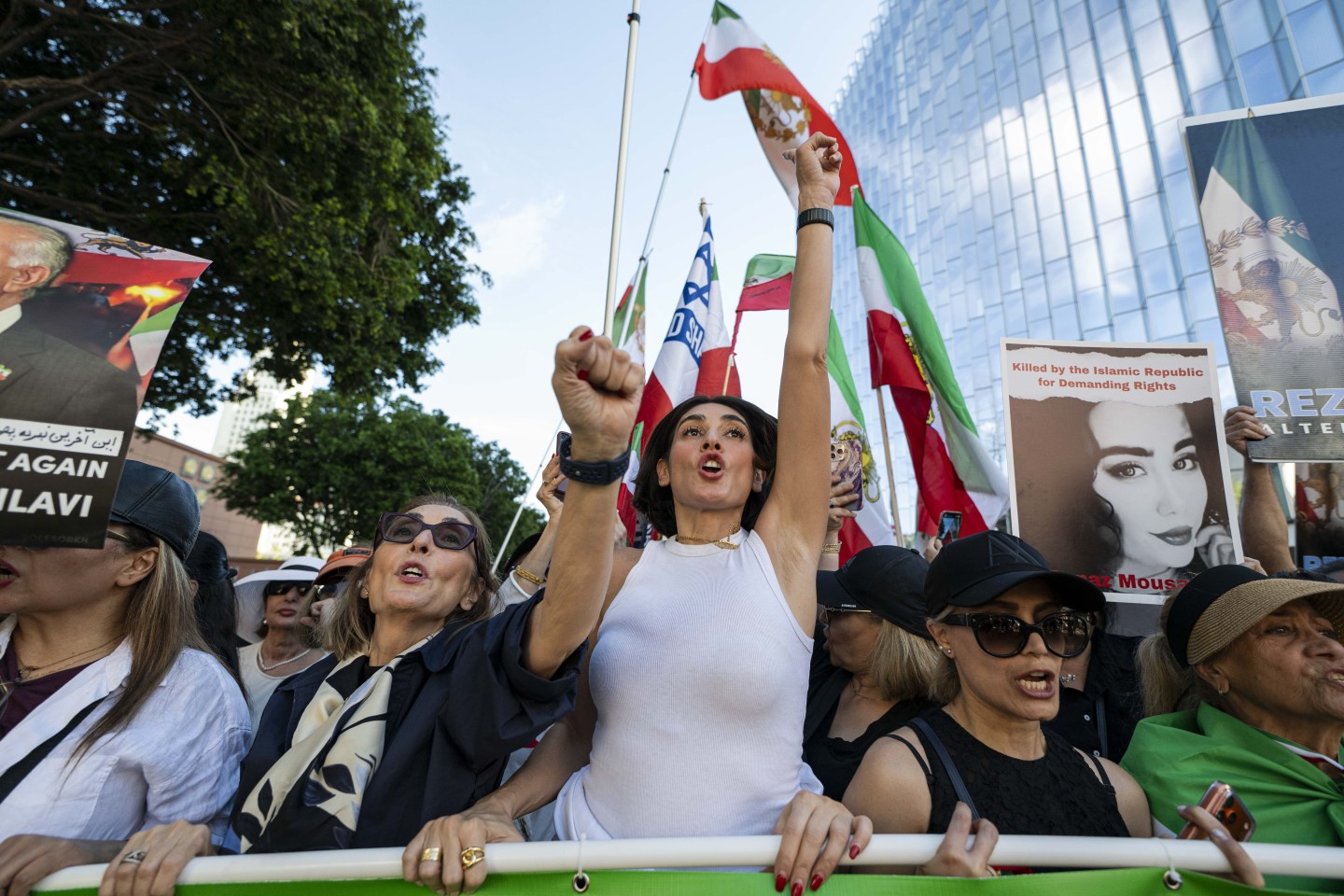
On December 28th of 2025, protests started in Iran’s capital in response to soaring prices and a collapsing economy. They swiftly fanned across the country and morphed into a mass movement against Iran’s theocratic government led by Ayatollah Ali Khamenei. Over three weeks later and thousands are reported dead, the result of a violent crackdown on protestors by the authorities. The majority of those murdered are thought to be younger than 30, a horrifying but perhaps unsurprising statistic in a country whose population skews young due to the baby boom that followed the 1979 revolution.
A government imposed internet blackout in the country means information about the victims is scarce, but some names have emerged: Akram Pirgazi, 40, the first woman reported to have been killed in the protests and a mother of two; Rebin Moradi, 17, a promising footballer and Robina Aminian, a 23-year-old studying fashion design at university in Tehran. Two weeks ago, after finishing class for the day, she joined an anti-regime rally. A human rights group says that she was shot in the head from close range shortly after. “She was thirsty for freedom, thirsty for women’s rights, her rights,” Aminian’s uncle told CNN in the wake of his niece’s murder.
Aminian’s spirit and unspeakable bravery is, remarkably, not unique in a country where female resistance has been a lifeblood of anti-government protest for almost half a century. Women were crucial participants in the 1979 revolution that overthrew the last Shah (king) of Iran and his oppressive rule. They hoped for a freer society. Instead, Khamenei’s new regime began policing their lives and rolling back their rights. Examples include a husband having the legal right to restrict his wife’s travel and employment, unequal divorce rights and punishment for appearing in public without a hijab ranging from fines to prison time to flogging.
The latter ignited a 2022 uprising when Mahsa Amini, 22, was dragged off the street by Iran’s morality police, a unit within the national police tasked with implementing Islamic codes, for not wearing her headscarf correctly. She died in custody, with eyewitnesses alleging that she was beaten unconscious inside a police van. Her death, along with that of a teenager, Armita Geravand, the following year in similar circumstances, stirred a collective rage that fueled the Women, Life, Freedom movement. Although its protests didn’t lead to regime change, they sparked much-needed global awareness of Iran’s human rights abuses. They also created an irreversible current of social resistance, particularly among young Iranians, that helped position women’s rights as a key pillar of the country’s democratic future. Women are at the forefront of the current protests.
A now widely-shared video from earlier this month shows an elderly Iranian woman protesting in the street, blood pouring from her mouth. “I’m not afraid,” she shouts. “I have been dead for 47 years”—the length of the current regime. From the comfort of our couches and desks, it’s hard to fathom the moral conviction of the women, young and old, whose desire for change and freedom overrides their fear of imminent death. But yet again, Iranian women are showing the rest of us what courage truly looks like.
Ellie Austin
ellie.austin@fortune.com
The Most Powerful Women Daily newsletter is Fortune’s daily briefing for and about the women leading the business world. Today’s edition was curated by Emma Hinchliffe. Subscribe here.
ALSO IN THE HEADLINES
The Supreme Court today is considering Trump's bid to fire Fed governor Lisa Cook. Oral arguments begin as Trump's campaign against Fed chair Jerome Powell continues. Both Cook and Powell are expected to attend. Reuters
All the ways Uber is being held accountable for a sexual assault problem. There's a ballot initiative in California that would make ride-hailing companies legally responsible; Rep. Debbie Dingell (D-Mich.) exploring a congressional hearing; and a shareholder push from the New York State comptroller for a transparency report. Uber says it has had constructive meetings in Washington, and calls the California ballot proposal a retaliatory measure by a lobbying group. NYT
What's going on at Thinking Machines Lab? An exodus from Mira Murati's startup to OpenAI started with human drama—a cofounder's relationship with a colleague and Murati's concerns over his productivity. WSJ
Usha Vance is pregnant. With her fourth child with Vice President JD Vance, the couple announced. This will be the first time a sitting second lady has had a baby while in office. CNN
Wall Street star trader Howard Rubin was arrested for sex trafficking in September. This story pulls from legal filings and interviews to paint a picture of the secret life he was living and its impact on the women in it. WSJ
ON MY RADAR
Moms, how much power are you willing to give up? The Cut
Will ‘psychiatry’s Bible’ add a postpartum psychosis diagnosis? NYT
Dramas keep showing us hapless men—and hypercompetent women NYT
PARTING WORDS
"When you get the power, when you're the boss, when you're running your own thing, let's just not become female versions of the thing that was broken."
— Michelle Obama in a new appearance on Alex Cooper's Call Her Daddy