• Home
  • Latest
  • Fortune 500
  • Finance
  • Tech
  • Leadership
  • Lifestyle
  • Rankings
  • Multimedia
EconomyFinance

The U.S. debt now equals $229,000 per household—and a hefty tax hike looms as the most probable outcome

Shawn Tully
By
Shawn Tully
Shawn Tully
Senior Editor-at-Large
Down Arrow Button Icon
Shawn Tully
By
Shawn Tully
Shawn Tully
Senior Editor-at-Large
Down Arrow Button Icon
January 21, 2026, 5:00 AM ET
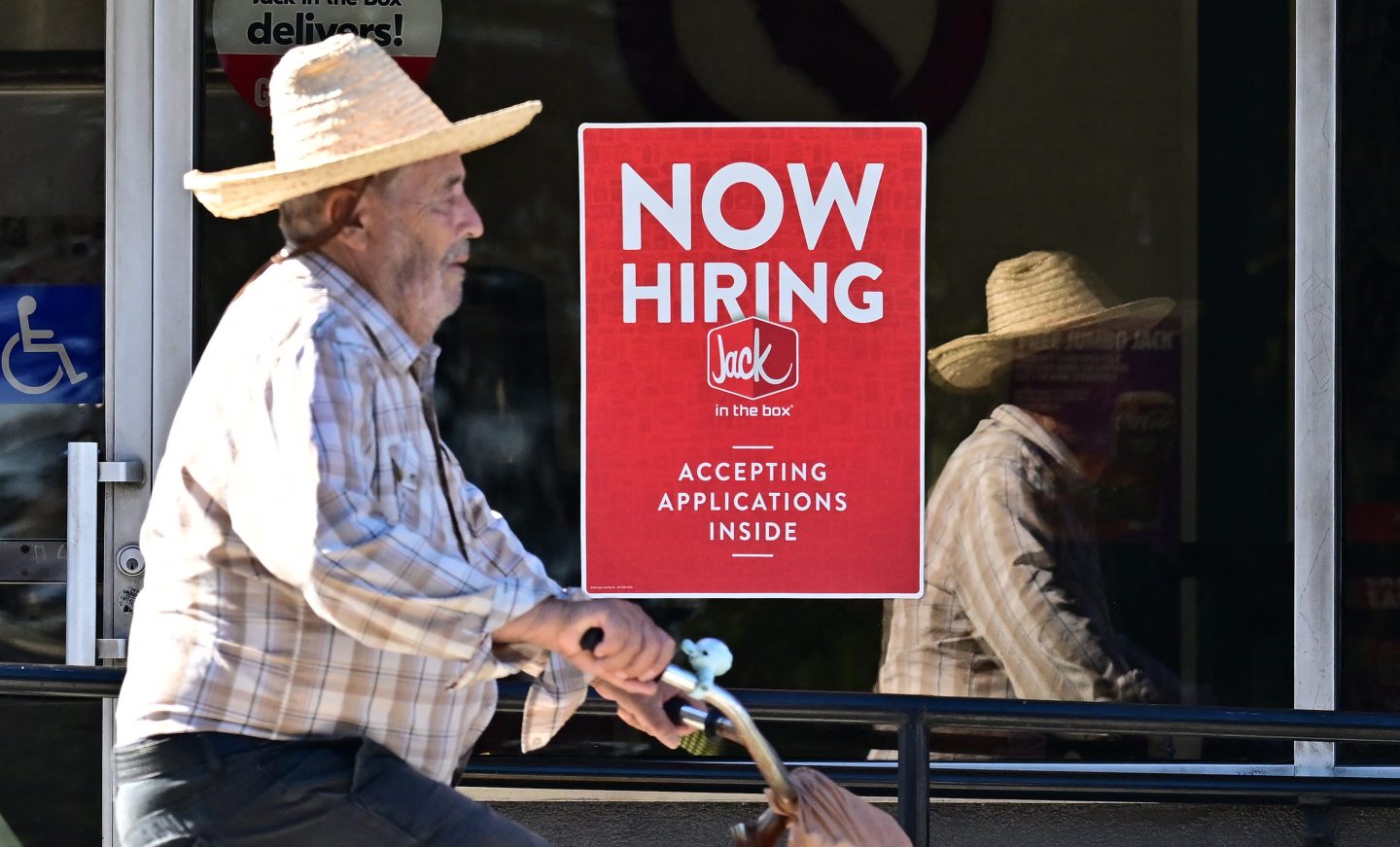
The national debt has snowballed since COVID as interest payments grow and grow.
The national debt has snowballed since COVID as interest payments grow and grow. Douglas Rissing—Getty Images

An overlooked feature of the explosion in U.S. deficits and debt that’s belatedly grabbing the attention of voters, politicians, and the media: The average American household’s share of federal borrowings is now equal to half the median price of their homes, and the figure is rising fast. Right now, teachers, nurses, store owners, and IT workers (i.e., average Americans) aren’t paying any of the interest on those tens of trillions, since the federal government is simply ramping the IOUs to cover the carrying costs. But that can’t go on forever. America is rapidly reaching the outer limits for the size of budget shortfalls, and the debt burden they amass. “There is a point where the bond markets will no longer be willing to lend Washington the unsustainable amounts it needs to keep financing its debt,” says Jessica Riedl, a senior tax and budget fellow at the Brookings Institution. “At some point, something has to give, and the solution has to be big tax hikes, inflation [itself a hidden form of tax increase], or spending cuts.”

Recommended Video

The sea change in U.S. borrowing—from historically high but stable, to gigantic, fast-rising, and alarming—is mainly a post-COVID phenomenon. From the start of 2013 through the close of 2019, the ratio of debt to GDP basically flatlined at around 75%. In other words, what the U.S. owed bondholders and the amount the nation produced in goods and services were rising at about the same rate. After the crisis passed, the U.S. kept spending at far above pre-pandemic norms, creating the growing structural gulf between revenues and expenditures before interest expense, or what’s called the “primary deficit.” The rapid escalation in rates on Treasuries deployed to finance those gaps—the two-year T-bill now yields 3.6%, 16 times its 22 basis point rate in mid-2021—worked in tandem alongside the budget shortfalls to triple interest payments from $352 billion in FY 2021 to $970 billion in FY 2025, putting the debt train on an accelerated track.

From the end of 2019 through mid-January, federal borrowings ballooned from $17 trillion to $30.9 trillion, a jump of 81% or 10.3% annually. Debt as a share of GDP swelled from the mid-70% range to its current level of almost exactly 100%. In other words, in the past six years, Americans’ borrowings have expanded around 40% faster than our national income.

Debt per household has reached staggering levels, and the burden is rising fast

At today’s $30.9 trillion, the U.S. owes $229,000 for each of our 135 million households. If those working families, and not the Treasury via deficit financing, were paying the prevailing 3.36% interest on that debt, they’d be out $7,700 a year in extra taxes. That’s 9% of their $85,000 average incomes. It’s going to get far worse. The General Accounting Office forecasts that the debt will keep outracing GDP so fast that by 2035, the ratio of borrowings to GDP will zoom from today’s 100% to around 135%, almost doubling the dollar figure from $30.9 trillion to roughly $60 trillion.

Owing $60 trillion would also more or less multiply each household’s part by two, to $434,000. That’s higher than the median home prices in America of $410,000, as calculated by the St. Louis Fed. Apply the current interest rate the U.S. is paying of 3.3%-plus, and the “payment,” or effective annual future interest liability, per one- or two-earner family rises to $14,600. Even assuming average incomes wax briskly to hit $100,000 by the end of 2035, that’s a huge chunk, amounting to more than one dollar in seven, before accounting for payroll and income taxes.

We’re not talking about the tax increases needed to balance the budget. If the government decided to collect an extra $14,600 from households, that would simply pay the interest expense on the debt, and hence slow its upward trajectory by curbing one of the largest contributors to the deficits.

It’s extremely unlikely that the U.S. can keep borrowing those interest payments by running ever bigger deficits. At 135% of GDP by 2035, we’d rank among the world’s most dangerously indebted major nations, exceeding where France stands now (113%), equaling Italy’s current number, and even approaching Greece (now 154%).

No recent administration has proposed financing even the interest payments component of the deficit via reductions in expenditures. Hence, a big tax bite looms as the most probable outcome. Put simply, the government is heaping something like a stealth mortgage on America’s households that are already stretched by a costly home loan and the famed “affordability” issues. That “stealth mortgage” keeps accruing interest, hiding for now that it’s today’s workers and their kids who will need to pay. Washington’s maneuvers delay the day of reckoning, but promise to make that reckoning far worse.


The Fortune 500 Innovation Forum will convene Fortune 500 executives, U.S. policy officials, top founders, and thought leaders to help define what’s next for the American economy, Nov. 16-17 in Detroit. Apply here.
About the Author
Shawn Tully
By Shawn TullySenior Editor-at-Large

Shawn Tully is a senior editor-at-large at Fortune, covering the biggest trends in business, aviation, politics, and leadership.

See full bioRight Arrow Button Icon

Latest in Economy

Finance
Lorem ipsum dolor sit amet, consectetur adipiscing elit, sed do eiusmod tempor incididunt ut labore et dolore magna aliqua. Ut enim ad minim veniam
By Fortune Editors
October 20, 2025
Finance
Lorem ipsum dolor sit amet, consectetur adipiscing elit, sed do eiusmod tempor incididunt ut labore et dolore magna aliqua. Ut enim ad minim veniam
By Fortune Editors
October 20, 2025
Finance
Lorem ipsum dolor sit amet, consectetur adipiscing elit, sed do eiusmod tempor incididunt ut labore et dolore magna aliqua. Ut enim ad minim veniam
By Fortune Editors
October 20, 2025
Finance
Lorem ipsum dolor sit amet, consectetur adipiscing elit, sed do eiusmod tempor incididunt ut labore et dolore magna aliqua. Ut enim ad minim veniam
By Fortune Editors
October 20, 2025
Finance
Lorem ipsum dolor sit amet, consectetur adipiscing elit, sed do eiusmod tempor incididunt ut labore et dolore magna aliqua. Ut enim ad minim veniam
By Fortune Editors
October 20, 2025
Finance
Lorem ipsum dolor sit amet, consectetur adipiscing elit, sed do eiusmod tempor incididunt ut labore et dolore magna aliqua. Ut enim ad minim veniam
By Fortune Editors
October 20, 2025

Most Popular

Finance
Lorem ipsum dolor sit amet, consectetur adipiscing elit, sed do eiusmod tempor incididunt ut labore et dolore magna aliqua. Ut enim ad minim veniam
By Fortune Editors
October 20, 2025
Finance
Lorem ipsum dolor sit amet, consectetur adipiscing elit, sed do eiusmod tempor incididunt ut labore et dolore magna aliqua. Ut enim ad minim veniam
By Fortune Editors
October 20, 2025
Finance
Lorem ipsum dolor sit amet, consectetur adipiscing elit, sed do eiusmod tempor incididunt ut labore et dolore magna aliqua. Ut enim ad minim veniam
By Fortune Editors
October 20, 2025
Finance
Lorem ipsum dolor sit amet, consectetur adipiscing elit, sed do eiusmod tempor incididunt ut labore et dolore magna aliqua. Ut enim ad minim veniam
By Fortune Editors
October 20, 2025
Finance
Lorem ipsum dolor sit amet, consectetur adipiscing elit, sed do eiusmod tempor incididunt ut labore et dolore magna aliqua. Ut enim ad minim veniam
By Fortune Editors
October 20, 2025
Finance
Lorem ipsum dolor sit amet, consectetur adipiscing elit, sed do eiusmod tempor incididunt ut labore et dolore magna aliqua. Ut enim ad minim veniam
By Fortune Editors
October 20, 2025
Fortune Secondary Logo
Rankings
  • 100 Best Companies
  • Fortune 500
  • Global 500
  • Fortune 500 Europe
  • Most Powerful Women
  • Future 50
  • World’s Most Admired Companies
  • See All Rankings
Sections
  • Finance
  • Fortune Crypto
  • Features
  • Leadership
  • Health
  • Commentary
  • Success
  • Retail
  • Mpw
  • Tech
  • Lifestyle
  • CEO Initiative
  • Asia
  • Politics
  • Conferences
  • Europe
  • Newsletters
  • Personal Finance
  • Environment
  • Magazine
  • Education
Customer Support
  • Frequently Asked Questions
  • Customer Service Portal
  • Privacy Policy
  • Terms Of Use
  • Single Issues For Purchase
  • International Print
Commercial Services
  • Advertising
  • Fortune Brand Studio
  • Fortune Analytics
  • Fortune Conferences
  • Business Development
  • Group Subscriptions
About Us
  • About Us
  • Editorial Calendar
  • Press Center
  • Work At Fortune
  • Diversity And Inclusion
  • Terms And Conditions
  • Site Map
  • About Us
  • Editorial Calendar
  • Press Center
  • Work At Fortune
  • Diversity And Inclusion
  • Terms And Conditions
  • Site Map
  • Facebook icon
  • Twitter icon
  • LinkedIn icon
  • Instagram icon
  • Pinterest icon

Latest in Economy

Deutsche Bank asked AI if it’s true that AI will solve the economy’s inflation problems. The robots answered
Economydisruption
Deutsche Bank asked AI if it’s true that AI will solve the economy’s inflation problems. The robots answered
By Nick LichtenbergApril 1, 2026
2 hours ago
retail sales
EconomyConsumer Spending
Retail sales tick up 0.6% in February before Iran war, gas price spike
By Anne D'Innocenzio and The Associated PressApril 1, 2026
3 hours ago
Gen Z shoppers are actually more deliberate than baby boomers and agonize over their cart for days
RetailGen Z
Gen Z shoppers are actually more deliberate than baby boomers and agonize over their cart for days
By Jeena Sharma and Retail BrewApril 1, 2026
5 hours ago
receipts
EconomyFederal Reserve
‘Inflationary surge’: Fed economists warn AI hype is overheating the economy whether or not the technology ever delivers
By Jake AngeloApril 1, 2026
6 hours ago
AI
AIProductivity
AI is saving workers up to an hour a day—but Goldman Sachs says 80% of companies aren’t using it yet
By Nick LichtenbergApril 1, 2026
6 hours ago
COVID gave us hybrid work. The Iran war might give us a four-day week—and this time, experts say it could stick
SuccessFour day work week
COVID gave us hybrid work. The Iran war might give us a four-day week—and this time, experts say it could stick
By Orianna Rosa RoyleApril 1, 2026
9 hours ago

Most Popular

Jerome Powell says the $39 trillion national debt is ‘not unsustainable,’ but warns the trajectory ‘will not end well’
Economy
Jerome Powell says the $39 trillion national debt is ‘not unsustainable,’ but warns the trajectory ‘will not end well’
By Fortune EditorsMarch 30, 2026
2 days ago
Two-thirds of parents say their adult Gen Z kids still rely on them financially  for support—even though it's putting them under strain
Success
Two-thirds of parents say their adult Gen Z kids still rely on them financially  for support—even though it's putting them under strain
By Fortune EditorsMarch 31, 2026
1 day ago
Kevin O'Leary says if you earn $68,000 a year and follow this rule, you'll retire a millionaire
Personal Finance
Kevin O'Leary says if you earn $68,000 a year and follow this rule, you'll retire a millionaire
By Fortune EditorsMarch 31, 2026
1 day ago
A man used AI to call 3,000 Irish bartenders to track the cost of Guinness. Now pubs are lowering their prices to compete
AI
A man used AI to call 3,000 Irish bartenders to track the cost of Guinness. Now pubs are lowering their prices to compete
By Fortune EditorsMarch 30, 2026
2 days ago
Hiring just hit a level not seen since the economy was ‘closed down literally’ during COVID, top economist says
Economy
Hiring just hit a level not seen since the economy was ‘closed down literally’ during COVID, top economist says
By Fortune EditorsMarch 31, 2026
1 day ago
Markets cheer as Trump threatens to abandon Iran war, but Jamie Dimon sides with allies: ‘Win this thing and clean up the straits’
Energy
Markets cheer as Trump threatens to abandon Iran war, but Jamie Dimon sides with allies: ‘Win this thing and clean up the straits’
By Fortune EditorsMarch 31, 2026
1 day ago

© 2026 Fortune Media IP Limited. All Rights Reserved. Use of this site constitutes acceptance of our Terms of Use and Privacy Policy | CA Notice at Collection and Privacy Notice | Do Not Sell/Share My Personal Information
FORTUNE is a trademark of Fortune Media IP Limited, registered in the U.S. and other countries. FORTUNE may receive compensation for some links to products and services on this website. Offers may be subject to change without notice.