• Home
  • Latest
  • Fortune 500
  • Finance
  • Tech
  • Leadership
  • Lifestyle
  • Rankings
  • Multimedia
BankingDebt

Why the $38 trillion national debt doomed Fed independence regardless of the Trump/Powell drama, top economist says

By
Eva Roytburg
Eva Roytburg
Fellow, News
Down Arrow Button Icon
By
Eva Roytburg
Eva Roytburg
Fellow, News
Down Arrow Button Icon
January 13, 2026, 2:09 PM ET
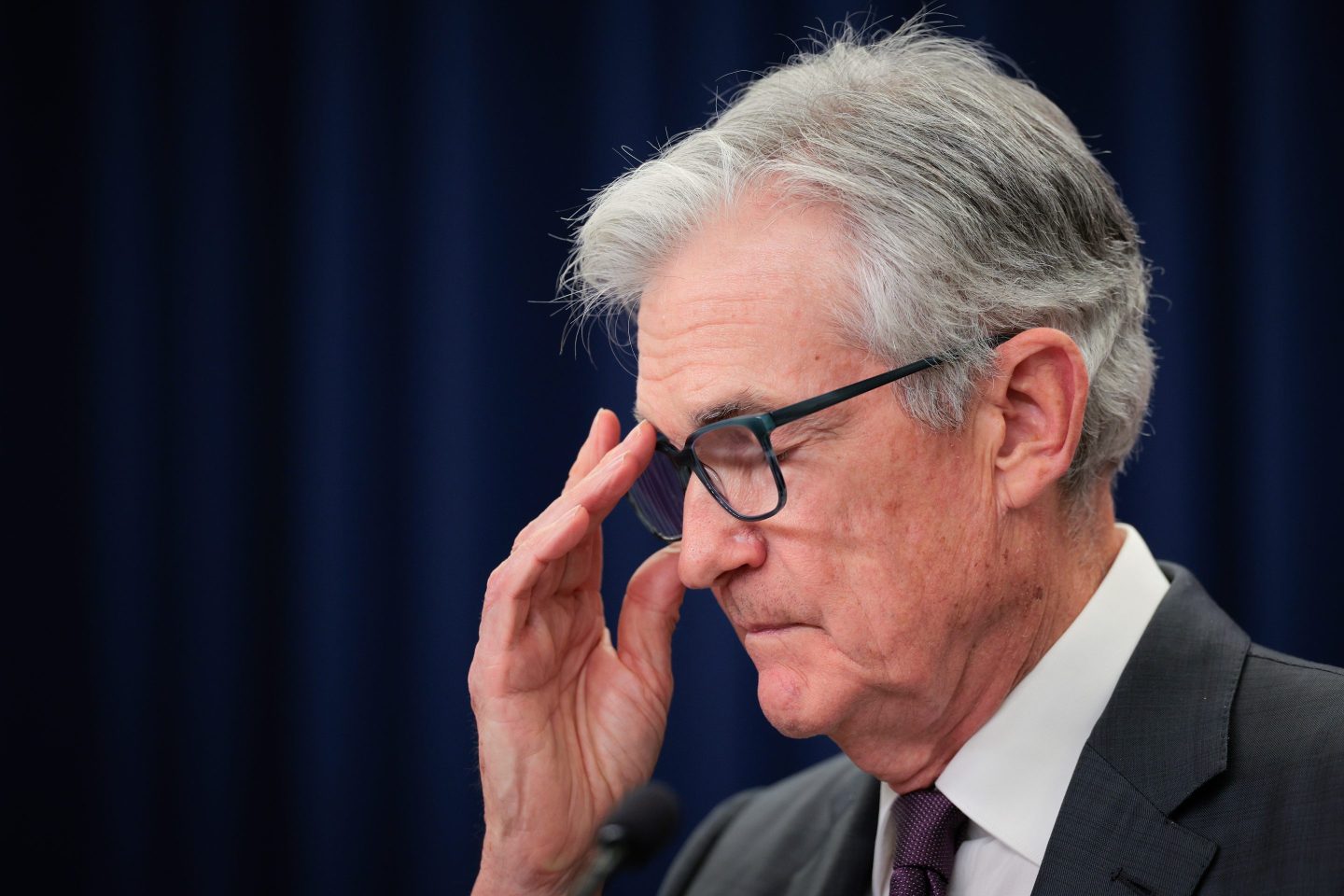
Federal Reserve Chairman Jerome Powell.
Federal Reserve Chairman Jerome Powell. Chip Somodevilla/Getty Images

When Fed Chair Jerome Powell announced Sunday evening he was under criminal investigation from the DOJ this week, the markets braced for a shock.  The probe—centered on a $2.6 billion renovation of the Fed’s Washington headquarters—was immediately branded by an unusually direct Powell as a “pretext” to force interest rate cuts. Futures went down.

Recommended Video

Yet, Monday came, and while gold and silver went vertical, equities stayed calm and the dollar barely drifted. To economist Tyler Cowen, the renowned libertarian from George Mason University and author of the influential Marginal Revolution blog, this lack of market panic is the most revealing part of the drama. It isn’t that investors trust the administration’s motives; it’s that they have already accepted the “ugly little truth” that the Federal Reserve’s independence is a relic of a bygone era. 

“What Trump did was terrible,” Cowen said on the technology podcast TBPN, referring to the administration’s erratic, “Captain Queeg” style of institutional pressure. “But to me, the reason markets didn’t react more is because we already wrecked the independence of the Fed. That’s the ugly little truth behind this story. It was already wrecked.”

In Cowen’s telling, the damage was done years ago, through fiscal policy. Budget deals, tax cuts and a chronic deficit have steadily narrowed the Fed’s real freedom to act, regardless of its formal mandate.

“The basic problem is our debt and deficits are so high that over time, we will monetize them to some extent and have higher inflation because we prefer that over higher taxes, no matter what we might say,” Cowen said on technology show TBPN.

That preference, Cowen argues, quietly undermines central bank independence. Even without overt political pressure, a heavily indebted democracy is one that limits its own monetary choices. At some point, inflation becomes the least politically painful way to manage obligations that voters are unwilling to finance through taxes or spending cuts.

A grim echo

This diagnosis is a grim echo of the work of Ray Dalio, the billionaire founder of top hedge fund Bridgewater Associates, who has long warned of the “Big Cycle” debt trap. Dalio’s framework suggests that nations with massive debts eventually run out of good options. They are left with a choice between three politically poisonous options: austerity (massive spending cuts), default (which would be unthinkable for a reserve currency), or inflation (“printing money” in order to devalue the debt). 

Dalio has frequently agreed with Cowen that for the United States, inflation is the only path forward, since it is an invisible tax that a democracy will always prefer over the political suicide of massive tax hikes or the gutting of social programs. Speaking with fellow billionaire, Carlyle co-founder David Rubenstein, Dalio recently said, “My grandchildren, and great grandchildren not yet born, are going to be paying off this debt in devalued dollars.”

Cowen offered a prediction about how what Dalio calls the “ugly deleveraging” will look: the U.S. may require half a decade of 7% inflation to erode the debt’s value relative to the size of the economy.

“It’s highly unpleasant, and a lot of people will be thrown out of work and living standards will be lower,” Cowen said. “But we’ve already spent that money. We can’t default, and that’s what’s facing us over the next 10 to 15 years,” implying that, while default would ordinarily be a country’s way out of this kind of dilemma, America’s status as the richest economy in world history and the home of the world’s reserve currency make that unfeasible.

The irony, Cowen notes, is that America’s unique status allows it to run higher debt than almost any other nation, even the wealthy ones. That privilege may boost living standards today, but it still weakens political discipline tomorrow, allowing leaders to not only “get away with more debt” but also explicitly destabilize the Fed without worrying too much about market backlash. 

Although neither Dalio nor Cowen have taken this argument about the debt into the feud between Powell and Trump, at its heart lies a similar dynamic: how can the U.S. improve living standards for its lower and middle class? Trump has been badgering Powell about interest rate cuts that would bring down mortgage rates and ease housing affordability, but that runs the risk of fueling an even higher inflation wave down the road, or sooner. 

Albert Edwards, an outspoken and eccentric global strategist for Societe Generale, sounded eerily similar to Dalio and Cowen when he spoke to Fortune in November. “We’re going to end up with runaway inflation at some point,” Edwards said, “because, I mean, that’s the end game, right? There’s no appetite to cut back the deficits.”

The god out of the machine

There is, however, a deus ex machina that could change the course of things: the productivity miracle that many economists expect to come, driven by artificial intelligence. If AI could boost U.S. GDP growth by a full percentage point per year, Cowen said, the country might grow its way out of the debt trap without resorting to a decade of high inflation. Yet he is skeptical. 

Roughly half the U.S. economy—government, higher education, much of healthcare, and the nonprofit sector—is structurally sluggish, he argues. AI may save workers enough time in these sectors to “hang out more at the water cooler,” but not enough to dramatically raise output. Meanwhile, innovation might just concentrate at already-productive sectors of the economy. Without a radical efficiency gain in the half of the economy that doesn’t produce “white or black-belt” AI tools, the debt clock will continue to outrun the AI revolution.

The result is a new, more dangerous era for the U.S. dollar.

“I’m not telling you not to worry” about Fed independence, Cowen said. “I’m telling you should have been worried to begin with.”

And yet, as Morgan Stanley noted in early January, something else appears on the calculus along with the latest rumbles about central bank independence: a 4.9% boost to annualized productivity, as suggested by fresh third-quarter GDP data. 

“We believe much of the rise is cyclical,” economists led by Michael Gapen noted, adding “it remains an open question as to what is driving the productivity acceleration.”


Join us at the Fortune Workplace Innovation Summit May 19–20, 2026, in Atlanta. The next era of workplace innovation is here—and the old playbook is being rewritten. At this exclusive, high-energy event, the world’s most innovative leaders will convene to explore how AI, humanity, and strategy converge to redefine, again, the future of work. Register now.
About the Author
By Eva RoytburgFellow, News

Eva is a fellow on Fortune's news desk.

See full bioRight Arrow Button Icon

Latest in Banking

Finance
Lorem ipsum dolor sit amet, consectetur adipiscing elit, sed do eiusmod tempor incididunt ut labore et dolore magna aliqua. Ut enim ad minim veniam
By Fortune Editors
October 20, 2025
Finance
Lorem ipsum dolor sit amet, consectetur adipiscing elit, sed do eiusmod tempor incididunt ut labore et dolore magna aliqua. Ut enim ad minim veniam
By Fortune Editors
October 20, 2025
Finance
Lorem ipsum dolor sit amet, consectetur adipiscing elit, sed do eiusmod tempor incididunt ut labore et dolore magna aliqua. Ut enim ad minim veniam
By Fortune Editors
October 20, 2025
Finance
Lorem ipsum dolor sit amet, consectetur adipiscing elit, sed do eiusmod tempor incididunt ut labore et dolore magna aliqua. Ut enim ad minim veniam
By Fortune Editors
October 20, 2025
Finance
Lorem ipsum dolor sit amet, consectetur adipiscing elit, sed do eiusmod tempor incididunt ut labore et dolore magna aliqua. Ut enim ad minim veniam
By Fortune Editors
October 20, 2025
Finance
Lorem ipsum dolor sit amet, consectetur adipiscing elit, sed do eiusmod tempor incididunt ut labore et dolore magna aliqua. Ut enim ad minim veniam
By Fortune Editors
October 20, 2025

Most Popular

Finance
Lorem ipsum dolor sit amet, consectetur adipiscing elit, sed do eiusmod tempor incididunt ut labore et dolore magna aliqua. Ut enim ad minim veniam
By Fortune Editors
October 20, 2025
Finance
Lorem ipsum dolor sit amet, consectetur adipiscing elit, sed do eiusmod tempor incididunt ut labore et dolore magna aliqua. Ut enim ad minim veniam
By Fortune Editors
October 20, 2025
Finance
Lorem ipsum dolor sit amet, consectetur adipiscing elit, sed do eiusmod tempor incididunt ut labore et dolore magna aliqua. Ut enim ad minim veniam
By Fortune Editors
October 20, 2025
Finance
Lorem ipsum dolor sit amet, consectetur adipiscing elit, sed do eiusmod tempor incididunt ut labore et dolore magna aliqua. Ut enim ad minim veniam
By Fortune Editors
October 20, 2025
Finance
Lorem ipsum dolor sit amet, consectetur adipiscing elit, sed do eiusmod tempor incididunt ut labore et dolore magna aliqua. Ut enim ad minim veniam
By Fortune Editors
October 20, 2025
Finance
Lorem ipsum dolor sit amet, consectetur adipiscing elit, sed do eiusmod tempor incididunt ut labore et dolore magna aliqua. Ut enim ad minim veniam
By Fortune Editors
October 20, 2025
Rankings
  • 100 Best Companies
  • Fortune 500
  • Global 500
  • Fortune 500 Europe
  • Most Powerful Women
  • Future 50
  • World’s Most Admired Companies
  • See All Rankings
Sections
  • Finance
  • Leadership
  • Success
  • Tech
  • Asia
  • Europe
  • Environment
  • Fortune Crypto
  • Health
  • Retail
  • Lifestyle
  • Politics
  • Newsletters
  • Magazine
  • Features
  • Commentary
  • Mpw
  • CEO Initiative
  • Conferences
  • Personal Finance
  • Education
Customer Support
  • Frequently Asked Questions
  • Customer Service Portal
  • Privacy Policy
  • Terms Of Use
  • Single Issues For Purchase
  • International Print
Commercial Services
  • Advertising
  • Fortune Brand Studio
  • Fortune Analytics
  • Fortune Conferences
  • Business Development
About Us
  • About Us
  • Editorial Calendar
  • Press Center
  • Work At Fortune
  • Diversity And Inclusion
  • Terms And Conditions
  • Site Map
  • Facebook icon
  • Twitter icon
  • LinkedIn icon
  • Instagram icon
  • Pinterest icon

Latest in Banking

BankingDebt
Why the $38 trillion national debt doomed Fed independence regardless of the Trump/Powell drama, top economist says
By Eva RoytburgJanuary 13, 2026
2 hours ago
Mark Zuckerberg
Future of WorkMeta
Meta is changing its performance review to reward output over effort, taking a page from Amazon and X
By Jake AngeloJanuary 13, 2026
4 hours ago
Mercor Founders - Adarsh Hiremath, Brendan Foody
AIskills
Chief people officers—and Jamie Dimon—say AI can’t learn ‘human skills.’ The world’s youngest self-made billionaires want to prove them wrong
By Jake AngeloJanuary 13, 2026
5 hours ago
CryptoCryptocurrency
Investors cry foul over former NYC Mayor Eric Adams’s crypto launch: ‘Such an obvious rug’
By Leo SchwartzJanuary 13, 2026
6 hours ago
Personal FinanceLoans
Personal loan APRs on Jan. 13, 2026
By Glen Luke FlanaganJanuary 13, 2026
7 hours ago
CryptoCryptocurrency
Polygon Labs buys two crypto startups for $250 million as it looks to compete with Stripe
By Ben WeissJanuary 13, 2026
8 hours ago

Most Popular

placeholder alt text
Economy
Treasury spent $276 billion in interest on the national debt in the final three months of 2025, says the CBO—up $30 billion from a year prior
By Eleanor PringleJanuary 12, 2026
1 day ago
placeholder alt text
Economy
‘Sell America’: Investors dump U.S. assets in fear of the end of Fed independence
By Jim EdwardsJanuary 12, 2026
1 day ago
placeholder alt text
Newsletters
The oil CEO who stood up to Trump is a follower of the disciplined 'Exxon way' and has a history of blunt statements
By Jordan BlumJanuary 13, 2026
11 hours ago
placeholder alt text
Tech
Elon Musk asked people to upload their medical data to X so his AI company could learn to interpret MRIs and CT scans
By Sasha RogelbergJanuary 11, 2026
2 days ago
placeholder alt text
Success
An exec at $62 billion giant Colgate says Gen Z workers, despite getting flak for being woke and lazy, are actually ‘pushing us to get better’
By Emma BurleighJanuary 10, 2026
3 days ago
placeholder alt text
Economy
The longer the Supreme Court delays its tariff decision, the better it is for President Trump
By Jim EdwardsJanuary 13, 2026
10 hours ago

© 2025 Fortune Media IP Limited. All Rights Reserved. Use of this site constitutes acceptance of our Terms of Use and Privacy Policy | CA Notice at Collection and Privacy Notice | Do Not Sell/Share My Personal Information
FORTUNE is a trademark of Fortune Media IP Limited, registered in the U.S. and other countries. FORTUNE may receive compensation for some links to products and services on this website. Offers may be subject to change without notice.