
As companies shed staffers and hiring stagnates, thousands of Gen Zers are abandoning the dream that an elite degree will land them a six-figure, cushy office job. While blue-collar work has become an attractive, stable career for some, a swath of young professionals is flocking to education amid uncertainty.
Over the past three years, Teach for America (TFA), an education non-profit, experienced a 43% surge in incoming corps members (full-time teachers), according to the organization’s data, confirmed by Fortune. This school year, Teach For America welcomed 2,300 new corps members as the teacher shortage persists and Gen Z embraces the profession. It’s a rare bright spot in a job market increasingly short on entry-level roles.
There has also been a renewed Gen Z interest in Teach for America jobs after years of waning applications; from 2013 to 2016, the organization faced declining recruitment into the program, according to Chalkbeat. In 2013, TFA received a record high of 57,226 candidates, but the figure dwindled by 23% three years later as the economy boomed. However, the recent flood of Gen Z workers into the education non-profit could reflect broader attitudes towards work and an uncertain labor market. Teach For America experienced a 40% surge in applications in 2009—in the wake of the U.S. financial crisis—according to the National Council on Teacher Quality.
Teach for America’s chief growth and program officer, Whitney Petersmeyer, told The Guardian there was a connection between the applicant surge and job disruptions. Other than flocking to education careers because they’re “craving human connection and experiences that feel real,” Gen Zers are also looking for practical jobs. The young workers see teaching as a career path that is better shielded from what employment challenges lie ahead, and are “responding to the opportunity for purpose and responsibility at a time where many entry jobs feel uncertain or disconnected from impact,” Petersmeyer noted.
“We know that members of Gen Z are eager to have real impact, and they’re seeking connection and community in their careers, and our applicants are finding those opportunities through TFA,” Petersmeyer tells Fortune. “They’re seeking exposure to careers where they can create real impact while gaining the skills to thrive in the emerging economy.”
“At Teach For America, we make the case to young people that leading a classroom is the best first job in an AI-powered economy, and the ideal place to launch a meaningful career.”
Teach for America’s program: how to get in, salary, and benefits
The Teach for America corps is a full-time, paid opportunity for young educators to get their foot in the classroom door. The two-year leadership role funnels talent into positions at under-resourced K-12 schools—and allows hires to choose their placement across 40 U.S. locations.
Salaries can range from $32,000 to $72,000, depending on the region, and benefits include health insurance, retirement benefits, a $3,000 to $6,500 summer training stipend, needs-based grants, and access to graduate school scholarships. In addition to the perks, Teach for America says it offers lifelong career support, including exclusive partnerships with top employers, scholarships, career accelerators, career coaching, and mentorship.
There are only a few requirements to get into the program: a perfect opportunity for early-career Gen Zers with fairly blank resumes. At a minimum, talent must have a bachelor’s degree from an accredited university with a cumulative GPA of at least 2.5, and the organization says it has no preference for specific majors or backgrounds. Job-seekers also must be a U.S. citizen, national, lawful permanent resident, or EAD (Employment Authorization Document) holder.
Despite having very few requirements, it’s still no cake walk to get into the program. Teach For America has boasted competitive acceptance rates over the years; in 2010, it accepted just 13% of 46,000 candidates, and in 2013, it hired only 14% of around 57,000 applicants.
Disillusioned Gen Zers are turning to education
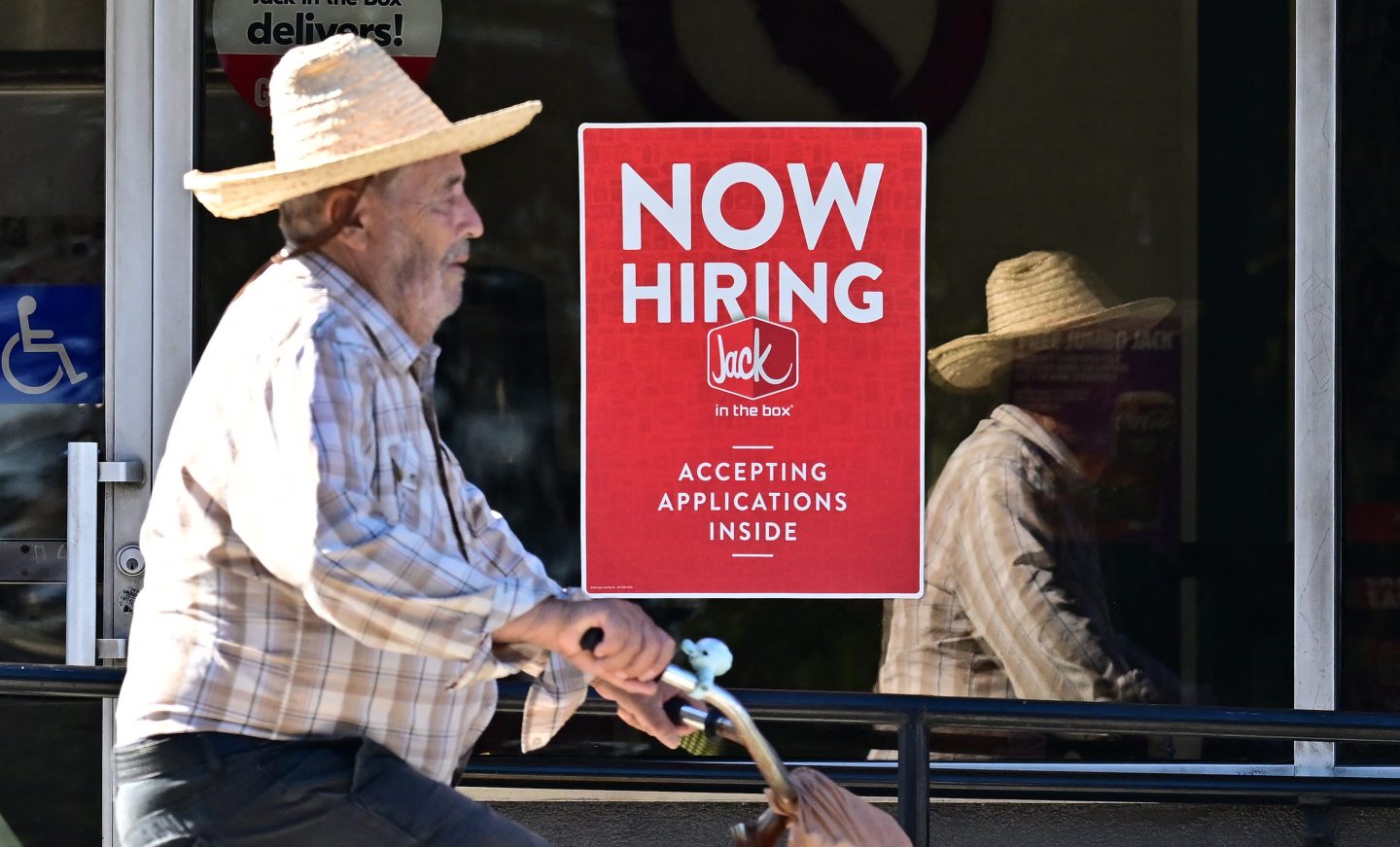
White-collar jobs aren’t as plentiful as they once were, as AI optimization and pandemic-era overhiring drag down the number of open roles. Last November, job openings fell to about 7.1 million, a sharp decline from October and nearly 900,000 positions lower than the year before. And across 2025 altogether, headcounts only grew by an average of 49,000 jobs per month—a steep drop from 168,000 monthly in 2024, according to the U.S. Bureau of Labor Statistics.
As the labor market lags and six-figure dreams have been dashed, Gen Zers are turning to fulfilling careers—and education makes the top of the list.
About 9 in 10 Gen Zers consider a sense of purpose important to their job satisfaction—even ranking it above pay—according to a 2025 report from Deloitte. And teaching can offer just that, including job security; the education sector is the fastest-growing industry in the U.K., according to a 2024 LinkedIn analysis. Roles including teachers, lecturers, and learning support assistants have particularly taken off as “being some of the most sought-after roles,” LinkedIn’s career expert Charlotte Davies told Fortune last year.
It’s a welcome change as Gen Z high school students’ interest in studying education in college had been on the decline for around a decade, according to a 2024 study from SREB. Education has long been seen as an incredibly tough, low-paying profession, with 77% of teachers reporting that their job is frequently stressful, and 88% calling it overwhelming, according to a 2023 Pew Research Center survey. The career can be tough, and more than half of educators “would not advise a young person starting out today to become a teacher.” Yet the profession has exactly what Gen Z is looking for: purpose in their work.
Despite the headaches and long days, around 67% of public and private school teachers feel a strong sense of purpose and hope when thinking about the future, according to a 2025 Morning Consult and EdChoice poll. And the profession is looking to hire—there were 41,920 unfilled teacher positions across 30 U.S. states in 2024, according to the Learning Policy Institute. Plus, at least 406,964 education positions were vacant or filled by teachers not fully certified for their assignments—about 1 in 8 of all teaching positions across America.