As Americans prepare to ring in 2026, the economic hangover from a year of aggressive trade policy is creating a distinctive “affordability crisis,” particularly in durable goods such as cars, furniture, and appliances. According to veteran market watcher Ed Yardeni’s latest outlook, this pricing pressure may be the catalyst that pushes President Trump to reverse course on trade barriers, leveraging negotiated wins to lower U.S. tariff rates in the coming year.
In his December 29 report titled “2026—Another Year Of Living Audaciously!”, the president of Yardeni Research outlines a “Roaring 2020s” base-case scenario where the administration pivots from protectionist friction to transactional easing. While 2025 was marked by rising costs for imported durable goods due to higher tariffs, Yardeni predicts that 2026 will see the administration utilizing these tariffs as bargaining chips rather than permanent walls.
Tariff pivot
The mechanics of this potential policy shift rely on what the administration calls “reciprocal” victories. Yardeni, a generally bullish analyst known for constructive long-term views such as the “Roaring 2020s” thesis and high S&P 500 targets, notes that Trump’s negotiations have already “extracted commitments from foreign governments and companies to build manufacturing facilities in the US in return for lower U.S. tariff rates.” This suggests a strategic de-escalation: having used the threat of levies to secure nearly $10 trillion in investment commitments, the White House may now slash those same tariffs to alleviate the consumer price crunch.
This pivot is politically urgent. While the administration has touted a plan to distribute $2,000 “dividend” checks funded by tariff revenue, the proposal faces significant hurdles; Congress has yet to introduce the necessary legislation, and the Supreme Court could strike down the tariff authority entirely. Without these checks, the administration must address the high costs directly to maintain economic momentum. “Since tariffs have increased the cost of imported durable goods this year,” Yardeni wrote, “the administration may be forced to lower some tariffs to address the affordability crisis.” Yardeni included a chart of durable goods inflation to show just how much tariffs have added to the pain in the pocketbook, the first upsurge since pandemic-era inflation driven by supply-chain constraints.
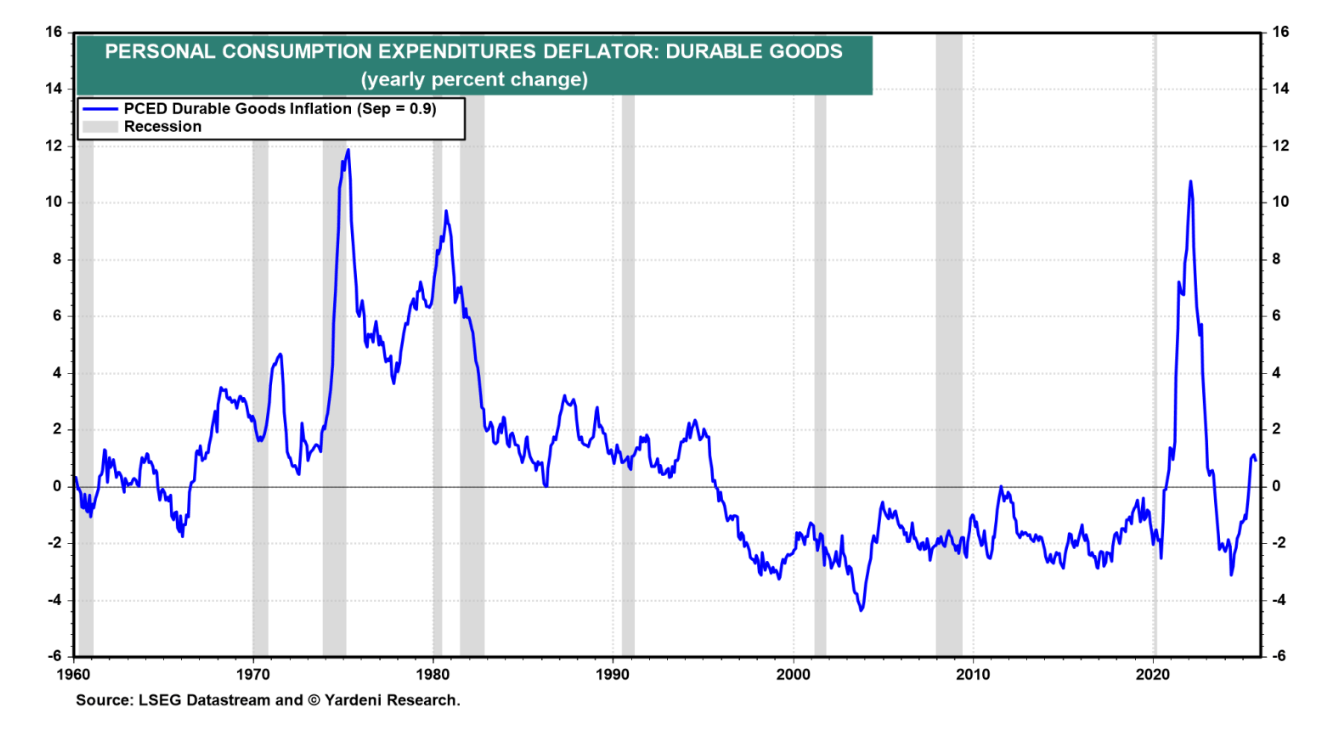
Yardeni’s chart underscores the violent uptick in inflation since 2019, as inflation surged at levels unseen in 40 years. Inflation in general is up between 25%-27% since January 2020, as measured by the Consumer Price Index, leaving people feeling, to Yardeni’s point, that they don’t have enough money to pay their bills. Yardeni had previously tackled what he called the “affordability crisis” in an early December note, arguing that it explains why many Americans feel financially squeezed despite strong macro data. He focused on the cumulative jump in prices for essentials, housing, and borrowing costs, outpacing what people feel their wages can buy. He also links it to politics and markets, arguing that the crisis has become a major driver of voter anger and a new source of uncertainty for investors.
Some of Trump’s own advisors have hinted that they agree with Yardeni, with Treasury Secretary Scott Bessent calling the tariffs a “shrinking ice cube” earlier this month, in conversation with Dealbook’s Andrew Ross Sorkin. In late November, the Congressional Budget Office (CBO) estimated that $800 billion of projected deficit reduction had been wiped out on the back of Trump’s retreat from high tariff rates. The national debt, meanwhile, keeps growing, surpassing $38 trillion in late October and setting the stage for $1 trillion or more of annual interest payments for the foreseeable future, per the Committee for a Responsible Federal Budget.
Fiscal stimulus to the rescue
Even if tariff relief takes time to trickle down to price tags, Yardeni forecasts a massive injection of liquidity into household bank accounts via the “One Big Beautiful Bill Act” (OBBBA), passed in July 2025. Because many of the bill’s tax cuts were retroactive to the start of 2025, workers did not see the benefits in their weekly paychecks during the year. Instead, they are poised to receive a “massive wave of tax refunds” when they file taxes in early 2026.
The OBBBA includes targeted relief to offset the affordability crisis, including tax deductions for tip income, overtime pay, and interest on vehicle loans. Additionally, it offers a “means-tested $6,000 deduction for individuals” over age 65, effectively eliminating Social Security taxes for many seniors. The CBO has estimated that OBBBA will boost real GDP growth by 0.4% in 2026 from 1.8% to 2.2%, and early returns are also supportive of Yardeni’s argument, with real-GDP growth in the third quarter surprising to the upside with a 4.3% blowout quarter.
The growth outlook
Fueled by this fiscal stimulus and the potential lowering of trade barriers, Yardeni has raised the (admittedly subjective) odds of his optimistic “Roaring 2020s” scenario to 60%. He projects real GDP growth to accelerate to 3.0%-3.5% in 2026. This growth is further underpinned by the wealthy Baby Boomer cohort, which holds $85.4 trillion in net worth and continues to spend down its retirement nest eggs.
However, the outlook is not without risks. The combination of OBBBA tax refunds and continued spending has “Bond Vigilantes” circling, worried that the swelling federal deficit could trigger a debt crisis. Yardeni warns that soaring bond yields in Japan and the UK could pressure U.S. rates upward. Furthermore, while the labor market remains stable, finding a job has become more difficult, creating a fragile environment for consumer confidence if the affordability crisis is not tamed swiftly. Under a section titled “What could possibly go wrong?” Yardeni also leaves room for geopolitical shocks. “China could invade Taiwan, and Russia could invade Europe,” he wrote, noting that while such geopolitical crises usually create buying opportunities in the stock market, “if China invades Taiwan or Russia invades Europe, all bets are off.”
For 2026, the message from Yardeni is clear: The path to continued prosperity likely involves the administration declaring victory on its trade war and lowering the very tariffs that defined the previous year.