• Home
  • Latest
  • Fortune 500
  • Finance
  • Tech
  • Leadership
  • Lifestyle
  • Rankings
  • Multimedia
AIbooks

‘The rocket ship keeps going off’: Inside the Nvidia phenomenon with author Stephen Witt

Nick Lichtenberg
By
Nick Lichtenberg
Nick Lichtenberg
Business Editor
Down Arrow Button Icon
Nick Lichtenberg
By
Nick Lichtenberg
Nick Lichtenberg
Business Editor
Down Arrow Button Icon
December 19, 2025, 9:53 AM ET
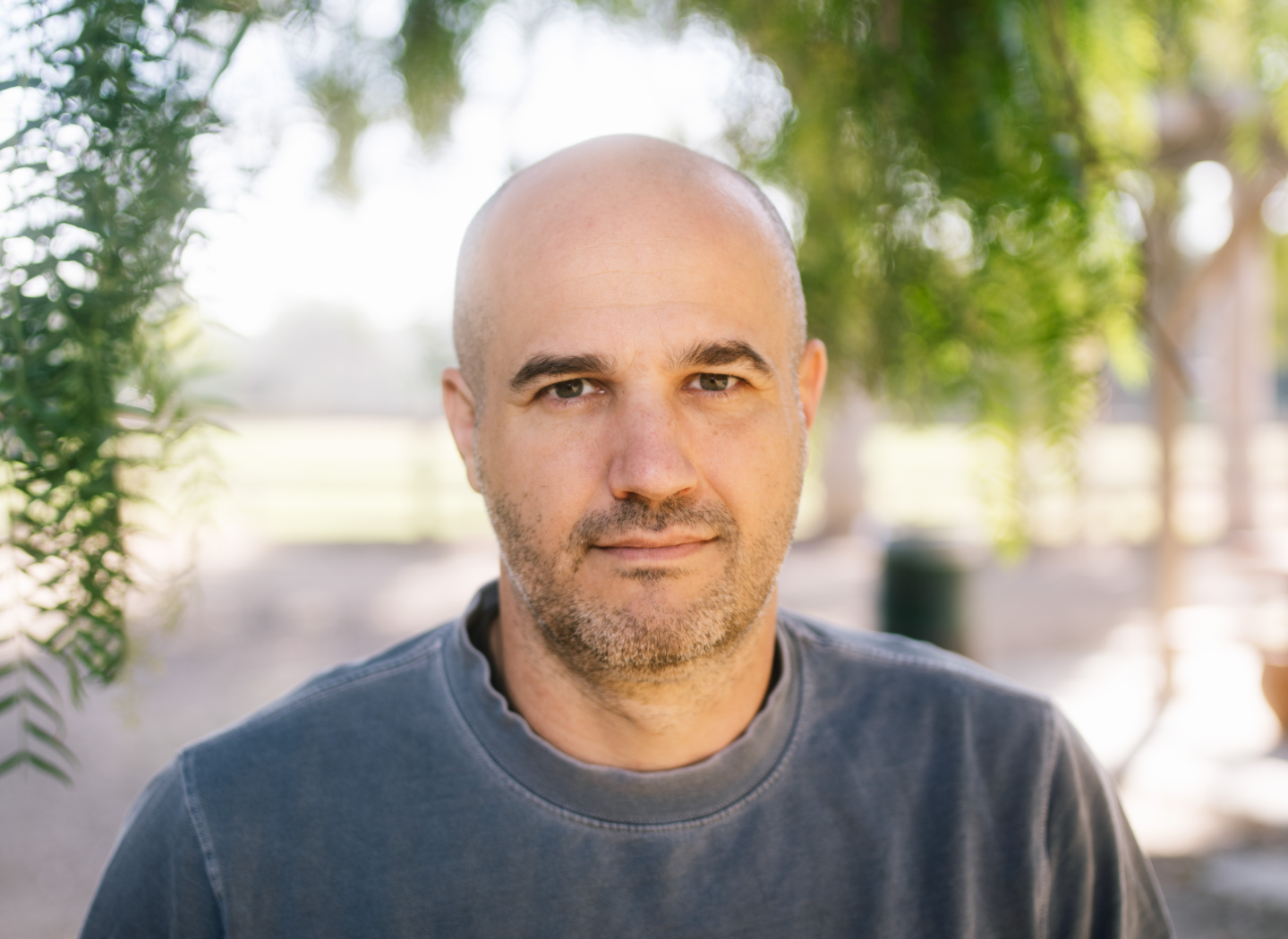
Stephen Witt
Stephen Witt, author of “The Thinking Machine.”Courtesy of Stephen Witt

For employees at Nvidia, the chipmaker at the center of the artificial intelligence boom, the financial incentives to retire are staggering, yet few are heading for the exits. According to Stephen Witt, the freelance journalist and author whose book on the most valuable company in the world, The Thinking Machine, just became the FT and Schroders business book of the year, this retention of wealthy engineers comes down to a fear of missing out on history (along with all that money, of course).

Recommended Video

“I think if the company was selling breakfast cereal, a lot of them would retire, but they’re making what they believe to be the single most important technology of all time,” Witt told Fortune in a recent interview, referring to Nvidia’s groundbreaking GPU chips that function as something like the oil wells of the AI boom.

“They’re engineers,” Witt said of Nvidia CEO Jensen Huang, his friends, his investors, and his employees, all of whom he talked to for his deeply reported book. He described their attitude as one of “I can’t leave now … I just can’t not be working with this technology. It’s like a once-in-a-lifetime opportunity.” Acknowledging that Nvidia’s soaring valuation to a $4-trillion-plus market capitalization doesn’t hurt, Witt explained how “the rocket ship keeps going off,” both from a technological and financial standpoint. The thing is, he explained, “they’re a very generous employer, especially with employee stock purchasing programs.”

Field of GPU dreams

Nvidia’s journey was not an overnight success, according to Witt. The author described the company’s early development of GPUs for AI as a Field of Dreams scenario where it built technology “without any users, without any customers.” Seen through the lens of capitalism, developing a new technology, at least for “very long-dated technologies, the market will not work” without some kind of buffer to allow time for the tech to mature, Witt concluded: “Jensen was a singular individual, and his stock price went down, or was stagnant, for 10 years while he was developing these platforms, for people to compute. He was not rewarded for a long, long, long time for doing this.”

Nvidia’s financial performance and stock price have taken off since 2015, to Witt’s point, and began gathering steam in the 2004–07 period, when academic AI researchers discovered the benefit of Nvidia’s GPUs. And there was a long period where the stock was not generating great returns, but Nvidia’s chips were always popular with gamers, and so the market worked to at least that extent.

Witt noted that he found similar dynamics in previous reporting, having written a book about MP3 file-sharing tech in 2015 (How Music Got Free). “That was also true of those guys,” he said, who likewise faced many years of development before it paid off. “If we were working in a corporation, I don’t think anyone would have had the patience. We needed almost a third base between academia and finance to sort of make this work.” Witt cited other examples, such as neural nets and the state-sponsored TSMC, one of Nvidia’s closest rivals in the advanced semiconductor space.

Witt said his reporting revealed that many Nvidia workers were initially on the losing side of this dynamic, having bought into employee stock ownership programs and seen the stock fall 50% or 60% from there. “The employees would get upset. They’d be like, ‘Oh, my God … I invested, I maxed out my cap to, you know, an employee stock purchasing program, and … now it’s underwhelming, and I don’t know if I’ll ever make it back.” At that point, Huang instituted a program to allow workers to buy the stock at a discount to the current market price, but also at a discount to any price in the past two years. “And then the stock turned into a rocket ship,” said Witt. Soon enough, he found, “every employee started maxing out these contributions to the employee stock purchase program, and then the stock continued to go up another, like, hundred times on these very low-cost basis transactions.”

The bubble question

Now that the market has caught up, questions of a financial bubble loom. Witt, who has worked for a hedge fund and said he approaches journalism with a shareholder’s mindset, admits the possibility of a crash if cash flows don’t eventually align with infrastructure spending: “So, so much is predicated on getting the timing of cash flows correct. And it may be the case that we throw all this money into building data centers and buying Nvidia chips, and that doesn’t pay off at the exact right time, and then everything crashes for a little while. That may be happening right now.”

Yet Witt also drew a sharp distinction between financial bubbles and technological utility, saying that the now well-trod comparisons of AI to the internet and railroad booms may have some merit. But echoing similar remarks from leaders such as JPMorgan CEO Jamie Dimon, Witt said of AI: “This stuff is real.” Witt predicted that breakthroughs from Nvidia, TSMC, and others will lead fo a “spreading wave of robots and autonomy,” recalling Huang’s own prediction that in 10 years, anything that moves will be autonomous. “We’re moving into the world of AI,” Witt added, saying that in 10 years, “we will interact with AI as frequently as we interact with the internet or electricity. And there’s a big scramble on to be the company that gets it in front of me. I think that explains all the investment.”

The political dynamic

The big scramble for funding also has a political effect, of course. “Jensen was forced to become a political creature, especially this year,” Witt said, suggesting that “he kind of pivoted into being almost like Trump’s Thomas Cromwell,” likening him to the famous advisor to King Henry VIII, although Huang is a close external advisor and not in Trump’s cabinet, with someone like Treasury Secretary Scott Bessent or Commerce Secretary Howard Lutnick a much closer analogue. (Witt said as an aside that he’s been reading Hilary Mantel’s modern classic Wolf Hall lately, and the subject was on his mind.) On Huang and Trump’s relationship, Witt added: “He became, like, a real advisor in the game … And he was really successful in that regard.”

Witt observed of the dynamic that “Trump likes to be close to Jensen because Jensen’s a winner. And Trump likes winners, and Jensen’s basically the biggest winner there is right now.” Huang also needs certain support from the federal government, Witt added, not just exemption from tariffs for Taiwan, but also in selling certain chips to China. “Maybe even most importantly, and maybe least discussed, he needs absolutely to secure an ongoing pipeline of H-1B visas for his best technical work,” Witt said, noting that one-third, if not more, of Nvidia’s employees are South Asians. “They’re extremely dedicated, they’re extremely bright, and it’s part of really what makes Nvidia work.”

Ultimately, Nvidia’s soaring valuation is underpinned by a new geopolitical narrative. Witt argues that the U.S. is engineering a merger between Silicon Valley and the Pentagon, fueled by fears of an “AI gap” with China. “Just as in the old days,” Witt said, “you would talk about the fear of a missile gap with the Soviet Union. Now, it’s an AI gap with China.” And on that count, Witt added, Trump likes winners, “and he’s got a winner in AI.”


Join us at the Fortune Workplace Innovation Summit May 19–20, 2026, in Atlanta. The next era of workplace innovation is here—and the old playbook is being rewritten. At this exclusive, high-energy event, the world’s most innovative leaders will convene to explore how AI, humanity, and strategy converge to redefine, again, the future of work. Register now.
About the Author
Nick Lichtenberg
By Nick LichtenbergBusiness Editor
LinkedIn icon

Nick Lichtenberg is business editor and was formerly Fortune's executive editor of global news.

See full bioRight Arrow Button Icon

Latest in AI

Finance
Lorem ipsum dolor sit amet, consectetur adipiscing elit, sed do eiusmod tempor incididunt ut labore et dolore magna aliqua. Ut enim ad minim veniam
By Fortune Editors
October 20, 2025
Finance
Lorem ipsum dolor sit amet, consectetur adipiscing elit, sed do eiusmod tempor incididunt ut labore et dolore magna aliqua. Ut enim ad minim veniam
By Fortune Editors
October 20, 2025
Finance
Lorem ipsum dolor sit amet, consectetur adipiscing elit, sed do eiusmod tempor incididunt ut labore et dolore magna aliqua. Ut enim ad minim veniam
By Fortune Editors
October 20, 2025
Finance
Lorem ipsum dolor sit amet, consectetur adipiscing elit, sed do eiusmod tempor incididunt ut labore et dolore magna aliqua. Ut enim ad minim veniam
By Fortune Editors
October 20, 2025
Finance
Lorem ipsum dolor sit amet, consectetur adipiscing elit, sed do eiusmod tempor incididunt ut labore et dolore magna aliqua. Ut enim ad minim veniam
By Fortune Editors
October 20, 2025
Finance
Lorem ipsum dolor sit amet, consectetur adipiscing elit, sed do eiusmod tempor incididunt ut labore et dolore magna aliqua. Ut enim ad minim veniam
By Fortune Editors
October 20, 2025

Most Popular

Finance
Lorem ipsum dolor sit amet, consectetur adipiscing elit, sed do eiusmod tempor incididunt ut labore et dolore magna aliqua. Ut enim ad minim veniam
By Fortune Editors
October 20, 2025
Finance
Lorem ipsum dolor sit amet, consectetur adipiscing elit, sed do eiusmod tempor incididunt ut labore et dolore magna aliqua. Ut enim ad minim veniam
By Fortune Editors
October 20, 2025
Finance
Lorem ipsum dolor sit amet, consectetur adipiscing elit, sed do eiusmod tempor incididunt ut labore et dolore magna aliqua. Ut enim ad minim veniam
By Fortune Editors
October 20, 2025
Finance
Lorem ipsum dolor sit amet, consectetur adipiscing elit, sed do eiusmod tempor incididunt ut labore et dolore magna aliqua. Ut enim ad minim veniam
By Fortune Editors
October 20, 2025
Finance
Lorem ipsum dolor sit amet, consectetur adipiscing elit, sed do eiusmod tempor incididunt ut labore et dolore magna aliqua. Ut enim ad minim veniam
By Fortune Editors
October 20, 2025
Finance
Lorem ipsum dolor sit amet, consectetur adipiscing elit, sed do eiusmod tempor incididunt ut labore et dolore magna aliqua. Ut enim ad minim veniam
By Fortune Editors
October 20, 2025
Fortune Secondary Logo
Rankings
  • 100 Best Companies
  • Fortune 500
  • Global 500
  • Fortune 500 Europe
  • Most Powerful Women
  • Future 50
  • World’s Most Admired Companies
  • See All Rankings
Sections
  • Finance
  • Fortune Crypto
  • Features
  • Leadership
  • Health
  • Commentary
  • Success
  • Retail
  • Mpw
  • Tech
  • Lifestyle
  • CEO Initiative
  • Asia
  • Politics
  • Conferences
  • Europe
  • Newsletters
  • Personal Finance
  • Environment
  • Magazine
  • Education
Customer Support
  • Frequently Asked Questions
  • Customer Service Portal
  • Privacy Policy
  • Terms Of Use
  • Single Issues For Purchase
  • International Print
Commercial Services
  • Advertising
  • Fortune Brand Studio
  • Fortune Analytics
  • Fortune Conferences
  • Business Development
About Us
  • About Us
  • Editorial Calendar
  • Press Center
  • Work At Fortune
  • Diversity And Inclusion
  • Terms And Conditions
  • Site Map
Fortune Secondary Logo
  • About Us
  • Editorial Calendar
  • Press Center
  • Work At Fortune
  • Diversity And Inclusion
  • Terms And Conditions
  • Site Map
  • Facebook icon
  • Twitter icon
  • LinkedIn icon
  • Instagram icon
  • Pinterest icon

Latest in AI

sam altman
AIOpenAI
Sam Altman tells staff at an all-hands that OpenAI is negotiating a deal with the Pentagon, after Trump orders the end of Anthropic contracts
By Sharon GoldmanFebruary 27, 2026
8 hours ago
Future of Workthe future of work
Have good taste? It may just get you a job during the AI jobs apocalypse, says Sam Altman
By Marco Quiroz-GutierrezFebruary 27, 2026
8 hours ago
Emil Michael smirks
AIAnthropic
Emil Michael, the Silicon Valley exec turned Trump official leading the war against Anthropic, has deep ties to the tech world
By Lily Mae LazarusFebruary 27, 2026
9 hours ago
AIMilitary
Trump orders U.S. government to stop using Anthropic but gives Pentagon six months to phase it out while Hegseth adds supply-chain risk designation
By Jason MaFebruary 27, 2026
9 hours ago
Aerial view of a data center under construction in Ohio.
EconomyEconomics
Before AI gains materialize, governments will have to deal with a ‘policy tradeoff,’ Moody’s says: How to handle the massive spending and debt risk
By Tristan BoveFebruary 27, 2026
10 hours ago
jack dorsey
AILayoffs
Block CEO Jack Dorsey lays off nearly half of his staff because of AI and predicts most companies will make similar cuts in the next year
By Jake AngeloFebruary 27, 2026
12 hours ago

Most Popular

placeholder alt text
Innovation
An MIT roboticist who cofounded bankrupt robot vacuum maker iRobot says Elon Musk’s vision of humanoid robot assistants is ‘pure fantasy thinking’
By Marco Quiroz-GutierrezFebruary 25, 2026
2 days ago
placeholder alt text
Commentary
'The Pitt': a masterclass display of DEI in action 
By Robert RabenFebruary 26, 2026
2 days ago
placeholder alt text
Success
Jeff Bezos says being lazy, not working hard, is the root of anxiety: ‘The stress goes away the second I take that first step’
By Sydney LakeFebruary 25, 2026
3 days ago
placeholder alt text
Economy
It’s more than George Clooney moving to France: America is becoming the ‘uncool’ country that people want to move away from
By Nick LichtenbergFebruary 27, 2026
22 hours ago
placeholder alt text
Success
Japanese companies are paying older workers to sit by a window and do nothing—while Western CEOs demand super-AI productivity just to keep your job
By Orianna Rosa RoyleFebruary 27, 2026
15 hours ago
placeholder alt text
Success
Gen Z Olympic champion Eileen Gu says she rewires her brain daily to be more successful—and multimillionaire founder Arianna Huffington says it really does work
By Orianna Rosa RoyleFebruary 25, 2026
3 days ago

© 2026 Fortune Media IP Limited. All Rights Reserved. Use of this site constitutes acceptance of our Terms of Use and Privacy Policy | CA Notice at Collection and Privacy Notice | Do Not Sell/Share My Personal Information
FORTUNE is a trademark of Fortune Media IP Limited, registered in the U.S. and other countries. FORTUNE may receive compensation for some links to products and services on this website. Offers may be subject to change without notice.