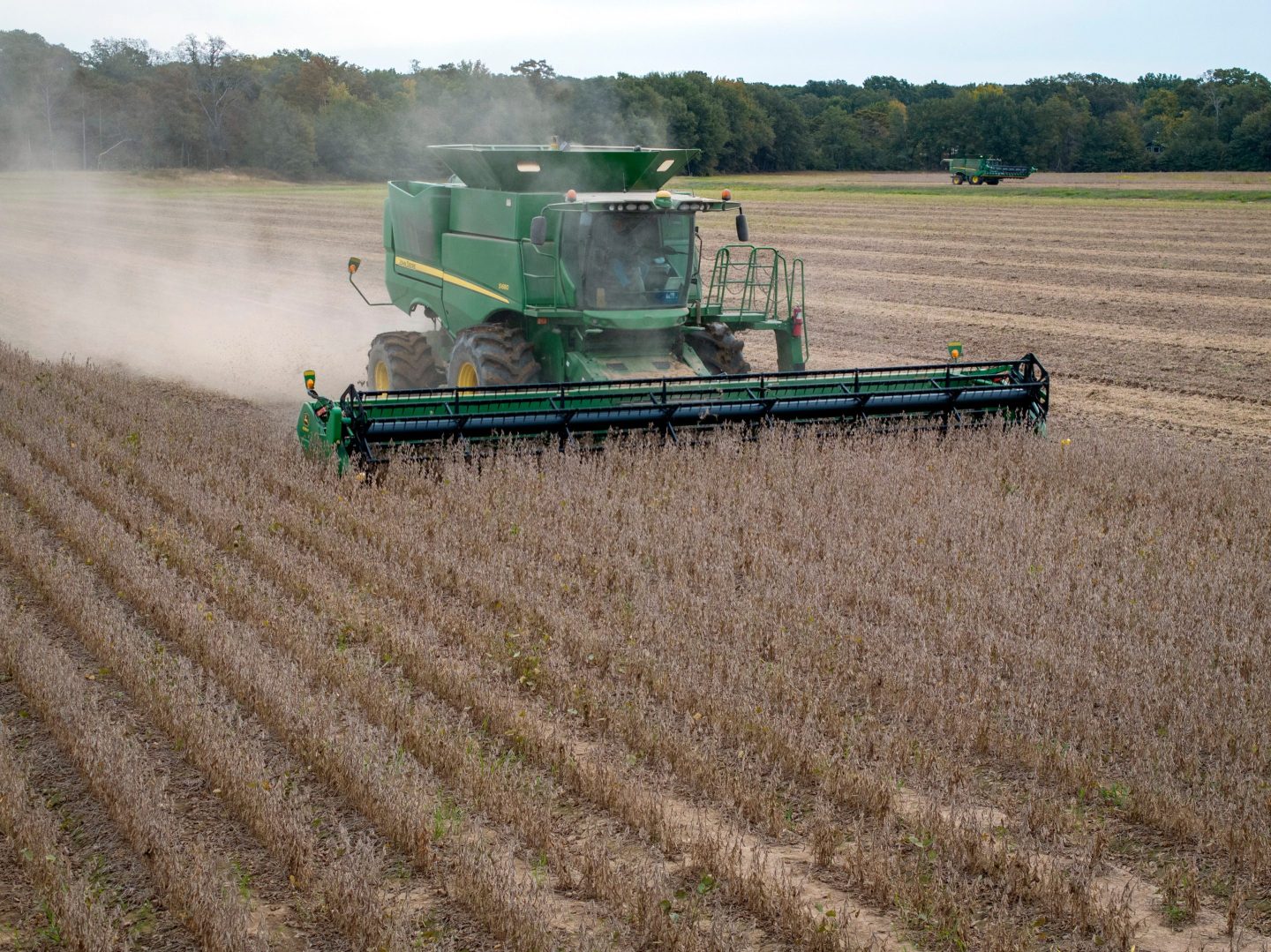
Financial conditions in the agriculture economy are flashing more signs of strain as farmers’ costs remain high while prices for their crops stay low.
A survey last month from the Chicago Fed found that third-quarter repayment rates in the Midwest for non-real-estate farm loans were lower than a year earlier for the eighth quarter in a row.
Meanwhile, 21% of the lenders who responded to the survey said collateral requirements for farm loans rose in the third quarter, while none reported that requirements eased.
And an overwhelming 92% majority expect net cash earnings, including government payments, for crop farmers to be lower during the fall and winter than a year earlier.
As a result, nearly half the bankers surveyed see forced sales or liquidations of farm assets owned by financially distressed farmers rising in the next three to six months.
Earlier this month, the American Soybean Association (ASA) projected that 2025 will mark a third straight year of losses, noting that when harvest began in September, futures prices for November were 25% to 30% lower compared with 2022.
At the same time, farm production expenses are seen increasing by $12 billion from a year ago to reach $467.4 billion in 2025. And with costs seen staying high next year, 2026 is shaping up to be more of the same.
“Unless revenues increase significantly next year, this would squeeze farmgate profits for a fourth year, marking the longest stretch of substantial soybean production losses since [USDA’s Economic Research Service] 1998-2002 reporting period,” the ASA warned.
Several factors have spiked costs recently. President Donald Trump’s tariffs have made key imports more expensive; Russia’s war on Ukraine boosted fertilizer prices; and the Federal Reserve’s earlier round of rate hikes lifted borrowing costs.
On the demand side, Trump’s trade war essentially halted Chinese orders for U.S. soybeans until just recently.
Separate data have shown that U.S. farm bankruptcies have soared this year, and the National Corn Growers Association raised alarms this summer about “the economic crisis hitting rural America.”
The Trump administration plans a $12 billion rescue that will serve as a “bridge” before more aid comes next year, but farmers say the short-term lifeline still won’t be enough to cover their losses.
In fact, losses this year for the nine major commodity crops should range from $35 billion to $44 billion, Shawn Arita, associate director of the Agricultural Risk Policy Center at North Dakota State University, told Reuters.
Caleb Ragland, president of the ASA and a farmer himself, estimated the aid package will be enough for only about one-quarter of soybean losses.
“We’re appreciative of an economic bridge,” he told Reuters, but added that the money is just “plugging holes and slowing the bleeding.”