
• Home
  • Latest
  • Fortune 500
  • Finance
  • Tech
  • Leadership
  • Lifestyle
  • Rankings
  • Multimedia
EconomyAgriculture

Trump’s $12 billion farmer bailout is a ‘Band-Aid on a bigger wound’ the American agriculture industry is still reeling from

Sasha Rogelberg
By
Sasha Rogelberg
Sasha Rogelberg
Reporter
Down Arrow Button Icon
Sasha Rogelberg
By
Sasha Rogelberg
Sasha Rogelberg
Reporter
Down Arrow Button Icon
December 9, 2025, 12:51 PM ET
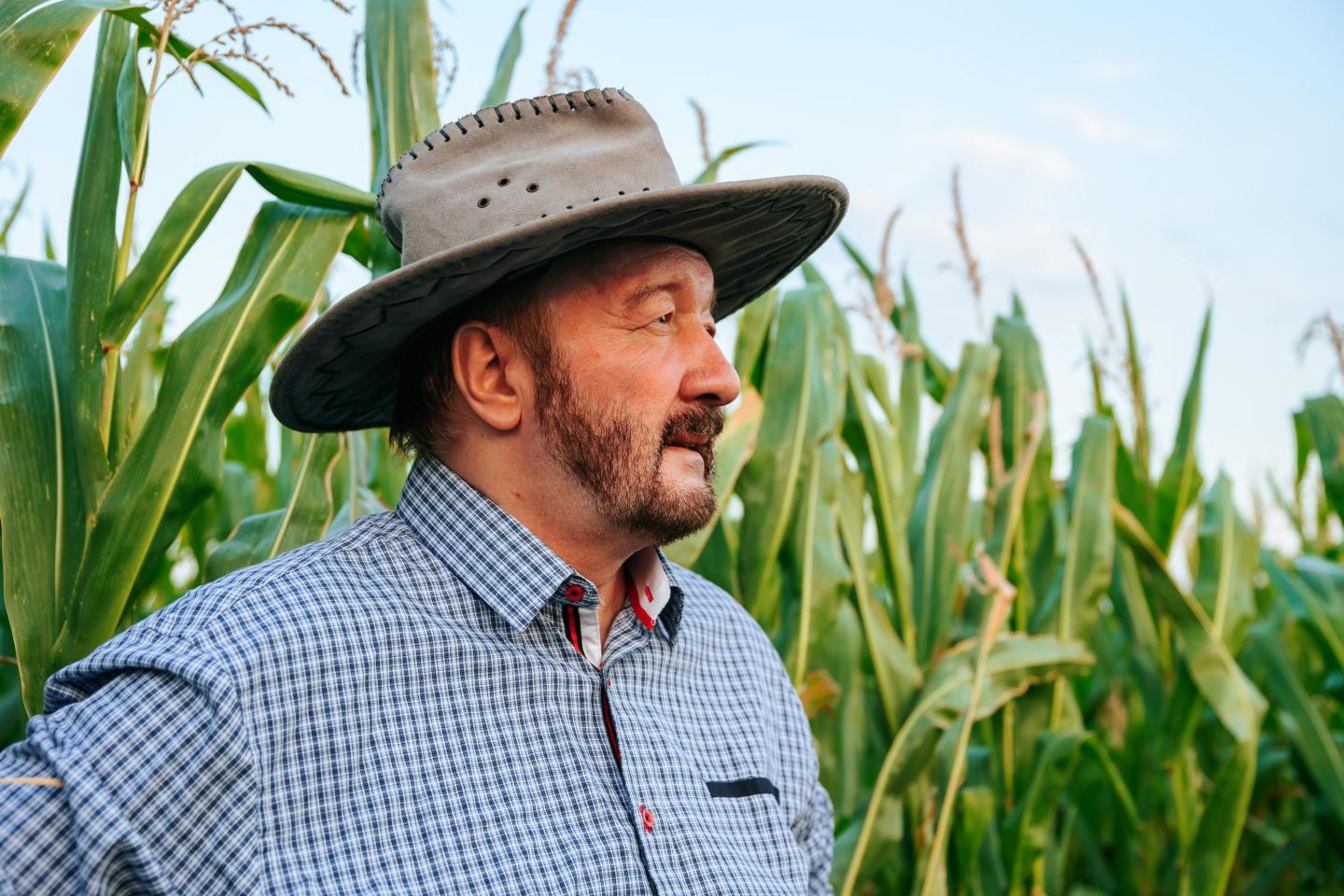
An older man with a wide-brimmed hat stands in a corn field
U.S. farmers say they are grateful for the Trump administration’s $12 billion aid program, but that more changes are needed to help the beleaguered industry. Alexandr Musuc

President Donald Trump has delivered on his promise to provide aid to U.S. farmers hit by his sweeping tariff policy, but that hasn’t freed the agriculture industry from worries of tight margins and volatile markets. 

Recommended Video

On Monday, Trump, alongside Treasury Secretary Scott Bessent, Agriculture Secretary Brooke Rollins, and National Economic Council director Kevin Hassett, announced a $12 billion farm aid program, which outlined much-needed relief for farmers who sounded the alarms about increasing input costs and fewer export opportunities amid ongoing trade tensions. Farmers will begin receiving funds by the end of February, Rollins said.

“Now we’re once again in a position where a president is able to put farmers first,” Trump said at a Monday roundtable of farmers and lawmakers. “But unfortunately, I’m the only president that does that.”

While farmers and agricultural economists see the package as a way to move forward after a disappointing harvest season, they fear the precedent of cash bailouts does not provide systemic solutions to a beleaguered industry, and they don’t believe the $12 billion gesture is enough to solve agriculture’s deeper challenges.

“We’re talking $12 billion, and while it is a lot of money, in the grand scheme of things, it’s still going to be a Band-Aid on a bigger wound,” Ryan Loy, assistant professor and extension economist for the University of Arkansas Division of Agriculture, told Fortune. “How can we triage this situation right now, work on that longer-term solution? That’s really, I think, the overall attitude toward it.”

The one-time payment program will send $11 billion to major row-crop producers growing corn, soybeans, and rice, and the remaining $1 billion will be reserved for specialty-crop growers, such as sugar. Trump said additional aid programs will depend on whether trade improves with China and other countries. While the money is welcome, farmers say they’d rather have the government secure stable markets and trade relations.

“At the end of the day, the farmers, they just want to conduct business, not necessarily have to get these packages to help them out during these times,” Loy said.

Farmers’ struggles

Since Trump introduced expansive import taxes—especially on China, provoking a wave of retaliatory tariffs—farmers have seen input costs increase while export demand and crop prices plummet. 

“It’s been a bit of a roller coaster in terms of not just uncertainty over our global markets and our prices, but also whether or not we were going to see any relief on the input side,” Kyle Jore, an economist, northwest Minnesota–based farmer, and secretary of the Minnesota Soybean Growers Association, told Fortune.

Tariffs on farming-related machinery as well as products like seeds and fertilizer sit at 9%, costing U.S. farmers about $33 billion more, according to North Dakota State University’s Agricultural Trade Monitor. That includes a more than 15% tax on tractors and herbicides.

Soybean farmers, responsible for the U.S.’s biggest agricultural export—which accounts for about 14% of the country’s total crops sent overseas—have been hit particularly hard by tariffs. Trade disputes with Beijing have disincentivized China from buying American soybeans, and the country has instead turned to South American countries like Argentina and especially Brazil, which makes up about 71% of China’s soybean imports, according to the American Soybean Association.

To be sure, thawing relations between the U.S. and China has enlivened soybean trade. China committed in October to resume orders of U.S. soybeans after halting all purchases in May, promising to import 12 million tons of soybeans by the end of the year, as well as at least 25 million tons in each of the next three years. However, soybean prices have still lagged because of stifled demand, and farmers saw their third straight year of losses, in large part due to tariff turmoil.

According to agricultural economists, Trump’s farm aid program doesn’t hurt, but its benefits are limited: The bailout announcement arrived late in the harvest season, with farmers already booking orders at lower prices, nearly guaranteeing losses for the year. The package also doesn’t address input costs, which Jore sees as critical in improving tight margins.

“A lot of farmers are making purchasing decisions on the ’26 year crop right now,” he said. “And the hope was that by now, we’d start to see some of the fertilizers and stuff come down, and it’s just not happening to the extent that we were hoping for.”

Changing systems

Joe Maxwell, a Missouri farmer and cofounder and chief strategy officer of agriculture watchdog group Farm Action, said many of the issues plaguing the U.S. agriculture industry—including input costs—go beyond the trade disputes created by the Trump administration. His celebration of the bailout package was tempered by his belief the administration should be addressing policies that for years have been hurting the industry.

“The message we’re wanting to get to Washington, D.C., is that the system is broke,” Maxwell told Fortune. “We need the financial support that the president has announced. But we need Congress to take a serious look at the structure of these programs, because it’s just failed.”

While input costs have risen substantially from tariffs, Maxwell said the reason behind rising fertilizer and seed prices have more to do with corporate consolidations and monopolies dominating the input industry. According to Farm Action’s Agriculture Consolidation Data Hub, three fertilizer companies (CF Industries, Nutrien, and Koch) control 93% of North American nitrogen fertilizer sales in North America. Four seed companies (Bayer, Corteva, ChemChina, and BASF) similarly dominated 60% of the global seed market.

On Saturday, Trump signed an executive order creating a task force to investigate alleged antitrust practices impacting the cost of farming.

“There is a disconnect from the fundamentals in the market, basic supply, demand,” Maxwell said. “One of the fundamentals is competition, and that does not exist in America’s agriculture.” 

Maxwell also noted Congress provides subsidies for export crops, which he argued has created an oversupply problem. That exposes U.S. farmers, such as soybean producers, in instances like trade disputes when export demand plummets, he added. These subsidies also discourage American farmers from planting fruits and vegetables that would make the U.S. less reliant on exports and encourage crop diversification, which lends itself better to regenerative farming practices like crop rotation, which can decrease input costs and ultimately widen profits, Maxwell argued.

The USDA directed Fortune to its press release about the bailout program when asked for comment.

Until the government addresses the purported anticompetitive input industry and how subsidies may be exposing the agriculture industry in times of trade volatility, bailout packages will only go so far, Maxwell said.

“If we don’t go after the antitrust violations that are there, and we don’t change the structure of our farm programs, we will not solve the financial crisis farmers are facing today,” he concluded.

The Fortune 500 Innovation Forum will convene Fortune 500 executives, U.S. policy officials, top founders, and thought leaders to help define what’s next for the American economy, Nov. 16-17 in Detroit. Apply here.
About the Author
Sasha Rogelberg
By Sasha RogelbergReporter
LinkedIn iconTwitter icon

Sasha Rogelberg is a reporter and former editorial fellow on the news desk at Fortune, covering retail and the intersection of business and popular culture.

See full bioRight Arrow Button Icon

Latest in Economy

Finance
Lorem ipsum dolor sit amet, consectetur adipiscing elit, sed do eiusmod tempor incididunt ut labore et dolore magna aliqua. Ut enim ad minim veniam
By Fortune Editors
October 20, 2025
Finance
Lorem ipsum dolor sit amet, consectetur adipiscing elit, sed do eiusmod tempor incididunt ut labore et dolore magna aliqua. Ut enim ad minim veniam
By Fortune Editors
October 20, 2025
Finance
Lorem ipsum dolor sit amet, consectetur adipiscing elit, sed do eiusmod tempor incididunt ut labore et dolore magna aliqua. Ut enim ad minim veniam
By Fortune Editors
October 20, 2025
Finance
Lorem ipsum dolor sit amet, consectetur adipiscing elit, sed do eiusmod tempor incididunt ut labore et dolore magna aliqua. Ut enim ad minim veniam
By Fortune Editors
October 20, 2025
Finance
Lorem ipsum dolor sit amet, consectetur adipiscing elit, sed do eiusmod tempor incididunt ut labore et dolore magna aliqua. Ut enim ad minim veniam
By Fortune Editors
October 20, 2025
Finance
Lorem ipsum dolor sit amet, consectetur adipiscing elit, sed do eiusmod tempor incididunt ut labore et dolore magna aliqua. Ut enim ad minim veniam
By Fortune Editors
October 20, 2025

Most Popular

Finance
Lorem ipsum dolor sit amet, consectetur adipiscing elit, sed do eiusmod tempor incididunt ut labore et dolore magna aliqua. Ut enim ad minim veniam
By Fortune Editors
October 20, 2025
Finance
Lorem ipsum dolor sit amet, consectetur adipiscing elit, sed do eiusmod tempor incididunt ut labore et dolore magna aliqua. Ut enim ad minim veniam
By Fortune Editors
October 20, 2025
Finance
Lorem ipsum dolor sit amet, consectetur adipiscing elit, sed do eiusmod tempor incididunt ut labore et dolore magna aliqua. Ut enim ad minim veniam
By Fortune Editors
October 20, 2025
Finance
Lorem ipsum dolor sit amet, consectetur adipiscing elit, sed do eiusmod tempor incididunt ut labore et dolore magna aliqua. Ut enim ad minim veniam
By Fortune Editors
October 20, 2025
Finance
Lorem ipsum dolor sit amet, consectetur adipiscing elit, sed do eiusmod tempor incididunt ut labore et dolore magna aliqua. Ut enim ad minim veniam
By Fortune Editors
October 20, 2025
Finance
Lorem ipsum dolor sit amet, consectetur adipiscing elit, sed do eiusmod tempor incididunt ut labore et dolore magna aliqua. Ut enim ad minim veniam
By Fortune Editors
October 20, 2025
Fortune Secondary Logo
Rankings
  • 100 Best Companies
  • Fortune 500
  • Global 500
  • Fortune 500 Europe
  • Most Powerful Women
  • World's Most Admired Companies
  • See All Rankings
  • Lists Calendar
Sections
  • Finance
  • Fortune Crypto
  • Features
  • Leadership
  • Health
  • Commentary
  • Success
  • Retail
  • Mpw
  • Tech
  • Lifestyle
  • CEO Initiative
  • Asia
  • Politics
  • Conferences
  • Europe
  • Newsletters
  • Personal Finance
  • Environment
  • Magazine
  • Education
Customer Support
  • Frequently Asked Questions
  • Customer Service Portal
  • Privacy Policy
  • Terms Of Use
  • Single Issues For Purchase
  • International Print
Commercial Services
  • Advertising
  • Fortune Brand Studio
  • Fortune Analytics
  • Fortune Conferences
  • Business Development
  • Group Subscriptions
About Us
  • About Us
  • Press Center
  • Work At Fortune
  • Terms And Conditions
  • Site Map
  • About Us
  • Press Center
  • Work At Fortune
  • Terms And Conditions
  • Site Map
  • Facebook icon
  • Twitter icon
  • LinkedIn icon
  • Instagram icon
  • Pinterest icon

Latest in Economy

old
Commentaryaffordability
The American household just took an 81% margin cut. Wall Street hasn’t priced it in
By Katica RoyMay 2, 2026
1 hour ago
A group of people wait by a gap pump with their motorcycles.
EnergyOil
One economist’s ‘radical idea’ to solve the biggest energy crisis in history: a reverse OPEC
By Sasha RogelbergMay 2, 2026
4 hours ago
drinks
CommentaryFood and drink
We need a new way of thinking about drinking: Time to replace the ‘standard drink’ with advice people can actually use
By Justin KissingerMay 2, 2026
4 hours ago
pakistan
CommentaryIran
Asia is being hammered by the Iran conflict’s economic fallout. The U.S. has the playbook to help—and every reason to
By Wendy Cutler and Jane MellsopMay 2, 2026
5 hours ago
Betting on the Kentucky Derby is more popular than ever. So why is it so confusing?
LawSports
Betting on the Kentucky Derby is more popular than ever. So why is it so confusing?
By Catherina GioinoMay 2, 2026
5 hours ago
Trump says a ‘final proposal’ for a taxpayer-funded takeover of Spirit Airlines is under consideration
PoliticsAirline industry
Trump says a ‘final proposal’ for a taxpayer-funded takeover of Spirit Airlines is under consideration
By Michelle L. Price, Rio Yamat and The Associated PressMay 1, 2026
15 hours ago

Most Popular

Scott Bessent on financial literacy: 'it drives me crazy' to see young men in blue-collar construction jobs playing the lottery
Personal Finance
Scott Bessent on financial literacy: 'it drives me crazy' to see young men in blue-collar construction jobs playing the lottery
By Fatima Hussein and The Associated PressMay 1, 2026
1 day ago
China dominates the world's lithium supply. The U.S. just found 328 years' worth in its own backyard
North America
China dominates the world's lithium supply. The U.S. just found 328 years' worth in its own backyard
By Jake AngeloApril 30, 2026
2 days ago
The U.S. economy is booming — just not where 50 million Americans live
Commentary
The U.S. economy is booming — just not where 50 million Americans live
By Derek KilmerMay 1, 2026
1 day ago
Current price of oil as of May 1, 2026
Personal Finance
Current price of oil as of May 1, 2026
By Joseph HostetlerMay 1, 2026
1 day ago
A Chick-fil-A worker got fired and then showed up behind the register to allegedly refund himself over $80,000 in mac and cheese
Law
A Chick-fil-A worker got fired and then showed up behind the register to allegedly refund himself over $80,000 in mac and cheese
By Catherina GioinoMay 1, 2026
20 hours ago
Apple cofounder Ronald Wayne—whose stake would be worth up to $400 billion had he not sold it in 1976—says that at 91, he has no regrets
Success
Apple cofounder Ronald Wayne—whose stake would be worth up to $400 billion had he not sold it in 1976—says that at 91, he has no regrets
By Preston ForeApril 27, 2026
5 days ago

© 2026 Fortune Media IP Limited. All Rights Reserved. Use of this site constitutes acceptance of our Terms of Use and Privacy Policy | CA Notice at Collection and Privacy Notice | Do Not Sell/Share My Personal Information
FORTUNE is a trademark of Fortune Media IP Limited, registered in the U.S. and other countries. FORTUNE may receive compensation for some links to products and services on this website. Offers may be subject to change without notice.