
LeanIn.org’s annual Women in the Workplace report with McKinsey is out today. Some of its findings may not be that surprising; the report’s headline is that only half of companies are prioritizing women’s advancement today.
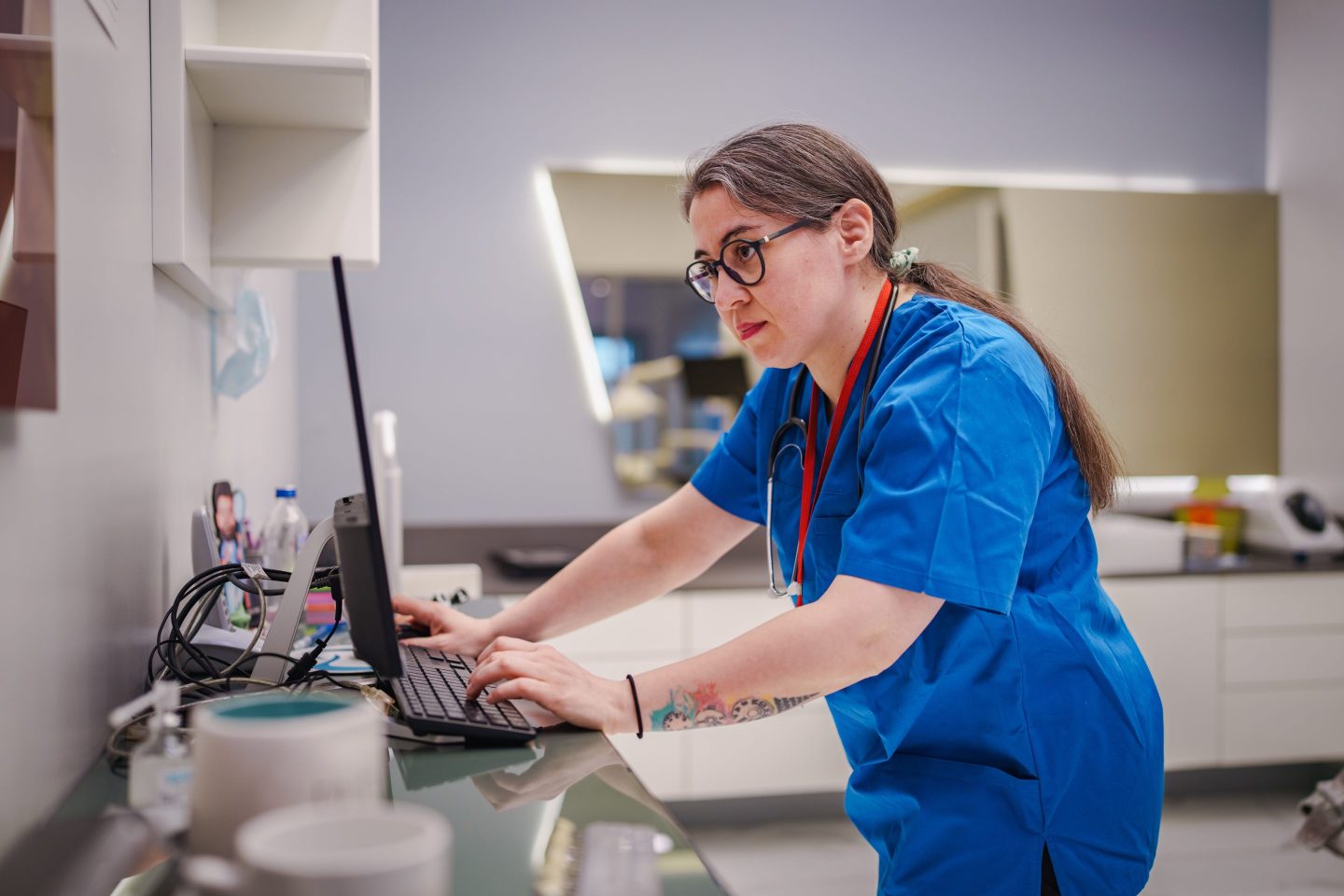
One finding stood out to me: women who work remotely are promoted at lower rates than men who do the same. Thirty-seven percent of women who work remotely three or more days a week have been promoted in the past two years—but 49% of men with the same arrangement have. This problem is starting early. Among entry-level remote workers, 44% of men were promoted and only 25% of women were. Relatedly, women who work remotely are less likely to say they have a sponsor at work. Thirty-seven percent of remote women again say they have a sponsor, compared to 52% of men.
What’s most shocking to me is not that this gap exists, but that it nearly disappears when you look at only women and men who both work mostly in the office. Among that cohort of on-site employees, 54% of men got a promotion in the past two years—and so did 53% of women.
We are seeing the impact of how companies handle remote work on women in real time. And I’m careful to say the impact of how companies treat it and not of remote work itself, because we’ve also seen the consequences of eliminating flexible working arrangements—women have been dropping out of the workforce entirely. But when employers don’t take care to ensure equitable opportunities for remote employees, women are clearly falling behind.
This result sits at the intersection of two trends. First, 25% of companies have scaled back or discontinued remote or hybrid work. Second, Lean In says an ambition gap is emerging for the first time in its decade of doing this research. Women are saying they are less likely to want to be promoted. Eighty percent of women say they want to be promoted, compared to 86% of men, with the gap becoming more pronounced at the entry level and at senior levels (it evens out mid-career).
So is the gap in advancement for remote workers a consequence of remote work? Or are women rethinking ambition anyway—and those doing so are choosing remote work?
“We’re seeing a clear double whammy: women are more likely to use remote and flexible work options, yet they’re also more likely to be penalized when they do,” LeanIn.org cofounder and CEO Rachel Thomas told me. “Remote work shouldn’t put women at a disadvantage—but right now, it does.”
For women who do want to advance in their careers, the authors of this research have a warning—one that wouldn’t be true in a perfect world, but seems to be true in our world today. McKinsey senior partner Alexis Krivkovich says, “We tell women that, for them uniquely, a remote job may come with a hidden penalty.”
Emma Hinchliffe
emma.hinchliffe@fortune.com
The Most Powerful Women Daily newsletter is Fortune’s daily briefing for and about the women leading the business world. Subscribe here.
ALSO IN THE HEADLINES
Sen. Amy Klobuchar (D-Minn.) writes in support of AI regulation. But she says President Trump's plan to replace state legislation with "one rulebook" for AI regulation threatens progress on AI safety. NYT
Dobbs hasn't stopped people from having abortions. Telehealth services and medication abortion are driving the increase, as providers in states where abortion is legal treat patients in states where it isn't. NYT
Can legacy athletes benefit from the women's sports boom? A new podcast series on the first U.S. Women's National Team brings together "The 85ers"—including through an athlete-owned LLC to help monetize their story on their behalf. USA Today
ON MY RADAR
Traditional gender roles won't get men what they want Vox
Is this former Bravo star Democrats' toughest critic? NYT
Kamala Harris isn't ready to be written off NYT
PARTING WORDS
"It was a lot because IVF kind of became my full-time job at the time. I kind of let everything about it dictate my happiness."
— Abby Elliott, opening up to Parents about her fertility journey