• Home
  • News
  • Fortune 500
  • Tech
  • Finance
  • Leadership
  • Lifestyle
  • Rankings
  • Multimedia
AIBrainstorm AI

Google Cloud CEO lays out 3-part strategy to meet AI’s energy demands, after identifying it as ‘the most problematic thing’

Jason Ma
By
Jason Ma
Jason Ma
Weekend Editor
Down Arrow Button Icon
Jason Ma
By
Jason Ma
Jason Ma
Weekend Editor
Down Arrow Button Icon
December 8, 2025, 8:57 PM ET
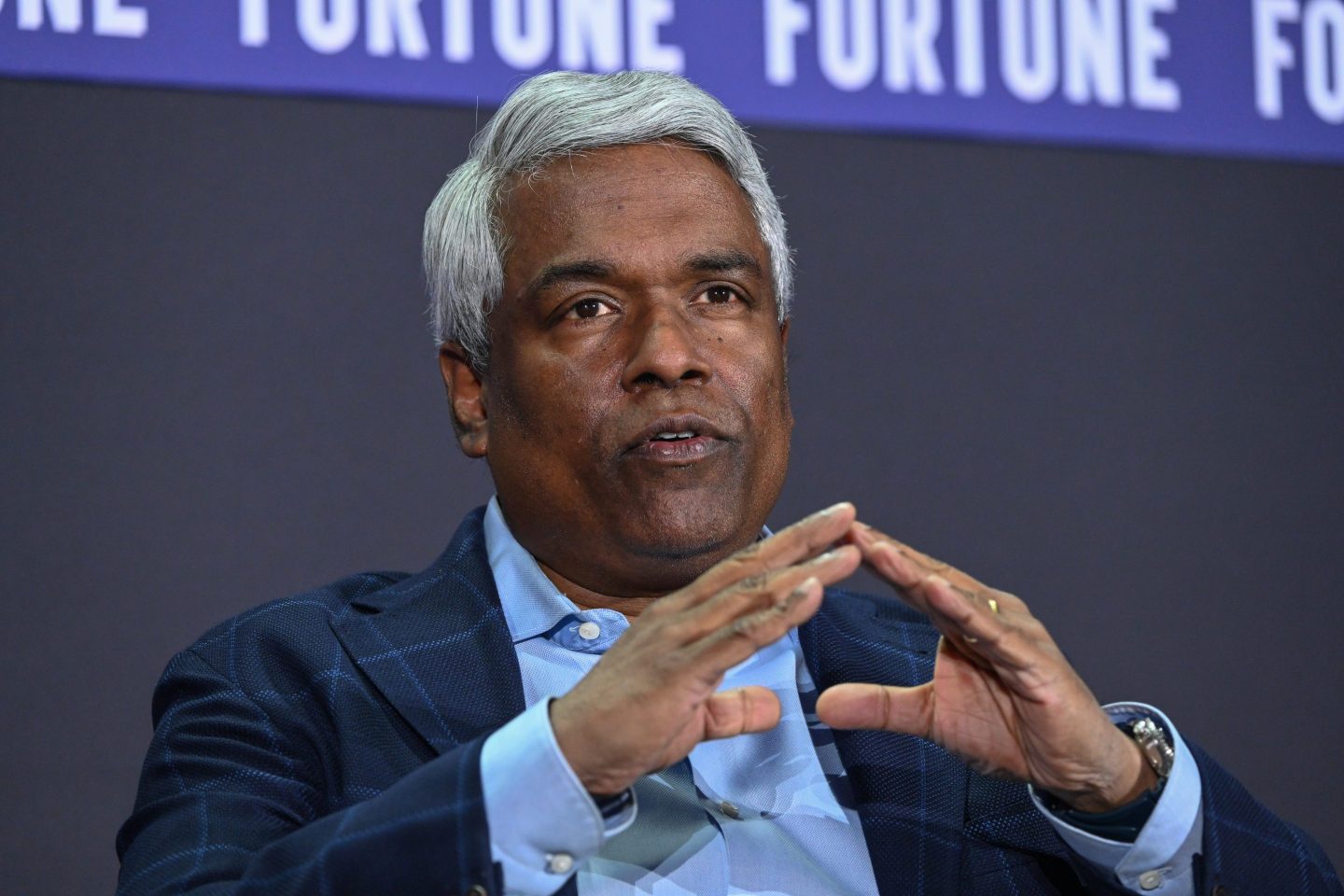
Google Cloud CEO Thomas Kurian
Google Cloud CEO Thomas KurianStuart Isett—Fortune

The immense electricity needs of AI computing were flagged early on as a bottleneck, prompting Alphabet’s Google Cloud to plan for how to source energy and how to use it, according to Google Cloud CEO Thomas Kurian.

Recommended Video

Speaking at the Fortune Brainstorm AI event in San Francisco on Monday, he pointed out that the company—a key enabler in the AI infrastructure landscape—has been working on AI since well before large language models came along and took the long view.

“We also knew that the most problematic thing that was going to happen was going to be energy, because energy and data centers were going to become a bottleneck alongside chips,” Kurian told Fortune’sAndrew Nusca. “So we designed our machines to be superefficient.”

The International Energy Agency has estimated that some AI-focused data centers consume as much electricity as 100,000 homes, and some of the largest facilities under construction could even use 20 times that amount.

At the same time, worldwide data center capacity will increase by 46% over the next two years, equivalent to a jump of almost 21,000 megawatts, according to real estate consultancy Knight Frank.  

At the Brainstorm event, Kurian laid out Google Cloud’s three-pronged approach to ensuring that there will be enough energy to meet all that demand.

First, the company seeks to be as diversified as possible in the kinds of energy that power AI computation. While many people say any form of energy can be used, that’s actually not true, he said.

“If you’re running a cluster for training, and you bring it up and you start running a training job, the spike that you have with that computation draws so much energy that you can’t handle that from some forms of energy production,” Kurian explained.

The second part of Google Cloud’s strategy is being as efficient as possible, including how it reuses energy within data centers, he added.

In fact, the company uses AI in its control systems to monitor thermodynamic exchanges necessary in harnessing the energy that has already been brought into data centers.

And third, Google Cloud is working on “some new fundamental technologies to actually create energy in new forms,” Kurian said without elaborating further.

Earlier on Monday, utility company NextEra Energy and Google Cloud said they are expanding their partnership and will develop new U.S. data center campuses that will include new power plants as well.

Tech leaders have warned that energy supply is critical to AI development alongside innovations in chips and improved language models.

The ability to build data centers is another potential chokepoint as well. Nvidia CEO Jensen Huang recently pointed out China’s advantage on that front compared with the U.S.

“If you want to build a data center here in the United States, from breaking ground to standing up an AI supercomputer is probably about three years,” he said at the Center for Strategic and International Studies in late November. “They can build a hospital in a weekend.”

Join us at the Fortune Workplace Innovation Summit May 19–20, 2026, in Atlanta. The next era of workplace innovation is here—and the old playbook is being rewritten. At this exclusive, high-energy event, the world’s most innovative leaders will convene to explore how AI, humanity, and strategy converge to redefine, again, the future of work. Register now.
About the Author
Jason Ma
By Jason MaWeekend Editor

Jason Ma is the weekend editor at Fortune, where he covers markets, the economy, finance, and housing.

See full bioRight Arrow Button Icon

Latest in AI

AIpalantir
New contract shows Palantir is working on a tech platform for another federal agency that works with ICE
By Jessica MathewsDecember 9, 2025
4 hours ago
Databricks CEO speaking on stage.
AIBrainstorm AI
Databricks CEO Ali Ghodsi says his company will be worth $1 trillion by doing these three things
By Beatrice NolanDecember 9, 2025
4 hours ago
AIBrainstorm AI
CoreWeave CEO: Despite see-sawing stock, IPO was ‘incredibly successful’ after challenges of Liberation Day tariff timing
By Sharon GoldmanDecember 9, 2025
5 hours ago
Arm CEO on stage at Brainstorm AI
AIBrainstorm AI
Physical AI robots will automate ‘large sections’ of factory work in the next decade, Arm CEO says
By Beatrice NolanDecember 9, 2025
6 hours ago
AIBrainstorm AI
‘Customers don’t care about AI’—they just want to boost cash flow and make ends meet, Intuit CEO says
By Jason MaDecember 9, 2025
8 hours ago
A man and robot sitting opposite each other.
AIEye on AI
The problem with ‘human in the loop’ AI? Often, it’s the humans
By Jeremy KahnDecember 9, 2025
9 hours ago

Most Popular

placeholder alt text
Success
When David Ellison was 13, his billionaire father Larry bought him a plane. He competed in air shows before leaving it to become a Hollywood executive
By Dave SmithDecember 9, 2025
18 hours ago
placeholder alt text
Economy
‘Fodder for a recession’: Top economist Mark Zandi warns about so many Americans ‘already living on the financial edge’ in a K-shaped economy 
By Eva RoytburgDecember 9, 2025
7 hours ago
placeholder alt text
Real Estate
The 'Great Housing Reset' is coming: Income growth will outpace home-price growth in 2026, Redfin forecasts
By Nino PaoliDecember 6, 2025
4 days ago
placeholder alt text
Success
Craigslist founder signs the Giving Pledge, and his fortune will go to military families, fighting cyberattacks—and a pigeon rescue
By Sydney LakeDecember 8, 2025
2 days ago
placeholder alt text
Uncategorized
Transforming customer support through intelligent AI operations
By Lauren ChomiukNovember 26, 2025
13 days ago
placeholder alt text
Banking
Jamie Dimon taps Jeff Bezos, Michael Dell, and Ford CEO Jim Farley to advise JPMorgan's $1.5 trillion national security initiative
By Nino PaoliDecember 9, 2025
9 hours ago
Rankings
  • 100 Best Companies
  • Fortune 500
  • Global 500
  • Fortune 500 Europe
  • Most Powerful Women
  • Future 50
  • World’s Most Admired Companies
  • See All Rankings
Sections
  • Finance
  • Leadership
  • Success
  • Tech
  • Asia
  • Europe
  • Environment
  • Fortune Crypto
  • Health
  • Retail
  • Lifestyle
  • Politics
  • Newsletters
  • Magazine
  • Features
  • Commentary
  • Mpw
  • CEO Initiative
  • Conferences
  • Personal Finance
  • Education
Customer Support
  • Frequently Asked Questions
  • Customer Service Portal
  • Privacy Policy
  • Terms Of Use
  • Single Issues For Purchase
  • International Print
Commercial Services
  • Advertising
  • Fortune Brand Studio
  • Fortune Analytics
  • Fortune Conferences
  • Business Development
About Us
  • About Us
  • Editorial Calendar
  • Press Center
  • Work At Fortune
  • Diversity And Inclusion
  • Terms And Conditions
  • Site Map

© 2025 Fortune Media IP Limited. All Rights Reserved. Use of this site constitutes acceptance of our Terms of Use and Privacy Policy | CA Notice at Collection and Privacy Notice | Do Not Sell/Share My Personal Information
FORTUNE is a trademark of Fortune Media IP Limited, registered in the U.S. and other countries. FORTUNE may receive compensation for some links to products and services on this website. Offers may be subject to change without notice.