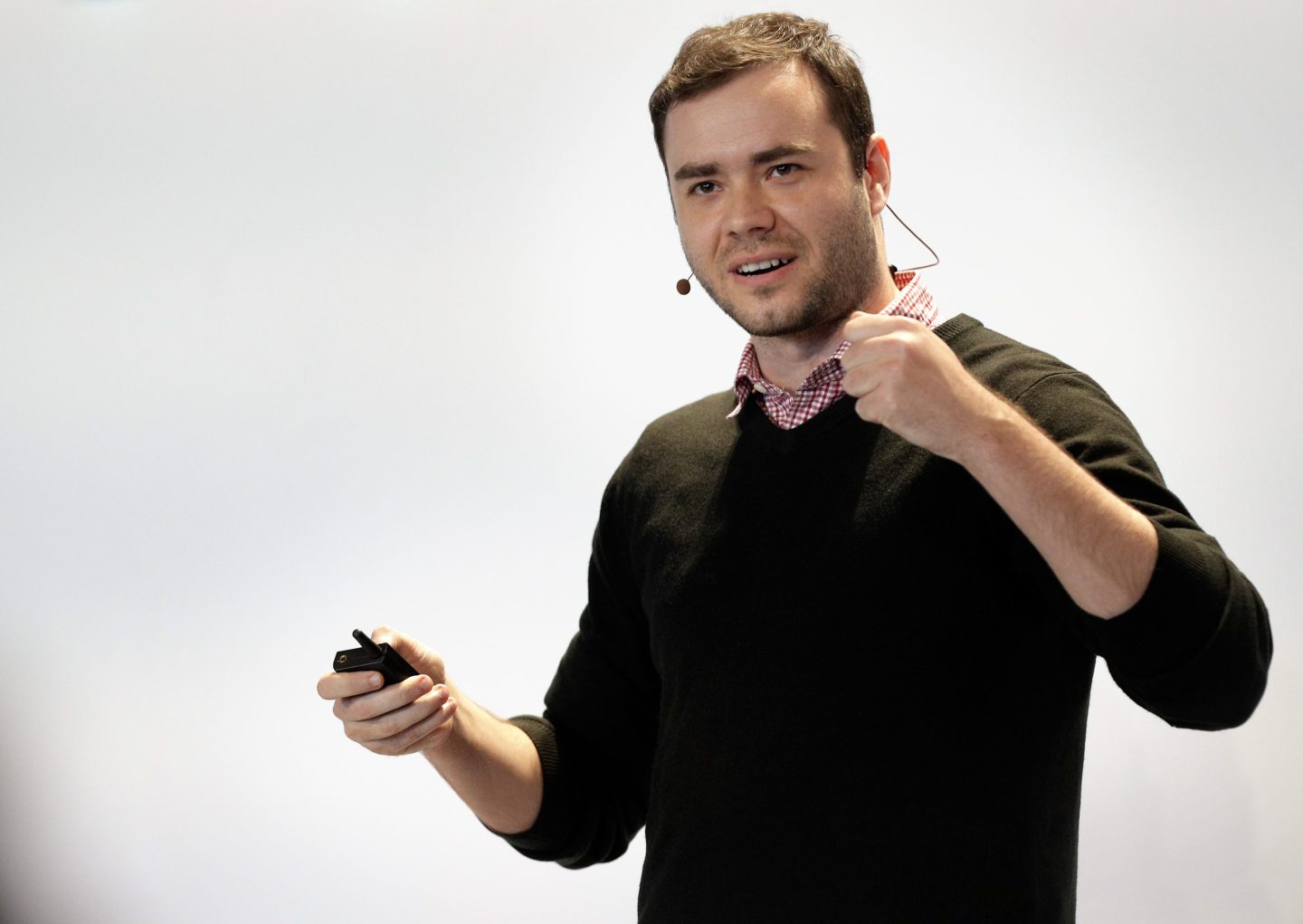

The future of professional technology is not just about adopting artificial intelligence (AI); it is about learning how to use it—even embrace it—as not just something to turn to for special purposes but fundamental to all work, according to Yulie Kwon Kim, vice president of product at Google Workspace. Speaking to Fortune from the tech giant’s New York City office, Kim highlighted the findings from Workspace’s second edition of the Google Workspace Study. She highlighted that workers aged 22 through 39 are not treating AI as a temporary experiment—but rather an integral element of their career growth and daily operations.
“I think it’s really fascinating,” Kim told Fortune, “because unlike older generations, where AI might be more of a utility in their life,” the survey shows “the younger generation is really feeling like it’s a native part of how they work.”
A mother of two, Kim said AI use as revealed in the survey is like watching young kids use iPads. “You didn’t have to teach a kid how to scroll, right?” She cited the survey, conducted for Google by the Harris Poll, canvassing more than 1,000 U.S.-based knowledge workers, as well as her conversations with both Fortune 500 companies and a worldwide network of start-ups. There’s just a clear generational split, she said. “A lot of the Gen Zers are really using it in ways that are very native.”
This observation is compelling because, historically, the younger generation has often dictated the trajectory of workplace technology, bringing products they grew up with in school or their personal life into their organizations. “Especially with AI, I’ve been also very curious to see how younger workers are using AI, because that kind of tells you where the future is going,” Kim said.
On the flipside of this question, the older, likely more vulnerable employees who are exposed to disruption by AI, Kim agreed this was part of the equation. “There’s going to be cohorts of people where they just pick it up and it just feels natural. And then there’s people who are very … Change is hard sometimes.”
Kim used the example of when Google Docs first arrived, and white-collar workers didn’t have to wait for a file to be emailed back and forth with revisions, but could be worked on by people, together, in real time.
“You can imagine how not having a separate literal version of a document might be a little bit unsettling to people who are very, very used to years and years of being able to lay it out,” she said. For the younger generation, she added, “it seems almost unfathomable that you’d have to wait for someone to be able to give you feedback or take a look at something very, very quickly.”
Quality means personalization
While the previous year was marked by experimentation for many large enterprises, Gen Z is “already there,” figuring out how to become more productive and effective on their own. She offered the example of “vibe coding,” or using AI tools to code without maybe having much coding training or expertise.
“It’s much more about what is the outcome that I want to create? And what is it that I want to create?” Kim said. “And using AI to partner and collaborate with you to build those things.”
This was the major theme that jumped out to Kim, as she highlighted 90% of rising leaders want “personalization” with their AI. Younger workers are already using AI to personalize their workflows, she said, and the AI tools (and companies) that will thrive will feed into that personalization. Young leaders are “beyond the point of generic output,” Kim said, and 92% of respondents said it’s essential for AI to deliver truly personalized assistance. For AI to be truly useful, the “quality bar” must be higher than mere novelty, requiring output that conveys the user’s specific voice, tone, and writing style. This demand for authenticity comes despite—or perhaps because of—a generation that maintains a high level of skepticism, quickly identifying when content, such as a photo or an article, might be AI-generated.
Kim said her own teenage kids are “very skeptical” when they see photos on social media. “They’re like, ‘Was that an AI image?'” She said her kids—and she assumes the younger generations—have “that radar” where it’s very important for things to feel “authentic and real.” The best AI tools in the future, according to Kim, will be the ones that seamlessly reflect their users.
AI helps workers focus on ideas by handling “all the time-consuming stuff” like “spell-checky, grammar-checky” functions. This empowerment means traditional barriers, such as a lack of coding skills or graphic design skills, are no longer major obstacles to taking an idea from thought to reality. One leader noted after introducing Gemini to their teams, they began producing the “highest quality work he’s seen.”
Google Workspace, which serves over 3 billion users across more than 11 million paid organizations globally, aims to meet users in this new reality. The strategic goal is to ensure AI does not feel like a “bolt-on to your life,” Kim said, but rather something that is seamlessly available within everyday tools like Gmail and Google Docs. This native integration has already yielded powerful results for a wide spectrum of users, including non-native English speakers who now use AI in Gmail to write professional emails quickly, boosting their communication confidence.
Kim described the privilege—and the pressure—of representing Google Workspace across the entire world. For instance, she said she regularly meets with Fortune 500 companies that use Workspace, but also smaller business in locations as far afield as Brazil and India.
“Just hearing from users around the world, it’s been amazing,” she said, highlighting how much AI has helped people who are not native English speakers write professional emails in English. “It saves time, but it also makes them confident about communication.”
Similarly, Kim said other customers have told her AI has cut down on the time they’ve needed to wait for their American colleagues to simply review copy before they could publish to their website. Since she represents digital tools that encompass half the world, the scale of Kim’s task is considerable.
When asked about the massive change that AI represents, and whether she sees part of her role as change management for 3 billion people, Kim paused, and nodded. “Sometimes, sometimes? Because I think that the thing is when you have that wide of a spectrum of users, you have all ages, different countries … it’s a privilege, and it’s a big challenge, to serve all those audiences, but it’s fun.”