• Home
  • Latest
  • Fortune 500
  • Finance
  • Tech
  • Leadership
  • Lifestyle
  • Rankings
  • Multimedia
Commentary

I helped design rocket engines for NASA’s space shuttles. Here’s why businesses need AI as trustworthy as aerospace tech

By
Adam Markowitz
Adam Markowitz
Down Arrow Button Icon
By
Adam Markowitz
Adam Markowitz
Down Arrow Button Icon
October 25, 2025, 9:15 AM ET
Adam Markowitz
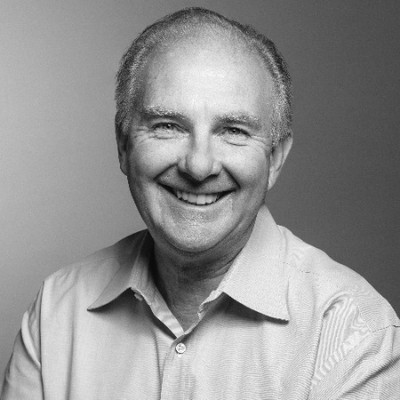
Adam Markowitz is the Co-Founder and CEO at Drata.courtesy of Drata

When I was an aerospace engineer working on the NASA Space Shuttle Program, trust was mission-critical. Every bolt, every line of code, every system had to be validated and tested carefully, or the shuttle would never leave the launchpad. After their missions, astronauts would walk through the office and thank the thousands of engineers for getting them back home safely to their families—that’s how deeply ingrained trust and safety were in our systems. 

Recommended Video

Despite the “move fast and break things” rhetoric, tech should be no different. New technologies need to build trust before they can accelerate growth.

By 2027, about 50% of enterprises are expected to deploy AI agents, and a McKinsey report forecasts that by 2030, as much as 30% of all work could be carried out by AI agents. Many of the cybersecurity leaders I speak with are looking to bring in AI as fast as they can to enable the business, but also recognize that they need to ensure these integrations are done safely and securely with the right guardrails in place.

For AI to fulfill its promise, business leaders need to trust AI. That won’t happen on its own. Security leaders must take a lesson from aerospace engineering and build trust into their processes from day one—or risk missing out on the business growth it accelerates.

The relationship between trust and growth is not theoretical. I’ve lived it.

Founding a business based on trust

After NASA’s Space Shuttle program ended, I founded my first company: a platform for professionals and students to showcase and share evidence of their skills and competencies. It was a simple idea, but one that demanded that our customers trusted us. We quickly discovered universities wouldn’t partner with us until we proved we could handle sensitive student data securely. That meant providing assurance through a number of different avenues, including showing a clean SOC 2 attestation, answering long security questionnaires, and completing various compliance certifications through painstakingly manual processes.

That experience shaped the founding of Drata, where my cofounders and I set out to build the trust layer between great companies. By helping GRC leaders and their companies gain and prove their security posture to customers, partners, and auditors, we remove friction and accelerate growth. Our rapid trajectory from $1 million to $100 million in annual recurring revenue in just a few years is proof that businesses are seeing the value, and slowly starting to shift from viewing GRC teams as a cost center to a business enabler. That translates to real, tangible results–we’ve seen $18 billion in security influenced revenue with security teams using our SafeBase Trust Center. 

Now, with AI, the stakes are even higher.

Today’s compliance frameworks and regulations — like SOC 2, ISO 27001, and GDPR — were designed for data privacy and security, not for AI systems that generate text, make decisions, or act autonomously. 

Thanks to legislation like California’s newly enacted AI safety standards, regulators are slowly starting to catch up. But waiting for new rules and regulations isn’t enough—particularly as businesses rely on new AI technologies to stay ahead. 

You wouldn’t launch an untested rocket

In many ways, this moment reminds me of the work I did at NASA. As an aerospace engineer, I never “tested in production.” Every shuttle mission was a meticulously planned operation. 

Deploying AI without understanding and acknowledging its risk is like launching an untested rocket: the damage can be immediate and end in catastrophic failure. Just as a failed space mission can reduce the trust people have in NASA, a misstep in the use of AI, without fully understanding the risk or applying guardrails, can reduce the trust consumers put in that organization. 

What we need now is a new trust operating system. To operationalize trust, leaders should create a program that is:

  1. Transparent. In aerospace engineering, exhaustive documentation isn’t bureaucracy, but a force for accountability. The same applies to AI and trust. There needs to be traceability—from policy to control to evidence to attestation.
  2. Continuous. Just as NASA is continuously monitoring its missions around-the clock, businesses must invest in trust as a continuous and ongoing process rather than a point-in-time checkbox. Controls, for example, need to be continuously monitored so that audit readiness becomes more a state of being, and not a last minute sprint.
  3. Autonomous. Rocket engines today can manage their own operation through embedded computers, sensors, and control loops, without pilots or ground crew directly adjusting valves mid-flight. And as AI becomes a more prevalent part of everyday business, this must also be true of our trust programs. If humans, agents, and automated workflows are going to transact, they have to be able to validate trust on their own, deterministically, and without ambiguity.

When I think back to my aerospace days, what stands out is not just the complexity of space missions, but their interdependence. Tens of thousands of components, built by different teams, have to function together perfectly. Each team trusts that others are doing their work effectively, and decisions are documented to ensure transparency across the organization. In other words, trust was the layer that held the entire space shuttle program together.

The same is true for AI today, especially as we enter this budding era of agentic AI. We’re shifting to a new way of business, with hundreds—someday thousands—of agents, humans, and systems all continuously interacting with one another, generating tens of thousands of touch points. The tools are powerful and the opportunities vast, but only if we’re able to earn and sustain trust in every interaction. Companies that create a culture of transparent, continuous, autonomous trust will lead the next wave of innovation. 

The future of AI is already under construction. The question is simple: will you build it on trust?

The opinions expressed in Fortune.com commentary pieces are solely the views of their authors and do not necessarily reflect the opinions and beliefs of Fortune.

Join us at the Fortune Workplace Innovation Summit May 19–20, 2026, in Atlanta. The next era of workplace innovation is here—and the old playbook is being rewritten. At this exclusive, high-energy event, the world’s most innovative leaders will convene to explore how AI, humanity, and strategy converge to redefine, again, the future of work. Register now.
About the Author
By Adam Markowitz
See full bioRight Arrow Button Icon

Latest in Commentary

Finance
Lorem ipsum dolor sit amet, consectetur adipiscing elit, sed do eiusmod tempor incididunt ut labore et dolore magna aliqua. Ut enim ad minim veniam
By Fortune Editors
October 20, 2025
Finance
Lorem ipsum dolor sit amet, consectetur adipiscing elit, sed do eiusmod tempor incididunt ut labore et dolore magna aliqua. Ut enim ad minim veniam
By Fortune Editors
October 20, 2025
Finance
Lorem ipsum dolor sit amet, consectetur adipiscing elit, sed do eiusmod tempor incididunt ut labore et dolore magna aliqua. Ut enim ad minim veniam
By Fortune Editors
October 20, 2025
Finance
Lorem ipsum dolor sit amet, consectetur adipiscing elit, sed do eiusmod tempor incididunt ut labore et dolore magna aliqua. Ut enim ad minim veniam
By Fortune Editors
October 20, 2025
Finance
Lorem ipsum dolor sit amet, consectetur adipiscing elit, sed do eiusmod tempor incididunt ut labore et dolore magna aliqua. Ut enim ad minim veniam
By Fortune Editors
October 20, 2025
Finance
Lorem ipsum dolor sit amet, consectetur adipiscing elit, sed do eiusmod tempor incididunt ut labore et dolore magna aliqua. Ut enim ad minim veniam
By Fortune Editors
October 20, 2025

Most Popular

Finance
Lorem ipsum dolor sit amet, consectetur adipiscing elit, sed do eiusmod tempor incididunt ut labore et dolore magna aliqua. Ut enim ad minim veniam
By Fortune Editors
October 20, 2025
Finance
Lorem ipsum dolor sit amet, consectetur adipiscing elit, sed do eiusmod tempor incididunt ut labore et dolore magna aliqua. Ut enim ad minim veniam
By Fortune Editors
October 20, 2025
Finance
Lorem ipsum dolor sit amet, consectetur adipiscing elit, sed do eiusmod tempor incididunt ut labore et dolore magna aliqua. Ut enim ad minim veniam
By Fortune Editors
October 20, 2025
Finance
Lorem ipsum dolor sit amet, consectetur adipiscing elit, sed do eiusmod tempor incididunt ut labore et dolore magna aliqua. Ut enim ad minim veniam
By Fortune Editors
October 20, 2025
Finance
Lorem ipsum dolor sit amet, consectetur adipiscing elit, sed do eiusmod tempor incididunt ut labore et dolore magna aliqua. Ut enim ad minim veniam
By Fortune Editors
October 20, 2025
Finance
Lorem ipsum dolor sit amet, consectetur adipiscing elit, sed do eiusmod tempor incididunt ut labore et dolore magna aliqua. Ut enim ad minim veniam
By Fortune Editors
October 20, 2025
Rankings
  • 100 Best Companies
  • Fortune 500
  • Global 500
  • Fortune 500 Europe
  • Most Powerful Women
  • Future 50
  • World’s Most Admired Companies
  • See All Rankings
Sections
  • Finance
  • Leadership
  • Success
  • Tech
  • Asia
  • Europe
  • Environment
  • Fortune Crypto
  • Health
  • Retail
  • Lifestyle
  • Politics
  • Newsletters
  • Magazine
  • Features
  • Commentary
  • Mpw
  • CEO Initiative
  • Conferences
  • Personal Finance
  • Education
Customer Support
  • Frequently Asked Questions
  • Customer Service Portal
  • Privacy Policy
  • Terms Of Use
  • Single Issues For Purchase
  • International Print
Commercial Services
  • Advertising
  • Fortune Brand Studio
  • Fortune Analytics
  • Fortune Conferences
  • Business Development
About Us
  • About Us
  • Editorial Calendar
  • Press Center
  • Work At Fortune
  • Diversity And Inclusion
  • Terms And Conditions
  • Site Map
  • Facebook icon
  • Twitter icon
  • LinkedIn icon
  • Instagram icon
  • Pinterest icon
Adam Markowitz is the Co-Founder and CEO at Drata, the leading Trust Management Platform serving 8,000+ customers in automating compliance, streamlining security, and managing risk. Launched in 2021, Drata is one of the world's fastest-growing software companies, backed by ICONIQ Growth, Notable Capital (formerly GGV Capital), Alkeon, Salesforce, Cowboy Ventures, Okta Ventures, SVCI, Intuit, SentinelOne, and executives from today's largest security and technology companies. Prior to Drata, Adam was the Founder & CEO at Portfolium - Acquired by Instructure (NYSE:INST) in 2019." 

Latest in Commentary

powell/trump
CommentaryFederal Reserve
Is Powell’s Fed head independence dead? Trump outfoxes himself this time
By Jeffrey SonnenfeldJanuary 13, 2026
1 day ago
paramount
CommentaryM&A
A cautionary Hollywood tale: the Ellisons’ lose-lose Paramount positioning
By Jeffrey Sonnenfeld and Stephen HenriquesJanuary 12, 2026
2 days ago
Walken
Commentarybeverages
Molson Coors CEO: We’re doing our part to solve society’s ‘occasion problem’ – and we’re getting some unexpected help
By Rahul GoyalJanuary 12, 2026
2 days ago
AsiaChina
What global executives need to ask about China in 2026
By Joe Ngai and Jeongmin SeongJanuary 11, 2026
3 days ago
Justin Harlan
Commentaryremote work
I run one of America’s most successful remote work programs and the critics are right. Their solutions are all wrong, though
By Justin HarlanJanuary 11, 2026
3 days ago
Gene Ludwig
Commentaryaffordability
Millions of Americans are grappling with years of declining economic wellbeing and affordability needs a rethink
By Gene Ludwig and Shannon MeyerJanuary 11, 2026
3 days ago

Most Popular

placeholder alt text
Success
Despite his $2.6 billion net worth, MrBeast says he’s having to borrow cash and doesn’t even have enough money in his bank account to buy McDonald’s
By Emma BurleighJanuary 13, 2026
1 day ago
placeholder alt text
AI
'Godfather of AI' says the technology will create massive unemployment and send profits soaring — 'that is the capitalist system'
By Jason MaJanuary 12, 2026
2 days ago
placeholder alt text
Economy
The longer the Supreme Court delays its tariff decision, the better it is for President Trump
By Jim EdwardsJanuary 13, 2026
1 day ago
placeholder alt text
Future of Work
'Microshifting,' an extreme form of hybrid working that breaks work into short, non-continuous blocks, is on the rise
By Nick LichtenbergJanuary 13, 2026
1 day ago
placeholder alt text
Tech
Elon Musk asked people to upload their medical data to X so his AI company could learn to interpret MRIs and CT scans
By Sasha RogelbergJanuary 11, 2026
3 days ago
placeholder alt text
Economy
Goldman Sachs top economist says Powell probe won’t change the Fed: 'Decisions are going to be made based on employment and inflation'
By Sasha RogelbergJanuary 12, 2026
2 days ago

© 2025 Fortune Media IP Limited. All Rights Reserved. Use of this site constitutes acceptance of our Terms of Use and Privacy Policy | CA Notice at Collection and Privacy Notice | Do Not Sell/Share My Personal Information
FORTUNE is a trademark of Fortune Media IP Limited, registered in the U.S. and other countries. FORTUNE may receive compensation for some links to products and services on this website. Offers may be subject to change without notice.