• Home
  • News
  • Fortune 500
  • Tech
  • Finance
  • Leadership
  • Lifestyle
  • Rankings
  • Multimedia
EconomyJamie Dimon

Jamie Dimon isn’t so sure the U.S. will avoid a recession next year—even if Wall Street is convinced otherwise

Eleanor Pringle
By
Eleanor Pringle
Eleanor Pringle
Senior Reporter, Economics and Markets
Down Arrow Button Icon
Eleanor Pringle
By
Eleanor Pringle
Eleanor Pringle
Senior Reporter, Economics and Markets
Down Arrow Button Icon
October 8, 2025, 6:26 AM ET
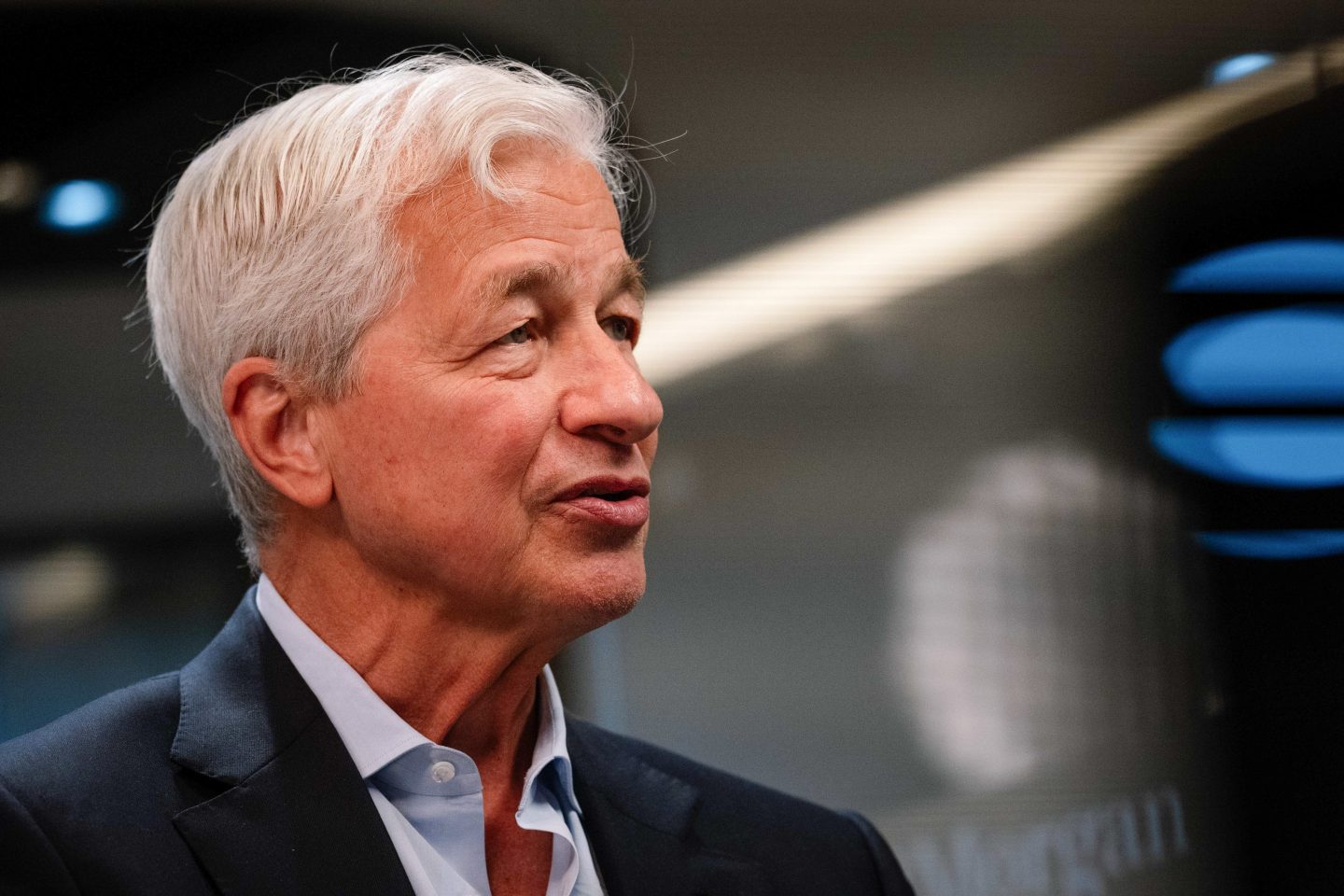
Jamie Dimon, chief executive officer of JPMorgan Chase
Jamie Dimon, chief executive officer of JPMorgan ChaseJose Sarmento Matos—Bloomberg/Getty Images
  • JPMorgan CEO Jamie Dimon said a U.S. recession could still occur in 2026, despite GDP growing 3.8% last quarter. While emphasizing that JPMorgan is prepared to navigate any downturn, Dimon said in an interview this week he isn’t ruling out weakness ahead and called Washington’s ongoing government shutdown “a bad idea.” His cautious stance contrasts with indicators like the Sahm Rule, which currently show little sign of recession risk.

It would be reassuring for markets to hear Jamie Dimon, the leader of America’s biggest bank and a veteran of Wall Street, say he didn’t see a recession coming. Unfortunately, that’s not the case.

Recommended Video

In his decades leading JPMorgan Chase, Dimon’s economic opinion has been seen as a barometer for the health of the U.S. economy. But those who follow Dimon also know he conducts rigorous stress testing at JPM, making sure the institution can withstand a range of outcomes.

To this end, Dimon isn’t taking a recession off the table for next year—even though GDP at present is tracking upward. According to the latest figures, U.S. gross domestic product increased at an annual rate of 3.8% in the second quarter of 2025.

But there are questions outstanding for analysts: Particularly those like Dimon who refrain from falling to the overly bullish or bearish side. Those questions include the impact of tariffs on inflation (if or when those increases truly hit), as well as geopolitics, the labor market, and whether AI will deliver the returns investors are banking on.

Dimon echoed this caution in an interview this week, saying: “I think [a recession] could happen in 2026—I’m not worried about it, is a different statement. We’ll deal with it, we’ll serve our clients, we’ll navigate through it. A lot of us have been through them before.”

Previously the billionaire banker has warned the American economy is weakening, saying in September following a measly jobs report from the Bureau of Labor Statistics that whether that weakness spills into economic contraction remains to be seen.

He struck a similar tone this week, saying in the conversation with Bloomberg: “You don’t wish it, because you know certain people get hurt,” adding: “How it all sorts out? We’ll see.”

Dimon’s caution is at odds with some tried-and-trusted indicators. The Sahm Rule indicator—which signals the start of a recession when the three-month moving average of the national unemployment rate is 0.5 percentage points greater than the minimum of the three-month averages from the previous 12 months—sits at a comfortable 0.13%, assisted by a relatively stable unemployment rate.

Likewise JPMorgan itself wrote earlier this year the odds of a recession now sit at 40%, though global economist Joseph Lupton did note in the May release that the bank expects “material headwinds to keep growth weak through the rest of this year.”

Dimon, never one to bank on one outcome or another, did counter the warning with some reasons for optimism: “But I do think there are positives—like deregulation is a real positive, which also helps animal spirits … and, you know, in the One Big Beautiful Bill there’s also more stimulus; that has positives for the economy but may be negative for inflation.”

Shutdowns are a bad idea

One thing Dimon is sure of is that the current government shutdown isn’t good news for anyone. Washington is currently locked in a stalemate over funding, with threats lingering over furloughed workers not receiving back pay and potentially even their jobs when they return.

Similarly, the majority of traders are expecting the government shutdown to last for more than 15 days, with 52% expecting it to drag on for more than 20. This presents problems for the Fed, which will meet in a week to make a decision on the base rate without key data from federal releases.

“Look, I don’t like shutdowns. I think it’s just a bad idea—I don’t care what the Democrats or Republicans say, it’s a bad idea,” Dimon said. “It’s not a way to run a railroad.”

Even then, Dimon, like many others on Wall Street, don’t expect the shutdown to materially impact the economy: “You know, one of them went for 35 days, I’m not sure … if it really affected the economy, the market in a real way.”
Join us at the Fortune Workplace Innovation Summit May 19–20, 2026, in Atlanta. The next era of workplace innovation is here—and the old playbook is being rewritten. At this exclusive, high-energy event, the world’s most innovative leaders will convene to explore how AI, humanity, and strategy converge to redefine, again, the future of work. Register now.
About the Author
Eleanor Pringle
By Eleanor PringleSenior Reporter, Economics and Markets
LinkedIn icon

Eleanor Pringle is an award-winning senior reporter at Fortune covering news, the economy, and personal finance. Eleanor previously worked as a business correspondent and news editor in regional news in the U.K. She completed her journalism training with the Press Association after earning a degree from the University of East Anglia.

See full bioRight Arrow Button Icon

Latest in Economy

Jerome Powell, chairman of the US Federal Reserve, during the Hoover Institution's George P. Shultz Memorial Lecture Series in Stanford, California, US, on Monday, Dec. 1, 2025.
EconomyJobs
‘Fodder for a recession’: Top economist Mark Zandi warns about so many Americans ‘already living on the financial edge’ in a K-shaped economy 
By Eva RoytburgDecember 9, 2025
5 hours ago
Photo of Jamie Dimon
BankingJPMorgan Chase
Jamie Dimon taps Jeff Bezos, Michael Dell, and Ford CEO Jim Farley to advise JPMorgan’s $1.5 trillion national security initiative
By Nino PaoliDecember 9, 2025
6 hours ago
An older man with a wide-brimmed hat stands in a corn field
EconomyAgriculture
Trump’s $12 billion farmer bailout is a ‘Band-Aid on a bigger wound’ the American agriculture industry is still reeling from
By Sasha RogelbergDecember 9, 2025
8 hours ago
jobs
EconomyJobs
The low-hire, low-fire economy crawls along with job openings unchanged from September to October
By Paul Wiseman and The Associated PressDecember 9, 2025
10 hours ago
Man carrying a cardboard box
EconomyLayoffs
The ‘forever layoffs’ era hits a recession trigger as corporates sack 1.1 million workers through November
By Nick Lichtenberg and Eva RoytburgDecember 9, 2025
11 hours ago
jobs
Commentaryprivate equity
There is a simple fix for America’s job-quality crisis: actually give workers a piece of the business 
By Pete StavrosDecember 9, 2025
12 hours ago

Most Popular

placeholder alt text
Success
When David Ellison was 13, his billionaire father Larry bought him a plane. He competed in air shows before leaving it to become a Hollywood executive
By Dave SmithDecember 9, 2025
15 hours ago
placeholder alt text
Real Estate
The 'Great Housing Reset' is coming: Income growth will outpace home-price growth in 2026, Redfin forecasts
By Nino PaoliDecember 6, 2025
4 days ago
placeholder alt text
Success
Craigslist founder signs the Giving Pledge, and his fortune will go to military families, fighting cyberattacks—and a pigeon rescue
By Sydney LakeDecember 8, 2025
1 day ago
placeholder alt text
Investing
Baby boomers have now 'gobbled up' nearly one-third of America's wealth share, and they're leaving Gen Z and millennials behind
By Sasha RogelbergDecember 8, 2025
1 day ago
placeholder alt text
Uncategorized
Transforming customer support through intelligent AI operations
By Lauren ChomiukNovember 26, 2025
13 days ago
placeholder alt text
Banking
Jamie Dimon taps Jeff Bezos, Michael Dell, and Ford CEO Jim Farley to advise JPMorgan's $1.5 trillion national security initiative
By Nino PaoliDecember 9, 2025
6 hours ago
Rankings
  • 100 Best Companies
  • Fortune 500
  • Global 500
  • Fortune 500 Europe
  • Most Powerful Women
  • Future 50
  • World’s Most Admired Companies
  • See All Rankings
Sections
  • Finance
  • Leadership
  • Success
  • Tech
  • Asia
  • Europe
  • Environment
  • Fortune Crypto
  • Health
  • Retail
  • Lifestyle
  • Politics
  • Newsletters
  • Magazine
  • Features
  • Commentary
  • Mpw
  • CEO Initiative
  • Conferences
  • Personal Finance
  • Education
Customer Support
  • Frequently Asked Questions
  • Customer Service Portal
  • Privacy Policy
  • Terms Of Use
  • Single Issues For Purchase
  • International Print
Commercial Services
  • Advertising
  • Fortune Brand Studio
  • Fortune Analytics
  • Fortune Conferences
  • Business Development
About Us
  • About Us
  • Editorial Calendar
  • Press Center
  • Work At Fortune
  • Diversity And Inclusion
  • Terms And Conditions
  • Site Map

© 2025 Fortune Media IP Limited. All Rights Reserved. Use of this site constitutes acceptance of our Terms of Use and Privacy Policy | CA Notice at Collection and Privacy Notice | Do Not Sell/Share My Personal Information
FORTUNE is a trademark of Fortune Media IP Limited, registered in the U.S. and other countries. FORTUNE may receive compensation for some links to products and services on this website. Offers may be subject to change without notice.