
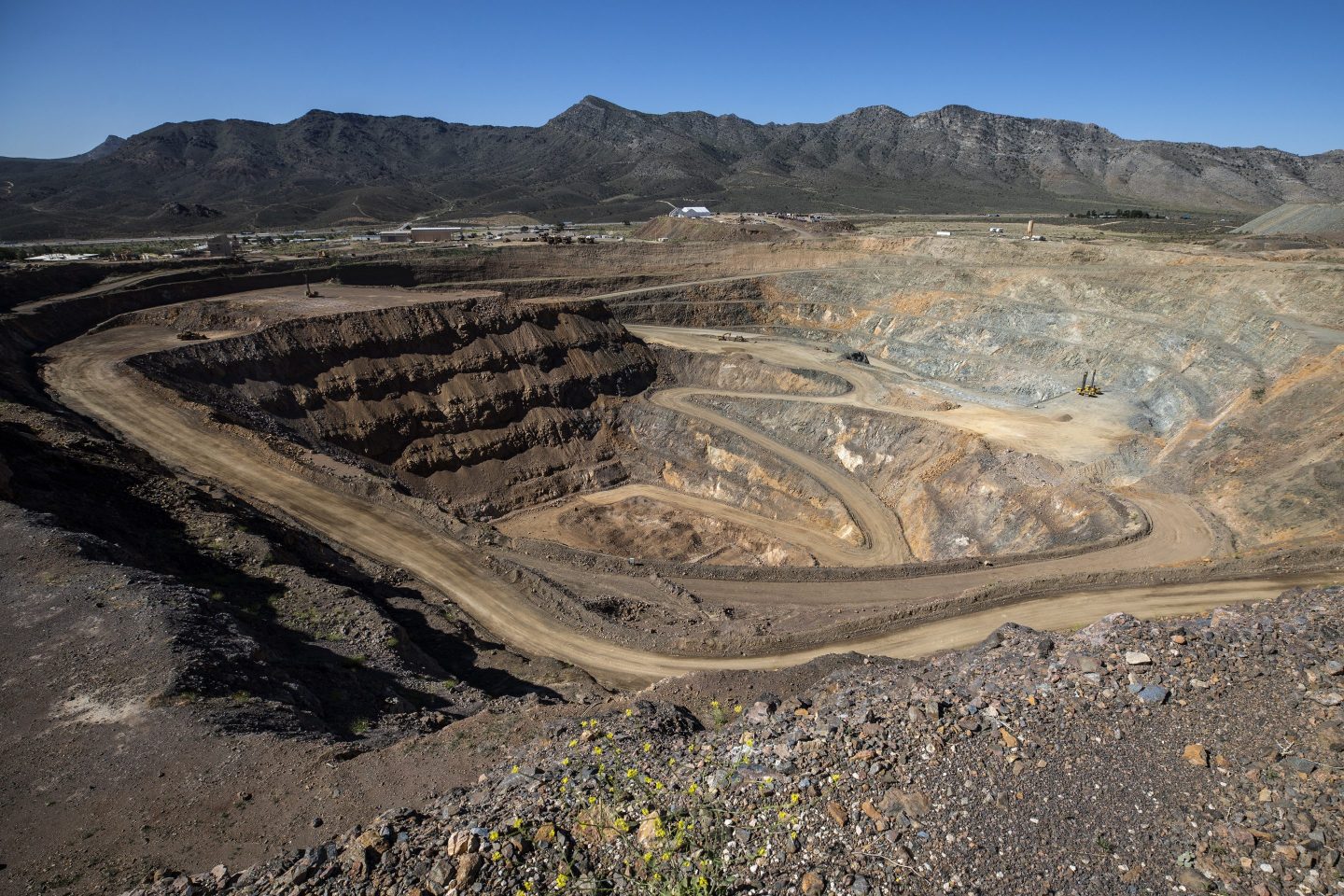
California miner MP Materials struck metaphorical gold in July when it announced a landmark deal with the Trump administration to make the Defense Department its largest shareholder, followed up days later by an expansion agreement with Apple. But what MP actually mines—so-called rare earth elements that are central to many of the world’s most important technologies—appears to be even more precious than gold to investors.
MP is the nation’s only rare earths miner, at a time when the U.S. aspires to compete against China’s supply-chain dominance in the field. Its share price has spiked an astonishing 365% year to date, including a 150% surge in just over a month.
MP’s market cap has risen from just over $2 billion to $13 billion, entering large-cap territory—not bad for a company that brought in just $204 million in revenue last year. It’s a rise comparable to that of Silicon Valley defense firm Palantir—but with all due respect to that AI-fueled company, Palantir’s stock has risen by only 140% year to date.
“I give MP credit for having the foresight and for being in the right place at the right time,” Ben Kallo, Baird senior research analyst, told Fortune. “I think it’s surprising because I didn’t believe the government would react in such a quick and forceful way.
“I think the fire is in the belly of supply-chain managers to move away from China right now.”
MP also is the nation’s only vertically integrated miner and specialty magnets producer, having just opened a metals and neodymium magnets plant in Fort Worth. Not one to miss a marketing opportunity, MP named that plant “Independence.”
The powerful magnets are as critically important as they are little-known. They are used in electric vehicles, renewable energy, mobile phones, military equipment, and, most recently, AI data centers. General Motors was MP’s first flagship customer for magnets.
From a military standpoint, the magnets are just as crucial: They’re used in drones, fighter jets, missile systems, and nuclear submarines. More than 80% of the world’s neodymium magnet supply is manufactured in China. The U.S. counts a few manufacturers, while China has a few hundred.
“Rare earth” materials actually are not rare, but they are expensive to separate and refine. That growth takes financial support.
The Defense Department bought $400 million worth of MP shares in July to become a 15% shareholder; on Aug. 10, it backed up its initial deal with an additional $150 million loan to MP to help expand its mining operations in Mountain Pass, Calif.
“We are taking decisive action to restore our domestic critical minerals supply chain, revive our industrial base, and rebuild our military to achieve President Trump’s goal of peace through strength,” said Emil Michael, defense undersecretary for research and engineering, in a statement. Michael is a former top executive at Uber.
Even apart from the military, both MP and the administration see the company growing because of the AI boom.
“We have the platform, the partners, and the perspective to seize another enormous runway of opportunity,” said MP founder, chairman, and CEO James Litinsky on the company’s Aug. 7 earnings call. “And it does not hurt that we have a front-row seat and an important role in what may well become the most significant business transformation of our generation, the era of physical AI.”
The rise of MP
MP is built on the ashes of the former mine owner Molycorp and its Mountain Pass facilities. A decade ago, Molycorp was failing because of heavy indebtedness and China’s price dumping into the global rare earths markets.
Seeing the thesis case for domestic rare earths mining, Litinsky and his eponymously named JHL Capital Group hedge fund bought into Molycorp’s bonds during its 2015 bankruptcy proceedings. Litinsky eventually folded his fund to buy the Mountain Pass assets outright and form MP Materials in 2017.
Litinsky had previously worked at the New York–based Fortress Investment Group, and MP Materials went public in 2020 when it merged with one of Fortress’s several special purpose acquisition companies, or SPACs, in a $1.47 billion deal.
“One of the biggest question marks and pushback was, ‘How can these finance guys operate a mine and make it work?’” Kallo said. But MP cleaned up its mining operations, kept debt low, and focused on vertical integration and growth. “They’ve surprised to the upside.”
The Independence plant opened in January, and MP was looking at a smoother growth trajectory. But in the spring, the onslaught of Trump’s tariff war shook things up, and companies began to realize they shouldn’t rely on Chinese supply chains so heavily.
“A lot of companies didn’t realize their magnets came from China,” Kallo said. “It woke a lot of people up. These magnets go into everything.”
This is when the Wall Street–ization of the Defense Department under the second Trump administration came into play.
Steve Feinberg, the new U.S. deputy secretary of defense, is the billionaire cofounder of Cerberus Capital Management. Feinberg spearheaded the unusual, landmark deal with Litinsky. It not only made the Pentagon a 15% shareholder, it included the pledge of a multibillion-dollar total investment as MP aims to expand its magnet production capacity 10-fold.
That expansion is expected to be completed in 2028. The deal also puts a floor on pricing for MP’s rare earth materials for 10 years, helping offset the possibility of foreign price dumping.
A Defense Department spokesperson told Fortune: “Rebuilding the critical minerals and rare earth magnet sectors of the U.S. industrial base won’t happen overnight, but DOD is taking immediate action to streamline processes and identify opportunities to strengthen critical minerals production.”
Four days after the Pentagon deal announcement, on July 15, MP announced a $500 million partnership with Apple to supply rare earth magnets that are fully manufactured from recycled materials, a pledge that would entail recycling expansions at both the Mountain Pass and Fort Worth facilities. MP and Apple had piloted advanced recycling technologies for five years before announcing the deal.
“American innovation drives everything we do at Apple, and we’re proud to deepen our investment in the U.S. economy,” said Apple CEO Tim Cook in a statement. “Rare earth materials are essential for making advanced technology, and this partnership will help strengthen the supply of these vital materials here in the United States.”
MP used to ship more of its raw materials to China because of a lack of U.S. refining capacity. One potential stumbling block for MP was its smaller ownership stake still held by China’s Shenghe Resources, which had helped Litinsky buy out Molycorp in 2017. But the larger U.S. government ownership position combined with the new pricing floor and Chinese tariffs on U.S. exports has allowed MP to cease its exports to China as of April.
“We are maniacally focused on investing and executing in the United States of America,” Litinsky said on his earnings call. He emphasized, “Through years of relentless execution, this team has transformed a bankrupted and abandoned mine site into a vertically integrated American national champion with a strategic and economic platform that matters.”