• Home
  • News
  • Fortune 500
  • Tech
  • Finance
  • Leadership
  • Lifestyle
  • Rankings
  • Multimedia
FinanceFortune Intelligence

Why Jamie Dimon says we ‘may have seen peak private credit’—and why you should care

By
Nick Lichtenberg
Nick Lichtenberg
and
Fortune Intelligence
Down Arrow Button Icon
By
Nick Lichtenberg
Nick Lichtenberg
and
Fortune Intelligence
Down Arrow Button Icon
July 16, 2025, 12:38 PM ET
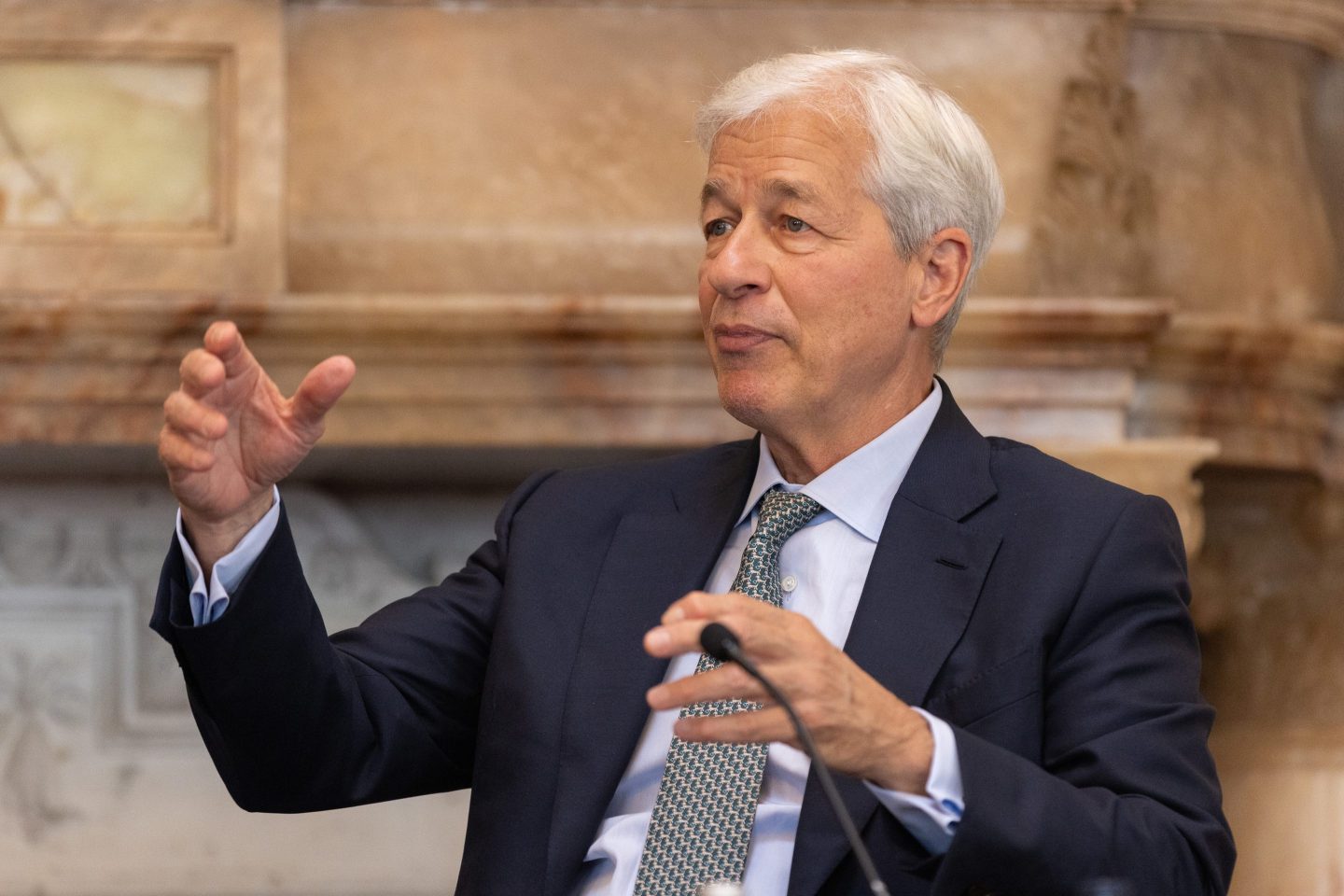
Jamie Dimon
JPMorgan CEO Jamie Dimon.Patrick Bolger/Bloomberg via Getty Images

On July 15, JPMorgan Chase CEO Jamie Dimon sent ripples through the financial world by declaring, “You may have seen peak private credit.” The comment, made during the bank’s second-quarter earnings call, came with a hedge, as Dimon adding “a little bit” at the end. Still, Dimon is one of the most successful bankers in generations, someone Fortune referred to nearly 20 years ago as the “most watched, most discussed, most loved, and most feared banker in the world.” If he’s signaling the peak of a $1.6 trillion asset class, it’s notable.

Recommended Video

Private credit refers to loans made by non-bank lenders—such as private-equity firms, asset managers, and hedge funds—directly to companies, and it’s exploded in the decade-plus since the financial crisis. Marquee names in the space have grown growing to titanic proportions: Think KKR, Blackstone, and Ares Management. These players often operate outside of traditional regulatory frameworks in transactions that are too risky or unconventional for traditional banks.

As banks like Dimon’s have been forced by regulations to reduce corporate lending, private credit has become a go-to source for everything from leveraged buyouts to business expansions, offering attractive returns but also carrying higher risks.

Dimon’s remarks also came in response to an analyst’s question about whether JPMorgan itself is looking to deepen its own investments in the private-credit space, as reported by The Wall Street Journal. JPMorgan had a chance to own a private-credit operation but went in another direction in 2008, reportedly to Dimon’s chagrin.

“I would say it’s not high in my list,” Dimon said about JPMorgan buying a private-credit firm, adding he would have a “slight reluctance,” depending on the acquisition target. Then he offered a nuanced explanation, reiterating “credit spreads are very low.”

Dimon was suggesting that credit spreads—the extra yield lenders demand for risk—have shrunk to levels that no longer compensate for potential losses. Coupled with looser underwriting and increased leverage, Dimon implicitly suggested we’re seeing echoes of risk cycles that preceded past credit busts. In flat terms: Too much capital is chasing too few quality opportunities, driving up risk while driving down returns.

Later in the day, as Dimon taped an episode of the “Acquired” podcast at Radio City Music Hall, he said private credit is “one place that people worry has unknown leverage.” JPMorgan declined to comment beyond Dimon’s comments on the earnings call.

Why it matters

Dimon’s remarks are notable for several reasons, ranging from the impact on corporate borrowing to macroeconomics. A peaking private-credit market suggests “easy money” is ending—businesses may soon face stricter lending standards and higher costs, which could dampen expansion or M&A activity. Many pension plans, endowments, and affluent investors have loaded up on private credit for yield. If defaults rise or liquidity dries up, retirement plans and wealth portfolios could suffer unexpected losses at inconvenient moment in the economic cycle, or worse.

Private credit isn’t subject to the same regulations or oversight as banks, raising contagion risk if the market seizes up. Dimon is essentially signaling that what looks like healthy innovation can morph into a vulnerability if risk is mispriced en masse. Dimon’s warning also comes in a context of elevated asset prices and policy uncertainty, when monetary policy is in flux and economic growth is cooling—a recipe for for a credit accident cocktail.

The impact on your business

A peak for private capital would signal tighter lending ahead: Companies—especially mid-sized and riskier firms—may find it harder or more expensive to borrow. This could slow expansion, hiring, and deal-making. As private lenders pull back, traditional banks may regain market share, but with stricter terms and higher scrutiny.

Many pension funds, endowments, and even high-net-worth individuals have flocked to private credit for its high yields. If the market cools, future returns may disappoint, affecting retirement savings and investment portfolios. Private-credit investments are less liquid than stocks or bonds. In a downturn, investors may struggle to cash out or face losses if defaults rise.

Most ominously, a wave of defaults in private credit could spill over into the broader economy, especially if highly leveraged companies start to fail. Dimon’s warning is a reminder that financial innovation can sow the seeds of instability if left unchecked.

Dimon’s warning is a signal that the era of easy money and rapid growth in the private-credit market may be ending. For executives, business owners, and upper middle class investors, it’s a cue to reassess borrowing strategies, investment allocations, and risk management. If Wall Street’s hottest trend cools, it could impact everything from business expansion to retirement security.

For this story, Fortune used generative AI to help with an initial draft. An editor verified the accuracy of the information before publishing. 

Fortune Brainstorm AI returns to San Francisco Dec. 8–9 to convene the smartest people we know—technologists, entrepreneurs, Fortune Global 500 executives, investors, policymakers, and the brilliant minds in between—to explore and interrogate the most pressing questions about AI at another pivotal moment. Register here.
About the Authors
Nick Lichtenberg
By Nick LichtenbergBusiness Editor
LinkedIn icon

Nick Lichtenberg is business editor and was formerly Fortune's executive editor of global news.

See full bioRight Arrow Button Icon
Fortune Intelligence
By Fortune Intelligence

Fortune Intelligence uses generative AI to help with an initial draft, thereby bringing you breaking business news faster while maintaining our high standards of accuracy and quality. These stories are edited by Fortune's senior business editors to verify the accuracy of the information before publishing.

See full bioRight Arrow Button Icon

Latest in Finance

EconomyEurope
JPMorgan CEO Jamie Dimon says Europe has a ‘real problem’
By Katherine Chiglinsky and BloombergDecember 6, 2025
45 minutes ago
Elon Musk
Big TechSpaceX
SpaceX to offer insider shares at record-setting $800 billion valuation
By Edward Ludlow, Loren Grush, Lizette Chapman, Eric Johnson and BloombergDecember 6, 2025
1 hour ago
EconomyDebt
The most likely solution to the U.S. debt crisis is severe austerity triggered by a fiscal calamity, former White House economic adviser says
By Jason MaDecember 6, 2025
1 hour ago
SuccessWealth
The $124 trillion Great Wealth Transfer is intensifying as inheritance jumps to a new record, with one 19-year-old reaping the rewards
By Jason MaDecember 6, 2025
4 hours ago
Trump
PoliticsWhite House
Trump finally meets Claudia Sheinbaum face to face at the FIFA World Cup draw
By Will Weissert and The Associated PressDecember 6, 2025
8 hours ago
coal
EnvironmentCoal
‘You have an entire culture, an entire community that is also having that same crisis’: Colorado coal town looks anxiously to the future
By Brittany Peterson, Jennifer McDermott and The Associated PressDecember 6, 2025
8 hours ago

Most Popular

placeholder alt text
Big Tech
Mark Zuckerberg rebranded Facebook for the metaverse. Four years and $70 billion in losses later, he’s moving on
By Eva RoytburgDecember 5, 2025
1 day ago
placeholder alt text
Economy
Two months into the new fiscal year and the U.S. government is already spending more than $10 billion a week servicing national debt
By Eleanor PringleDecember 4, 2025
3 days ago
placeholder alt text
Success
Nvidia CEO Jensen Huang admits he works 7 days a week, including holidays, in a constant 'state of anxiety' out of fear of going bankrupt
By Jessica CoacciDecember 4, 2025
2 days ago
placeholder alt text
Success
‘Godfather of AI’ says Bill Gates and Elon Musk are right about the future of work—but he predicts mass unemployment is on its way
By Preston ForeDecember 4, 2025
2 days ago
placeholder alt text
Success
Nearly 4 million new manufacturing jobs are coming to America as boomers retire—but it's the one trade job Gen Z doesn't want
By Emma BurleighDecember 4, 2025
2 days ago
placeholder alt text
Asia
Despite their ‘no limits’ friendship, Russia is paying a nearly 90% markup on sanctioned goods from China—compared with 9% from other countries
By Jason MaNovember 29, 2025
7 days ago
Rankings
  • 100 Best Companies
  • Fortune 500
  • Global 500
  • Fortune 500 Europe
  • Most Powerful Women
  • Future 50
  • World’s Most Admired Companies
  • See All Rankings
Sections
  • Finance
  • Leadership
  • Success
  • Tech
  • Asia
  • Europe
  • Environment
  • Fortune Crypto
  • Health
  • Retail
  • Lifestyle
  • Politics
  • Newsletters
  • Magazine
  • Features
  • Commentary
  • Mpw
  • CEO Initiative
  • Conferences
  • Personal Finance
  • Education
Customer Support
  • Frequently Asked Questions
  • Customer Service Portal
  • Privacy Policy
  • Terms Of Use
  • Single Issues For Purchase
  • International Print
Commercial Services
  • Advertising
  • Fortune Brand Studio
  • Fortune Analytics
  • Fortune Conferences
  • Business Development
About Us
  • About Us
  • Editorial Calendar
  • Press Center
  • Work At Fortune
  • Diversity And Inclusion
  • Terms And Conditions
  • Site Map

© 2025 Fortune Media IP Limited. All Rights Reserved. Use of this site constitutes acceptance of our Terms of Use and Privacy Policy | CA Notice at Collection and Privacy Notice | Do Not Sell/Share My Personal Information
FORTUNE is a trademark of Fortune Media IP Limited, registered in the U.S. and other countries. FORTUNE may receive compensation for some links to products and services on this website. Offers may be subject to change without notice.