President Donald Trump’s spending cuts and border security package would inject roughly $150 billion into his mass deportation agenda over the next four years, funding everything from an extension of the United States’ southern border wall to detention centers to thousands of additional law enforcement staff.
The current annual budget for Immigration and Customs Enforcement, the government’s primary department for immigration enforcement, is around $10 billion. If the Republican president’s big bill passes in Congress, the immense cash infusion could reshape America’s immigration system by expanding the law enforcement and detention network while increasing costs to legally immigrate to the U.S.
The Senate is debating its own version of the bill, which largely aligns with the House’s approach when it comes to these issues. In recent days, Republicans have focused on sometimes-violent protests against Trump’s immigration crackdown to press for quick passage over Democratic opposition.
That’s what happened earlier in June when protests triggered unrest in parts of Los Angeles.
“The lawlessness happening in LA is ANOTHER reason why we need to pass the One Big Beautiful Bill IMMEDIATELY,” House Speaker Mike Johnson wrote on X. “It provides the ESSENTIAL funding needed to secure our nation’s borders.”
Plenty, though, remains unclear about the legislation.
“One thing about this bill, these sections are super vague,” said Adam Isacson, a researcher with the Washington-based human rights advocacy organization WOLA, including multibillion-dollar expenditures sometimes explained in just a few vague lines. “There’s no real specificity in the bill about how it’s going to be spent.”
Here’s a look at some key immigration sections of the 1,000-page bill, as approved by the House, and what it could mean for the U.S. government’s posture on immigration:
PROJECT: The wall
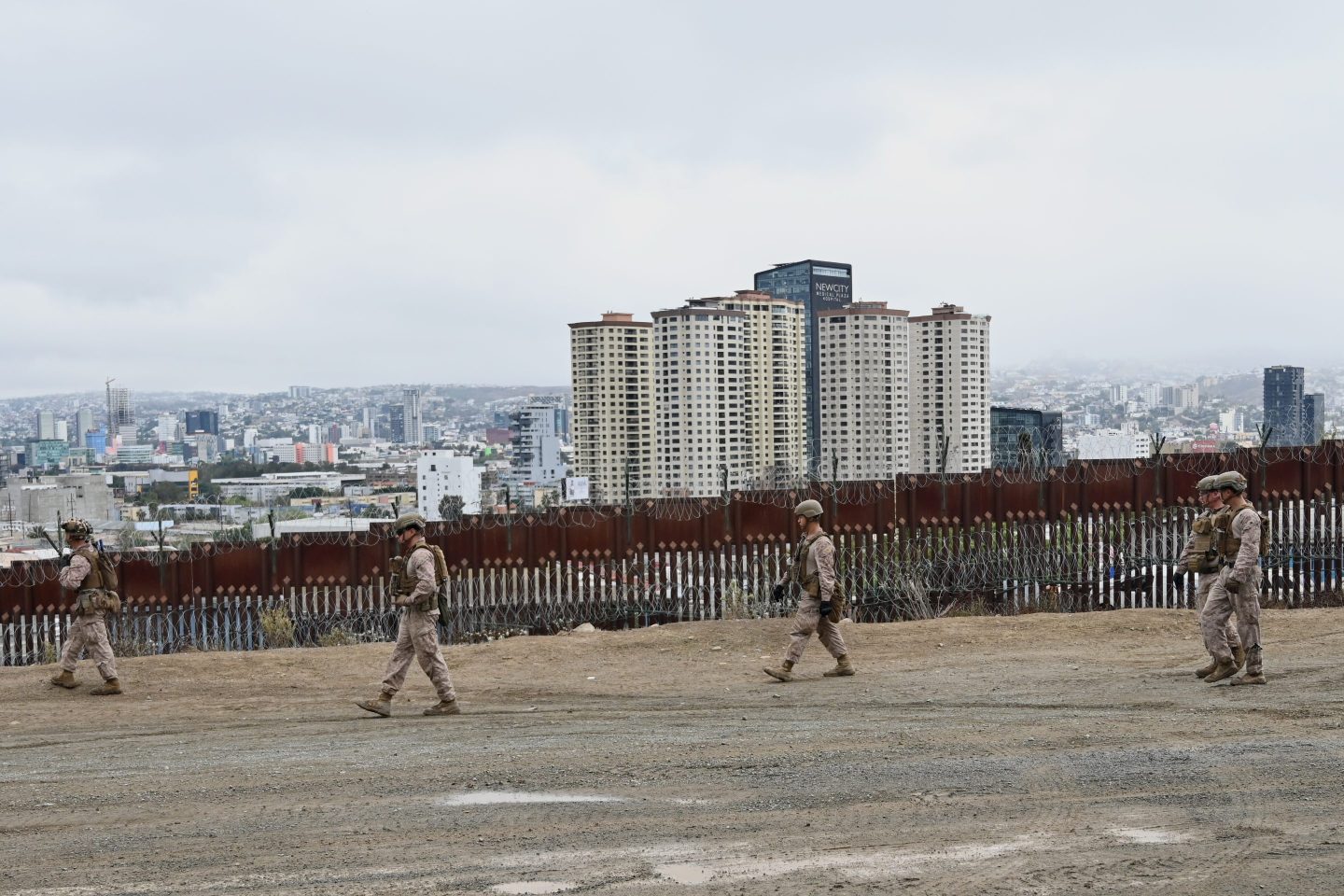
WHAT THE BILL SAYS: The bill sets aside $46.5 billion for what the House Homeland Security Committee calls an “integrated border barrier system,” including fencing, water barriers, law enforcement access roads and technology like movement sensors. The funding would complete 701 miles (1,128 kilometers) of primary walls and 900 miles (1,448 kilometers) of river barriers along the U.S.-Mexico border, according to the committee. It is the bill’s largest expenditure.
“Any lawmaker who claims to care about border security will need to put their money where their mouth is and work to advance these recommendations,” said the committee’s chairman, Republican Rep. Mark Green of Tennessee.
THE IMPACT: Building the wall has long been one of Trump’s signature promises, but its impacts beyond political symbolism are unclear. Illegal border crossings have plunged since Trump took office in January amid a string of orders on immigration, including the suspension of the asylum system. Simply ending asylum meant tens of thousands of people who would’ve surrendered to law enforcement instead of trying to avoid capture didn’t even attempt to cross.
Plus, the effectiveness of border walls is hotly debated, even in populated areas where barriers tend to be heavily reinforced. Human smugglers, often linked to drug cartels, have used tunnels, ladders and power tools to cross walls.
But, experts note that though illegal crossings are down now, that can change rapidly.
PROJECT: Detention facilities and staff
WHAT THE BILL SAYS: The bill, which top White House aide and immigration hawk Stephen Miller has called “the most essential piece of legislation currently under consideration in the entire Western World,” sets aside $45 billion to expand the network of immigrant detention facilities for adult migrants and families.
The standards in adult facilities, the bill notes, would be set at “the sole discretion of the Secretary of Homeland Security.”
More than $12 billion was also requested for 18,000 new ICE and Border Patrol personnel.
THE IMPACT: ICE has said it wants to increase its current detention capacity from about 41,000 people to 100,000. It’s part of what ICE’s acting director, Todd Lyons, has suggested is a deportation system that could function “like Amazon, trying to get your product delivered in 24 hours.”
ICE currently has about 6,000 deportation officers, a number that’s been stagnant for years.
While expanding staff and detention centers would make it easier for the administration to increase deportations, even the tens of billions of dollars the bill requests may not be enough to meet Trump’s goals. Miller has said ICE should be making 3,000 arrests per day of people in the country illegally. That’s a vast increase over the roughly 650 arrested a day in the first five months of Trump’s second term.
But the plans are a boon to America’s private prison industry, with stock prices for the two dominant companies, Geo Group Inc. and CoreCivic, up more than 50% since Trump’s election.
PROJECT: Immigration courts
WHAT THE BILL SAYS: The legislation sets aside $1.25 billion for the immigration court system, with funds to hire more immigration judges and support staff and to expand courtroom capacity. The courts’ annual budget currently stands at roughly $850 million.
THE IMPACT: The immigration court system, which has roughly 700 judges, has struggled for years with chronic understaffing and a backlog that has reached more than 3.6 million cases. Judges typically take more than five years to make decisions.
It’s a chaotic system, with overworked judges, a shortage of translators and immigrants who often don’t have lawyers.
The chaos has grown in recent weeks, with immigration courts seeing a spike in arrests outside courtrooms as agents wait to detain immigrants attending routine hearings. The arrests have spread fed confusion and fear, especially among asylum-seekers, who are accustomed to remaining free while their cases plod their way through the system.
The proposed funding would be “a significant increase, and from an institutional perspective it’s urgently needed money,” said Greg Chen, director of government relations for the American Immigration Lawyers Association.
But he also believes the rising numbers of courthouse arrests reflect an administration looking for ways to bypass immigration courts.
PROJECT: Immigration fees
WHAT THE BILL SAYS: The bill overhauls the system of immigration costs, with dramatic increases and new fees imposed for once-free services.
Applying for asylum, which has long been free, will now cost $1,000, with asylum-seekers paying another $550 for employment applications. Among other fee increases, appealing an immigration judge decision jumps from $110 to $900 and applying for temporary protected status, which allows people from certain countries facing civil unrest or natural disasters to stay temporarily in the U.S., goes from $50 to $500.
THE IMPACT: For wealthier immigrants, the new fees will be an inconvenience. But for the vast majority of people even a few hundred dollars could be enough to make them change their plans.