
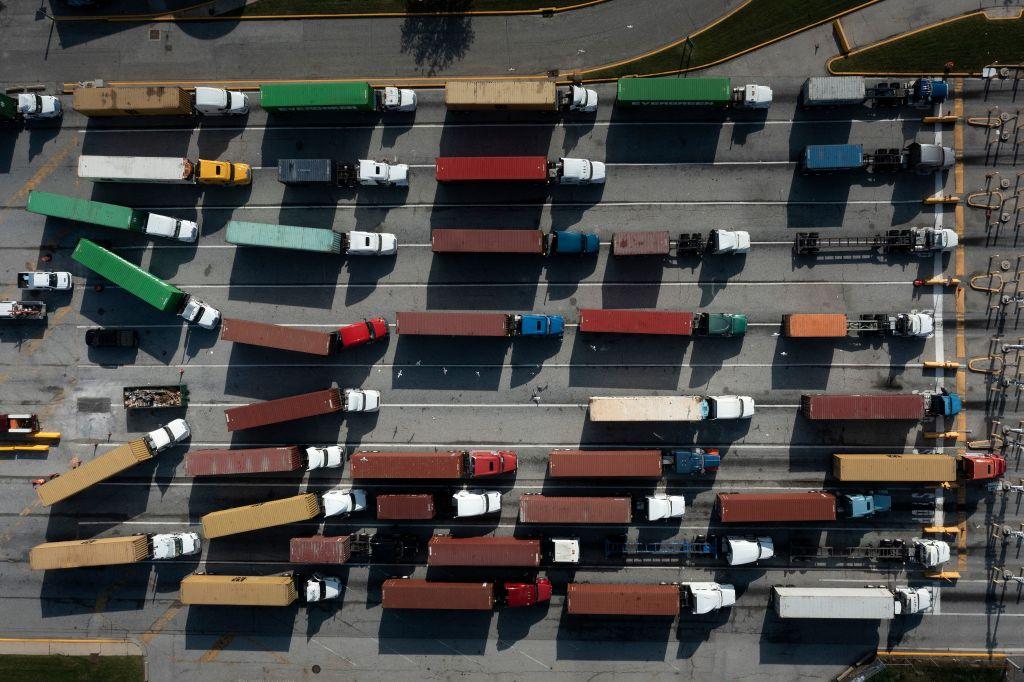
Tariffs have suddenly become a massively disruptive feature of the U.S. economic landscape, upending supply chains and threatening consumers with a new wave of inflation. But even as tariffs have come to dominate headlines, most people would struggle to explain how exactly they work in practice. How exactly do U.S. businesses keep track of them? How do firms know how much they owe? The answer is that the process is not easy and requires companies to know their way around an 18-pound book with thousands of rules—while also posting bonds upwards of $50,000 and using special software.
To get an idea of how collecting tariffs works in practice, Fortune spoke with customs brokers and legal experts to learn just what happens after the White House announces a new tariff. Here is a basic overview of the process.
How does a U.S. firm know when it has to pay a tariff?
Tariffs only apply to imports from other countries. This means all goods that arrive at U.S. ports, land border crossings, or airports are subject to a potential fee when they enter the country.
Until this year, tariffs didn’t apply to numerous countries—including Australia, Israel, and Costa Rica—because they enjoyed free trade deals. Now, under President Donald Trump, they apply to every country, though some goods from Canada and Mexico are still exempt.
How does a firm know how much to pay?
It depends both on the good in question and the country it comes from. People in the import business rely on an 18-pound book that lists all of this based on an international classification system known as the Harmonized Tariff Schedule.
This information can also be found on the U.S. government website https://hts.usitc.gov/, including a list of mostly 10-digit codes that serve as shorthand. They are not always easy to decipher. Gretchen Blough, a manager at customs broker Logistics Plus, says, for example, that computers are classified as “automatic processing machines.”
Businesses then use those codes to report what they are importing to U.S. Customs and Border Protection, using a software system called Automated Commercial Environment (ACE).
What if the tariffed goods are made of different stuff?
This is where it gets tricky. If a good is assembled with parts from all over, Customs will typically apply a single tariff based on the place that supplied its “essential character.” For instance, in 2022, the agency said a fish smoker with components from five countries should receive the tariff assigned to Turkey, which supplied a wooden rack that gave it that essential character.
But some goods may be subject to more than one tariff. That’s the case if there is a special material—such as steel—that has been singled out for a special rate.
How do firms keep up when the tariff rules keep changing?
It’s not easy. In the past, a U.S. trade official would announce a tariff change, and it would go into effect when published on the official Federal Register, along with a fact sheet on the Commerce Department website. More recently, the process has been more haphazard as President Trump has been implementing changes via executive order.
According to Blough, Trump’s unpredictable announcements have forced importers to scour the White House website or even rely on news reports in efforts to figure out what tariff rates apply on a given day.
How is a small business supposed to do all that?
Most of the time they don’t. Instead they rely on dedicated customs brokers like Logistics Plus or Livingston—UPS and FedEx also offer this service—to handle the tracking and paperwork in exchange for a fee. Some businesses may do this in-house, but most rely on these third-party services, which do not have a hands-on role when it comes to the goods.
“The broker will never see the goods, especially in this day and age. In the old days, someone would sit at the border and meet drivers and file for them,” says Jill Hurley, a senior director at Livingston, adding that the broker typically lets Customs know in advance, and ensures the goods are released to a trucker.
What was that about posting a bond?
Companies that import on a regular basis will have a standing account from which Customs draws the tariff payments, typically 10 days after the goods are released. This arrangement makes the process go more smoothly, but to use it a company will have to post a bond in case there is not enough money in their account.
The minimum bond is $50,000, but many firms will have to post much more since the amount is based on 10% of the duties they paid in the last 12 months. For firms that are importing major commodity shipments, including oil and gas, the bond could be in the millions of dollars. Companies, though, typically don’t post all that collateral themselves—instead they pay a fee to a third-party surety service to do it for them.
What happens if a company gets the tariff wrong?
If Customs discovers that a firm or its custom broker gets the tariff rate wrong—the agency has up to 300 days to review a given transaction—it will ask the company to pay any shortfall. And if the agency concludes the mistake is deliberate, it may impose a series of penalties.