• Home
  • Latest
  • Fortune 500
  • Finance
  • Tech
  • Leadership
  • Lifestyle
  • Rankings
  • Multimedia
Leadershipsupply chains

How does a Fortune 500 company rebuild its supply chain overnight? Most are piecing together a playbook on the fly

Geoff Colvin
By
Geoff Colvin
Geoff Colvin
Senior Editor-at-Large
Down Arrow Button Icon
Geoff Colvin
By
Geoff Colvin
Geoff Colvin
Senior Editor-at-Large
Down Arrow Button Icon
April 11, 2025, 6:00 AM ET
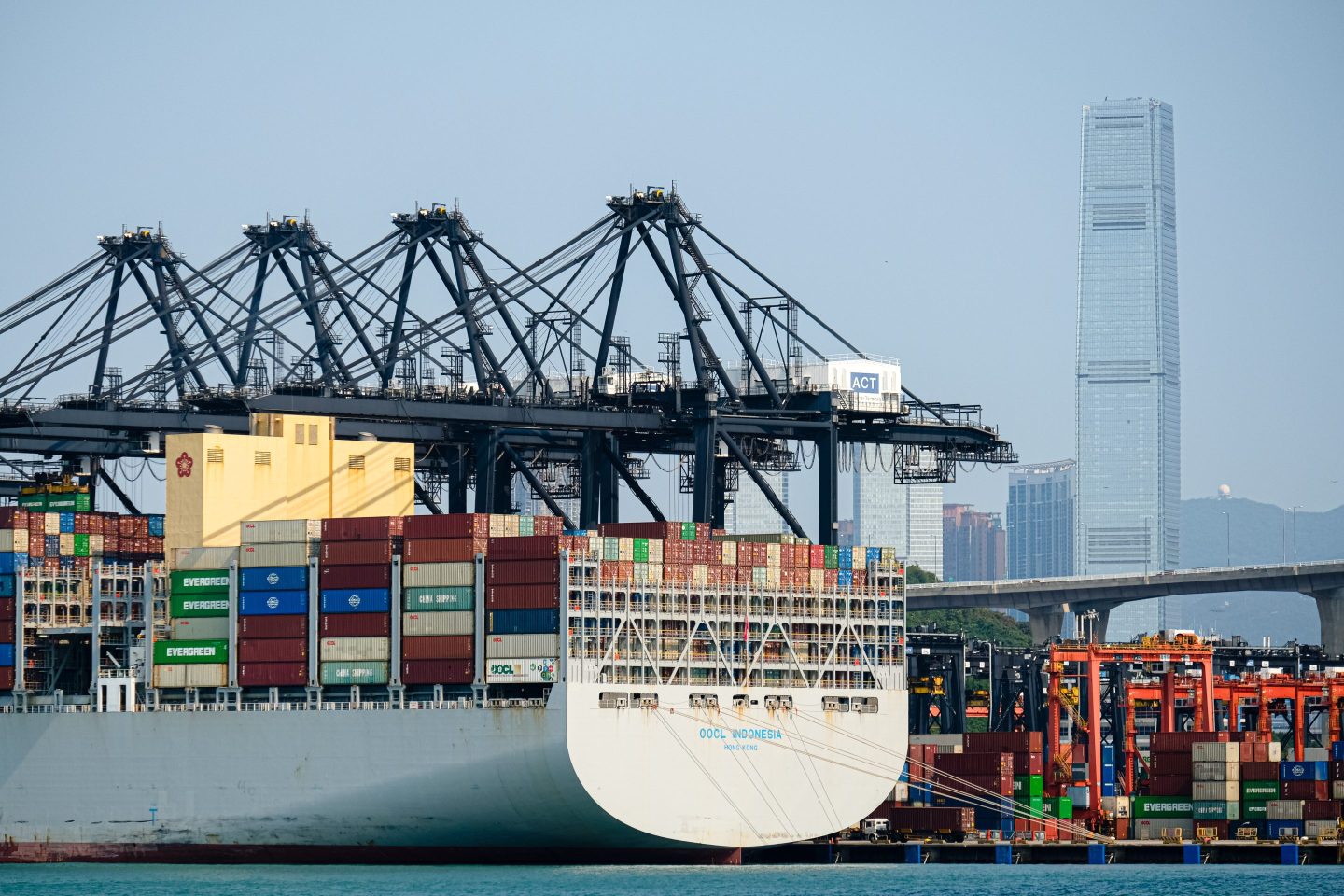
A cargo ship loaded with containers docks at Hong Kong International terminal on April 7, 2025.
A cargo ship loaded with containers docks at Hong Kong International terminal on April 7, 2025.Sawayasu Tsuji—Getty Images

“Almost every client I talk to has a war room,” says Mary Rollman, KPMG’s U.S. supply-chain leader. “They get a team spun up, and the members have completely dropped their day job. Their job now is to watch the news and see what comes out next, and quickly be able to present to leadership.”

Recommended Video

That’s life in the chaotic Great Trade War of 2025—but companies aren’t waging the war. They’re trying to survive and thrive as governments radically remake the global business environment. At the heart of that challenge is the supply chain, and exactly how to transform it is Topic A in all those war rooms. “This is a unique time in supply-chain history,” says Abe Eshkenazi, CEO of the Association for Supply Chain Management. “It’s something we have never done at this level.”

Everyone knew something big was looming—President Trump had often told the world he would impose more and heavier tariffs—but hardly anyone was prepared for the magnitude of the tariffs he imposed on 57 countries on April 2. They ranged from 11% (on Cameroon and Democratic Republic of the Congo) to 49% (on Cambodia), raising the average effective U.S. tariff rate to 22.5%—the highest since 1909. A week later he paused most of those tariffs, reducing them to 10% for all countries except China, for which the tariff at this writing is 145%. No one alive has any experience managing a U.S. business in that environment.

So far, most U.S. companies seem to be taking small steps. Some are accelerating existing plans to bring manufacturing to the U.S., says Rollman. Some are holding imports at the border as tariffs change. But “that is the minority,” she says. “Most companies I work with are working to model options and scenarios but not making any major changes now.”

Adapting won’t be easy. In the now-gone globalized economy, cars assembled in the U.S. included parts from dozens of countries, for example. Some parts crossed borders multiple times as they were built. Ford says it uses parts made of over 1,000 materials supplied by some 1,400 suppliers. Redesigning that kind of supply chain will be mind-boggling.
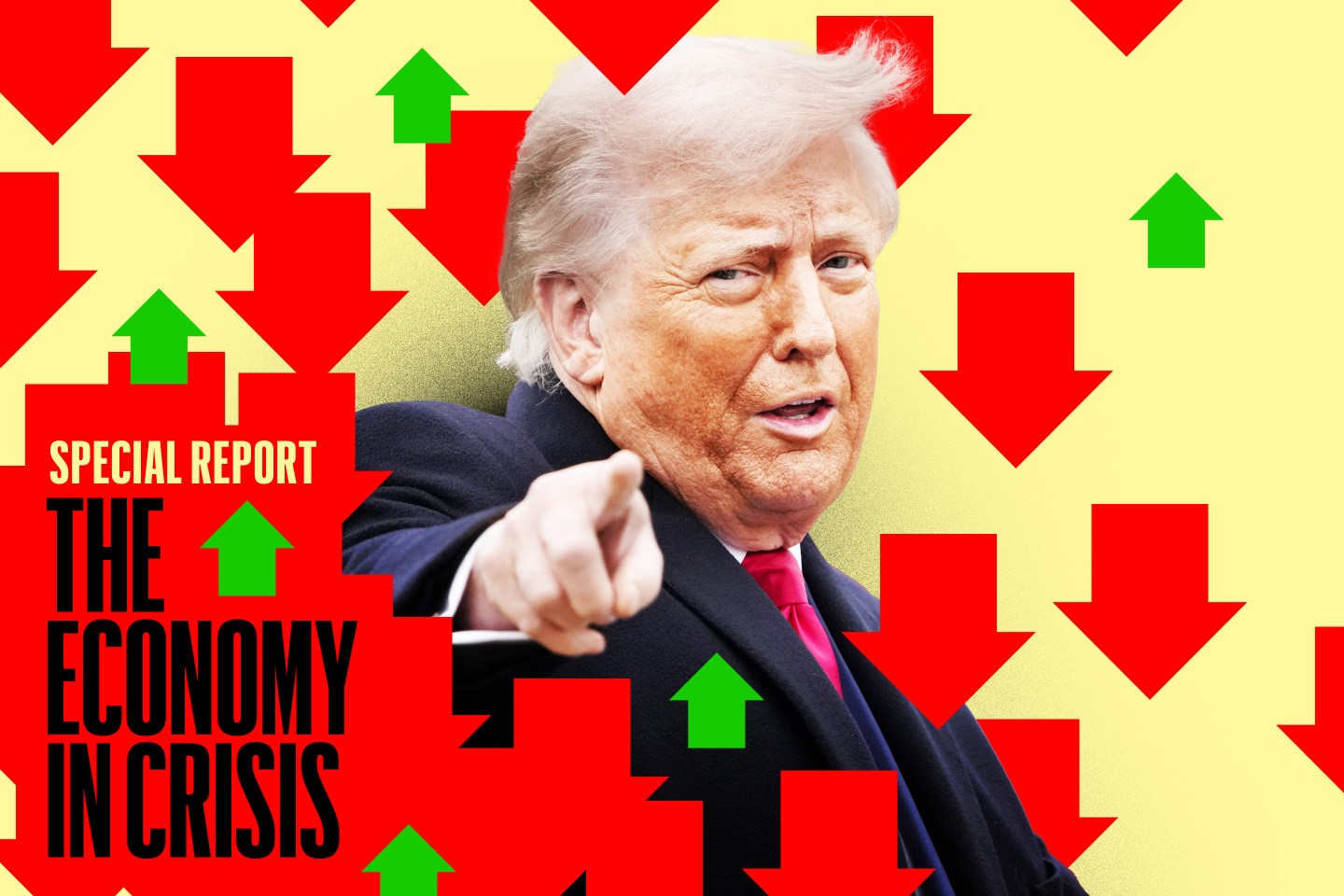
Fortune Special Report — The Economy in Crisis
Read more of our coverage via the linked image above.
Photo illustration by Fortune; Original photo by Andrew Harnik—Getty Images

A few industries had to scrap their supply chains after Trump’s tariffs in his first term, but that experience may not give them much of an advantage this time. “One industry we’re seeing that was heavily impacted was the textile and apparel industry,” says Andrew Siciliano, head of KPMG’s U.S. and global trade and customs practices. “Many companies moved out of China in 2018,” after Trump imposed tariffs in his first term, “and moved to Vietnam, Thailand, India, and Malaysia.” As of April 2, all four of those countries faced high tariffs. They’re now down to 10%, and there’s no telling what tariffs they will face when the pause expires.

Now add yet another layer of complexity: Will today’s tariff be the same tomorrow? The pause was a surprise, and history says more surprises are surely ahead. In his first term as president, Trump announced a new tariff on metals from Brazil, for example, then canceled it days later after speaking with then Brazilian President Jair Bolsonaro. A similar procedure is shaping up again, this time on a much larger scale. Trump recently told reporters on Air Force One that the tariffs give the U.S. “great powers to negotiate” and that “I spoke to a lot of Europeans, Asians, all over the world. They’re dying to make a deal.” Other officials, including U.S. Trade Representative Jamieson Greer, have signaled the administration is open to making deals. The tariffs announced on April 2 are apparently opening bids in a negotiation, which means business leaders must now build new supply chains based on tariffs that could change at any time with little warning.

That is exactly the environment in which supply chains work badly. “The supply chain depends on consistency, not only on data, but on predictability,” says Eshkenazi. “If we know what the demand is, then we know how to sequence supply and ordering and inventories and logistics. As in financial markets, we don’t deal well with uncertainty.”

Compounding the difficulty, big changes in supply chains often require long-term responses. Automakers need at least 2 ½ years to build a U.S. manufacturing facility, for example, and some plants have required three to five years. By the time they’re running, what tariffs on which countries will automakers be trying to avoid? Will that billion-dollar investment have turned out to be wise? Or consider the ingredients for generic drugs, most of which are made in China and India. “It’s been that way for 20 years,” says Rollman. Producing them in the U.S. would cost 35% more, she says, but building U.S. plants could take up to two years. Until then, the ingredients would have to be imported at prices that could be even higher—no one knows how much—depending on tariffs negotiated with China and India.

As leaders struggle to make high-stakes decisions, they’re frustrated by the difficulty of discerning Trump’s long-term objectives. Republican Sen. John Kennedy of Louisiana recently confessed to the Wall Street Journal, “I just don’t know what his goal is right now.” Eshkenazi wonders, “What is it that we’re trying to accomplish through all these tariffs?” They may want to remember what Trump wrote in his 2015 book Crippled America: “I don’t want people to know exactly what I’m doing—or thinking. I like being unpredictable. It keeps them off-balance.”

With supply-chain executives and others, he is certainly succeeding.

Join us at the Fortune Workplace Innovation Summit May 19–20, 2026, in Atlanta. The next era of workplace innovation is here—and the old playbook is being rewritten. At this exclusive, high-energy event, the world’s most innovative leaders will convene to explore how AI, humanity, and strategy converge to redefine, again, the future of work. Register now.
About the Author
Geoff Colvin
By Geoff ColvinSenior Editor-at-Large
LinkedIn iconTwitter icon

Geoff Colvin is a senior editor-at-large at Fortune, covering leadership, globalization, wealth creation, the infotech revolution, and related issues.

See full bioRight Arrow Button Icon

Latest in Leadership

Finance
Lorem ipsum dolor sit amet, consectetur adipiscing elit, sed do eiusmod tempor incididunt ut labore et dolore magna aliqua. Ut enim ad minim veniam
By Fortune Editors
October 20, 2025
Finance
Lorem ipsum dolor sit amet, consectetur adipiscing elit, sed do eiusmod tempor incididunt ut labore et dolore magna aliqua. Ut enim ad minim veniam
By Fortune Editors
October 20, 2025
Finance
Lorem ipsum dolor sit amet, consectetur adipiscing elit, sed do eiusmod tempor incididunt ut labore et dolore magna aliqua. Ut enim ad minim veniam
By Fortune Editors
October 20, 2025
Finance
Lorem ipsum dolor sit amet, consectetur adipiscing elit, sed do eiusmod tempor incididunt ut labore et dolore magna aliqua. Ut enim ad minim veniam
By Fortune Editors
October 20, 2025
Finance
Lorem ipsum dolor sit amet, consectetur adipiscing elit, sed do eiusmod tempor incididunt ut labore et dolore magna aliqua. Ut enim ad minim veniam
By Fortune Editors
October 20, 2025
Finance
Lorem ipsum dolor sit amet, consectetur adipiscing elit, sed do eiusmod tempor incididunt ut labore et dolore magna aliqua. Ut enim ad minim veniam
By Fortune Editors
October 20, 2025

Most Popular

Finance
Lorem ipsum dolor sit amet, consectetur adipiscing elit, sed do eiusmod tempor incididunt ut labore et dolore magna aliqua. Ut enim ad minim veniam
By Fortune Editors
October 20, 2025
Finance
Lorem ipsum dolor sit amet, consectetur adipiscing elit, sed do eiusmod tempor incididunt ut labore et dolore magna aliqua. Ut enim ad minim veniam
By Fortune Editors
October 20, 2025
Finance
Lorem ipsum dolor sit amet, consectetur adipiscing elit, sed do eiusmod tempor incididunt ut labore et dolore magna aliqua. Ut enim ad minim veniam
By Fortune Editors
October 20, 2025
Finance
Lorem ipsum dolor sit amet, consectetur adipiscing elit, sed do eiusmod tempor incididunt ut labore et dolore magna aliqua. Ut enim ad minim veniam
By Fortune Editors
October 20, 2025
Finance
Lorem ipsum dolor sit amet, consectetur adipiscing elit, sed do eiusmod tempor incididunt ut labore et dolore magna aliqua. Ut enim ad minim veniam
By Fortune Editors
October 20, 2025
Finance
Lorem ipsum dolor sit amet, consectetur adipiscing elit, sed do eiusmod tempor incididunt ut labore et dolore magna aliqua. Ut enim ad minim veniam
By Fortune Editors
October 20, 2025
Fortune Secondary Logo
Rankings
  • 100 Best Companies
  • Fortune 500
  • Global 500
  • Fortune 500 Europe
  • Most Powerful Women
  • Future 50
  • World’s Most Admired Companies
  • See All Rankings
Sections
  • Finance
  • Fortune Crypto
  • Features
  • Leadership
  • Health
  • Commentary
  • Success
  • Retail
  • Mpw
  • Tech
  • Lifestyle
  • CEO Initiative
  • Asia
  • Politics
  • Conferences
  • Europe
  • Newsletters
  • Personal Finance
  • Environment
  • Magazine
  • Education
Customer Support
  • Frequently Asked Questions
  • Customer Service Portal
  • Privacy Policy
  • Terms Of Use
  • Single Issues For Purchase
  • International Print
Commercial Services
  • Advertising
  • Fortune Brand Studio
  • Fortune Analytics
  • Fortune Conferences
  • Business Development
About Us
  • About Us
  • Editorial Calendar
  • Press Center
  • Work At Fortune
  • Diversity And Inclusion
  • Terms And Conditions
  • Site Map
Fortune Secondary Logo
  • About Us
  • Editorial Calendar
  • Press Center
  • Work At Fortune
  • Diversity And Inclusion
  • Terms And Conditions
  • Site Map
  • Facebook icon
  • Twitter icon
  • LinkedIn icon
  • Instagram icon
  • Pinterest icon

Latest in Leadership

Future of Workthe future of work
Have good taste? It may just get you a job during the AI jobs apocalypse, says Sam Altman
By Marco Quiroz-GutierrezFebruary 27, 2026
1 hour ago
C-SuiteFortune 500 Power Moves
Fortune 500 Power Moves: Which executives gained and lost power this week
By Fortune EditorsFebruary 27, 2026
2 hours ago
Successphilanthropy
Dolly Parton’s philanthropy inspiration is her father who couldn’t read or write: ‘I saw how crippling that could be’
By Sydney LakeFebruary 27, 2026
5 hours ago
Personal Financewealth management
The Great Wealth Transfer is already happening as millennials hitting their ‘Peak 35’ are richer than ever
By Catherina GioinoFebruary 27, 2026
5 hours ago
jack dorsey
AILayoffs
Block CEO Jack Dorsey lays off nearly half of his staff because of AI and predicts most companies will make similar cuts in the next year
By Jake AngeloFebruary 27, 2026
6 hours ago
Spencer Rascoff, chief executive officer of Match Group Inc
SuccessGen Z
CEO of the tech company behind Hinge and Tinder set up an employee hotline where staff can DM him anytime: ‘No hierarchy. No filters. Just real input.’
By Emma BurleighFebruary 27, 2026
8 hours ago

Most Popular

placeholder alt text
Innovation
An MIT roboticist who cofounded bankrupt robot vacuum maker iRobot says Elon Musk’s vision of humanoid robot assistants is ‘pure fantasy thinking’
By Marco Quiroz-GutierrezFebruary 25, 2026
2 days ago
placeholder alt text
Success
Jeff Bezos says being lazy, not working hard, is the root of anxiety: ‘The stress goes away the second I take that first step’
By Sydney LakeFebruary 25, 2026
2 days ago
placeholder alt text
Economy
Trump claims America is ‘winning so much.’ The IMF agrees, adding that Trump’s trade policies are the only thing holding it back from even more
By Tristan BoveFebruary 26, 2026
1 day ago
placeholder alt text
Commentary
'The Pitt': a masterclass display of DEI in action 
By Robert RabenFebruary 26, 2026
1 day ago
placeholder alt text
Economy
It’s more than George Clooney moving to France: America is becoming the ‘uncool’ country that people want to move away from
By Nick LichtenbergFebruary 27, 2026
16 hours ago
placeholder alt text
Success
Gen Z Olympic champion Eileen Gu says she rewires her brain daily to be more successful—and multimillionaire founder Arianna Huffington says it really does work
By Orianna Rosa RoyleFebruary 25, 2026
2 days ago

© 2026 Fortune Media IP Limited. All Rights Reserved. Use of this site constitutes acceptance of our Terms of Use and Privacy Policy | CA Notice at Collection and Privacy Notice | Do Not Sell/Share My Personal Information
FORTUNE is a trademark of Fortune Media IP Limited, registered in the U.S. and other countries. FORTUNE may receive compensation for some links to products and services on this website. Offers may be subject to change without notice.