
• Home
  • Latest
  • Fortune 500
  • Finance
  • Tech
  • Leadership
  • Lifestyle
  • Rankings
  • Multimedia
Commentarybond yields

Why this ‘basis trade’ moment is so dangerous

Jim Edwards
By
Jim Edwards
Jim Edwards
Executive Editor, Global News
Down Arrow Button Icon
April 9, 2025, 12:27 PM ET
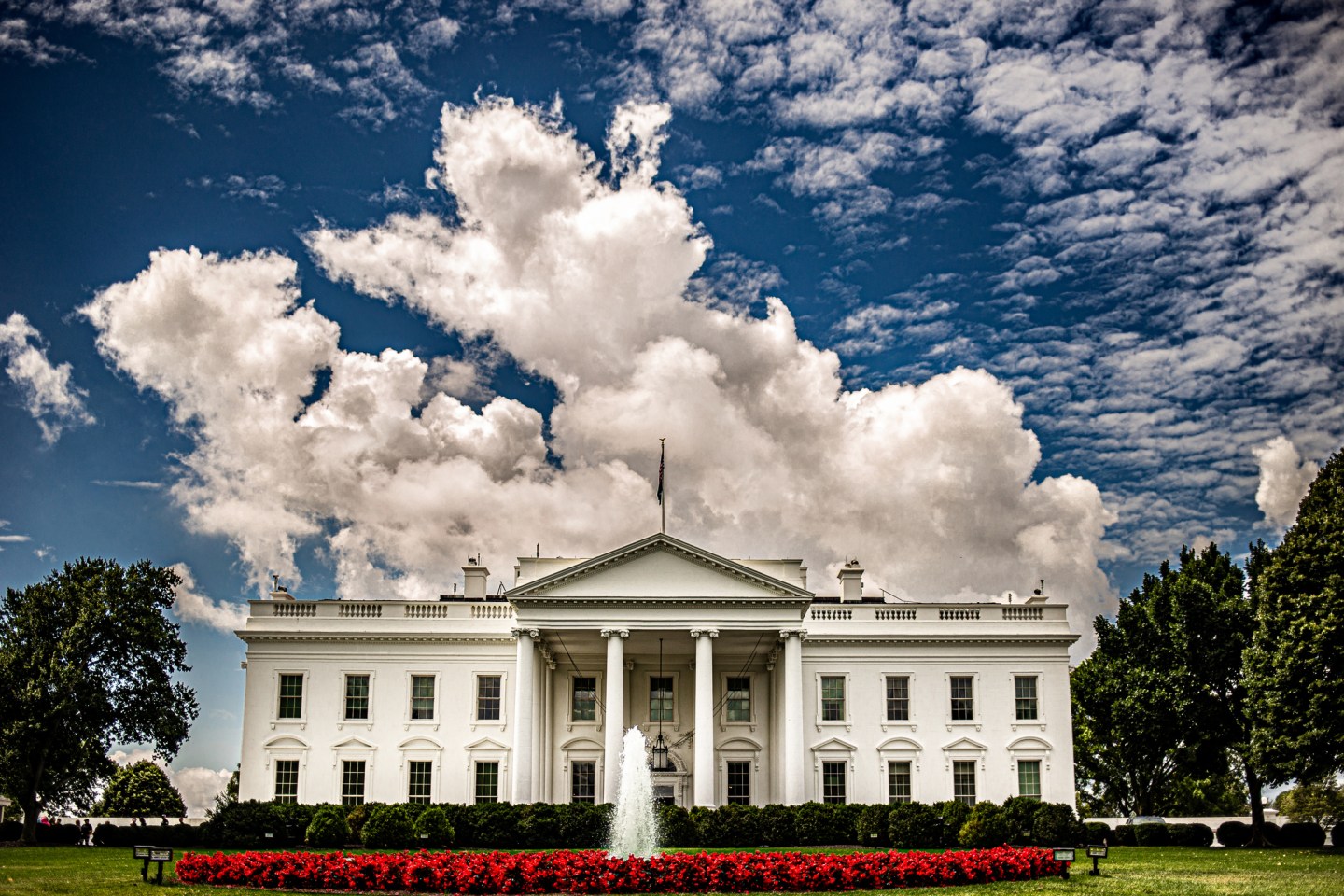
Clouds over the White House. Credit: J. Altdorfer Photography/Getty Images
  • The fact prices in the bond market are in decline at the same time as the stock market suggests there may be a liquidity crisis in the financial sector happening at the same time as the trade tariff crisis. Both phenomena could be on the scale of the 2008 financial crisis, if President Trump does not change course. Some investment managers are calling for intervention by the U.S. Federal Reserve.

You can forgive yourself if, before today, you had never heard of “the basis trade.” You had no reason to.

Recommended Video

But we might be about to learn a whole lot about basis trades in the same way that we had to suddenly learn about “credit default swaps” and “mortgage-backed securities” during the Great Financial Crisis of 2008.

Because this moment—with President Trump’s tariff program threatening to push the planet into a recession, as stocks and bonds fall—feels just as dangerous as August 3, 2007, when Jim Cramer suddenly began screaming on CNBC that the U.S. Federal Reserve had to “open the discount window” (meaning be more generous to large banks that were in trouble) because former Fed Chairman Ben Bernanke had “no idea how bad it is out there!” 

That was the moment that presaged the 2008 crisis. The S&P dropped 50% of its value over the next two years as, slowly at first and then with increasing alarm, everyone realized the economy had taken on way more mortgage debt than could ever be paid off.

On Tuesday, the S&P 500 collapsed to under 5,000—around 18% below its all-time high of 6,144 in February. 

Usually, when stocks go down, investors flee to the safety of bonds, and bonds go up. 

But bonds were also going down. The yield on the 10-year Treasury rose from 3.9% and briefly hit 4.51%. (Remember: If yields are going up, it means bond prices are going down). 

This was unusual

Scarily, mysteriously unusual. It meant there was nowhere “safe” for money to hide.

Then, also on Tuesday, Torsten Sløk, the chief economist of Apollo Management, published a fantastically helpful note explaining the likely problem in the bond market: “The basis trade.”

It turns out that since the Great Financial Crisis of 2008, hedge funds have been placing bets with up to 100 times leverage on the price difference between Treasuries and Treasury futures contracts. In the bet, to put it simply, you buy the Treasury bond and then short the differently priced futures contract on a similar bond. As the bond comes up on its expiry date, the prices converge. The futures price comes down, and your short bet pays off.

The price differences are small, and that is why hedge funds use 100 times leverage to make money on them.

“How big is the basis trade?” Sløk asked. “It is currently around $800 billion and an important part of the $2 trillion outstanding in prime brokerage balances.”

The liquidity problem

The only problem with leverage, of course, is that you have to pay it back.

And what the bond market—with its falling prices—seemed to be signalling was that there was a liquidity problem among hedge funds and banks that were scrambling to exit the basis trade in order to raise and hold cash.

When there is a liquidity problem on that scale, you’ve potentially got systemic, institutional issues. Ark Invest’s Cathie Wood posted on X, albeit in reference to a different aspect of the bond market, there were “serious liquidity issues in the US banking system.” 

“This crisis is calling out for … serious support from the Fed,” she said.

She’s not the only one who is worried. 

Jefferies’ chief U.S. economist, Thomas Simons, published a note to clients Wednesday morning titled, “We Could See Fed Intervention Soon.”

Nick Lawson, chief executive of investment group Ocean Wall, told the Financial Times, “As things spiral, they’re [the hedge funds] being forced to sell anything they can — even good assets — just to stay afloat … if the Federal Reserve doesn’t step in soon, this could turn into a full-blown crisis. It’s that serious.”

This sounds a lot like 2008

That is why it is so scary.

But this time, it is potentially worse than 2008. 

The trigger of this crisis is not merely a couple of hedge funds making some bad bets on Treasuries. It’s President Trump’s trade tariffs. The White House all but called a halt to any international trade with America—and the stock market is reacted negatively as a result. 

To put the scale of what Trump is doing in perspective: Trump’s tariffs might spell the end of Apple’s iPhone for American consumers. The tariffs on China mean the price of a new iPhone could rise to $3,500, according to Wedbush analyst Daniel Ives. That price assumes Apple could make an iPhone inside the U.S., thus avoiding the China tariff. But that’s impossible, Ives says, because it takes years to build the kind of semiconductor fabrication factories needed for a smartphone. And even if you could do it, the phones would be too expensive for anyone but the very rich. “The reality of a $1,000 iPhone being one of the best made consumer products on the planet would disappear,” Ives says.

Goldman Sachs sent their clients a note on Wednesday that says, “The implied growth downgrade on April 3 and 4 [from the tariffs] exceeded anything seen outside the initial COVID shock, one episode in the GFC, and Black Monday in 1987,” analysts Dominic Wilson and Vickie Chang wrote.

With those prospects, it is not surprising that stocks are selling off. The tariffs will simply prevent many companies from being in the business they are in.

Back in February—it feels like a lifetime ago but it was just a few weeks!—all the chatter was about the “soft landing” the U.S. Federal Reserve seemed to have engineered for the U.S. economy. The American economy had hit a few bumps last year, but it was fundamentally sound. Stocks were anticipating good times ahead. Even the recent job numbers for March looked good.

All that is now in the past

Of course, there was a cure for this. Trump—not known for admitting his mistakes—partially reversed his trade policy on Wednesday. That may be enough to avoid the worst-case scenario in which we had not one but two 2008-scale crises at the same time, both feeding each other: The crisis among companies who suddenly cannot trade; and a crisis in the financial sector, which suddenly can’t locate enough cash to stay liquid. Whether it will forestall the recession that (until Wednesday morning) everyone was expecting, time will tell.


Join us at the Fortune Workplace Innovation Summit May 19–20, 2026, in Atlanta. The next era of workplace innovation is here—and the old playbook is being rewritten. At this exclusive, high-energy event, the world’s most innovative leaders will convene to explore how AI, humanity, and strategy converge to redefine, again, the future of work. Register now.
About the Author
Jim Edwards
By Jim EdwardsExecutive Editor, Global News
LinkedIn iconTwitter icon

Jim Edwards is the executive editor for global news at Fortune. He was previously the editor-in-chief of Business Insider's news division and the founding editor of Business Insider UK. His investigative journalism has changed the law in two U.S. federal districts and two states. The U.S. Supreme Court cited his work on the death penalty in the concurrence to Baze v. Rees, the ruling on whether lethal injection is cruel or unusual. He also won the Neal award for an investigation of bribes and kickbacks on Madison Avenue.

See full bioRight Arrow Button Icon

Latest in Commentary

Finance
Lorem ipsum dolor sit amet, consectetur adipiscing elit, sed do eiusmod tempor incididunt ut labore et dolore magna aliqua. Ut enim ad minim veniam
By Fortune Editors
October 20, 2025
Finance
Lorem ipsum dolor sit amet, consectetur adipiscing elit, sed do eiusmod tempor incididunt ut labore et dolore magna aliqua. Ut enim ad minim veniam
By Fortune Editors
October 20, 2025
Finance
Lorem ipsum dolor sit amet, consectetur adipiscing elit, sed do eiusmod tempor incididunt ut labore et dolore magna aliqua. Ut enim ad minim veniam
By Fortune Editors
October 20, 2025
Finance
Lorem ipsum dolor sit amet, consectetur adipiscing elit, sed do eiusmod tempor incididunt ut labore et dolore magna aliqua. Ut enim ad minim veniam
By Fortune Editors
October 20, 2025
Finance
Lorem ipsum dolor sit amet, consectetur adipiscing elit, sed do eiusmod tempor incididunt ut labore et dolore magna aliqua. Ut enim ad minim veniam
By Fortune Editors
October 20, 2025
Finance
Lorem ipsum dolor sit amet, consectetur adipiscing elit, sed do eiusmod tempor incididunt ut labore et dolore magna aliqua. Ut enim ad minim veniam
By Fortune Editors
October 20, 2025

Most Popular

Finance
Lorem ipsum dolor sit amet, consectetur adipiscing elit, sed do eiusmod tempor incididunt ut labore et dolore magna aliqua. Ut enim ad minim veniam
By Fortune Editors
October 20, 2025
Finance
Lorem ipsum dolor sit amet, consectetur adipiscing elit, sed do eiusmod tempor incididunt ut labore et dolore magna aliqua. Ut enim ad minim veniam
By Fortune Editors
October 20, 2025
Finance
Lorem ipsum dolor sit amet, consectetur adipiscing elit, sed do eiusmod tempor incididunt ut labore et dolore magna aliqua. Ut enim ad minim veniam
By Fortune Editors
October 20, 2025
Finance
Lorem ipsum dolor sit amet, consectetur adipiscing elit, sed do eiusmod tempor incididunt ut labore et dolore magna aliqua. Ut enim ad minim veniam
By Fortune Editors
October 20, 2025
Finance
Lorem ipsum dolor sit amet, consectetur adipiscing elit, sed do eiusmod tempor incididunt ut labore et dolore magna aliqua. Ut enim ad minim veniam
By Fortune Editors
October 20, 2025
Finance
Lorem ipsum dolor sit amet, consectetur adipiscing elit, sed do eiusmod tempor incididunt ut labore et dolore magna aliqua. Ut enim ad minim veniam
By Fortune Editors
October 20, 2025
Rankings
  • 100 Best Companies
  • Fortune 500
  • Global 500
  • Fortune 500 Europe
  • Most Powerful Women
  • Future 50
  • World’s Most Admired Companies
  • See All Rankings
Sections
  • Finance
  • Leadership
  • Success
  • Tech
  • Asia
  • Europe
  • Environment
  • Fortune Crypto
  • Health
  • Retail
  • Lifestyle
  • Politics
  • Newsletters
  • Magazine
  • Features
  • Commentary
  • Mpw
  • CEO Initiative
  • Conferences
  • Personal Finance
  • Education
Customer Support
  • Frequently Asked Questions
  • Customer Service Portal
  • Privacy Policy
  • Terms Of Use
  • Single Issues For Purchase
  • International Print
Commercial Services
  • Advertising
  • Fortune Brand Studio
  • Fortune Analytics
  • Fortune Conferences
  • Business Development
About Us
  • About Us
  • Editorial Calendar
  • Press Center
  • Work At Fortune
  • Diversity And Inclusion
  • Terms And Conditions
  • Site Map

© 2025 Fortune Media IP Limited. All Rights Reserved. Use of this site constitutes acceptance of our Terms of Use and Privacy Policy | CA Notice at Collection and Privacy Notice | Do Not Sell/Share My Personal Information
FORTUNE is a trademark of Fortune Media IP Limited, registered in the U.S. and other countries. FORTUNE may receive compensation for some links to products and services on this website. Offers may be subject to change without notice.


Most Popular

placeholder alt text
Economy
For the first time since Trump’s tariff rollout, import tax revenue has fallen, threatening his lofty plans to slash the $38 trillion national debt
By Sasha RogelbergDecember 12, 2025
9 days ago
placeholder alt text
Future of Work
A Walmart employee nearly doubled her pay after entering its pipeline for skilled tradespeople. 'I was able to move out of my parents' house'
By Anne D'Innocenzio and The Associated PressDecember 20, 2025
17 hours ago
placeholder alt text
Success
The scientist who helped create AI says it’s only ‘a matter of time’ before every single job is wiped out—even safer trade jobs like plumbing
By Orianna Rosa RoyleDecember 19, 2025
2 days ago
placeholder alt text
Future of Work
Meet a 55-year-old automotive technician in Arkansas who didn’t care if his kids went to college: ‘There are options’
By Muskaan ArshadDecember 21, 2025
7 hours ago
placeholder alt text
Future of Work
'They'll lose their humanity': Dartmouth professor says he's surprised just how scared his Gen Z students are of AI
By Nick LichtenbergDecember 20, 2025
1 day ago
placeholder alt text
Economy
Sneaking unemployment rate means the U.S. economy is inching closer to a key recession indicator, says Moody’s
By Eleanor PringleDecember 19, 2025
2 days ago

Latest in Commentary

sustainability
CommentarySustainability
2025: the year sustainability didn’t die 
By Andrew WinstonDecember 21, 2025
3 hours ago
Thomas “Tom” McInerney is President, CEO and a Director of Genworth Financial
CommentaryCaregiving
I’m a CEO who’s spent nearly 40 years talking to presidents, lawmakers and leaders about our long-term care crisis. They knew this moment was coming
By Thomas McInerneyDecember 19, 2025
2 days ago
Kristin Olson
Commentaryinvesting advice
I lead Goldman Sachs’ alternatives for wealth globally. Around the world, investors want to know more 
By Kristin OlsonDecember 19, 2025
2 days ago
unemployed
CommentaryLayoffs
The AI efficiency illusion: why cutting 1.1 million jobs will stifle, not scale, your strategy
By Katica RoyDecember 18, 2025
3 days ago
Muddu
CommentaryIT
IT service is reaching its breaking point. At Salesforce, we see 3 tipping points
By Muddu SudhakarDecember 18, 2025
3 days ago
small business
CommentaryLayoffs
Our data shows that companies of 500 and fewer workers mostly avoided the AI layoffs. They’re making AI work for them
By Gabby BurlacuDecember 18, 2025
3 days ago