When employees at customs broker Logistics Plus signed into work on Thursday, they discovered a torrent of emails from worried customers. Gretchen Blough, a manager in Erie, Pa., says half of the emails came from importers scrambling to get shipments into the country as a crush of new levies came into effect. The other half, she said, were from businesses simply trying to figure out what they had to do.
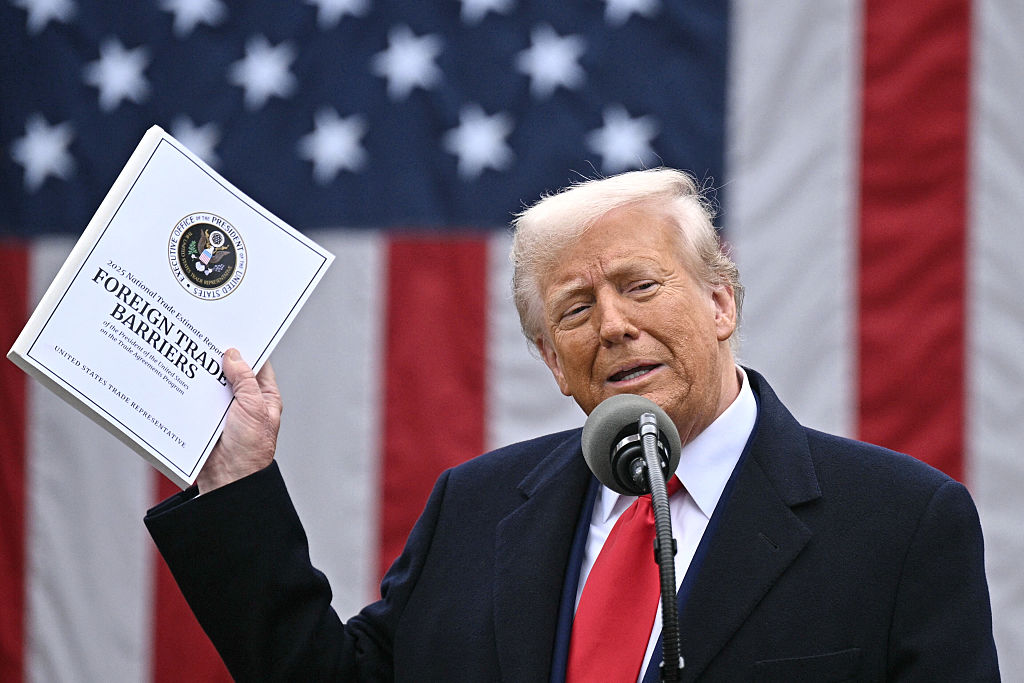
While import duties have always been part of U.S. commerce, President Donald Trump’s “Liberation Day” announcement dramatically increased the cost of tariffs and the scope of goods to which they apply. This means that many U.S. firms must not only pay more for what they import, but must also devote time to deciphering a complex customs bureaucracy.
Paying import duties is no small matter—especially for businesses unfamiliar with them, owing to a reliance on long-standing free trade rules with countries like Mexico and Canada. For many, that will mean paying for the services of a customs broker, which can help navigate the Harmonized Tariff Schedule or HTS, an 18-pound book that sets out a classification system for the world’s goods. Blough notes that the categories are not always modern or intuitive: Computers, for instance, fall under the HTS category of “automatic processing machine.”
Once a category is established, an importer must turn to the U.S. government’s HTS website to determine how much they must pay. In the case of recently imposed tariffs, however, the site may not be up to date, which requires would-be tariff payers to consult fact sheets from the White House or the arcane government log known as the Federal Register.
Unfortunately, in recent weeks, this information hasn’t always been available—even when new tariffs are going into effect.
“In Trump 2.0, he’s not taking standard regulator or statutory pathways to implement these tariffs. Keeping an eye on what’s coming is a bit of an art form to piece together the information,” says Jill Hurley, senior director of U.S. consulting at customs broker Livingston.
She cited Trump’s recent dispute with Colombia over deportation flights, which led to on-again, off-again tariffs that required importers to “haunt the White House website” for specifics on his latest executive actions.
Penalties and a $50,000 bond
The tariff regime is complex but is even more so when it comes to goods assembled from components originating in multiple countries, or made from diverse materials. Consider, for instance, wood items fashioned with screws made from steel—a metal that is a trade fixation for Trump—or a vehicle assembled with parts from Mexico and Canada. In both cases, an importer may have to make their best guess on the appropriate duties.
In the past, an importer would be able to ask for clarity or, in cases where they chose the wrong category, to pay for any shortfall. In recent weeks, however, Hurley says, there have been scenarios where importers have been unable to ask for details about new tariffs, and have run the risk of penalties even if they have made a good faith mistake.
Businesses that, until now, have not had to pay import duties will likely have their hands full trying to understand how much they must pay. That’s not all, though. These firms will also have to learn the system for making payments.
Some firms will choose to pay customs brokers a fee to handle the payments on their behalf. Others will choose to make the payments directly by setting up an ACH account with the Customs and Border Protection (CBP) agency, where funds will be debited on a daily or monthly basis. That is not the end of the matter, though.
Firms that import goods on a regular basis are obliged to post a bond, typically $50,000, with the CBP to cover any shortfalls or penalties. For firms that handle huge volumes of imports, as in the case of oil or corn, the bond may be much higher.
There are specialized firms that post so-called surety bonds on an importer’s behalf in exchange for collateral, but the process of retaining and paying them is likely to prove another unwelcome headache for companies that, in many cases, are already drowning in paperwork.
“Especially with Canada and Mexico, people got used to importing goods with no duties owed. Folks are now scrambling to ensure they have an adequate bond,” says Hurley.
The bottom line is that, even as U.S. firms brace for higher prices as a result of tariffs, many of them are only beginning to confront the administrative and logistical toll that goes with the new measures.