
• Home
  • Latest
  • Fortune 500
  • Finance
  • Tech
  • Leadership
  • Lifestyle
  • Rankings
  • Multimedia

Trendingnow

1

U.S. companies have finally gotten $71 billion in tariff refunds, but they’re using it to offset inflation caused by the Iran war

2

FedEx CEO says we are in the middle of the biggest supply chain shift he’s seen in 35 years: ‘We are the referendum’

3

Buffett says AI giants are ‘playing a game they don’t want to play’ in the AI race, reveals he was behind Berkshire’s $31 billion bet on Google

1

U.S. companies have finally gotten $71 billion in tariff refunds, but they’re using it to offset inflation caused by the Iran war

2

FedEx CEO says we are in the middle of the biggest supply chain shift he’s seen in 35 years: ‘We are the referendum’

3

Buffett says AI giants are ‘playing a game they don’t want to play’ in the AI race, reveals he was behind Berkshire’s $31 billion bet on Google
EconomyU.S. economy

Top economist says companies are close to a ‘Cortés moment’ on AI, referencing the conquistador who burned his boats and then invaded Mexico

Nick Lichtenberg
By
Nick Lichtenberg
Nick Lichtenberg
Business Editor
Down Arrow Button Icon
Nick Lichtenberg
By
Nick Lichtenberg
Nick Lichtenberg
Business Editor
Down Arrow Button Icon
March 3, 2026, 2:31 PM ET
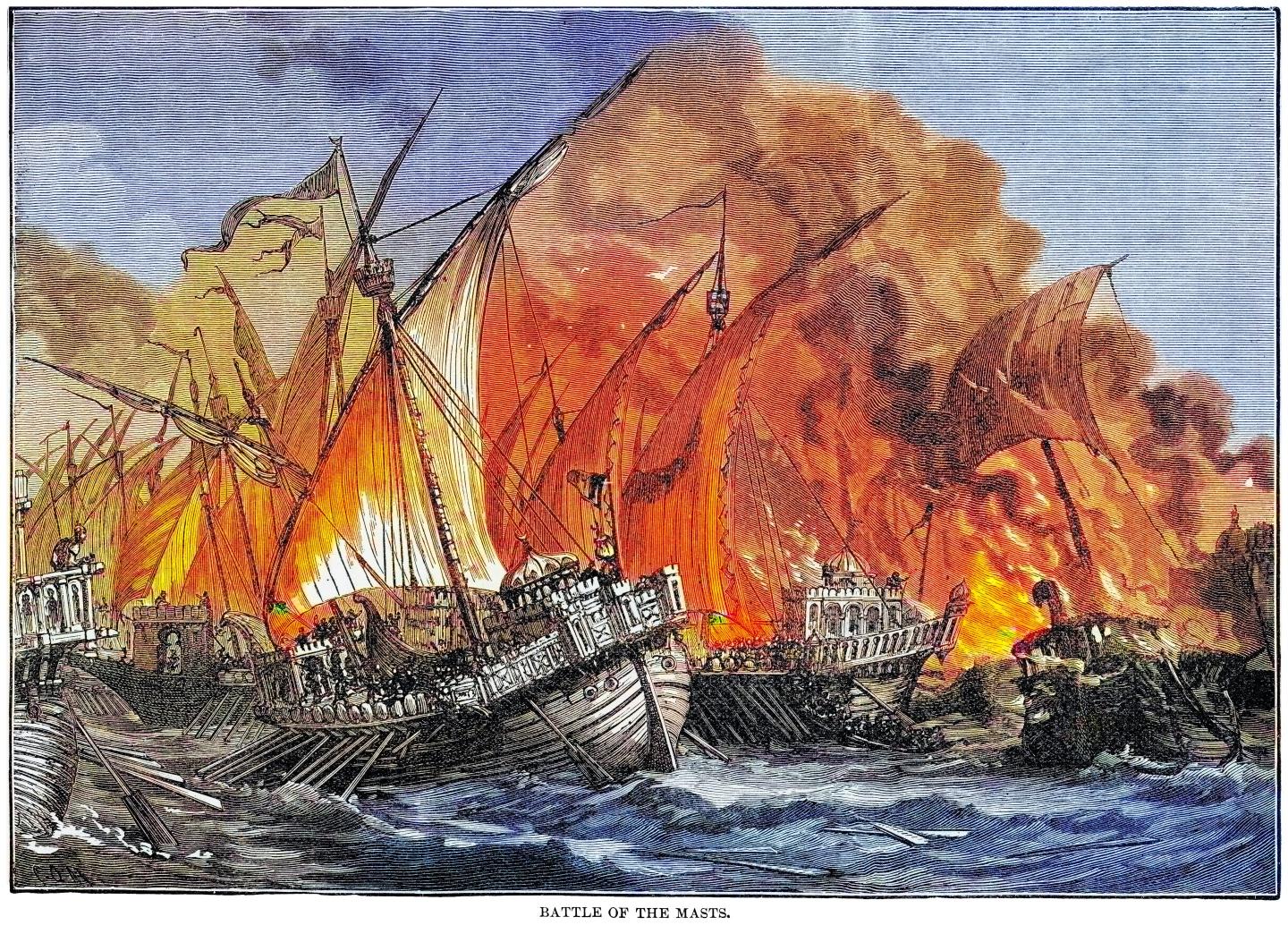
Illustration of ships on fire
Moody’s economist Mark Zandi said companies are reaching a “Cortés moment” on AI, a point of irreversible commitment that could reshape the U.S. labor market in ways not yet visible in the data.Getty Images
Add Fortune on Google for similar content.

American companies are approaching what one top economist is calling a “Cortés moment” on artificial intelligence—a point of irreversible commitment that could reshape the U.S. labor market in ways not yet visible in the data, but coming fast.

Recommended Video

Mark Zandi, chief economist at Moody’s Analytics, invoked the Spanish conquistador Hernán Cortés—who burned his boats upon arriving in Mexico in 1519, eliminating any possibility of retreat—to describe the posture he believes corporate America is quietly assuming toward AI adoption. Companies are investing heavily, making structural bets, and cutting off their own escape routes. Whether that leads to conquest or catastrophe, Zandi suggests, may depend on timing. The analogy crystallized for Zandi after fintech company Block announced it was slashing its workforce by 40%.

“Businesses appear to be nearing a Cortés moment with artificial intelligence,” Zandi wrote on LinkedIn. “That’s my takeaway from fintech company Block’s move to slash its workforce by 40%. While Block didn’t explicitly pin the cuts on AI, it all but did.”

Zandi acknowledged the possibility that AI could be serving as a convenient cover story. “Of course, AI could be a smoke screen for other, less flattering reasons for the cuts,” he wrote, “but I suspect not.” And even if it were, he argued, the effect on the broader labor market may be the same, referring to Block’s stock surge following the announcement.

“Even so, it may not matter for the job market,” Zandi wrote, “as the jump in Block’s stock price signals to other companies that they will be rewarded if they follow suit.”

That dynamic—when one firm’s AI-driven restructuring is applauded by Wall Street, prompting peers to imitate it—is precisely the mechanism Zandi fears most. It’s not a single dramatic rupture, but a cascading series of rational corporate decisions, each one nudging the labor market closer to the edge.

“We’re not creating any jobs now, and there’s no AI productivity gains,” Zandi said at a recent virtual event on AI and the economy joined by economists from Goldman Sachs and Yale. “What happens when we get some productivity gains here? Doesn’t that mean job loss?”

His concern is a familiar one dressed in new urgency. For years, economists have debated whether AI would be a net creator or destroyer of jobs—a debate that has mostly played out in conference rooms and research papers while the macro data remained stubbornly stable. But Zandi argues that stability is masking a slow-motion transformation. The impact of AI is starting to “kick in” across the economy, he told Bloomberg in February, and it’s already visible in one place above all: hiring.​

Tech job openings are falling. Hiring rates broadly are weak. And layoffs across the economy recently hit their highest level since 2009—although Zandi makes the distinction AI’s weighing effect on the job market “is due to weaker hiring, not layoffs.” Meanwhile, the National Bureau of Economic Research reports over 80% of firms in recent surveys say there is no impact from AI on employment or productivity over the past three years—yet those same firms forecast AI will boost productivity by 1.4% over the next three years. That disconnect between falling hiring numbers and rising productivity is precisely what worries Zandi and why he considers this a watershed Cortés moment.

When productivity gains do arrive, companies won’t ease into them. They’ll act on them at scale—like Block, cutting headcount, consolidating workflows, and deploying AI agents across functions that once required entire teams. That, in Zandi’s framing, is the Cortés moment: not when companies start investing in AI, but when they commit to it so fully that reverting to the old model becomes unthinkable.

The financial infrastructure of that commitment is already in place. The 10 largest AI companies are on track to issue more than $120 billion in bonds—a record high that many are drawing parallels to the debt Big Tech took on during the dotcom boom of the late 1990s. Unlike that era, when the Y2K bubble’s collapse was largely absorbed by equity investors, today’s AI buildout is being financed with debt, meaning a market correction would ripple well beyond stock portfolios.

In a Moody’s report, Zandi has laid out four possible futures for the AI economy in 2026: a smooth AI-empowered productivity-led expansion (40% probability), a jobs upheaval in which adoption outpaces labor market adjustment (20%), a scenario where AI falls flat and triggers a correction (25%), and a 1990s-style productivity boom (15%). The most likely outcome, he believes, is navigable, but none of them are cost-free.​

The labor market, for now, has one remaining buffer: health care, which has been the economy’s primary job-creation engine. “Without health care,” Zandi told Business Insider, “the economy would be losing lots of jobs.”​

Cortés won his gamble. His troops, with no ships to sail home on, had no choice but to fight forward. Corporate America, Zandi implies, may soon find itself in the same position—committed not by decree, but by the sheer weight of investment, debt, and competitive pressure. The boats, in other words, are already smoldering.

Subscribe to Fortune Gulf Brief. Every Tuesday, this new newsletter delivers clear-eyed, authoritative intelligence on the deals, decisions, policies, and power shifts shaping one of the world’s most consequential regions, written for the people who need to act on it. Sign up here.
About the Author
Nick Lichtenberg
By Nick LichtenbergBusiness Editor
LinkedIn icon

Nick Lichtenberg is business editor and was formerly Fortune's executive editor of global news.

See full bioRight Arrow Button Icon
Add Fortune on Google for similar content.

Latest in Economy

Finance
Lorem ipsum dolor sit amet, consectetur adipiscing elit, sed do eiusmod tempor incididunt ut labore et dolore magna aliqua. Ut enim ad minim veniam
By Fortune Editors
October 20, 2025
Finance
Lorem ipsum dolor sit amet, consectetur adipiscing elit, sed do eiusmod tempor incididunt ut labore et dolore magna aliqua. Ut enim ad minim veniam
By Fortune Editors
October 20, 2025
Finance
Lorem ipsum dolor sit amet, consectetur adipiscing elit, sed do eiusmod tempor incididunt ut labore et dolore magna aliqua. Ut enim ad minim veniam
By Fortune Editors
October 20, 2025
Finance
Lorem ipsum dolor sit amet, consectetur adipiscing elit, sed do eiusmod tempor incididunt ut labore et dolore magna aliqua. Ut enim ad minim veniam
By Fortune Editors
October 20, 2025
Finance
Lorem ipsum dolor sit amet, consectetur adipiscing elit, sed do eiusmod tempor incididunt ut labore et dolore magna aliqua. Ut enim ad minim veniam
By Fortune Editors
October 20, 2025
Finance
Lorem ipsum dolor sit amet, consectetur adipiscing elit, sed do eiusmod tempor incididunt ut labore et dolore magna aliqua. Ut enim ad minim veniam
By Fortune Editors
October 20, 2025

Most Popular

Finance
Lorem ipsum dolor sit amet, consectetur adipiscing elit, sed do eiusmod tempor incididunt ut labore et dolore magna aliqua. Ut enim ad minim veniam
By Fortune Editors
October 20, 2025
Finance
Lorem ipsum dolor sit amet, consectetur adipiscing elit, sed do eiusmod tempor incididunt ut labore et dolore magna aliqua. Ut enim ad minim veniam
By Fortune Editors
October 20, 2025
Finance
Lorem ipsum dolor sit amet, consectetur adipiscing elit, sed do eiusmod tempor incididunt ut labore et dolore magna aliqua. Ut enim ad minim veniam
By Fortune Editors
October 20, 2025
Finance
Lorem ipsum dolor sit amet, consectetur adipiscing elit, sed do eiusmod tempor incididunt ut labore et dolore magna aliqua. Ut enim ad minim veniam
By Fortune Editors
October 20, 2025
Finance
Lorem ipsum dolor sit amet, consectetur adipiscing elit, sed do eiusmod tempor incididunt ut labore et dolore magna aliqua. Ut enim ad minim veniam
By Fortune Editors
October 20, 2025
Finance
Lorem ipsum dolor sit amet, consectetur adipiscing elit, sed do eiusmod tempor incididunt ut labore et dolore magna aliqua. Ut enim ad minim veniam
By Fortune Editors
October 20, 2025
Fortune Secondary Logo
Rankings
  • 100 Best Companies
  • Fortune 500
  • Global 500
  • Fortune 500 Europe
  • Most Powerful Women
  • World's Most Admired Companies
  • See All Rankings
  • Lists Calendar
Sections
  • Finance
  • Fortune Crypto
  • Features
  • Leadership
  • Health
  • Commentary
  • Success
  • Retail
  • Mpw
  • Tech
  • Lifestyle
  • CEO Initiative
  • Asia
  • Politics
  • Conferences
  • Europe
  • Newsletters
  • Personal Finance
  • Environment
  • Magazine
  • Education
Customer Support
  • Frequently Asked Questions
  • Customer Service Portal
  • Privacy Policy
  • Terms Of Use
  • Single Issues For Purchase
  • International Print
Commercial Services
  • Advertising
  • Fortune Brand Studio
  • Fortune Analytics
  • Fortune Conferences
  • Business Development
  • Group Subscriptions
About Us
  • About Us
  • Press Center
  • Work At Fortune
  • Terms And Conditions
  • Site Map
  • About Us
  • Press Center
  • Work At Fortune
  • Terms And Conditions
  • Site Map
  • Facebook icon
  • Twitter icon
  • LinkedIn icon
  • Instagram icon
  • Pinterest icon

Latest in Economy

Trump may have to choose between an endless quagmire and ceding the Strait of Hormuz to Iran
EnergyIran
Trump may have to choose between an endless quagmire and ceding the Strait of Hormuz to Iran
By Jordan BlumJuly 18, 2026
2 hours ago
After the Supreme Court killed his first tariffs, Trump turns to a new legal workaround to impose 25% tariffs on Brazil and possibly others
EconomyTariffs
After the Supreme Court killed his first tariffs, Trump turns to a new legal workaround to impose 25% tariffs on Brazil and possibly others
By Marco Quiroz-GutierrezJuly 17, 2026
13 hours ago
koch
RetailWorld Cup
‘What a wonderful group of people’: Sam Adams beer founder said the Scots were consuming one every 12 seconds at their World Cup peak
By Dee-Ann Durbin and The Associated PressJuly 17, 2026
18 hours ago
Alex Karp gestures
SuccessWealth
With a $15 billion net worth, Palantir CEO Alex Karp predicts he will get 20x richer from AI—but that middle-class workers will get just modest raises
By Preston ForeJuly 17, 2026
19 hours ago
shelton
Commentarydisruption
Former Obama official on AI anxiety and the depression nobody remembers — and the training model that gives him hope
By Jim SheltonJuly 17, 2026
22 hours ago
dollar
CommentaryCurrency
The dollar’s demise has been predicted for 55 years. The BCG Institute says it’s still overstated
By Philipp Carlsson-Szlezak, Nikolaus Lang and Paul SwartzJuly 17, 2026
1 day ago

Most Popular

U.S. companies have finally gotten $71 billion in tariff refunds, but they’re using it to offset inflation caused by the Iran war
Economy
U.S. companies have finally gotten $71 billion in tariff refunds, but they’re using it to offset inflation caused by the Iran war
By Sasha RogelbergJuly 17, 2026
1 day ago
FedEx CEO says we are in the middle of the biggest supply chain shift he’s seen in 35 years: ‘We are the referendum’
C-Suite
FedEx CEO says we are in the middle of the biggest supply chain shift he’s seen in 35 years: ‘We are the referendum’
By Fortune EditorsJuly 15, 2026
3 days ago
Buffett says AI giants are ‘playing a game they don’t want to play’ in the AI race, reveals he was behind Berkshire’s $31 billion bet on Google
Big Tech
Buffett says AI giants are ‘playing a game they don’t want to play’ in the AI race, reveals he was behind Berkshire’s $31 billion bet on Google
By Mia OsmonbekovJuly 16, 2026
2 days ago
Current price of oil as of July 17, 2026
Personal Finance
Current price of oil as of July 17, 2026
By Joseph HostetlerJuly 17, 2026
1 day ago
Kevin O’Leary claimed opposition to his Utah data center was fueled by Chinese money. Now he and Fox News are being sued for defamation
Law
Kevin O’Leary claimed opposition to his Utah data center was fueled by Chinese money. Now he and Fox News are being sued for defamation
By Marco Quiroz-GutierrezJuly 17, 2026
1 day ago
Current price of silver as of Friday, July 17, 2026
Personal Finance
Current price of silver as of Friday, July 17, 2026
By Joseph HostetlerJuly 17, 2026
1 day ago

© 2026 Fortune Media IP Limited. All Rights Reserved. Use of this site constitutes acceptance of our Terms of Use and Privacy Policy | CA Notice at Collection and Privacy Notice | Do Not Sell/Share My Personal Information
FORTUNE is a trademark of Fortune Media IP Limited, registered in the U.S. and other countries. FORTUNE may receive compensation for some links to products and services on this website. Offers may be subject to change without notice.