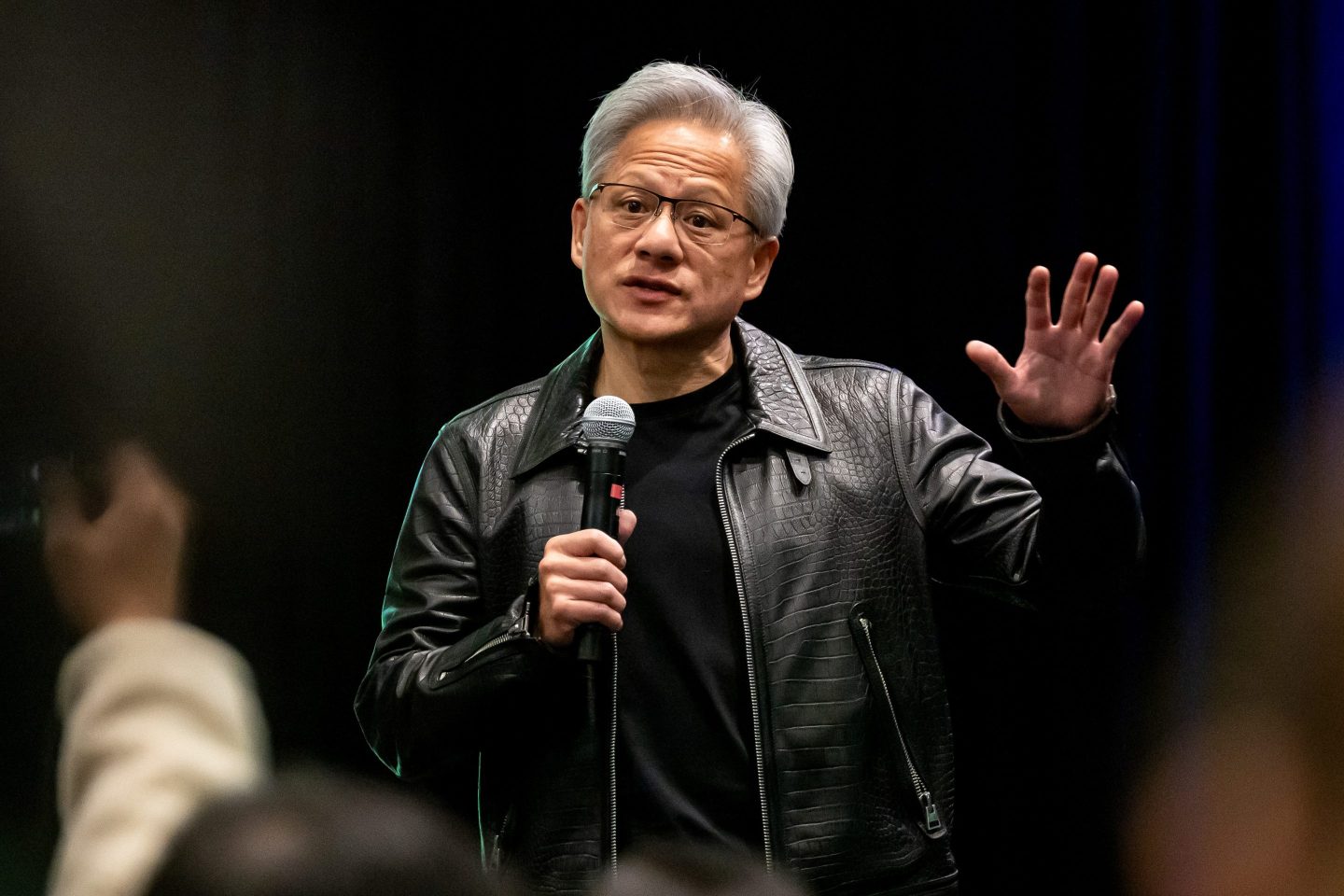
- Jensen Huang hosted a “Quantum Day” during GTC, Nvidia’s annual developers conference, where experts shed light on quantum-computing progression. The Nvidia CEO said quantum computers will solve problems more important than just faster food deliveries and more powerful spreadsheets. Nonetheless, quantum-related stocks still fell.
During “Quantum Day” at Nvidia’s GTC conference this week, CEO Jensen Huang hosted experts in the quantum-computing field in an effort to reverse the impact of statements he made in January that tanked industry stock prices.
“This is the first event in history where a company CEO invited all of the guests to explain why he was wrong,” Huang said during his opening remarks.
At CES in January, Huang said the most exciting developments in quantum computing are more than a decade away, which, in turn, drove down quantum-computing stock prices with some shares falling more than 40%.
“My first reaction was, I didn’t know they were public,” Huang said. “How could a quantum computing company be public?”
For those unfamiliar: Quantum computers are powered by atom-sized “qubits” that can answer complex math problems significantly faster than “classical” supercomputers, which are most comparable to a basic laptop. Notably in November, Google announced Willow, its quantum-computing chip the company says solved one particular puzzle in five minutes that would take a traditional computer 10 septillion years to arrive at the same conclusion.
During Thursday’s event, Huang said quantum computing is “insanely complicated” compared to a supercomputer.
“I think there is an unnecessary expectation, and it actually sets the industry back frankly,” Huang said. “An unnecessary expectation that somehow the quantum computer is going to be better at spreadsheets.”
Huang said Nvidia’s approach to quantum computing stems from the belief the industry will find “new ways to solve very challenging problems, but not so that we can go solve food delivery.”
“But there are some things that simply won’t get solved without quantum computing,” Huang said.
Aware of Wall Street repercussions after CES, Huang treaded lightly during the event and moderated in a similar way.
Rigetti president and CEO Subodh Kulkarni told the audience its quantum computers are “not good enough yet for practical use.”
Huang interjected saying, “well don’t give up yet,” and quickly moved to the next person.
Other panelists during Quantum Day similarly tried to keep expectations within check. Rob Schoelkopf, cofounder and chief scientist of Quantum Circuits, told the audience it’s a false notion to think quantum computing will solve the world’s problems in a flip of a switch. He said quantum computing is more like a knob on a radio.
“We’re going to be turning the volume steadily, and we can start to hear the music now, and eventually everyone will be able to hear the music,” Schoelkopf said.
Group sentiment indicated quantum computing is on the horizon and will eventually have a worldly impact down the line, but it’s just not there yet. This sentiment had a clear impact on investors and stock prices. While Nvidia rose nearly 1% Thursday, publicly traded quantum-computing companies whose chief executives were featured during “Quantum Day” saw their stock prices retreat. Companies like D-Wave, IonQ and Rigetti had substantial market falters Thursday. D-Wave stock fell 18% to $8.69 per share while IonQ and Rigetti fell 9.3% and 9.2%, respectively.