
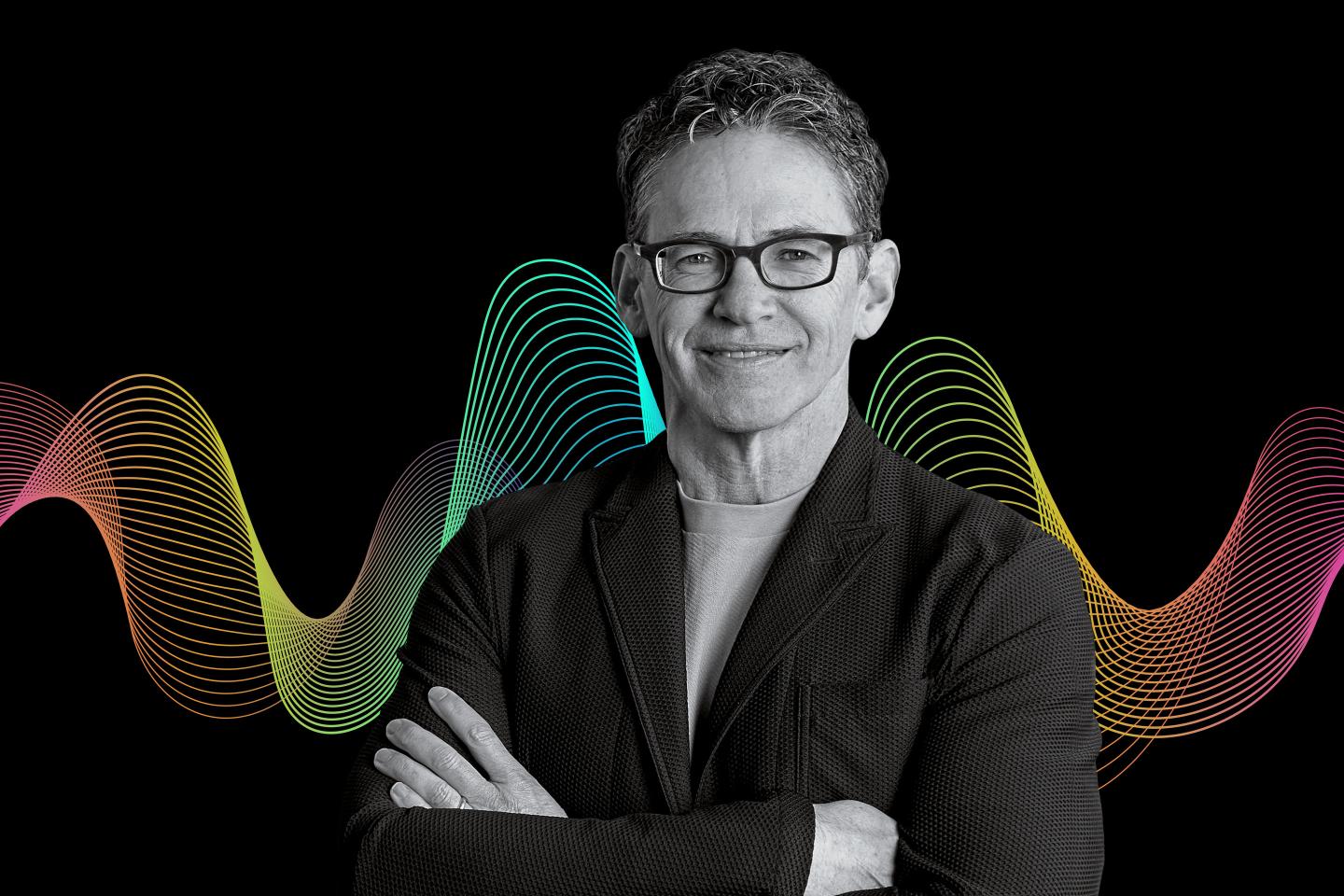
On this episode of Fortune’s Leadership Next podcast, co-hosts Diane Brady, executive editorial director of the Fortune CEO Initiative and Fortune Live Media, and editorial director Kristin Stoller talk to Bill Anderson, CEO of Bayer. They discuss Anderson’s overhaul of Bayer’s workplace and teams, why acronyms can be challenging, and the next big things in the pharmaceutical industry.
Listen to the episode or read the transcript below.
Transcript
Diane Brady: Leadership Next is powered by the folks at Deloitte who, like me, are exploring the changing roles of business leadership and how CEOs are navigating this change.
Hi everyone. Welcome to Leadership Next, the podcast about the people…
Kristin Stoller: …and trends…
Brady: …that are shaping the future of business. I’m Diane Brady.
Stoller: And I’m Kristin Stoller.
Brady: This week we’re speaking with Bill Anderson of Bayer Global.
Stoller: Yes, so I met Bill at our Climate Week sustainability dinner in September. He sat next to me at dinner and was a lovely partner. Diane, how do you know him?
Brady: Well, certainly through sustainability as well. But I’ve met him a few times and he’s always struck me as this sort of cool Texan who would be more at home, you know, at a South by Southwest kind of setting than what I associate him with. He’s had a very long career in the pharmaceutical industry.
Stoller: Definitely. And I think I was really impressed by the op-ed he wrote for us last spring.
Brady: About how he was gutting his management structure. That one.
Stoller: It was so refreshingly honest and interesting, and he was saying that there had been so much bureaucracy in there. And he said, “Our internal rules for employees span 1362 pages,” which, the Fortune handbook. I don’t know if it’s that much, but…
Brady: Probably not. It’s a 160-year-old company so I guess those rules pile up. And to be fair, it’s the kind of thing a CEO would say when they’re about to basically go on a mission to gut the management structure.
Stoller: And that’s what he did.
Brady: Exactly what he did. No, I think he’s he’s interesting. And one of the things, he’s a serial CEO, I guess you could say. He was CEO of Genentech. He was head of Roche. And he came into Bayer at an interesting time because it had acquired Monsanto and, with that I think, inherited a mountain of pain because of the weedkiller Roundup, which has been allegedly linked to cancer. There’s been a lot of litigation around that. So we’ll definitely talk about that.
Stoller: Yeah, and he’s pretty steadfast in the fact that it allegedly does not cause cancer. And they in the company have a whole page on their website dedicated to it. So I wonder if even though he wasn’t CEO at the time, does he regret this? Is he, you know, he did inherit a lot of problems.
Brady: You’re right. Well, he inherited a lot of products, too. And so I think this is almost par for the course for a lot of these big pharma companies. And I think what’s also interesting to me about Bayer, frankly, is its history. Which is if you go back, let’s go way back to the ’30s and ’40s. This is a company that was very much associated with the Nazi Party, with the Holocaust. And rather than run away from that, they have leaned into causes around Judaism and remembering the Holocaust. That’s both a plus and, I think in this environment, is also something that feels a bit brave.
Stoller: Oh yeah. Like now in in 2025 when there’s so much anti-DEI rhetoric, I wonder if he’s going to keep holding fast on that messaging or if you know, a lot of companies have rolled back their DEI promises, so I wonder what he’s going to do with that.
Brady: And of course, where do they grow from here? So that is the question of the hour. We’ve got lots to talk about. And when we come back, we will have Bill live in the studio.
[Music starts.]
We’re entering an era of innovation unlike any we’ve witnessed before. You all see it. The pace of technological change is staggering and it’s challenging for any leader to keep up. We spoke with Jason Girzadas, the CEO of Deloitte US, which is the long-time sponsor of this podcast. Here is his advice for leaders on how to navigate this new world.
Jason Girzadas: There’s probably nothing more important for CEOs, no matter what organization they’re leading, to really be thinking about technology’s impact on our workforce. It’s really a function of how do you think about technology in concert with your workforce. We at Deloitte talk about it as the age of with. The age of technology, with your workforce and really embracing this idea of the codependency of technology and workforce. We’re also in an environment of a very tight workforce where there’s a scarcity of top talent and an increased pressure on a diversity of top talent. That’s going to be the challenge for organizations to demonstrate to top talent that they can grow and evolve the work that they do, working with leading technology in a very aligned way. Finally, it’s what top talent really wants in an organization is to learn and grow and to be part of an organization that’s supportive of them actually embedding technology in their work.
[Music ends.]
Brady: Well, welcome. I think you’re the first guest we’ve had Bill to actually bring your own teabag. So what are we drinking?
Bill Anderson: A little mint tea. We’ve got enough coffee already in the system for the day.
Brady: I’m drinking coffee, so I think you can never have too much as a journalist. But no, I’m very well. Anyway, welcome. Thanks for joining us. And you know, where I wanted to start actually was when you did this op-ed recently where you talked about getting rid of all these layers at Bayer or “Buyer,” as I guess the Germans and the Scots pronounce it. How has that gone? Tell us a bit about that.
Anderson: It’s been an incredible journey. We started out with a kind of a two part vision. Part one is we want the company to just revolve around customers, around products, to be much faster, more dynamic. Of course, we want those things. Everybody wants that. But we said, How can you actually do it? And so that’s the second part. We said, we have to have a system where the people doing the work can make 95% of the decisions. You know, that’s the key to sort of unlocking the power of the organization. And I have to say, we hit the start button about 18 months ago, and it’s been a race.
Brady: Tell us what it was like, because it sounds to me like the corporate equivalent of founder mode, you know, where you came in and you’re like, I want all these direct, you’re getting rid of middle management. What was it like when you first came in because you were talking about the book, for example?
Stoller: Yeah, I was. Your op-ed said that there is this handbook with 1300 pages or something like that. Do you still have that? Did you get rid of it? And did you face resistance? Were employees like really angry you were making these changes?
Anderson: You know, I think if I had arrived 10 years earlier, I don’t know that we could have made these changes. But when I arrived, what I found was a company where there was a really nice culture. People were very supportive of their colleagues, a real focus on science and an interest in our mission of health for all, hunger for none. So a lot of that good stuff. But really, people were burdened down by the rules, by the layers.
Brady: What’s the stupidest rule that you saw in the book. Any?
Anderson: Oh, I don’t even know where I would start. You know, this is the thing. Oftentimes people think the problem with the rule is that it’s stupid. Generally, the problem with a rule is that it exists.
Brady: Right.
Anderson: Do you know? Because the idea is sort of like, Oh, well, we had this lesson yesterday and we made a mistake, so let’s make a rule so that never happens again. Okay. Like Sarbanes-Oxley or something. Yeah.
Brady: Yeah. It brings joy to the heart of every CFO and CEO.
Anderson: Exactly. We’re really good at solving yesterday’s problems, but we’re not very good at solving tomorrow’s problems. And so we make rules. And then, of course, we make so many rules that nobody can even keep track of them, like our laws. And so it’s really getting rid of the rules, redesigning the organization around the customer. Get rid of the org chart. Get rid of things like annual plans.
Brady: Get rid of annual plans?
Anderson: Oh, yeah.
Stoller: What about performance reviews? Asking for a friend.
Anderson: Ah, so performance reviews…
Brady: Kristin reports to me, by the way.
Anderson: Yeah, so, so performance reviews. We will move into peer assessment. Think of it this way. You can fool your boss, but you can’t fool your peers. Do you believe that?
Brady: I beg to differ. Look, I hear you. I know there’s so much to talk about that I don’t want to get too in the weeds on this, but I do think it’s fascinating and universal that you come in. You’ve been a CEO, you were a CEO at Genentech, you were at Roche, you came in to Bayer. I’d love to know a little bit like, what did you do that made this effective? Because it’s very disruptive in general. But the way you, I mean, you did a complete overhaul in an industry, by the way, that is known for its rules for good reason. I can’t think of a more regulated industry than the two that you’re in, you know, agtech, of course, and pharma. So, you know, how did you do it? What do you think was most effective?
Anderson: It helped that at least in my case, I’ve been doing this work for about seven years before I arrived at Bayer. So you have to go back to, let’s say almost 10 years ago, I had been at that point working as a manager in large companies, but also in some small companies. I worked in a 30-person organization. I worked in a 700-person organization. And what I found was the bigger the organization, the more it prevented people from just doing what they needed to do. And after 20 years of my career, I sort of said, Hey, I’m not going to do this anymore. I’m either going to find a very different way to organize or I’m done. I can’t live with myself just turning the corporate crank one more year. And when I looked, I found there was a handful of companies in the world, big companies that were doing things very differently and getting really different results. So that was the origin. But I had seven years to practice that in my former companies. So when I came to Bayer, I talked to our leaders and I sort of said, look, I know it’s awkward. I’m coming from the outside. That’s different. But actually the thing that’s even going to be more awkward is I really have some very different ideas about how a company should run. So how about I share those with you and then we’ll have a conversation about it and we’ll decide together.
Brady: This was after you’ve been hired?
Anderson: Yeah.
Stoller: Is there a lot of, because I find that people, there’s a lot of inertia when you come into a company or you’re new to a company, people don’t want to try new things. Did you face a lot of that? And what did you say to convince people like, take a chance on this?
Brady: Yeah, I’m the boss.
Anderson: No, really, because especially if you’re coming in new to a company. So, you know, there was 100,000 people and I was one of those people and, sure okay, I have a CEO title. You’re still one person out of 100,000. There’s no way.
Brady: Like “Animal Farm.” Some are more equal than others, right? So, yeah, there’s that.
Anderson: No, but really, you can only do so much.
Brady: True. You know what reminds me of? And I want to talk a bit more about your background, but, you know, I’m thinking of René Obermann used to be the CEO of Deutsche Telekom, and I remember he left as CEO around the same time that Jack Ma left Alibaba and Jack Ma said he was too old for the job. René Obermann said he was too young to be stuck in such a massive company. He wanted to go to a startup. So it’s feeling a little bit, since you’ve been at small companies, now a massive company, were you trying to create a startup culture? Because that’s what he felt he missed and I think he’s actually ended up back in corporate. So the story doesn’t necessarily have the same ending you’d think.
Anderson: Well, I want to create not a startup culture, because culture is like, Oh, how people feel or how people treat one another. The challenge with big companies, it’s generally not it’s not so much a culture problem as it is a problem of mechanics. I mean, for example, if you have 10 layers, you can say, Oh, hey, we’re going to make the culture more vibrant, more dynamic. Still 10 ten layers, still means that if there’s a decision…
Brady: Joe in purchasing is not quite as culturally astute as the boss is, right?
Anderson: Yeah, Yeah. So the thing is, by the way, sometimes people say, Hey, let’s, let’s take a field trip to a startup and maybe, you know, maybe the entrepreneurial spirit will rub off on us. That’s, that’s really stupid.
Brady: Or acquire them.
Stoller: Yeah. Yeah, totally.
Brady: Yeah. Acquire and kill.
Anderson: Yeah, yeah, yeah. So. So this is really about what does it take to organize a large firm so that all the people in it can behave like they’re at a startup? And for example, you can’t just say, Okay, everybody just do, do whatever you think is best. That sounds clever. It would last for about a week, right? So that’s not going to do it. So it’s really about a systematic approach to turning people loose. And so you have for example, everyone’s on 90 day cycles, the whole company, including the executive team.
Brady: What does that mean? Your job’s up for review every 90 days? What’s the 90-day cycle?
Anderson: What we do is we set a vision, whether it’s for the company or whether it’s for a division or a department. You know, they have a vision like, what are we trying to achieve? Maybe we’re trying to deliver better solutions for farmers for lower cost. Okay, that’s a vision. But then each group, so we’re organized now into thousands of teams and the teams have their team vision. And then their goal within a 90-day cycle is, Hey, what are the two or three most important things we can achieve towards that vision in the next 90 days? Like, yeah, the clock’s ticking, 90 days, right? And by the way, we’re going to do that four times a year. We’re going to have those 90 day cycles and we’ll talk about how we did at the end. So there’s no a priori target. There’s no safe number, like, Oh, I’m the cost center manager, I’ve got an $11 million budget. Of course I’m going to spend $11 million. In our system there’s no safe place to hide behind a budget target. Do it. Go fast. Deliver better for customers. Use the least resources, and we’ll talk about how you did at the end. And by the way, your peers are going to basically rate you.
Stoller: This efficiency push, it’s making me think about the current administration and everything that’s going on with DOGE. Yeah, exactly. Which makes me wonder, what are you…
Brady: Is that a comparison you like?
Stoller: Yeah, you may not love that. But how are you looking at, you know, the regulatory environment that’s going on right now? How do you think it’s going to affect you and your business?
Anderson: I think the idea that we need to make the federal government more efficient and more responsive, I think, is brilliant.
Brady: Mr. Anderson goes to Washington. What would you do?
Anderson: Oh, I don’t know. I think I think that might be something I’d have to think about a little more. But I would say that every organization, whether it’s the government, whether it’s a company, there’s so much potential that’s trapped in these organizations. One thing I noticed when I started well, actually, over my career, I noticed there were people who didn’t seem very kind of aligned or into the company schtick. You know, they were sort of doing the bare minimum. But then I noticed some of those same people because you might think, oh, they’re lazy or they’re unambitious, but I noticed some of those people are, you know, they’re coaching their kids Little League team or they’re president of the city council. And then you think, you know, these are people that have a lot more talent in them than they’re bringing to work. And if you dig into it, I think that’s mostly the fault of the bosses.
Diane Brady: I mean, sometimes it’s just a job, though, isn’t it? For some people that is that okay, that that they have a job but get some money.
Stoller: Clock in and clock out.
Brady: Yeah, maybe clock in and clock out. And what you’re implying, the people who don’t give their all at work. Right. Well, let me go, let me talk about culture. I know we’re kind of, this is a connect the dots podcast. So we go all over the place. But I think one of the things that really interests me is the challenge culturally you had with, you acquired Monsanto, and with that of course came good things. And then you’ve had to deal with the litigation for Roundup and you’ve talked about that. I mean, let’s talk about the, did you notice a difference between the cultures and how do you inculcate this passion in people when you’re dealing with some pretty hard stuff that’s also in the news?
Anderson: I think by the time I joined the company, the kind of cultural harmonization has mostly happened.
Brady: Yeah, it’s true. Several years had past.
Anderson: I saw really a high alignment of interests, of kind of mission outlook and things. So really not much of a topic there. I mean, certainly the litigation is a big topic and that’s something I spent a lot of time on. I’m talking to policymakers in Washington and state capitals. A lot of it just has to do with whether we’re going to have a stable, understandable regulatory environment or whether we have regulatory anarchy, which is what, unfortunately, some of these judges have made of the U.S. system by which pesticides are regulated. It’s sort of like, well, I would have thought the EPA is the authority on that, but that’s been muddied in the courts. And so we’re advocating for policy on that because, for example, we have a new herbicide that we’re looking to bring to the market in the next two to three years. That’s been the result of maybe 15 years of R&D investment. And this is really important because weeds, insects, fungi, they adapt, they become resistant to the current product. So the food safety and supply of America and the world depends on new products like this. But it’s very hard for us to bring a new product to market if we can’t rely on the fact that if we develop it according to the EPA standards and it’s approved by the EPA, that we can still get sued by people claiming something that frankly is not supported by science.
Brady: Yeah, to Kristin’s point, though, look at what’s, the current environment in Washington would seem like the EPA itself is even in doubt. You’ve had the Supreme Court, had the <a href="https://fortune.com/2024/06/28/supreme-court-chevron-decision-banking-regulation/">Chevron deference, that’s been struck down. So if anything, you must be bracing for more court cases now because there’s not this assumption that the EPA’s ruling is the default best practice. So how is that impacting your day job?
Anderson: Well, again, that’s why the way our system works, right, is that the job of Congress is to make laws and that the executive branch to enforce them and the courts to follow those laws. And that’s why I think we probably need legislation to clarify that.
Stoller: What would you like to see?
Anderson: Well, in this particular case, where it has to do with agricultural inputs, crop protection products, it’s pretty simple. That the EPA is the authority, you know. So for example, in the FDA that hasn’t been questioned. If the FDA approves a label for a medicine, we don’t have the state of California saying, Oh, no, actually, we don’t agree with that label. We need a different label. But that’s exactly what’s happened in pesticides. And that’s what I mean by regulatory anarchy. I mean, it can’t be that a jury of non-experts basically is independently deciding the question that’s already been decided by hundreds of scientists that are employed by the EPA or by other food safety monitors in other countries.
Brady: You’ve just described the nightmare scenario that everybody’s looking at in Washington right now. Where, is it rule of the scientists or is it rule of partisan opponents of science, if anything? I mean, what are you feeling about this current environment and what you’re hearing?
Anderson: Yeah, it shouldn’t be ruled by scientists and it shouldn’t be arbitrary rule by politicians. It should be politicians rule based on input by scientists. And frankly, that got distorted a bit during the pandemic. And I think a lot of people resented that. There were times I certainly saw and by the way, I experienced the pandemic in really in three countries together, because we were just…
Brady: The jet setting.
Anderson: You know, at the time we were living in Switzerland and in California because of my job.
Brady: Yeah.
Anderson: And my daughter was in Singapore. So we were constantly in tune. And by the way, I had a son in Texas.
Brady: I hope that was your adult daughter off in Singapore?
Anderson: Yes. Yes. Yeah. And I had.
Anderson: Yeah. And I had an adult son. We had adult son in Dallas. So we were basically seeing the pandemic through the lens of Switzerland, Singapore, Texas, and California. And these are four places that handled it very differently. But everybody claimed science. So how can it be, if one country says, oh, we’re following the science and children shouldn’t go to school and another country says, oh, we’re following the science, children should go to school.
Brady: Which lens would you pick of those four since you managed to look through all four of them? And look, I was in Brooklyn.
Stoller: Same.
Brady: That’s all I have, like knocking pots at 7 o’clock, thanks health care workers.
Anderson: I hesitate to say it because I know it’s a very volatile subject, but I have to.
Brady: You’re among friends.
Anderson: Let me give you two examples. In California, public schools were shut for a long, long time. In Texas, those kids were back in school fast. And we’re seeing the impact. And so I’m sorry, but the poor families and the poor families, they suffered disproportionately because wealthier families could pay for tutors, wealthier families, maybe they had a stay at home parent. But the poorer families, they’re working. They couldn’t afford tutors. Their kids are sitting at home in front of a screen and they didn’t learn. And and so I don’t think it’s right for society to neglect the the weakest. And so poor kids suffer disproportionately. And I don’t think that’s right. And so I don’t think, for example, a progressive state to say, hey, we’re for, you know, like, well, if you’re really for those kids, then why are they sitting at home and not in school?
Brady: Yeah, you are from Texas, we should point out.
Anderson: It’s true.
Brady: I was going to call you a Dow Chemical baby. That gives the wrong impression. Your dad was a chemist, was he not?
Anderson: It’s true.
Brady: And you started out as a chemical engineer. So what is how did you get from that to being in the boss seat now? I mean, can you not take us through your career? But what is it you wanted to be and do? What intrigued you about chemical engineering?
Anderson: I think I’ve always been really curious about how things work. It’s funny because my my dad was a chemist, as you said, when we went on vacation, family vacations he knew people who worked for a lot of other companies because he would go to these chemist conventions and things, right. And so when we were on the road, we would load up the station wagon and drive across America every summer. We would stop in towns and do like factory tours, plant tours and seeing how how sugar was produced from sugar beets or seeing how you take, I don’t know, sawdust and produce methyl cellulose or, you know, all these different things. And I was just fascinated by the machinery, the equipment and so actually I would say my fascination with leadership and how large organizations can be more effective, it really traces back to that. It’s about how things work or don’t work.
Stoller: What was the biggest lesson you learned from that time? How do you use that in your leadership today?
Anderson: I think probably the biggest lesson was this idea of owning the business. And what do I mean by that? When I was a little kid, I wanted to work at the movie theater because that was one of the jobs in my little town that underage kids could get a job, like taking tickets at the movie theater. And I think you got paid like 50 cents an hour.
Brady: You’re not that old. Fifty cents an hour?
Anderson: Yeah, this was in the mid, mid seventies.
Brady: Really?
Anderson: Oh, yeah. You know, but remember, this is the job…
Stoller: Minimum wage has come a long way.
Brady: This is when you were six at the movie theater.
Anderson: Or like 10. Ten.
Brady: Yeah. Okay. Yeah, Yeah. So you’re 10 years old making 50 cents?
Anderson: Yeah, well, my dad was like, No, why would you do that? Why would you work for 50 cents an hour? Because I was mowing our lawn, he’s like, Look, I’ll rent you our lawnmower and you can mow the neighbor’s lawns and you pay me rent and you pay for the gas and you get to keep the delta. And so I was making you know, I was making like $6 an hour mowing lawns when I was 11 years old, when the minimum wage, if there even was one, was like $3.
Brady: Yeah.
Anderson: All right. But when you do that, if the lawnmower broke down, that’s your problem. If you’re out of gas and I had to go on my bike to the gas station with the gas can and get whatever, you learn billing. If somebody didn’t pay you, you got to kind of go get the money. So I think out of that, I just learned that, hey, this idea of like owning the business, it’s something I want for everyone. Yeah. You know, you mentioned about, okay, can’t some people just have a job? Yeah, I’m fine. I’m not talking about working more hours. I’m saying, Hey, if you’re going to spend 40 hours at work …
Brady: Love what you do.
Anderson: Yeah.
Brady: Yeah, I agree. I agree. And it’s a good parenting tactic. I do what your dad did, I do with lemonade stands is when you start to charge for the lemonade, then they’re like, What? Yeah. I’m like, Yeah, no, I’ve got to recover my costs, actually. Yeah. Welcome to adulthood.
Stoller: Yeah, but one of the things that I was telling Diane before this that I love is, especially in your op-ed, you’re so refreshingly honest and you’re always saying, you know, what’s on your mind advocating for your company, and especially with all the rhetoric going on right now in Washington about anti-DEI and all that, what do you make of that? And what is what do you feel like your role as a leader is to speak out?
Anderson: Yeah. Yeah. I get asked that in town halls and like yesterday. To me it’s actually really simple. For example, diversity is a beautiful thing. Look at New York. Look, I was in Dallas last weekend at church there with my son. Very diverse place. This is the world we live in. So I don’t think we I don’t think we need to have a debate about diversity. Now, let’s talk about inclusion. Okay? Do we all agree that the people around us are worthy of our respect, that they should be included, like, for example, at our company, is it right that everybody, when they come to work, they should feel like, hey, this is their place? They have every bit as much a right to be there as everyone else, to bring the best self to work and to contribute. That’s inclusion. Have I said anything controversial?
Brady: Well I think, if you said DEI, it evokes certain zero-sum-game totality for a lot of people. And certainly you’re not you’ve not been in the crosshairs of a Robby Starbuck, for example, where you’re getting tweets saying boycott every product that Bayer makes. I mean that you almost, you must send some fiduciary duty to talk about it differently in this environment, or do you just sort of feel like it’s important to be out there?
Anderson: So people who know me would know that when I talk about these topics, I speak about them as I just did. You notice I don’t use an acronym.
Stoller: Because the acronyms are the problem really right now?
Anderson: Think about inequity. Equity means very different things to different people. A lot of people say, Oh, equity, that’s kind of like equality that just means, yeah, we should all be equal. All other people say, Oh, equity. Well, that means we have to have equal outcomes. And any time the outcomes aren’t equal, that’s a sign of an embedded racism or sexism. So that’s where the political third rail lies. I tell our folks, Hey, we absolutely stand for having a diverse workplace. Our customers are diverse. If we’re going to understand them, if we’re going to reach them, we’re going to be diverse, too. We benefit from that. We’re going to be inclusive. Anyone who’s excluded. They can’t contribute. That’s not okay. That’s bad for business. All right. But stay away from the acronyms. Let’s focus on, follow the Golden Rule. You know, it doesn’t need to be that hard.
Brady: I think one of the things that’s toughest for somebody in your position right now, you’re not an insurer. You do make some health products. But clearly there is this anger and vilification of corporate leaders. And we saw it, of course, I was speaking with some folks from United Healthcare last week. I mean, how do you feel about that? Do you feel more targeted? Or do you have any when you speak to your peers, it does feel like a tough environment to navigate when people have these impressions about corporate leaders that don’t align with the reality you’re talking about.
Anderson: It’s a really complex topic area. I think there are lots of examples of corporate excess, of corporate leaders who’ve made bad decisions, and so I wouldn’t try to defend those things. I think in things like health care, people are frustrated because I think everyone has a sense that America possesses, almost the best and the worst in health care. You know, we have the best technologies and we have great doctors, we have great hospitals. But then when you go through this and I’ve been through this with family members, with loved ones, it’s a mess. And we’re a family that has, you know, my wife’s a dietitian. I’ve been in healthcare-related businesses for four decades. And we have a hard time navigating. And I think, how is it going to be for people who don’t have that kind of expertise. And so I get the frustration. I don’t think we’re having real conversations about it though. You know, for example, blaming insurance companies or pharmaceutical companies or even PBMs, right? It’s easy to do. But if you look at health care costs, two thirds of the costs of health care are doctors and hospitals. Yeah, and I know it’s not a very popular thing to say, but like, these are really high cost things and you have to kind of get into that. What’s driving those costs? And some of that is, like a lot of big incomes and some of it is crazy rules and weird payment mechanisms like Medicare and Medicaid. And so someday I hope we can start to have a real conversation about healthcare reform. But you ought to know, for example, the pharmaceutical industry, I think it’s like 12% of health care costs. So if people want to get angry about the cost of pharmaceuticals, just remember that’s 12%. If it feels like more than 12%, it’s because the system is making you pay more.
Stoller: See, I picked up a prescription yesterday from Duane Reade, and it was, the prices were insane. And, Diane, you were facing this big hospital bill in the past year, which is crazy.
Brady: Yeah, thank you son for breaking your ankle.
Stoller: Where do these conversations start? Like, how do we fix this? Who are we starting with? What’s what’s the road map?
Anderson: Yeah.
Brady: Start with Bill.
Anderson: Some years back, I was responsible for launching a medicine that cost, it was a really breakthrough medicine for a very serious disease. It cost about $60,000.
Brady: Per pill?
Anderson: Yeah, that was, that was like for, for half a year’s therapy.
Stoller: Oof.
Anderson: All right. No, but wait for it. So it was $60,000, but many hospitals were charging, they were billing that at $300,000.
Brady: Oh.
Stoller: My god.
Anderson: So this is what I mean, if we want to unpack this, the answer is you got to take the whole thing. So I would just say for the listeners out there, don’t assume, for example, in this case, the patient, the insurance company might pay the whole amount for the hospital, but charge the patient a 20% co-pay for the medicine. So then the patient…
Brady: Twenty percent of $300,000.
Anderson: No, 20% of $60.
Brady: Oh, okay.
Anderson: Right. So then the patient thinks, Wow, this medicine’s so expensive. It’s unbelievable. And you could say, Well, yeah, that is expensive. But on the total cost, you see there’s a lot of weird stuff like that.
Brady: You’ve got to get everybody to the same table and yeah.
Anderson: People that are in the system, they know this, the things I’m saying would they’re not that wouldn’t surprise anybody who is a hospital administrator, a doctor, a pharmaceutical company leader. Nothing I said would surprise them.
Brady: Is it different in Europe? I mean, let’s acknowledge and I’ve not even asked you about your at your football team. Let me get it. Bayer Leverkusen? Is that close?
Anderson: Oh, nice German accent.
Brady: Do you speak German by the way? Did you just learn that, you know, on the job? How many languages do you speak?
Anderson: Mostly. Well, I worked in French for a few years when I was right out of college.
Brady: French for a few years.
Stoller: Let’s do the whole podcast in French now.
Brady: So but let me ask you, but I want to pivot over a bit to Europe, because obviously this is a company that’s 160-plus-years-old. Right? And one of the things I’ve admired about there is this period in history that’s associated with, you know, Nazi Germany, the Holocaust, rather than run away from it, I feel like the company has leaned into it as something that is part of the past. It’s really making almost reparations. How do you think about it?
Anderson: Yeah, I think it’s really important to distinguish between remembering and guilt.
Brady: Okay.
Anderson: And I actually think, if you look at some of the culture wars in the U.S., I think that distinction is not well made. So, for example, nobody who’s alive today was responsible for what happened in Nazi Germany.
Brady: Yup.
Anderson: So the people alive today are not guilty of that. But we are companies, German companies, German citizens can still remember it and say, Hey, we’re not going to let that happen again and we’re going to learn lessons from that. And I think the same could be said of slavery or the many forms of discrimination in the past. Too often it’s about we’re going to try to put some guilt on somebody. We’re going to get something out of somebody. And I think we need to, we need to learn to say, no, no, this isn’t about guilt. This is about, Hey, we’ve got to learn from our past mistakes and we’ve got to try to do better in the future. So that’s kind of my approach to it.
Stoller: Do you feel now this responsibility in the face of, you know, deportations here and other things that people may, you know, liken back to past events, do you feel a responsibility to speak up because of it?
Brady: Including anti-Semitism is on the rise.
Anderson: Well, for sure. And we do in terms of, like, there’s no place for anti-Semitism. We have two millennia, at least, of that that’s well documented. And that’s not some place that whether we’re in America or in Germany or anywhere else that we want to go. But I think the broader topic is we need to get out of this blame game. I think part of the reason you see so much strife in the world today within our societies, within America, within the German society, is sort of this idea that like, okay, the people who believe what I believe are good and the people who believe something else are bad. The truth is that we’re each good and bad. I mean, every day I do good things and I have some bad thoughts, you know, things that I’m not proud of. And so we got to get used to the idea that just because someone has a different idea or a different solution doesn’t mean they’re bad. It means like, maybe they’re right and I could learn from them or maybe they’re wrong and I need to convince them. But it’s not like we’re on different moral planes.
Brady: Yeah, I think that’s very powerful. Let’s talk about your products. Now that we’ve taken it, we’re taking you on this global journey. I think first of all, AI is fascinating right now with regard to drug discovery, what’s happening internally at companies. So there’s that part, but also just raw scientific innovation. What’s on your radar you’d put on ours? You mentioned the herbicide that you’re trying to get through. What else is exciting to you in terms of what you’re creating and also how you create it?
Anderson: Oh wow, We’ve got some amazing stuff that I can totally geek out on. In fact, just coming here today, I was in midtown and we were driving down along the east side and we drove by a building that houses one of our subsidiaries called BlueRock. They’re taking stem cells and programming them to be different types of cells, like cardiac cells, neuronal cells. And if that sounds like, Oh, that’s cool science, but why should I care? You should care because we’re actually commencing a phase three study this year of the cell therapy for Parkinson’s disease. And we’ve got this, we have these now for more than two years in all of the phase one volunteers and the cells are alive. They’re producing dopamine. And, you know, the early signs are very encouraging in terms of the clinical effect. You know, it’s a very small group. But we looked at this. We consulted with the FDA and we said, Hey, we got to take this straight to phase three. This could be the biggest breakthrough ever in Parkinson’s. You know.
Stoller: How close are we to…?
Anderson: Well, it’s phase three. Okay. So, you know, if these studies play out, then we could be bringing this therapy to market like, you know, this decade.
Stoller: Wow.
Brady: That’s amazing.
Anderson: Which is soon in drug development. .
Brady: It’s a nanosecond. Well, how much is AI a factor in that? Because sometimes I wonder if we overindex on assuming that AI is the magic elixir that makes this happen. It sounds to me like that’s scientific discovery as it’s always been done.
Anderson: Yeah, I’m not sure how much AI was used in that particular one. We have a lot of other technologies where we use AI a ton. It’s not the stuff you read about in the paper every day, like OpenAI and large, large language models. This is what we call old AI. So machine learning. The quantitative stuff. And we use it a lot for like simulating different crystal structures or molecular shapes, trying to figure out, for example, if you’re trying to target a protein and you’ve got the geometry of the protein and you’ve got to try to figure out what chemical structure could you create or what kind of molecule might fit that structure, then machine learning is very important for those kind of applications. In plant genetics, we breed 50,000 new genetic variants of corn every year and we use machine learning models to decide of those 50,000, which are worth testing because it’s if you’re very expensive to test 50,000 varieties. So we’re using that that kind of again, it’s ironic to call it old AI, it’s just not the same as the large language model AI. Yeah, that, that’s going everywhere.
Stoller: Yeah. And I appreciate you explaining because I don’t know the science. It was very Bill Nye the Science Guy, so thank you. But I’m also curious about your your venture arm, because I know Bayer invests in a lot of different startups in companies. What is the most exciting thing you’re investing in right now and seeing?
Anderson: A couple of the ones. so the example, the cell therapy for Parkinson’s, that came through the venture arm. Another thing we’re investing in through the venture arm is we’re investing in a couple efforts, to how to explain this the simplest way? So beans, bean plants like soybean plants, they have this interesting feature, the roots of the soybean plants will harbor a bacteria that can actually, it basically eats nitrogen from the air and it converts it into nitrogen that can be fixed in the soil like fertilizer. So basically a simple way to think about it is bean plants kind of make their own fertilizer. Corn plants, on the other hand, they don’t. And that’s one of the reasons why you alternate corn and beans because, right, makes sense? So these guys are gene editing bacterium so that they can do that same thing but in a corn plant. And the implications of that are really important because fertilizer is a big user of energy. It can be a pollutant. So the ability to have the plant kind of make their own fertilizer has huge implications in terms of energy costs, in terms of greenhouse gas emissions. It’s yeah, well, that’s a big deal.
Brady: It gets back to what you were talking about earlier about be careful what you wish for, because I know in Europe, for example, a genetically modified plant, there’s there’s a big push against it. But some of the greatest advances that allow us to not use the chemical fertilizers is to actually do the kind of genetic modifications that you’re talking about.
Anderson: Yeah.
Stoller: So, Bill, what keeps you up at night?
Anderson: I’m very motivated to create a better workplace to fix some of the challenges that that we’ve been wrestling with. But honestly, nothing actually keeps me awake at night.
Stoller: Because you’re not drinking caffeine.
Anderson: No, it’s you know, honestly, I’m a person of faith. And I feel like part of that and I’ve learned over time better and better is kind of I know what my role is and I know what God’s role is. And so I try to do my best every day. The world’s been turning a long time before I came along, and it’s going to keep turning a long time after I’m gone and just kind of understanding our place. I’m one person. You’re one person. We do what we can and then we have to be satisfied with that.
Brady: Is there anything that we haven’t asked you? And I briefly alluded to football, but I feel like we should at least acknowledge you own a team. And I call it the real football. I know there’s American football out there, but I grew up with soccer. Talk about that. I mean, how important is that to you even psychologically? Do you get to hang out with Ryan Reynolds? I know he’s a low grade triple team.
Anderson: No, it’s fun. So we have a team called Bayer Leverkusen. Leverkusen is the hometown of Bayer in Germany and we’re the champions of the Bundesliga. And last year we came in second place in the Europa League and we won the German Cup. So it was what they call a double victory year because we won two of the three things we could win this year. We’re in sixth place in the Champions League. We’re in second in the Bundesliga and we’re still in the German Cup and into the semi-finals. So it’s good fun, but it’s really, it’s funny. How did Bayer end up owning a soccer club? And it’s basically it the employee club back in the day before professional sports. And we had so many employees that were really good soccer players that when the pro league formed, kind of like our All Stars became one of the teams in the pro league and we’ve owned it to this day. So it’s a fun part. I think there’s a lot of people in the company, they’re proud of it and I enjoy going to the games on a Saturday.
Brady: Very cool.
Stoller: Fun.
Brady: Yeah, yeah. Well thank you for joining us, Bill. I’ve enjoyed the conversation. Anything else in terms of what’s around the corner that’s exciting to you?
Anderson: Well, I think one thing that is pretty exciting is we are working on a medicine for menopause.
Brady: Well, thank you for that. I appreciate it.
Anderson: We’ve been in women’s health for many, many years, a leading company there. And so we’ve actually filed for registration for this year. And we’re yeah, we’re looking forward to a…
Brady: There’s a lot of drugs for menopause. Can I point that out. So what makes yours different?
Anderson: Well, so the main way that menopausal symptoms are treated is with hormone therapy. Most women won’t go on hormonal therapy because of concerns they have. And so this is basically a hormone-free approach. And so that’s that’s what we yeah, now we hope to bring that to that.
Brady: What do we get first? Parkinson’s or menopause?
Stoller: I know.
Brady: The race is on.
Stoller: Bill, I’m going to end on one icebreaker for you. I know we’ve broken the ice a lot, but if in 50 years there was one scientific breakthrough that happened that you really are pushing for, what would you want that to be?
Anderson: Oh, you know, I have to say, personally, I would love to see some breakthroughs in the neuropsych field, like schizophrenia, for example. Unfortunately, we haven’t had a lot of advances in a couple of decades. And just the the human toll is so great. I would really wish for that. Yeah.
Brady: The brain really is the final frontier.
Anderson: Yeah, we’ve made some excellent progress on diseases like multiple sclerosis, spinal muscular atrophy. Hopefully we will in Parkinson’s very soon. But there are other diseases like Huntington’s, Lou Gehrig’s disease. But then in neuro, neuropsychiatry, a lot of a lot of real need there. So that’s that’s where my some of my hopes are.
Stoller: Fingers crossed.
Brady: Thanks, Bill.
Stoller: Thank you, Bill.
Anderson: Thank you all. It’s great to be here.
Brady: Leadership Next is edited by Nicole Vergalla.
Stoller: Our executive producer is Adam Banicki.
Brady: Our producer is Mason Cohn.
Stoller: Our theme is by Jason Snell.
Brady: Our studio producer is Natasha Ortiz.
Stoller: Leadership Next is a production of Fortune Media.
Brady: I’m Diane Brady.
Stoller: And I’m Kristin Stoller.
Brady: See you next time.
Leadership Next episodes are produced by Fortune‘s editorial team. The views and opinions expressed by podcast speakers and guests are solely their own and do not reflect the opinions of Deloitte or its personnel. Nor does Deloitte advocate or endorse any individuals or entities featured on the episodes.