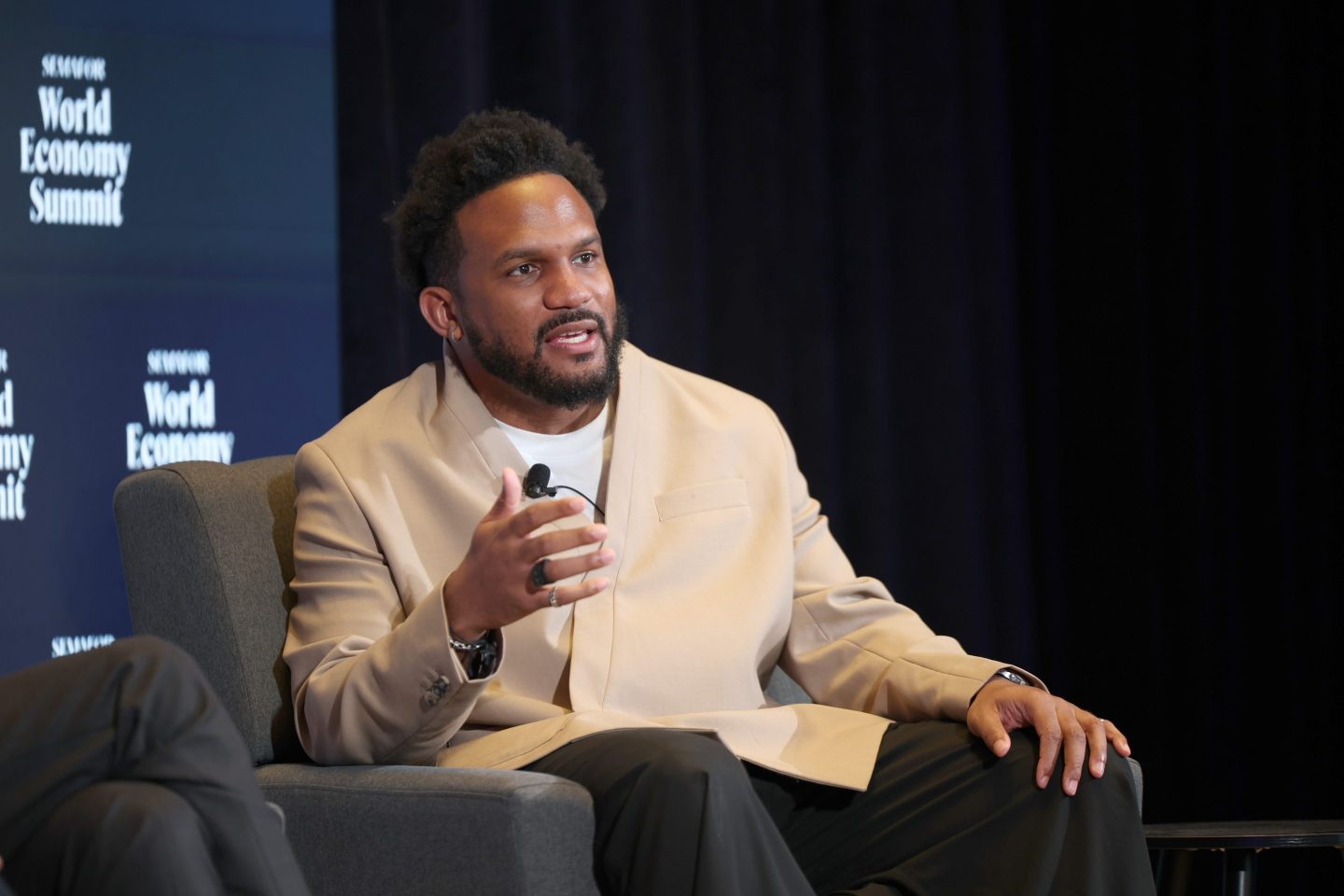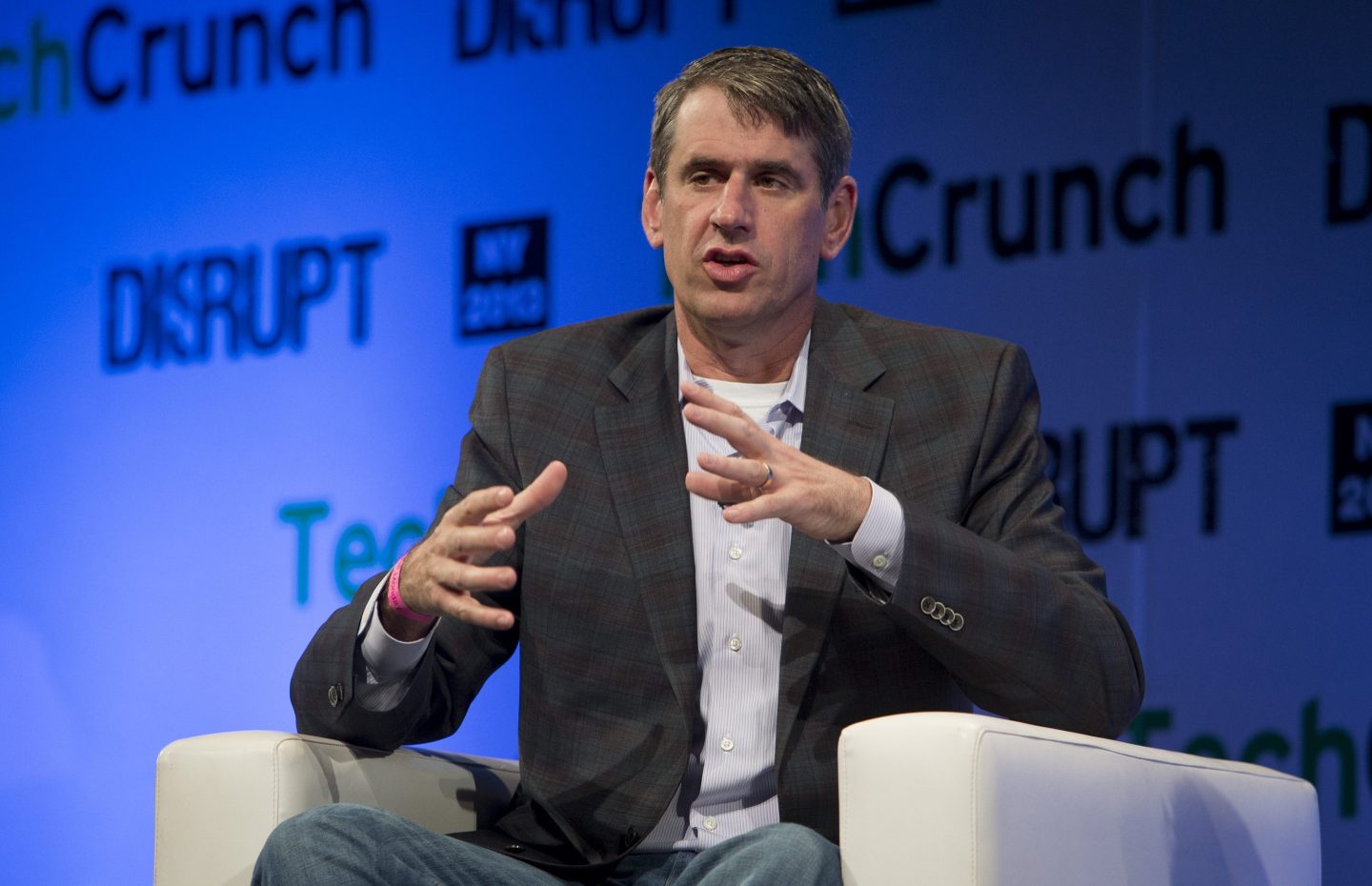

On this episode of Fortune’s Leadership Next podcast, co-hosts Diane Brady, executive editorial director of the Fortune CEO Initiative and Fortune Live Media, and editorial director Kristin Stoller talk to a pair of serial entrepreneurs who are also father and son. Naveen Jain, CEO of Viome Life Sciences, and Ankur Jain, CEO of Bilt, offer up advice on finding the right reason to launch a company and why you shouldn’t follow anything but your own obsessions.
Listen to the episode or read the transcript below.
Transcript
Diane Brady: Leadership Next is powered by the folks at Deloitte who, like me, are exploring the changing roles of business leadership and how CEOs are navigating this change.
Hi everyone. Welcome to Leadership Next, the podcast about the people…
Kristin Stoller: …and trends…
Brady: …that are shaping the future of business. I’m Diane Brady.
Stoller: And I’m Kristin Stoller. On this episode we have Ankur Jain, of rent rewards app Bilt, and his father, entrepreneur Naveen Jain.
Brady: I love the Jain family. I’m going to get it right out there. I don’t mean this in terms of necessarily love their business model or that I think everything they’ve done has been a huge success. But what an incredible parenting story this is.
Stoller: Well, you’ve known them for a long time.
Brady: I have.
Stoller: Let me know how that came about.
Brady: I first met Ankur when he was running something called the Kairos Summit, and that was a gathering of entrepreneurs from college campuses across America. In fact, I think it was across North America and maybe a few stragglers from Europe. And I was a mentor. I was, this was probably 2009, right after the financial crisis or 2010. So my fellow mentor was Dick Fuld of Lehman Brothers. Those of you who remember it.
Stoller: What a time
Brady: Scott Galloway, who I think is known to some listeners and a lot of CEOs who are basically mentoring this next generation of entrepreneurs, Ankur being one of them. And from that he started Humin, an app that was very much about trying to contextualize networking in people you met. He sold that to Tinder, stayed there for a while and then took the Kairos model to basically be an investor, and of course started Bilt which you yourself are a consumer of.
Stoller: Yes, I got turned on to it because I had moved into a new building and there was a sign in the elevator that said, you know, download Bilt, pay your rent, get rewards. I fell for the marketing and I fell for the rewards too, because I get 250 points every time I pay my rent and I have 7000 now. I’m on my way to, maybe, that free trip to Aruba. But it’s been really good because it’s totally free. There’s no fee. And I enjoy using it. I’m just curious how they’re going to be able to sustain it, because the perks are really, really good. And there is no annual fee, like with my Chase card or my Amex.
Brady: Well, that is a good question. We’re going to talk with Ankur about that, including the fact that he does not see himself as a credit card loyalty model. It’s much more like a kind of Airbnb, Uber model that he’s going for. So we’ll talk about that. I do want to also mention Naveen’s background. Because he started out very much as an internet entrepreneur. He was at Microsoft. He launched an internet company. He then moved into the space, literally outer space, model and now he is in the health space with Viome, this microbiome company. And so I think his own journey and how he’s translated that to Naveen in their family is fascinating.
Stoller: Yeah the how you raise a leader and you know I’m a nepo baby myself. My dad was a journalist, I became a journalist. I think it’s really fascinating in families where they pass down the entrepreneurship, the legacy.
Brady: I never think of journalism as producing nepo babies. Maybe the salaries are too low. I’m not quite sure.
Stoller: He warned me not to go in it.
Brady: As the daughter of a carpet salesman and a nurse, I learned a lot from both of them. Life is sales for sure, and humanity. So after a short break, we’ll take a listen to what I think is a great conversation.
Stoller: Definitely.
[Music begins.]
Brady: We’re seeing an erosion of trust in institutions which is being made worse amid the rise of AI and polarization. And yet trust in business remains relatively strong. We spoke with Jason Girzadas, the CEO of Deloitte US, which is the long-time sponsor of this podcast. Here’s what he had to say.
Jason Girzadas: Trust is a function of businesses meeting their stakeholders expectations and creating value. And that’s true for customers. That’s true for the workforce. That’s true for society at large. And I think given the challenges that other key pillars of the economy and society have faced in terms of trust, businesses have an opportunity to actually rise above that set of concerns and forge new levels of trust with all their stakeholders. This is an opportunity for businesses to really lead around trust, creating experiences that are reliable, resilient, as well as fulfilling their expectations to those stakeholders. And over time, I think trust will be a function of, are businesses actually meeting the human needs that are resident, whether it’s around health and wellbeing or contributing to the environment or to worker satisfaction and engagement.
[Music ends.]
Brady: So Naveen, Ankur, great to see you. I feel like I have to start because you’re such successful entrepreneurs by asking you how you think you’re similar and how you think you’re different, and Ankur, I’m going to start with you.
Ankur Jain: That’s not fair.
Brady: Of course it’s not fair.
Ankur Jain: Don’t they always say age before beauty?
Brady: Oh, well, in that case, you still go first.
Ankur Jain: Oh, first of all, it’s very fun. You grow up in a household with someone like my dad because he is a force of nature, and you very quickly realize that there is very little that isn’t possible when you see the crazy stuff that he is able to pull together here. I’d say in many ways I hope that I am as persistent and as determined to make the impossible happen as he is. But I’ll tell you, I hope that I’ve got the Energizer Bunny levels of energy he has in 30 years, too.
Brady: Okay. How are you different as entrepreneurs? I know it’s not that early days. You’ve been an entrepreneur now for decades.
Ankur Jain: Too long.
Brady: If we go back to the age of 11, you know.
Ankur Jain: In this household, the Jain household, you start young. So I started doing the road shows with him when I was six and started my first company at 11. And so I’ve got now two decades of experience under the belt, but lots of learnings, failures, successes. I’d say probably some of the bigger differences as is just stylistically, I’d say I probably lean more product-heavy than my dad just in terms of where I obsess on my side of the house and maybe a little bit different style in terms of the team types that we build. And I think some of that you can even tell just by the fact that I’m based in New York, he’s based in Seattle. We’re all five day a week in person. They have teams in different places. So it’s just a little bit of a different style there. And some of that just can be from the privilege of knowing this is the type of stuff I like. I’ve been able to build this company. And Diane since we’ve met, even when I was in college and my college start up, many of the same people I worked with back then I still work with now. And so that’s been a really kind of key defining thing on how I’ve approached it and I think my dad, coming from India, has probably approached that a little bit differently, not having had the same long-term entrepreneurial partners that I’ve been able to have.
Brady: Naveen, that sounds like fighting words to you. Do you agree?
Ankur Jain: No!
Naveen Jain: No, no, no, not at all. I would say, actually, first of all, I just absolutely admire the work Ankur has done. You know, in some sense, always as a father, the biggest joy you get is to see your children actually do better than you do. So, in fact, every time he does things that, you know, I’m just so proud of you. I’m so glad you’re able to do the things that I wish I could do. But in terms of age, I just want to be very clear biologically, Diane, I’m 33 and Ankur is 34. So unless he shows me his biological age, I’m going to still be that younger one so far.
Ankur Jain: And it’s true. He does look, by the way, five years, ten years younger now than he even did a couple of years ago. So I told him I got to get on the the Viome regiment fast. Yeah.
Ankur Jain: But I think there are a lot of similarities. And I think, you know, two logics then having him grow up in the entrepreneurial family, there’s so much actually I learned from our children that I actually learned from having done this for 25, 30 years myself. And I think as good as Ankur is, I still tell you that his sister still gives him the run for his money every single day.
Stoller: Tell us about your entrepreneurial journey then. I want to hear, we heard a bit from Ankur. I’d love to hear about you. Where did it begin?
Naveen Jain: Well, first of all, my entrepreneur journey has always been about taking an audacious problem and then solving it. And I think it’s really about asking yourself three basic questions: Why this? Why now? Why me? And why this is simply about asking yourself, God forbid I’m actually successful in solving the problem that I set out to do, would it help a billion people live a better life? And it’s not because I’m philanthropic, I’m extremely capitalistic person, and I know if you can build any product, any service that helps 100 million people or a billion people, you can create a $100 billion company. But you never wake up in the morning and say, What should I do to create a $100 billion company? Making money is simply a byproduct of doing things that actually improve people’s lives because that’s how you get the loyal customers.
And the second part is why now? Timing is always the number one predictor of success of any entrepreneur or venture. And the way you know it’s the right timing is you asked yourself what has changed in the last one to two years, but more importantly, what do you expect to happen in the next three to five years that will allow you to solve the problem at scale in three to five years, and this problem could not have been solved five years ago. That means are you actually intercepting the tomorrow’s technology to solve tomorrow’s problem or you’re actually using yesterday’s technologies, and by the time your data to scale someone comes along, it actually completely disrupts you. And that’s the fundamental (question), what is really happening in industry and how do you take advantage of what is going on? So Ankur is now saying, look, there’s so much data that we can use AI with and that will allow me to solve the problem that could not have been solved five years ago. And that’s really fundamentally how you build a company. The most important question you always ask is, why me, and why me is about the questions you are asking is the problem you solve. So what questions are you asking that has never been asked before?
Stoller: Tell us briefly about what some of those problems and questions you are looking to solve when you started your companies.
Brady: Can I jump in? Because you actually started, I know you grew up in New Delhi, but you also started as an employee, did you not? And then you started a company?
Naveen Jain: Yeah, absolutely. I started. I mean, in fact, I worked in the Silicon Valley, paid my dues to the valley, moved on, and very early days of Microsoft, and I think Microsoft was a very, very young companies in the eighties when I joined Microsoft and I worked with Microsoft for seven years. And learned a lot. I mean this was a great entrepreneurial venture. And then after that, I started in that dot com and I started a company called InfoSpace. As you know, it went on to become a very large company, and it was one of the top 100 companies in the country. But today, when I started Viome, it is completely different. The question to answer, Kristin, the question that you’re asking me that how did I come about starting Viome. The first thing that you any time you start a company, ask yourself what if? What if we can actually understand what changes in the human body at the onset and during the progression of these chronic diseases? We can prevent them from happening. We can diagnose them early and God forbid, outright reverse them. And that was fundamentally what we set out to do. And we knew if we could solve that problem, whether people have diabetes or obesity, but, you know, depression or anxiety or of cancer or aging, if we can solve that, not only it will help 1 billion people, it will help all 8 billion people, because every one of us is going to suffer from those diseases. The trick really was asking the right question. So why everyone in the industry was focused on trying to understand your DNA or your genes. I realized that your genes or your DNA never changes when you become diabetic or you have obesity or when you have depression, but it is your RNA that is always changing. As a matter of fact, Diane, your DNA does not even change after you die. So that’s how we do the biopsy. The DNA does not change even after you die, so you can’t even tell you you’re dead or alive, let alone, are you healthier or sicker.
Brady: Like a dinosaur.
Naveen Jain: Exactly. The woolly mammoth. You know, who knows that, right? The point is, it is the RNA that is always changing. And it is your microbiome that is in your gut and in your mouth that is constantly changing. And that was really the interesting thing was while we knew that almost every single disease is connected to microbiome, the biggest problem was every microbiome company was asking the same wrong question. They were focused on trying to understand what organisms are in your gut, and we realize it’s not the organism, it is what they do that matters because our body is a biochemical body. That means it’s about, we’re going to focus on what is it that microbiomes start producing? How is interacting with the immune system? And if we can understand that interaction, we can understand what is causing people to have chronic diseases. And today we’re so proud. We have now analyzed over 1 million samples. And not only we can tell you what your biological age, your cognitive health, your heart health or your gut health, we can, in fact, tell you exactly which foods to eat and why. So, for example, we can say don’t eat avocado because your uric acid production is too high.
Brady: Ankur, is your uric acid too high?
Ankur Jain: Thankfully it’s not because I live on avocado toast.
Naveen Jain: But the point is we need to actually you have to do the biome testing that’s sitting in your desk right now. So we’ve got to go send the samples now. But the point is, we can also say Diane, shouldn’t eat spinach because your (unintelligible) are not being metabolized properly or don’t eat broccoli, Kristin, because your sulfide acid production is too high. So we can tell you what foods to eat and why, what foods not to eat, and why. We can tell you exactly what your nutrition is lacking. So you need only two milligrams of (unintelligible) every day. Take 39 milligrams of elderberry every day and we custom made good nutrition for you. And Diane, just to complete the sentence here, we actually show and published a peer review research that shows people who follow these personalized diet and take the personalized supplement, the biotics. Then in six months, the clinical symptom of IBS came down by 49%, their clinical symptom of depression down by 47%. Clinical score of anxiety done by 42%. And the clinical HbA1c down by 30% in six months. So using food as medicine like Hippocrates said, food is medicine, and we are actually now making it happen to personalize AI knowledge.
Brady: You know, of course, as you’re talking you know you’ve done outer space. Now you’re doing your inner space. That is so different, Ankur, from what you’ve done. I think, you know, obviously when I met you, you mention you were a college student, but of course you did Humin. Sold it to Tinder. Now Bilt. Talk about your journey. And I know Kristin knows a lot about Bilt.
Stoller: I do.
Ankur Jain: Well, I’ll tell you a little bit about Bilt, but I think one of the fun things we should probably spend time on today, because you’ve got both of us on the on the line here is, I’d say, you know, one of my favorite things I love to joke about with my dad is probably by nature of English being his second language, he has perfected the art of speaking in tweets, as I say, and I would…
Stoller: See I say that about my dad, too, but he doesn’t love that.
Ankur Jain: And well, I’ll tell you, though, it is amazingly, there are some interesting one liners which, you know, over the years of growing up in this household, you hear over and over and over again that to this day, probably every employee in every company I’ve ever led can recite to you. Because the short tweet, bite-sized pieces of wisdom, I think, carries so much weight in how to build successful companies. And obviously, starting with solving a problem is one of them, which sounds so obvious. And yet I’ll tell you, I went to Wharton undergrad. It is a factory for bankers and consultants. And I think one of the worst things that happened to technology in Silicon Valley is that business school kids started becoming entrepreneurs, and all of a sudden you went…
Brady: Why are they so bad? What’s so bad about being what, a Wharton grad? Why? Why is that bad?
Ankur Jain: I’ll tell you why. Because it started with how do you solve a problem? And then all of a sudden everybody came into the Valley saying, Here’s my quadrant. If somebody did Uber for cars, I can build Uber for tacos. These venture capitalists who are all used to building their McKinsey case studies on every possible permutation of what’s been done in the past, it suddenly became the norm. And that’s why you now, now Silicon Valley has become a series of hype cycles accordingly, because one company succeeds and all of a sudden everybody just wants that for this, that for this, and you see these over and over and over again, which is classic business school education.
But I go back to that because that simple concept of solve a problem first, that is where all the best companies have started. And if you ask any founder who’s built a company that has been successful most of the time, it started with some frustrating experience they had themselves. They know that also is just because you can then build the best product because you are also the customer. I think it is very hard to build a company where you are completely abstracted away from the problem yourself because those little nuances are what matters. So after we sold Tinder in 2017 and it was kind of part of that full Match group spinoff, I mean, here I was in Silicon Valley, and I remember you sitting in San Francisco, which was at that time the capital of technology, innovation and all of this. And people were sitting at that time running around funding electric scooters for $200 million like these stupid companies throwing hundreds of millions of dollars at that. It was crypto monkeys and NFT and all this baloney. And in the meantime, nobody in San Francisco could afford rent. Nobody had access to health care. Nobody could figure out how to pay off their student loans and these are trillion dollar markets that are just sitting there where the quality of the service for customers is getting worse and the costs are going up. I mean, that just doesn’t add up. And so to us and to me, that the biggest opportunity sitting here. You have a generation coming in the workforce where you look at even just my circle of friends at the time who were quote unquote successful, people were living paycheck to paycheck because of the rent in San Francisco and your health care bills and your cost of food. I mean, it was crazy.
And so the question was, in 2017, can we rethink life’s biggest expenses, specifically around housing, health care, student loans, to work for us in a way that actually is tied to our generation? We’re like being told to just save more and be better. It doesn’t really work. It’s not possible when your rent just goes up year after year after year and it doesn’t do anything for you. And so we spent a few years focused starting on housing because housing makes up 40% of people’s income these days. And by the way, in cities like New York and San Francisco, people are spending half their income on rent. And what’s crazy is you pay your rent on time every single month and you get nothing really back for it. You don’t build your credit for it. And 10 years go by and everyone says, well, now it’s time to buy a home. And you’re like, Well, I’m no closer to home ownership after 10 years of paying half my income on rent. In fact, I’m further away because I don’t have any savings built up. And to me, that just seemed like such a backwards, asinine concept that paying your rent on time for 10 years gets you no closer to economic prosperity than anything else. It just doesn’t make sense. And so when you look back, one of the stories that another mentor of mine is a friend of our family said to me once, he goes, when you’re looking to start a business, it’s another way of thinking about the problem. Because once you envision the world with the idea that you’re excited about, sleep on it and the next morning you wake up and you can live in a world without your idea, don’t waste your time on it. But if it bothers you every day afterwards, then that’s the idea that you need to go commit to. And when you pay your rent every single month and you look at your bank account and you get nothing back, it doesn’t matter how successful you’ve been. It is one of the most infuriating experiences for a customer.
Stoller: I know that from slipping checks under the door of my landlord and getting nothing back for 10 years in New York. I feel you, Ankur. Can you break down for us how Bilt really helps with the economics of getting to prosperity. How impactful is it for users?
Ankur Jain: So super simple. For the first time now, when people pay their rent with bills, we are the largest payments platform in the United States for paying your rent. When you pay your rent, you now number one, you earn rewards. You’re earning airline miles, hotel points. So when you pay your rent, that money is going to work for you so that you can actually now afford to spend money on trips and traveling and all the things that today people are dipping into credit card debt or dipping into their savings for, your rent actually works for you now, number one. Number two, every time you pay your rent on time. Now Americans get that reported to the credit bureaus so you can build your credit history bill, your credit score, which means you qualify for mortgages, you can qualify for lower interest rates, you can save meaningful amounts of money. And for most Americans, it’s crazy, especially in your twenties, people don’t have a thick credit file or a credit score because it’s a stupid loop where they tell you you need to have credit to get credit, but they won’t give you credit without credit. It’s like this really dumb system. And so now paying your rent actually solves that for millions of Americans just because they pay their rent with Bilt.
Brady: Well, it’s kind of a millennial problem, isn’t it, Ankur? I’m not going to go boomers v. millennials. But here I am looking at a Boomer and a millennial and, you know, it just comes to mind.
Ankur Jain: Diane is talking generational war here.
Brady: I’m Gen X, I’m ignored in the middle so nobody cares about me. But talk a little bit about that. Naveen, I’m going to go to you a sec. From the generational perspective, when you look at millennials and Ankur, obviously about Boomers, part of it is just life has changed so much, has it not, from when you were starting out?
Ankur Jain: Cost of living has just gone up so much. And the problem is, I mean, look, I, I am the number one believer in the American dream and what gave my dad the opportunity in this country. The problem is today, you could be born in this country, do everything right, but by the time you’re out of school, you’re so busy trying to pay off your student loans and pay your rent and just make it that, how do you even get the chance to take a risk and take a bet if you’re not lucky enough to have that safety net? And that’s a very different experience than this work hard, put some money aside, save buy a home, build equity, and kind of grow that prior generations had access to.
Brady: All right. I have to ask my fellow, my, well my millennial co-host here. So do you feel you’re closer to homeownership now via Bilt or what’s been your experience?
Stoller: So I will preface this by saying I’ve only and I’m sorry, Ankur, I’ve just been using Bilt for four months because I just moved to a new building. For me, I haven’t even begun to think of homeownership because for so long it’s just something that’s so unattainable. And I think this is the first time that I’m thinking about it, but I feel overwhelmed. I wish there was something and maybe, Ankur, you can help me out with this.
Ankur Jain: You see this new thing that we launched last week or two weeks ago? Three weeks ago? Yeah, we, this is exactly the point. So take another system, like buying a home. Like I’m a Wharton grad and I cannot understand the mortgage industry. It’s so complicated.
Stoller: That’s how I feel, too.
Ankur Jain: You’re paying. Let’s say you pay $3,000 a month in rent and then all of a sudden someone says, You want to buy a home for 700 grand. You’re like, Where does that math map, right? So we created that. You can see this in your Bilt app now. It just went live a few weeks ago. For the first time, we worked with Fannie Mae, Freddie Mac and the listing services. And for the first time you can actually find homes to buy based on an all-in monthly price. And that’s it. So you say I can afford $4,000 a month and that’s all-in, and we will actually automatically figure out what mortgages you qualify, what interest rate, what home ownership feeds are, what the taxes are, what the insurance costs are, and show you our…
Brady: You’re sending Kristin to Boise, Idaho. You realize that?
Stoller: Can we keep it in Brooklyn?
Brady: I want to you know, in fact, I think a lot of people want to spend on experiences and wellness, which gets to a bit of what Naveen’s doing, but I want to step back a second, and also as a parent and I of brilliant, funny kids who are not starting billion dollar companies, I want to know what it’s like, Naveen, let me go to you as a parent. How do you raise a successful entrepreneur? Listening to Ankur, I know your daughter’s successful. Give us, give me some parenting advice here. Maybe it’s too late for me, but perhaps there’s hope for others listening to this.
Naveen Jain: Well, first of all, parenting, like starting a company, is very counterintuitive. That everything that you believe is good for your children actually, turns out, is harming them most of the time. So, for example, if you are, you have a successful exit and your kids are young, what’s the first thing comes to your mind? I want to spend time with my children because they are young. And what really happened and what your children see are very different. They see that Dad has had a financial success. Then I go to school. I watch my dad sitting on the sofa watching CNBC. I come back from school. My dad says, Work hard. Hard work is what it takes. Go to your room, work hard. And I see my dad sitting on the sofa watching CNBC. I want to grow up just like my dad, sit on the sofa and watch CNBC. Instead, you know, this dad started the second company and the third company and the dad goes crazy. We’re going to go to the moon. Ankur said, Are you crazy? That’s not going to happen. And then said, Dad, can I come in and show that people what lender are you building? And now the dad is 60 and dad wants to start a health care company. Dad, what are you talking about? Microbiome. There’s no such thing as microbiome. Nobody’s going to ever do that. And now Ankur said, Hey, one of my fellow colleague is having a problem with a gut, can you talk to him? The point I’m trying to make is that it is literally about taking on a problem that is worth solving and I just want you to know that it doesn’t matter what generation you live in. The problems are never going to be going away. Every single generation is going to have a new set of problems. And as long as there are problems to be solved, there is going to be a role for entrepreneurs. So that is never going to go away. So every day, just like what Ankur said, when you wake up in the morning and you’re not jumping out of the bed, whatever it is that you’re doing, you should quit because the minute you find the true calling, you will never be lying in the bed. Which is essentially, can you live without the idea that you have? In other words, find something that you’re willing to die for and then live for it. And it’s not the passion, is for losers. The winners really have obsession and the obsession to not for obsession for things or obsession for people but obsession to solve a problem. And that’s really the thing.
Ankur Jain: That’s of those tweets that you guys can put up in your, you know…
Naveen Jain: Oh, God.
Stoller: I’ll get it on a T-shirt, too. So Ankur then, what did you learn from your dad like when you were figuring out the Bilt business model? Did you call up your dad and be like, Hey, Dad, like, how do I do this? Or did you want to be totally independent?
Ankur Jain: He’s been so great at always being supportive and being a great sounding board. And I think candidly, we’ve had, like I said, I’ve been through this now with his guidance like multiple times. So now a lot of this is like getting to the point of learning from my own reps and mistakes. So, but I will say that you talked about the parenting and what it’s like growing up in a household like this, right? So I think there’s a couple of things that stand out to me that I would say that from the other side, show different. Yeah. I think number one, it is amazing to me how many of my friends, I think barely even know what their parents do. And you all work so hard to create a life for you and your family and us as kids that not giving us exposure to that would be, in my opinion, a huge mistake. And the best thing that I had was, you talk about there’s a lot of things that factor in social inequity in this country. But I think aside from money, obviously, one of the biggest gaps is the ability to experience and gain real world knowledge at an early age because that exposure makes such a difference. And so just being able to after school every day, more so out of necessity, because both my mom and dad were working at the startup, it wasn’t like we went home and like hung out at the house. We got dropped off at the startup office and we sat around and just we did our homework and hung out and played video games and then ended up sitting in meetings because we had nothing else to do every day after school. That kind of exposure you just can’t replicate. And it doesn’t matter what career someone’s in. Just that first hand exposure I think is such a big deal, you know.
Brady: I agree. But it sounds like it’s very peaceful. And I want to say like, let’s say Naveen, your daughter comes to you and says, I want to do creative writing or poetry, what’s your response?
Naveen Jain: My daughter was 16 year old. She said, dad, I know you love science and technology. I want nothing to do with science and tech. I have found my passion and I want to pursue my passion as opposed to more like most dad say, Oh, whatever it is, really, let me go ahead and support you. My first thing was let the dad do his job, which is to actually expose you to many things. You don’t get to decide what is that your passion is unless you even know what is it that you don’t like. So the fact is that I forced her to be exposed and to learn about neuroscience, learn about artificial intelligence, learn about the nanotechnology, learn about genetics. And that exposure is what allowed her when she went to Stanford to become a Stanford STEM fellow, to become a Stanford Mayfield Fellow. And the first company she did was actually using AI to remove the gender bias. And the second company is using AI to actually fill the gender gap between women and men, because women weren’t even allowed to be in the clinical trials until a couple of decades ago. So that means every drug that you take actually doesn’t work on women because they were never tested on women. And, you know, and even the diseases that diagnosed substantially later on women. So my point I’m trying to make is that it is not about simply art or creative. It is about exposing them to all the possibilities and what problem they want to solve. So it’s not about art. And anything you do is simply a means to an end. What is that end that you want? So even if you want to be an artist, what is it a problem that you would solve as an artist? You said, Look, my goal is to inspire millions, if not billions of people about solving a problem or be inspired to go take on a particular challenge, whether it’s the climate challenge or the world hunger problem. It is about like being an artist, but she becomes an activist, right, and saying, I’m going to inspire the next generation to go out and take on to these things that we want the next generation to be solving. So when you look at world hunger, the thing you need to be asking is it’s not about growing more food. The question you need to be asking is why do we eat food? Asking a completely different question rather than saying, I want to be an artist, ask yourself what problem do I want to solve and can being an artist help me solve that problem? Which is same as technology. Don’t say I want to start a company in bitcoin and AI and NFT. Say what problem do I want to solve, is this the right technology? So being an artist is a means to an end, not an end in itself.
Ankur Jain: Where are the skills that we picked up? You know, maybe it wasn’t the bigger high-level talk, right? It’s like what gets you to pick up those entrepreneurial skills when you’re 10 years old, nine years old, 11 years old, and candidly, you don’t really care about solving the big problems. You care about hanging out in middle school. I think one of the more interesting things and I’m not sure it was an intentional thing, but probably, as you guys know, my dad grew up in a very poor village in India, and sometimes it’s hard to kick those habits. And so some of the biggest fights we would get into when I was a kid was, when I was nine, 10 years old, and I wanted to go on the basketball team and I wanted to buy a $60 pair of basketball shoes, it was World War III in my household. How could you possibly spend 60 bucks on a pair of shoes? And so what happened was typically, I feel like in households, money is the be-all, end-all. You earn an allowance and that gives you freedom. Or you get money from your parents and that creates X, Y, or Z. And that’s the currency that you use to get what you want or you don’t want. One of the things that was almost again, how intentional or accidental to be answered, but in the household, money got taken out of the equation because he wouldn’t buy it. And then if I said I was going to go make money on my own, they would threaten to say, Well, if you want to pay for yourself, after we said no, then you going to pay for your private school by yourself too.
Brady: That’s pretty draconian.
Ankur Jain: But what that did is it forced if I wanted something or Priyanka wanted something or Neil wanted something, you had to get really creative with bartering and finding out how to get it without money. And that turned out to this day to, I think, be one of the most important skills you learn. So when I wanted those pair of shoes for the basketball team and I didn’t get money for it, literally, that’s when I learned about online ad…
Brady: Threatens to take your education away. That sounds kind of funny, Naveen.
Naveen Jain: No, no, no, no, no. I don’t want to takie the education away. The idea really was it’s not the money. You have to learn to do things right. So, see, I’m going to go do this thing and this is what I earn for it. Right? So the idea was that, hey, if you want a privilege, then you have to do something to earn that privilege, right? So part of the thing was he said, look, go start a website, learn to code, learn to build a website, and then you can go advertise and get the money for it. And that is a completely acceptable thing. But I’m not going to have you work at the gas station and actually earn money because then you’re not learning anything, right? So it has always been about learning.
Ankur Jain: But I think that it was like you said, it was a different approach. But I’ll tell you, those were some of the most interesting forced function lessons that we had growing up where, again, the answer was no and no wasn’t a good enough answer when you’re a kid. And so you start to figure things out. And that’s when I found out and I saw people making money on ads. And so that’s when I figured out if I made a website and I called the shoe company and started pitching them to send me a pair of shoes for free, if I put up their ad on my website. And then I came home one day with the box and the shoes, and at first they thought I bought it with some side money. And when I explained it to them, it wasn’t like, instead of getting mad at me for getting it, they were very congratulatory about it. And so that….
Stoller: That is a good way to escape being grounded. I think that’s very smart.
Naveen Jain: But I think and Diane, I think just to add to it, you know, one of the other things about parenting is exactly that. A lot of the parents who look, I worked very, very hard and I want to teach the value of money. And they said, I’m going to make you work at the gas station or the grocery store so you can learn the value of money. To me, it is a very sadistic thing to do, which is to say, look, I suffered and God, I’m going to make you suffer as well. Which is a bad approach. My approach was, look, you’ll never have to work during summer because we are well off. But what you can’t do is not use summer to learn something new. And that means every summer they had to go out and find what is it they want to learn and they go do that. So Neil wants to learn about, he went to Paul Allen Institute of artificial intelligence to learn about that or to learn about the neuroscience. But every single summer there had to learn something rather than work at the gas station and grocery store.
Stoller: Yeah, absolutely. But, you know, money is still important too. So, Ankur, I want to talk to you about that too. So Bilt’s free for the user. There’s no annual fee. I can download and use it right now for free. So tell me about the business model. How does it work? How are you making money?
Ankur Jain: So our core business today, we have now become the largest payments business in housing. So today one in four apartment buildings in the United States use Bilt to collect their rent. So when you move into an apartment building, as you sounds like you moved into one of our buildings recently, we say, Hey, you to pay your first month’s rent, security deposit, pay your next month rent. You go create a Bilt account and you then make your payments through Bilt. There are multiple multibillion dollar businesses that just did payments for housing prior to Bilt, but they were all legacy businesses that hadn’t really innovated. I mean, you probably remember these were like 1995 websites that you could click through to kind of make it. What we did is we came in and said to these properties, here’s a modern payment solution, but you’re to pay us the same amount that you were paying the former platform, except we can give part of that margin back to the customer in the form of rewards. And so we’ve built a huge business around payments, doing that at a slightly thinner margin than others. And we could do that because around the payments business, because we had created rewards, we were now able to create a much bigger ecosystem to monetize. And so we then said, Hey, you know, housing’s your biggest expense, but 80% of your spend outside of housing happens within 15 miles of your home. And all these local businesses are looking to reach you as a customer and get you in to their local restaurant, the local coffee shop, the local fitness studio.
And so the second business we’ve created is our neighborhood rewards business, where now those customers who live in our apartment buildings, when you choose to spend at a local business in our network, where we have 22,000 restaurants and 8,000 pharmacies and 4,000 fitness studios, you get extra rewards as a customer, and the merchants pay us to help bring local customers into those venues and use our rewards ecosystem to benefit you when you choose to spend locally. And so that has become a huge business for us as well. And then the third part is every year 40% of people are renters are moving and about between 5 and 10% go to buy their first home. And there’s $30 billion a year spent by rental companies on leasing incentives like, hey, sign a lease and get this gift card or sign a lease and get X And there’s another $30 billion spent by mortgage companies and brokers saying, Buy this home and get this incentive. Well, now that all goes through Bilt. And so when you’re moving or you’re ready to buy a home, like when you’re ready to buy a home, Kristin, if you go to that Bilt buy a home experience, not only do we make it easier to find a home, but you can get one point for every $2 when you buy a home through Bilt. So now, now, when you finally purchase that home at a time when most people are cash strapped, you could be hundreds of thousands of points in miles richer. So you could be traveling around the world multiple times for the same home purchase that you otherwise would have had nothing else on top of that. Right. And we’re redirecting those incentive dollars back into rewards.
Brady: I want to take a chance to look around the corner. But one of the things, you’re both very positive people and I think it’s obviously part of what draws you into doing the things you do. But if you go outside of Silicon Valley or even, arguably, parts of New York, there is a lot of, you mentioned it a little bit with your generation Ankur, but, you know, we do see a lot of pain in this country. There’s a lot of fear about AI, you know, the attitudes toward technology have changed. And it makes me wonder on two fronts. One, just if your own attitudes have changed, you know, even let me go to you Naveen about Silicon Valley and the role that it plays in the U.S. And if you kind of understand why we’re seeing this polarization and really this feeling that the American dream, I don’t think there’s as much buy-in as there was when I first moved to this country.
Naveen Jain: I would say, first of all, every time there’s a new technology, it has always been is that this is going to be the death knell for whatever the society is like. So when the printing came out, people thought the books are going to destroy religion and the books are going to destroy the society. But every time a new tech computer came out, that is going to completely destroy how people actually communicate. Because we used to write and no longer people are writing, people are now communicating using text messages, then no longer making phone calls. So it is every generation after the last new set of technology comes about and it actually makes, even though some of the jobs may be taken away. But every single time you will notice that today 50% of the jobs that exist today did not exist 20 years ago. And same thing will happen even after AI. There will be new types of jobs that are going to be created that AI takes that way. So the thing is, AI becomes a companion for you to do the thing that you could not do before because the tech allows you to do so. So you could be a high school graduate or you could be a nurse practitioner because you don’t need to know much about a human body anymore, because AI will be able to tell you everything and you can still use the same set of skills that you had that could be a good person to be around, someone who has good bedside manners, and now you can become a nurse practitioner even without knowing anything about the human body. And that’s the kind of things I think AI is going to do. Yes, some jobs are going to be taken away, but more jobs are going to be created.
Ankur Jain: So I think there’s different discussions here. Right, Diane? And I think this goes back to your generational difference here. I’m not sure that millennials or Gen Z are as afraid of AI. In fact, we all probably use ChatGPT and Claude for everything we do every day at this point. But I do think there is a real pain financially for people today, and I think it’s a real issue and it’s a real pain. And by the way, like I was abhorred at what happened with this health care shooting, but even more, even though I live and breathe the financial pains that our generation is facing as a customer and how we can solve it for them through our products, seeing just how that in a weird, perverse way resonated with so many people in this generation, I think shows you how big of a pain point this is. And by the way, like it is insane how much you pay for health care every month, and the fact that when you go to the doctor, you still get a bill that’s like disgustingly outrageous. And so these are real issues. I don’t think it’s a technology like AI or whatever that people are panicked about. It’s, Hey, like we’re going to work all day, every day, every single month, but how do I actually get ahead again? And I think that’s what people are looking for and I think that’s a little bit of what changed the election outcome this time, too, is this feeling of, hey, whatever is happening right now is not working, so blow the damn thing up. If anything else can solve it, maybe that’s good.
Stoller: There’s a lot of emotions here. And like you said, a lot of public hate that is kind of, do either of you feel unsafe as CEOs, company leaders in this current climate?
Naveen Jain: It is never easy, to be honest with you. Anytime you’re in the public eye, there is always a safety and security issue. But your hope really is that people, when you’re in the public eye and you’re doing the right thing and you’re actually making people’s life better, people come to you and want to take a picture with you rather than want to shoot you. And that’s the only hope that you continue to deliver the services.
Ankur Jain: To be fairly clear on this, like this shooting was really bad, but very young people who live in neighborhoods are getting shot every day. There’s been one CEO that’s been shot. So I think we’re getting an outsized amount of attention probably. I mean, really being in the public eye, you just get attacked on Reddit and social media all day. That’s like the cost.
Brady: Let me ask you first. You know, obviously there’s lots of things we haven’t asked that we should have asked. You can tell us. But I want to know what you do for fun. But before I ask that, what quirks do each of you have that may be annoying. If you could change one thing about the other day, you can’t say I wouldn’t change anything. Is there anything just little quirks?
Ankur Jain: You’re going to create family drama in the New Year?
Naveen Jain: Okay, so yes.
Brady: We rarely have a father-son combination. And I think, you know, there’s also that aspect of appealing to the humanity in both of you. I mean, family life is challenging. You’re obviously both successful. You both love each other. So I’m trying to just warm up the audience a little bit by making you human.
Naveen Jain: I’m going to actually make your life easy. I’m going to go first. So here’s what I would say. It. It doesn’t matter what Ankur has done or not done today, today he has become an unbelievably great human. That means every single thing that he did is what made him who he is. And I won’t change one bit of it because if he changed that, he wouldn’t be who he is today. And I just love him just the way he is today. And I don’t want to change anything about him.
Brady: My gosh. Okay. There you go. Guess you can’t top that.
Ankur Jain: That’s hard to top. But listen, I’m so lucky and that’s just reality. My brother, sister, and I would not have the opportunities we did if it wasn’t for my dad and my mom. I can’t even begin to fathom the battles that they went through to give us a better life in this country. And I spent the holidays obsessively reading through this, the Twitter war about things like the H-1B. And you talk about the American dream of our generation growing up here and having a chance to work hard and get up. But a big part of the American dream was also always giving opportunity to the best and brightest all over the world. And so it was first, I’m very happy with how that ended, and I’m very thankful that smart minds prevailed on America remaining a land for the smartest and best people to come and create and have a chance to succeed. But secondly, and more importantly, from a personal level, like we are the direct beneficiaries of that. And every weird quirk that I have or he has to his point is, is a direct result of battling through and getting here to create that opportunity for us. So we’re very grateful and very thankful.
Naveen Jain: And I think another thing that I really appreciate about Ankur really is learning to be intellectually curious. And I really think as a parent or as the number one thing we do to or for our children that we can do is really to make them intellectually curious. So it’s not about taking them in the water and making them drink. It’s about making them thirsty. And the only way to make someone thirsty is to give them intellectual curiosity, because once you give it to them, they will find they will constantly learn all their life. And I saw Ankur constantly talking to Claude or talking to ChatGPT or, you know, just learning about new things. And we now have a group where we actually share. So every time I read an article about how quantum theory is going to change this, I send it to him. So like, you know, just creating that intellectual curiosity to me is the biggest gift you can give your children. And I’m so glad you.
Ankur Jain: [Crosstalk.]
Naveen Jain: Oh God.
Brady: So, Naveen, to end with you, I think of my microbiome. Are we going to live forever?
Naveen Jain: I think you want to live healthy as long as you live. And that’s really the theme, is nobody wants to live to be 200 years and the last 100 years in ICU. So you want to live to be 200 years and while climbing the Mt. Everest. And that really is if you want to die on the top of the Mt. Everest, you want to be able to climb it. And that’s really the goal is to really increase that how to spend hopefully that by increasing the how to spend, you get to increase your lifespan. And that’s the key. And Ankur is laughing. It’s not really is about.
Ankur Jain: You know I’m laughing because that’s such a good quote.
Stoller: The Everest quote was great.
Ankur Jain: You are good at taking complex information. I mean, I’m telling you, English is my first language and I still struggle to compress things into such simple quotes.
Naveen Jain: So here you have it, right. I’m looking at Ankur here, and I’m saying that you know, Ankur and Priyanka, it’s not my job to just simply leave the great world for our children. We also want to leave the great children for our world. And that’s really the ultimate thing, is that you do not only you make the world a better place for them, you also create unbelievably great entrepreneurial kids who make the world better for the next generation as well.
Brady: I can’t think of a better place to end than there because I’m not doing a deep dive on fertility rates and whether we should all have more kids. We’re going to save that for Elon Musk. But you’re both great.
Stoller: Thank you both. Great parenting advice.
Brady: I look forward to hearing more about both your companies. And it’s always a lot of fun to see you. Yeah.
Naveen Jain: Thank you, Diane. And thank you, Kristin.
Brady: Leadership Next is edited by Nicole Vergalla.
Stoller: Our executive producer is Adam Banicki.
Brady: Our producer is Mason Cohn.
Stoller: Our theme is by Jason Snell.
Brady: Our studio producer is Natasha Ortiz.
Stoller: Leadership Next is a production of Fortune Media.
Brady: I’m Diane Brady.
Stoller: And I’m Kristin Stoller.
Brady: See you next time.
Leadership Next episodes are produced by Fortune‘s editorial team. The views and opinions expressed by podcast speakers and guests are solely their own and do not reflect the opinions of Deloitte or its personnel. Nor does Deloitte advocate or endorse any individuals or entities featured on the episodes.