• Home
  • Latest
  • Fortune 500
  • Finance
  • Tech
  • Leadership
  • Lifestyle
  • Rankings
  • Multimedia
LeadershipLeadership

Trump’s decision to target DEI among federal contractors opens up a new realm of corporate risk and a legion of ‘potential enforcers’

Brit Morse
By
Brit Morse
Brit Morse
Leadership Reporter
Down Arrow Button Icon
Brit Morse
By
Brit Morse
Brit Morse
Leadership Reporter
Down Arrow Button Icon
January 30, 2025, 4:00 AM ET
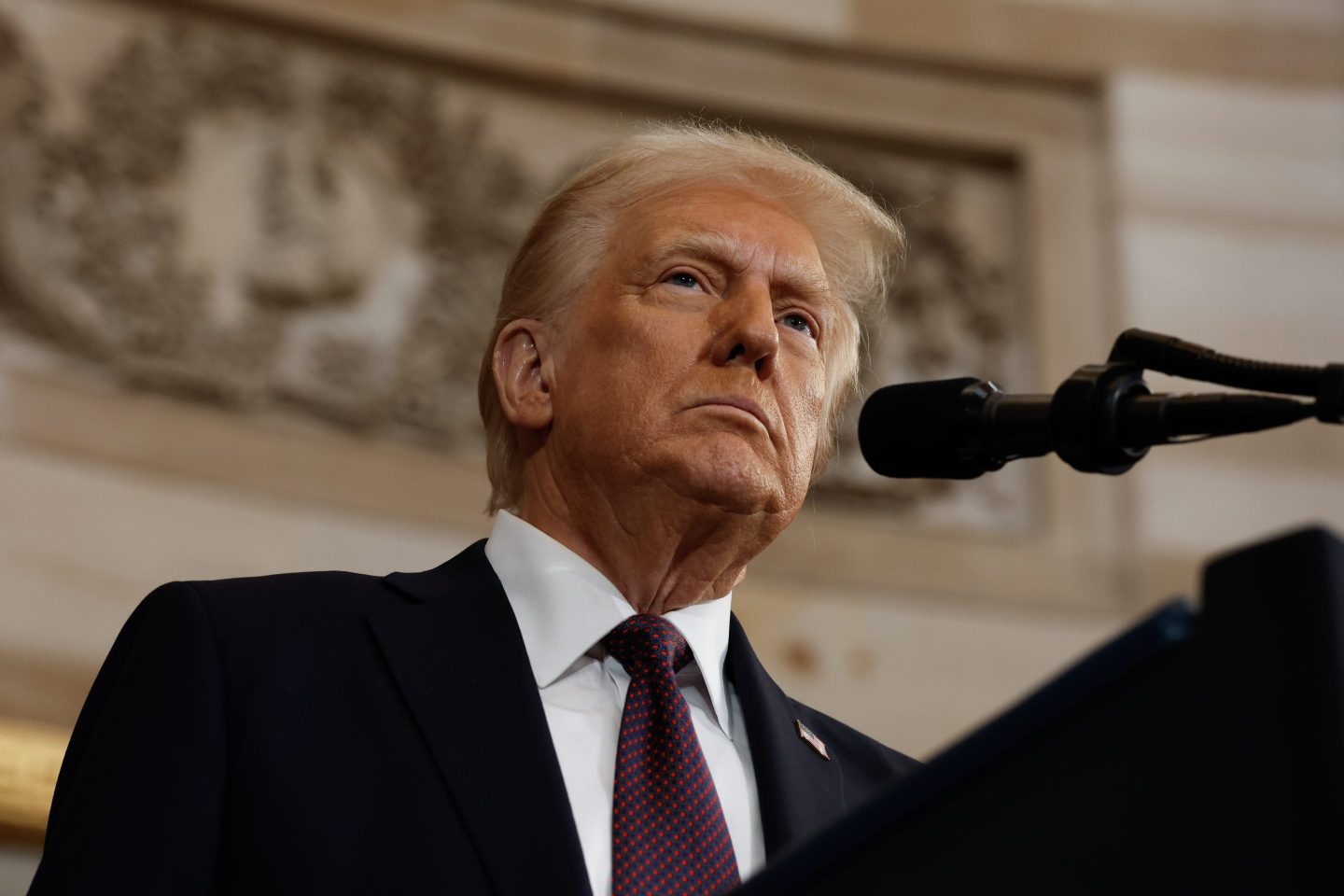
U.S. President Donald Trump speaks during inauguration ceremonies in the Rotunda of the U.S. Capitol on January 20, 2025 in Washington, DC.
U.S. President Donald Trump speaks during inauguration ceremonies in the Rotunda of the U.S. Capitol on January 20, 2025 in Washington, DC.Chip Somodevilla/Getty Images

President Donald Trump’s first days in office have included a flurry of orders and actions dismantling diversity, equity, and inclusion (DEI) programs across public and private sectors. 

Recommended Video

Last week, Trump signed an executive order to end all federal DEI initiatives. In a separate action, he directed federal agencies to target the private sector, and identify organizations with “illegal discrimination and preferences.” As part of that action, he specifically targeted federal contractors, dramatically changing decades-long rules around discriminatory practices, and transforming corporate liability risks. 

Rather than a niche concern among a handful of companies, these changes have an outsized effect on the business landscape—federal contractors include major corporations like Microsoft and IBM. The federal government committed about $759 billion to contracts in 2023, according to figures from the Government Accountability Office, which accounted for about 2.77% of the GDP from the U.S.

Legal experts tell Fortune that Trump’s new DEI mandates for these businesses have the potential to transform corporate America by creating a culture of informing, increasing their legal risk, and adding another level of regulation to an already-complicated government contracting process.

Or as Seth J. Chandler, a professor at the University of Houston Law Center puts it, “a culture of heightened fear and compliance crackdowns.”

What exactly is changing for federal contractors?

The DEI rules for federal contractors have transformed in a few significant ways. 

The first is the Trump administration’s move to revoke Executive Order 11246, which was established in 1965 to prohibit federal contractors from discriminatory practices. And the Office of Federal Contract Compliance Programs (OFCCP), which was previously in charge of enforcing that order, has announced it will immediately cease its longstanding mandate of “promoting ‘diversity.’”

“The OFCCP’s bulletin turns the office’s mission on its head and creates significant uncertainty for companies that do business with the federal government,” says Timothy J. Ford, a political law attorney at Dilworth Paxson. 

The second is a new demand for federal contractors to certify they are in “compliance in all respects with all applicable Federal anti-discrimination laws.” (There are some exceptions for programs for veterans and those with disabilities). Failure to do so now puts them in danger of violating the False Claims Act, legislation that ensures that people as well as companies are held liable for defrauding the government.

What exactly that means, however, is murky, according to Alex Sarria, vice chair of litigation at law firm Miller & Chevalier. He says that he’s been receiving a deluge of calls from federal contractor clients unclear about the new rules, and uneasy about the future. 

“There are a lot of looming questions and that could be by design—the administration is looking to spur compliance at a very broad level by just simply scaring folks into action,” he says. 

The OFCCP has promised additional guidance in the next several weeks, an executive order notes.

A new army of ‘potential enforcers’  

By putting the False Claims Act into play, Trump’s DEI orders around federal contractors create a way for individuals to accuse businesses of breaking the law. 

That opens up a whole new world of legal risk for these contractors. And lawsuits could come from anyone, legal experts note, either inside or outside an organization. “This dramatically raises the stakes, turning disgruntled employees, politically motivated observers, or just people interested in money into potential enforcers of the new Trump doctrine,” says Chandler.

Franklin Turner, a partner at law firm McCarter and English, and co-chair of the firm’s government contracts and global trade practice group, says his clients have been very concerned about anyone’s ability to “call up the OFCCP and cry fowl.” Additionally, he says the ability for people to inform on companies they believe are violating the new DEI rules will lead to an increase in lawsuits, and even create a “cottage industry” of lawyers taking advantage of the opportunity to sue companies for damages.

“In nearly two decades of doing this, I’ve never seen an executive order that I can remember that expressly ties compliance to the False Claims Act,” says Turner. 

How companies may need to change their policies

Companies looking to contract with the government will now have to take a hard look at their DEI programs to make sure they can pass increased scrutiny. However, multiple experts note that what exactly they will get in trouble for is vague. 

Any program that shows preference to a specific group in a range of areas, including scholarships, hiring protocols, or supplier requirements, is now likely prohibited, says Kendra Perkins Norwood, a government contracts lawyer and partner in the regulatory and investigations practice at law firm Reed Smith. Or at the very least, she says, companies “won’t be able to operate in a way that limits participation.” 

Organizations will have to do an internal audit on their policies to decide if they’re in conflict with any of the requirements of these executive orders. But she notes that it’s likely that these orders will be challenged, or revised. 

“The government can’t turn on a dime, it’s huge, so it will likely take time for these things to actually trickle down and be implemented. 

Legal experts agree that rather than getting rid of their DEI programs, a “wait and see” approach is prudent for government contractors right now. 

“This is all a scare tactic to get organizations to give up on DEI,” says Andrew Turnbull, partner at Morrison Foerster and co-chair of the firm’s Global Employment and Labor Group. He adds there are a host of programs, including employee resource groups (ERGs), which traditionally fall under the DEI umbrella, but are in no danger as long as anyone can join. 

A hit to smaller businesses 

Although experts emphasize that there is plenty of room for federal contractors to maneuver within DEI policy under the new Trump mandates, they say the increased scrutiny may deter some businesses from contracting with the government altogether.  

This is especially true for small businesses without a robust legal department to handle potential litigation. These enterprises already have to go through several hoops to land these contracts, including a rigorous application process that’s both time intensive and costly, says Willoughby.

This new hurdle around DEI initiatives will add another layer of regulation to an already bogged-down process. That could mean a sharp drop in gains that small businesses have made as federal contractors over the past few years. Around $183 billion, or 28.8% of all federal contracting dollars were awarded to small businesses in 2024, up from $178 billion in 2023.

“It will have a chilling effect, definitely,” notes Patrice Willoughby, chief of policy and legislative affairs at the NAACP. “While the legal requirements of some of these executive orders will likely be challenged in court, there are small businesses that will determine that the hazard of even applying is not worth the burden that’s associated with the time and expense.”

Join us at the Fortune Workplace Innovation Summit May 19–20, 2026, in Atlanta. The next era of workplace innovation is here—and the old playbook is being rewritten. At this exclusive, high-energy event, the world’s most innovative leaders will convene to explore how AI, humanity, and strategy converge to redefine, again, the future of work. Register now.
About the Author
Brit Morse
By Brit MorseLeadership Reporter
LinkedIn icon

Brit Morse is a former Leadership reporter at Fortune, covering workplace trends and the C-suite. She also writes CHRO Daily, Fortune’s flagship newsletter for HR professionals and corporate leaders.

See full bioRight Arrow Button Icon

Latest in Leadership

Finance
Lorem ipsum dolor sit amet, consectetur adipiscing elit, sed do eiusmod tempor incididunt ut labore et dolore magna aliqua. Ut enim ad minim veniam
By Fortune Editors
October 20, 2025
Finance
Lorem ipsum dolor sit amet, consectetur adipiscing elit, sed do eiusmod tempor incididunt ut labore et dolore magna aliqua. Ut enim ad minim veniam
By Fortune Editors
October 20, 2025
Finance
Lorem ipsum dolor sit amet, consectetur adipiscing elit, sed do eiusmod tempor incididunt ut labore et dolore magna aliqua. Ut enim ad minim veniam
By Fortune Editors
October 20, 2025
Finance
Lorem ipsum dolor sit amet, consectetur adipiscing elit, sed do eiusmod tempor incididunt ut labore et dolore magna aliqua. Ut enim ad minim veniam
By Fortune Editors
October 20, 2025
Finance
Lorem ipsum dolor sit amet, consectetur adipiscing elit, sed do eiusmod tempor incididunt ut labore et dolore magna aliqua. Ut enim ad minim veniam
By Fortune Editors
October 20, 2025
Finance
Lorem ipsum dolor sit amet, consectetur adipiscing elit, sed do eiusmod tempor incididunt ut labore et dolore magna aliqua. Ut enim ad minim veniam
By Fortune Editors
October 20, 2025

Most Popular

Finance
Lorem ipsum dolor sit amet, consectetur adipiscing elit, sed do eiusmod tempor incididunt ut labore et dolore magna aliqua. Ut enim ad minim veniam
By Fortune Editors
October 20, 2025
Finance
Lorem ipsum dolor sit amet, consectetur adipiscing elit, sed do eiusmod tempor incididunt ut labore et dolore magna aliqua. Ut enim ad minim veniam
By Fortune Editors
October 20, 2025
Finance
Lorem ipsum dolor sit amet, consectetur adipiscing elit, sed do eiusmod tempor incididunt ut labore et dolore magna aliqua. Ut enim ad minim veniam
By Fortune Editors
October 20, 2025
Finance
Lorem ipsum dolor sit amet, consectetur adipiscing elit, sed do eiusmod tempor incididunt ut labore et dolore magna aliqua. Ut enim ad minim veniam
By Fortune Editors
October 20, 2025
Finance
Lorem ipsum dolor sit amet, consectetur adipiscing elit, sed do eiusmod tempor incididunt ut labore et dolore magna aliqua. Ut enim ad minim veniam
By Fortune Editors
October 20, 2025
Finance
Lorem ipsum dolor sit amet, consectetur adipiscing elit, sed do eiusmod tempor incididunt ut labore et dolore magna aliqua. Ut enim ad minim veniam
By Fortune Editors
October 20, 2025
Rankings
  • 100 Best Companies
  • Fortune 500
  • Global 500
  • Fortune 500 Europe
  • Most Powerful Women
  • Future 50
  • World’s Most Admired Companies
  • See All Rankings
Sections
  • Finance
  • Leadership
  • Success
  • Tech
  • Asia
  • Europe
  • Environment
  • Fortune Crypto
  • Health
  • Retail
  • Lifestyle
  • Politics
  • Newsletters
  • Magazine
  • Features
  • Commentary
  • Mpw
  • CEO Initiative
  • Conferences
  • Personal Finance
  • Education
Customer Support
  • Frequently Asked Questions
  • Customer Service Portal
  • Privacy Policy
  • Terms Of Use
  • Single Issues For Purchase
  • International Print
Commercial Services
  • Advertising
  • Fortune Brand Studio
  • Fortune Analytics
  • Fortune Conferences
  • Business Development
About Us
  • About Us
  • Editorial Calendar
  • Press Center
  • Work At Fortune
  • Diversity And Inclusion
  • Terms And Conditions
  • Site Map
  • Facebook icon
  • Twitter icon
  • LinkedIn icon
  • Instagram icon
  • Pinterest icon

Latest in Leadership

Photo of Jim Farley
AIData centers
Ford CEO warns there’s a dearth of blue-collar workers able to construct AI data centers and operate factories: ‘Nothing to backfill the ambition’
By Sasha RogelbergJanuary 18, 2026
5 hours ago
LaurenAntonoff
Successwork-life balance
This CEO has a ‘1950s family structure in reverse’—her husband does the child care, cooking and cleaning: ‘I do the making money and paying taxes’
By Preston ForeJanuary 18, 2026
8 hours ago
boardroom
CommentaryCorporate Governance
When AI decides how shareholders vote, boards need to rethink governance
By Jane SadowskyJanuary 17, 2026
1 day ago
moreland
CommentaryHuman resources
Fortune 500 exec: College grads aren’t ready for today’s jobs
By Mary MorelandJanuary 17, 2026
1 day ago
The CEO of Informatica, Amit Walia
SuccessCareers
Like DoorDash and Google’s CEOs, $7.6 billion Informatica boss is a McKinsey alum—he says being ‘pushed around’ by smart consultants helped him grow
By Emma BurleighJanuary 17, 2026
1 day ago
Logan Paul
SuccessCareers
Logan Paul tells Gen Z they can turn any passion into a career—he’s turned Pokémon, YouTube, and wrestling into an empire worth millions
By Preston ForeJanuary 17, 2026
1 day ago

Most Popular

placeholder alt text
AI
This CEO laid off nearly 80% of his staff because they refused to adopt AI fast enough. 2 years later, he says he'd do it again
By Nick LichtenbergJanuary 11, 2026
7 days ago
placeholder alt text
Newsletters
The oil CEO who stood up to Trump is a follower of the disciplined 'Exxon way' and has a history of blunt statements
By Jordan BlumJanuary 13, 2026
5 days ago
placeholder alt text
Banking
'Absolutely, positively no chance, no way, no how, for any reason': Dimon says he'd never run the Fed but 'would take the call' to lead Treasury
By Jacqueline MunisJanuary 16, 2026
2 days ago
placeholder alt text
Economy
Making billionaires illegal by taxing their wealth wouldn’t even fund the government for a year, budget expert says
By Nick LichtenbergJanuary 17, 2026
1 day ago
placeholder alt text
Politics
The Nobel Prize committee doesn't want Trump getting one, even as a gift—but they treated Obama very differently
By Nick LichtenbergJanuary 16, 2026
2 days ago
placeholder alt text
Success
Jensen Huang tells Stanford students their high expectations may make it hard for them to succeed: 'I wish upon you ample doses of pain and suffering'
By Orianna Rosa RoyleJanuary 16, 2026
2 days ago

© 2025 Fortune Media IP Limited. All Rights Reserved. Use of this site constitutes acceptance of our Terms of Use and Privacy Policy | CA Notice at Collection and Privacy Notice | Do Not Sell/Share My Personal Information
FORTUNE is a trademark of Fortune Media IP Limited, registered in the U.S. and other countries. FORTUNE may receive compensation for some links to products and services on this website. Offers may be subject to change without notice.