
• Home
  • Latest
  • Fortune 500
  • Finance
  • Tech
  • Leadership
  • Lifestyle
  • Rankings
  • Multimedia
Future of WorkInfrastructure

Ford CEO Jim Farley says America is sleepwalking past its ‘essential economy’ crisis. Goldman Sachs just showed how big it really is

Nick Lichtenberg
By
Nick Lichtenberg
Nick Lichtenberg
Business Editor
Down Arrow Button Icon
Nick Lichtenberg
By
Nick Lichtenberg
Nick Lichtenberg
Business Editor
Down Arrow Button Icon
April 2, 2026, 8:00 AM ET
farley
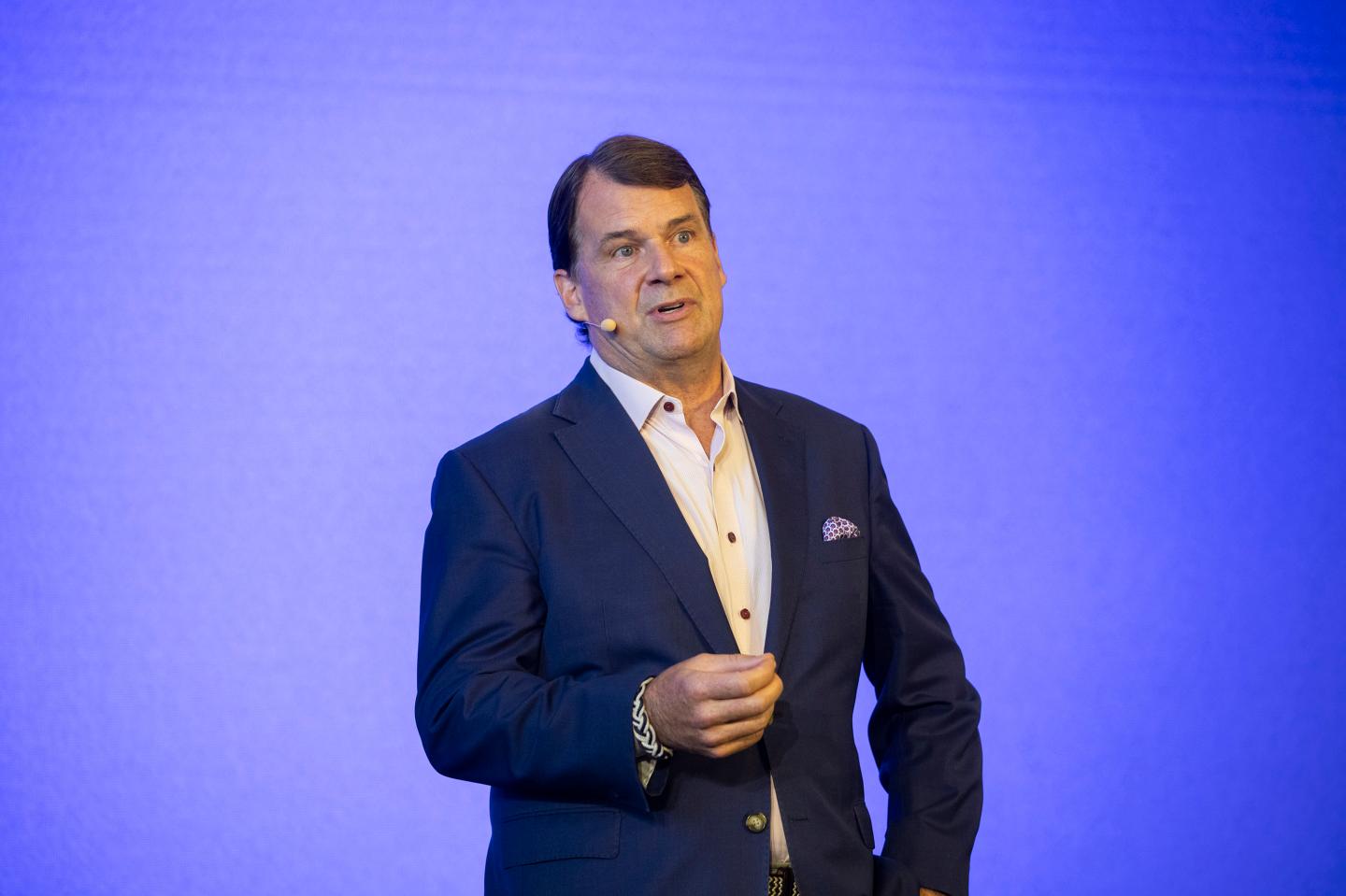
Jim Farley, president and CEO of Ford Motor, speaks at a Ford Pro Accelerate event, Sept. 30, 2025, in Detroit.Bill Pugliano—Getty Images

America’s AI ambitions may be undone not by a lack of capital or computing power, but by a shortage of electricians.

Recommended Video

That’s the emerging consensus between two disparate titans of the Fortune 500: Ford CEO Jim Farley, who has spent years sounding the alarm about a crisis in what he calls the “essential economy,” and Goldman Sachs, which is putting hard numbers on a labor crunch that threatens to slow the very AI build-out Wall Street has been banking on.

Farley has been the most persistent corporate voice warning the U.S. is sleepwalking into a workforce disaster. What he calls the essential economy, the blue-collar sectors that get things “moved, built, or fixed,” represents $12 trillion in U.S. GDP, per the Aspen Institute. But it is chronically understaffed and undervalued. The country is already short 600,000 factory workers and 500,000 construction workers, Farley wrote in a LinkedIn post last June. And he sees the situation getting worse, not better.

“I think the intent is there, but there’s nothing to backfill the ambition,” Farley told Axios in September 2025. “How can we reshore all this stuff if we don’t have people to work there?”

The irony, Farley argues, is the very technology disrupting white-collar work is creating a tidal wave of demand for the blue-collar workers America has neglected. AI could eliminate half of all white-collar jobs in the U.S. within a decade, he warned at last year’s Aspen Ideas Festival—gutting entry-level tech roles like junior programming and clerical work, the rungs many young Americans have been told to climb. Meanwhile, the skilled tradespeople needed to build the data centers that will run those AI systems simply don’t exist in sufficient numbers.

This dynamic suggests a disquieting loop. AI is eliminating the entry-level, white-collar jobs that have historically drawn young workers into technology careers—potentially shrinking the very talent pool that, with retraining, could feed the trades pipeline. The technology is simultaneously generating the infrastructure demand and undermining the workforce capacity to meet it.

“There’s more than one way to the American Dream, but our whole education system is focused on four-year education,” Farley said at Aspen. “Hiring an entry worker at a tech company has fallen 50% since 2019. Is that really where we want all of our kids to go?”

Now Goldman Sachs has quantified exactly how severe the constraint is.

In a Goldman Sachs Exchanges podcast appearance, Brian Singer, head of GS Sustain, warned the AI infrastructure build-out will require 500,000 new U.S. jobs just to build and power data centers—roughly 300,000 to supply electricity generation and another 200,000 for grid transmission and distribution work. The latter is the sticking point. GS Sustain is Goldman Sachs Research’s sustainability-focused framework, providing research and data tools exploring how innovation, regulation, and implementation of sustainability topics impact sustainable investing and broader capital flows.

“Where we are more concerned about is on the transmission and distribution side,” Singer said, “because there, electricians need four years of skilling.” The U.S. currently has approximately 45,000 energy apprentices, Singer noted—a number that needs to rise by 20,000 to 25,000 just to keep pace with projected demand.

Regional disparities

Those national figures, however, may obscure an even more acute regional crisis. Data center construction is heavily concentrated in a handful of markets: Virginia—which shoulders roughly 70% of the world’s internet traffic and has nearly 35 gigawatts in development—along with Texas and Arizona’s Phoenix metro area, which ranks third nationally for new capacity.

Matt Landek, global division president for data centers at JLL, warned earlier this year secondary markets “frequently lack the specialized construction expertise, skilled technical workforce, and operational support infrastructure that primary markets provide,” meaning the labor crunch follows the build-out wherever it goes. When multiple hyperscaler campuses break ground simultaneously in a single region, local talent pools are exhausted within months—forcing contractors to import workers from other states. In Northern Virginia, the wage pressure is already measurable: Journeyman electricians now earn upwards of $120,000 annually, and Microsoft has resorted to employing electricians commuting from 75 miles away.

Singer framed the labor constraint as the most worrying of his firm’s “six Ps,” a framework of factors that could drive or throttle AI power demand, encompassing pervasiveness, productivity, price, policy, parts, and people. Of the six, he said, “people” keeps him up at night the most.

The Goldman analysis arrives at essentially the same conclusion Farley reached through the windshield of Detroit: that America’s AI moonshot is running on a cracked foundation. All the hyperscaler capital in the world can’t conjure a licensed electrician out of thin air (Goldman estimates combined budgets rose by more than $300 billion for 2026 and 2027). And the cruel arithmetic of the AI moment means the technology eroding one workforce is depending on another workforce that America has spent decades failing to build.

Farley’s fix is systemic: more investment in vocational education; expanded apprenticeship pipelines; and a cultural reckoning with the prestige gap between four-year degrees and trade careers.

“On the surface, this looks like a people problem,” he told Axios. “But it’s actually not that simple. It’s an awareness problem. It’s a societal problem.”

Goldman’s Singer put it more bluntly: Without the workers to build the grid, the data centers don’t get built—and the AI revolution stalls on a transmission line.

For this story, Fortune journalists used generative AI as a research tool. An editor verified the accuracy of the information before publishing.

At the Fortune Workplace Innovation Summit, Fortune 500 leaders will convene to explore the defining questions shaping the workforce of the future—delivering bold ideas, powerful connections, and actionable insights for building resilient organizations for the decade ahead. Join Fortune May 19–20 in Atlanta. Register now.
About the Author
Nick Lichtenberg
By Nick LichtenbergBusiness Editor
LinkedIn icon

Nick Lichtenberg is business editor and was formerly Fortune's executive editor of global news.

See full bioRight Arrow Button Icon

Latest in Future of Work

Finance
Lorem ipsum dolor sit amet, consectetur adipiscing elit, sed do eiusmod tempor incididunt ut labore et dolore magna aliqua. Ut enim ad minim veniam
By Fortune Editors
October 20, 2025
Finance
Lorem ipsum dolor sit amet, consectetur adipiscing elit, sed do eiusmod tempor incididunt ut labore et dolore magna aliqua. Ut enim ad minim veniam
By Fortune Editors
October 20, 2025
Finance
Lorem ipsum dolor sit amet, consectetur adipiscing elit, sed do eiusmod tempor incididunt ut labore et dolore magna aliqua. Ut enim ad minim veniam
By Fortune Editors
October 20, 2025
Finance
Lorem ipsum dolor sit amet, consectetur adipiscing elit, sed do eiusmod tempor incididunt ut labore et dolore magna aliqua. Ut enim ad minim veniam
By Fortune Editors
October 20, 2025
Finance
Lorem ipsum dolor sit amet, consectetur adipiscing elit, sed do eiusmod tempor incididunt ut labore et dolore magna aliqua. Ut enim ad minim veniam
By Fortune Editors
October 20, 2025
Finance
Lorem ipsum dolor sit amet, consectetur adipiscing elit, sed do eiusmod tempor incididunt ut labore et dolore magna aliqua. Ut enim ad minim veniam
By Fortune Editors
October 20, 2025

Most Popular

Finance
Lorem ipsum dolor sit amet, consectetur adipiscing elit, sed do eiusmod tempor incididunt ut labore et dolore magna aliqua. Ut enim ad minim veniam
By Fortune Editors
October 20, 2025
Finance
Lorem ipsum dolor sit amet, consectetur adipiscing elit, sed do eiusmod tempor incididunt ut labore et dolore magna aliqua. Ut enim ad minim veniam
By Fortune Editors
October 20, 2025
Finance
Lorem ipsum dolor sit amet, consectetur adipiscing elit, sed do eiusmod tempor incididunt ut labore et dolore magna aliqua. Ut enim ad minim veniam
By Fortune Editors
October 20, 2025
Finance
Lorem ipsum dolor sit amet, consectetur adipiscing elit, sed do eiusmod tempor incididunt ut labore et dolore magna aliqua. Ut enim ad minim veniam
By Fortune Editors
October 20, 2025
Finance
Lorem ipsum dolor sit amet, consectetur adipiscing elit, sed do eiusmod tempor incididunt ut labore et dolore magna aliqua. Ut enim ad minim veniam
By Fortune Editors
October 20, 2025
Finance
Lorem ipsum dolor sit amet, consectetur adipiscing elit, sed do eiusmod tempor incididunt ut labore et dolore magna aliqua. Ut enim ad minim veniam
By Fortune Editors
October 20, 2025
Fortune Secondary Logo
Rankings
  • 100 Best Companies
  • Fortune 500
  • Global 500
  • Fortune 500 Europe
  • Most Powerful Women
  • World's Most Admired Companies
  • See All Rankings
  • Lists Calendar
Sections
  • Finance
  • Fortune Crypto
  • Features
  • Leadership
  • Health
  • Commentary
  • Success
  • Retail
  • Mpw
  • Tech
  • Lifestyle
  • CEO Initiative
  • Asia
  • Politics
  • Conferences
  • Europe
  • Newsletters
  • Personal Finance
  • Environment
  • Magazine
  • Education
Customer Support
  • Frequently Asked Questions
  • Customer Service Portal
  • Privacy Policy
  • Terms Of Use
  • Single Issues For Purchase
  • International Print
Commercial Services
  • Advertising
  • Fortune Brand Studio
  • Fortune Analytics
  • Fortune Conferences
  • Business Development
  • Group Subscriptions
About Us
  • About Us
  • Lists Calendar
  • Press Center
  • Work At Fortune
  • Terms And Conditions
  • Site Map
  • About Us
  • Lists Calendar
  • Press Center
  • Work At Fortune
  • Terms And Conditions
  • Site Map
  • Facebook icon
  • Twitter icon
  • LinkedIn icon
  • Instagram icon
  • Pinterest icon

Latest in Future of Work

Gen Z in city
SuccessGen Z
Gen Z graduates’ best shot at good pay and homeownership isn’t in New York or L.A.—it’s Omaha and Dallas
By Emma BurleighApril 22, 2026
4 hours ago
Elon Musk
SuccessEducation
Elon Musk thinks college is ‘basically for fun’—but his former Tesla HR chief tells Gen Z even their liberal arts degrees are more valuable than ever
By Preston ForeApril 22, 2026
5 hours ago
ravi
AICommentary
The $6 trillion reinvention: Why IT services firms must start underwriting outcomes
By Ravi Kumar S and Andreea RobertsApril 22, 2026
7 hours ago
beard
CommentaryEducation
Yale asked the right question. Now the rest of higher education owes an answer
By Steve BeardApril 22, 2026
9 hours ago
Craving work-life balance is a huge red flag, says Fortune 500 Europe CEO—and like Barack Obama, he happily works through weekends
Successwork-life balance
Craving work-life balance is a huge red flag, says Fortune 500 Europe CEO—and like Barack Obama, he happily works through weekends
By Orianna Rosa RoyleApril 22, 2026
13 hours ago
Apple CEO Tim Cook
SuccessCareer Advice
Apple taps John Ternus as its next CEO—and Tim Cook says he is handing down the same advice Steve Jobs gave him
By Emma BurleighApril 21, 2026
1 day ago

Most Popular

The tables have turned: Florida and Texas are the biggest losers in the housing market as Ohio emerges a surprise winner
Real Estate
The tables have turned: Florida and Texas are the biggest losers in the housing market as Ohio emerges a surprise winner
By Sydney LakeApril 21, 2026
1 day ago
'Something sinister could be happening': FBI looks into dead or missing nuclear and space defense scientists tied to NASA, Blue Origin, and SpaceX
Politics
'Something sinister could be happening': FBI looks into dead or missing nuclear and space defense scientists tied to NASA, Blue Origin, and SpaceX
By Catherina GioinoApril 21, 2026
1 day ago
‘Something sinister’: What we know about the FBI probe into dead and missing scientists linked to space and military industries
Economy
‘Something sinister’: What we know about the FBI probe into dead and missing scientists linked to space and military industries
By Jim EdwardsApril 22, 2026
10 hours ago
$166 billion in tariff refunds just became available, but small businesses may already be at a disadvantage
Law
$166 billion in tariff refunds just became available, but small businesses may already be at a disadvantage
By Sasha RogelbergApril 20, 2026
2 days ago
John Ternus, the man stepping into Tim Cook and Steve Jobs' shoes, is a 25-year Apple veteran with zero LinkedIn posts
C-Suite
John Ternus, the man stepping into Tim Cook and Steve Jobs' shoes, is a 25-year Apple veteran with zero LinkedIn posts
By Kelvin Chan and The Associated PressApril 21, 2026
1 day ago
Jeff Bezos once gave Eva Longoria and the admiral behind Osama bin Laden's capture $100 million—but she says you don't need wealth to give back
Success
Jeff Bezos once gave Eva Longoria and the admiral behind Osama bin Laden's capture $100 million—but she says you don't need wealth to give back
By Orianna Rosa RoyleApril 21, 2026
2 days ago

© 2026 Fortune Media IP Limited. All Rights Reserved. Use of this site constitutes acceptance of our Terms of Use and Privacy Policy | CA Notice at Collection and Privacy Notice | Do Not Sell/Share My Personal Information
FORTUNE is a trademark of Fortune Media IP Limited, registered in the U.S. and other countries. FORTUNE may receive compensation for some links to products and services on this website. Offers may be subject to change without notice.