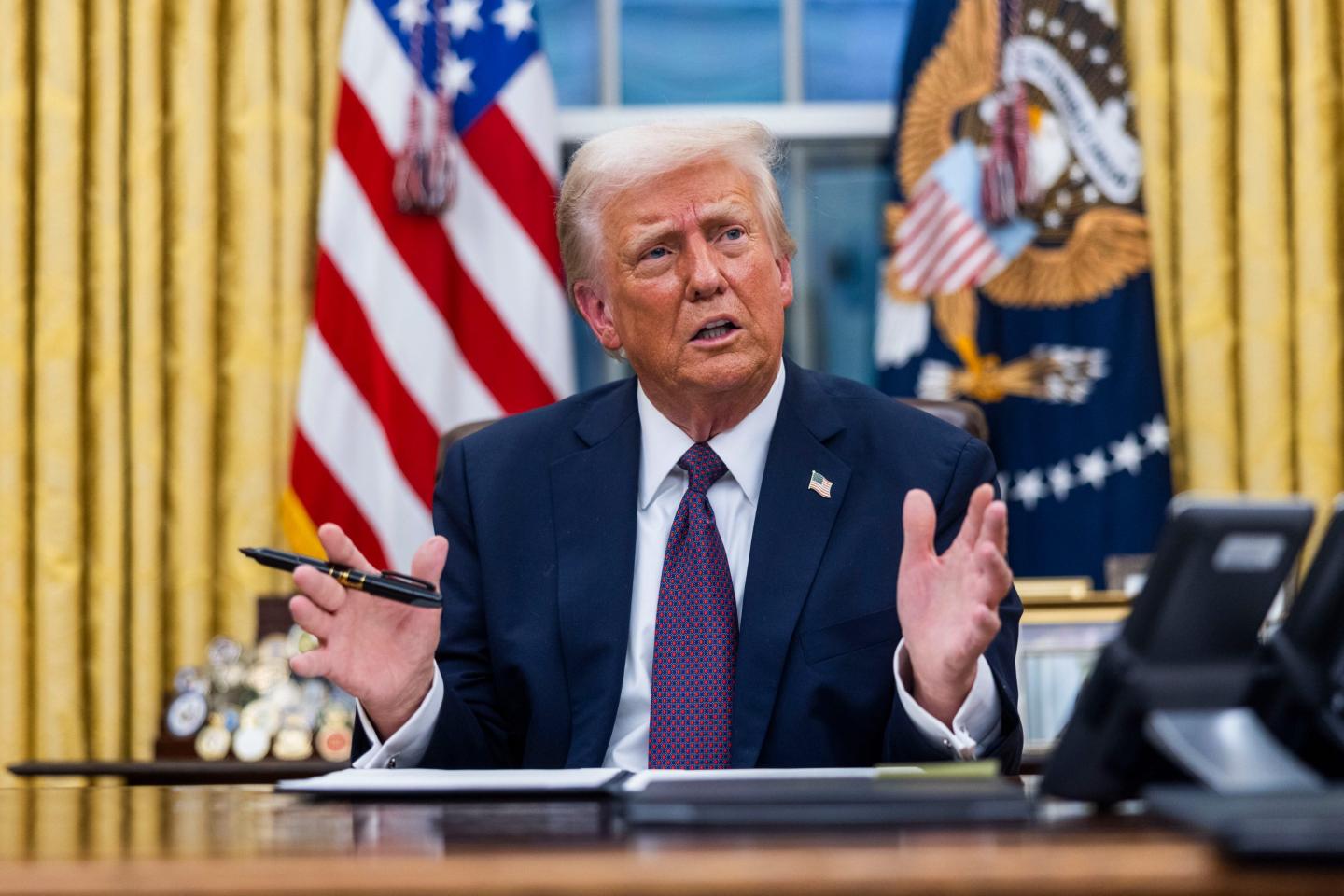
In his first two days in office, President Donald Trump quickly made major moves against DEI through a series of executive orders and actions intended for both federal workplaces and the private sector
One order unwound DEI elements that had been embedded in the federal hiring processes, and another, aimed at eliminating “wasteful” DEI programs in the federal government, calling for laying off employees tied to diversity efforts in government jobs. A third presidential action overturned a civil rights-era law prohibiting discrimination at companies that hold contracts with the federal government.
Most ominously for corporate America, perhaps, Trump also directed all federal agencies to create a list of nine private sector companies whose diversity, equity, and inclusion programs should be investigated as potentially illegal.
Trump’s sharp focus on this topic is expected to exacerbate anxieties over corporate DEI, and has already created confusion among Fortune 500 companies. But Kenji Yoshino, professor of constitutional law at NYU School of Law and the director of its Meltzer Center for Diversity, Inclusion, and Belonging, says companies don’t have that much to worry about. “By their very nature, executive orders can’t control private employers,” he explains.
Instead, Yoshino says Trump has created a reality-TV-style “spectacle”—but he also believes more troublesome anti-DEI efforts may be on the horizon.
This interview has been lightly edited for clarity and length.
What are this week’s biggest takeaways about DEI for private employers?
What people need to understand about executive orders is that they’re issued by the president on matters over which the president has control, so the biggest effect this is going to have is going to be on the federal government itself. I do not want to sugarcoat that at all; from a pro-DEI perspective, it’s a really dire set of results, where you’re shutting down the DEI offices and closing positions. But if we’re looking at this from the private employer perspective, there’s actually not that much in these executive orders.
The orders do mention federal contractors and subcontractors. And one action directs federal agencies to draw up a list of nine companies that are the “most egregious” DEI offenders. What effect do you think that will have?
Trump is putting the muscle of the executive branch behind the Students for Fair Admissions (SFFA) decision [regarding affirmative action.] He can create new energy by getting the attorney general to bring lawsuits, rather than relying on private plaintiffs to bring lawsuits against companies. That’s not nothing. But when those cases go to court, the standards that are going to be applied to them are not Donald Trump’s standards. The standards are set by Congress and interpreted by, ultimately, the Supreme Court.
That means the real sea change occurred in the Students For Fair Admissions case in 2023. This is going to put more energy behind how many suits are brought and against whom, but the legal landscape was already set long before Donald Trump came into office.
But will companies rush to make changes because being sued is expensive and time-consuming?
That’s exactly right. This is Donald Trump, the reality show. This almost feels like The Apprentice, but instead of people competing to become the apprentice, people are competing not to be on this list.
He knows how to create a spectacle so the country is going to be watching to see who’s on the list. He’s creating fear that you’re going to show up on a list that you don’t want to show up on, and that’s going to cause companies to be more risk-averse than they probably need to be.
Can the government deny funding to companies that will not back down from DEI?
If they’re federal contractors, he could close those contracts and make your DEI stance a condition. But one of the things that was interesting about the language of the executive orders was that the orders kept talking about the importance of meritocracy and obeying the law. If I’m a federal contractor and I say, “Everyone is going to go through unconscious bias training before they’re allowed to hire somebody,” that’s certainly DEI but it’s hard to argue that that’s illegal. In fact, in my view, it’s impossible because that training is taking bias out of the system. You’re removing bias from the system and making it more meritocratic.
For the most part, the executive orders are not trying to say that all DEI is illegal; they’re saying that there’s a subset of DEI that’s illegal. I think companies need to read that carefully, because if he’s saying that you will be denied federal funds if you engage in illegal activities, then that’s serious. But all that means is you need to comply with the law, and there are many forms of diversity and inclusion that still comply with the law.
And many Fortune 500 companies have said they have already audited their DEI programs to make sure they’re legal.
It’s actually been pretty impressive. Companies looked at SFFA and they hired law firms or did internal audits. Early on, my center suggested that you should traffic light code your programs, red, yellow or green, depending on legal risk. Many companies engaged in a risk assessment and audits and got rid of the programs that were the most risky or tweaked them in ways that would make them completely acceptable.
A good example of this would be targeted programs for fellowships. Some law firms were sued for fellowships that could only be held by people of color or by women. The firms tweaked the programs to say anyone can hold that fellowship, you just have to be interested in advancing diversity within the organization. They moved from cohorts to content.
What questions should board members be asking right now?
At my center, we say the nuts and bolts of the legal landscape is going to be determined by what we call the three P’s, which is, are you exhibiting a preference for a protected group with regard to a palpable benefit?
With regard to the Title VII employment discrimination statute, all three elements have to be present for a program to be illegal. Again, if you have an unconscious bias training program for everyone, that takes bias out of the system so you’re not exhibiting a preference for anyone, so that would be perfectly legal. Or if you shift to a group that’s not protected—you make the program open to everyone, or you invest in programs for first-gen individuals or veterans—that’s perfectly fine. Finally, with regard to palpable benefits, you have to show that a DEI program created some adverse employment condition for you to bring a complaint against it.
Is there any legal precedent for telling private companies how to conduct hiring?
Well, in a sense, the whole Civil Rights Act, including Title VII, is that. It says you cannot take these criteria into account. But that was a congressional enactment. Congress does have the power to regulate interstate commerce, and therefore to regulate employment relationships, whereas the president does not have the power to do that.
What could be the next shoe to drop?
I’m not underselling the importance of these executive orders for federal employees and for, say, trans people whose passports are affected. But the real action is to come, either legislatively or judicially.
For private employers, what I’m really looking at is the Dismantle DEI bill, which was sponsored by Vice President Vance when he was a senator. I used to think that it was never going to pass, but now that President Trump not only has the presidency, but also both houses of Congress, it could pass.
But I think a lot of the real damage to DEI is going to be done by the United States Supreme Court. There’s a lot of storm and stress around executive orders, but it’s almost a misdirection.
Are you watching something specific at the Supreme Court?
In some ways, the writing is on the wall, because of the SFFA case, but it was about education, and it concerned the equal protection clause of the Constitution and Title VI, which regulates entities receiving federal funding. If you’re a private employer, that doesn’t really affect you.
I think that in the Ames case coming up this term, the court is going to start importing the kinds of analysis about race discrimination that destroyed affirmative action in the educational context to apply to DEI programs in the private sector. But in some ways, we’ve already internalized the cost of that, because a lot of companies woke up after SFFA and did preemptive audits because they were worried about getting sued. In some ways, maybe the court has already done the worst that it can do.
Even under the kind of worst-case scenario, where the Supreme Court embraces the principles of SFFA [and other legal precedents], there’s still going to be a ton of stuff that you can do as an organization to support DEI that’s never going to be illegal, like anything that takes bias out of the system.