• Home
  • News
  • Fortune 500
  • Tech
  • Finance
  • Leadership
  • Lifestyle
  • Rankings
  • Multimedia
TechAI

Satya Nadella believes Chinese AI startup DeepSeek could be a win for tech, even as Microsoft’s shares tumble

Sasha Rogelberg
By
Sasha Rogelberg
Sasha Rogelberg
Reporter
Down Arrow Button Icon
Sasha Rogelberg
By
Sasha Rogelberg
Sasha Rogelberg
Reporter
Down Arrow Button Icon
January 27, 2025, 1:20 PM ET
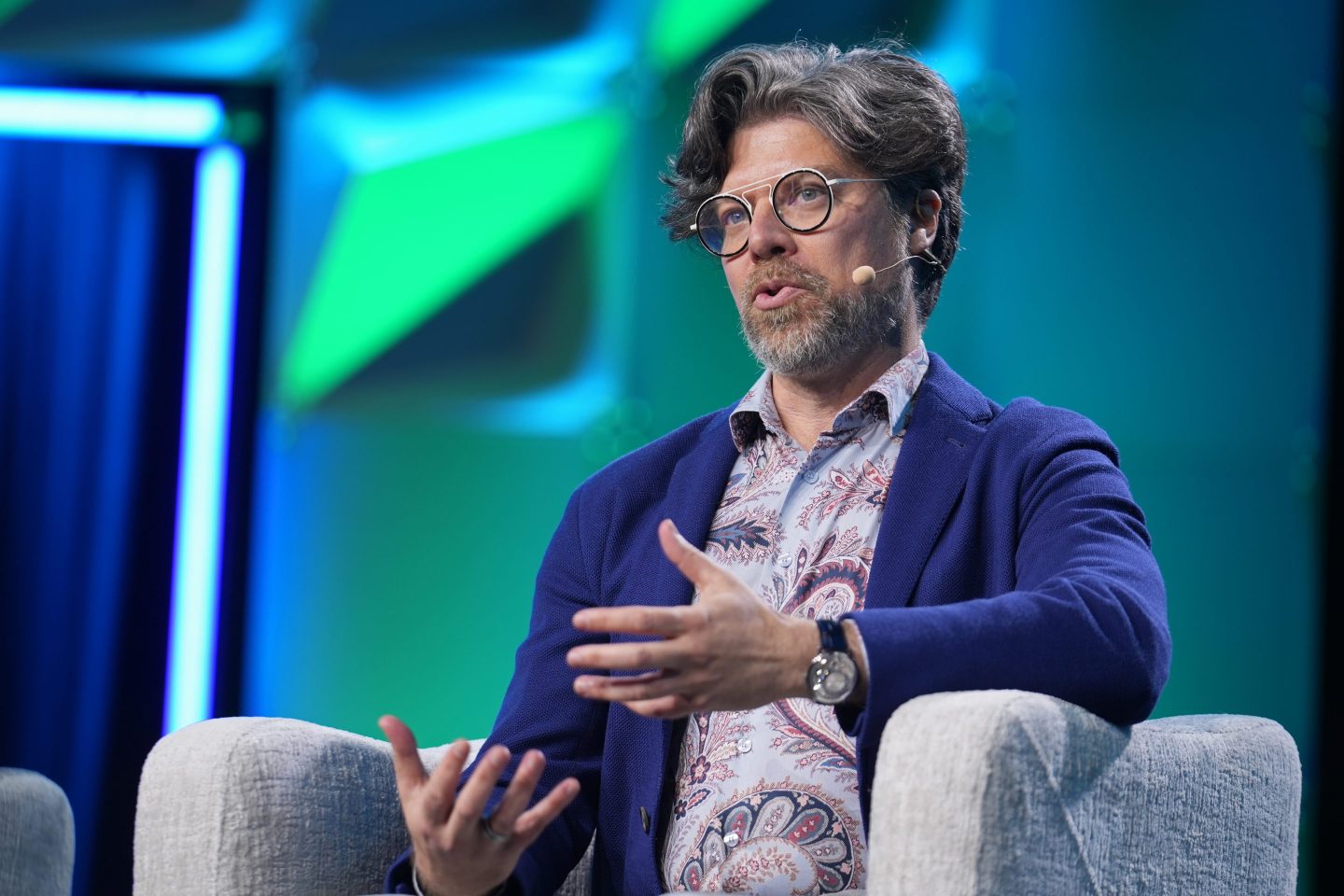
Satya Nadella gestures with his hands and speaks in front of a blue background.
Microsoft CEO Satya Nadella Hannes P Albert/picture alliance—Getty Images
  • Microsoft CEO Satya Nadella is optimistic about Chinese AI firm DeepSeek’s shakeup of the tech industry. DeepSeek claims its newly unveiled R1 model is as effective as OpenAI’s o1—and was reportedly developed for a fraction of the budget.

Chinese AI chatbot DeepSeek’s newly unveiled R1 reasoning model has shaken up Big Tech, with its app dethroning OpenAI’s ChatGPT as Apple’s most-downloaded App Store app and pummeling global tech stocks out of fear that America’s grip over AI development is slipping.

Recommended Video

One CEO seems to be unphased by the startup’s emergence. Microsoft chief executive Satya Nadella asserted DeepSeek’s David to the established AI sector’s Goliath could actually be good news for the tech industry as a whole.

“Jevons paradox strikes again!” Nadella wrote on LinkedIn Monday, referring to a theory that increased efficiency in a product’s production drives increased demand. “As AI gets more efficient and accessible, we will see its use skyrocket, turning it into a commodity we just can’t get enough of.”

Last week, emerging Chinese AI company DeepSeek unveiled R1, an open-source model promising to be on-par with Open AI’s o1 model released last year, which is capable of reasoning and solving math problems. The release turned heads. Not only was DeepSeek a potential burgeoning rival to OpenAI, but it also reportedly developed its V3 large language model on a $5.6 million budget—a fraction of the $100 million OpenAI poured into training ChatGPT-4. DeepSeek also claims it requires fewer computational resources than competitors.  

The effectiveness of DeepSeek—combined with its reported shoestring budget—has made it a threat to the U.S.’s stronghold over AI development. The U.S. has imposed export controls and restrictions on sales of advanced semiconductors to Chinese companies since 2022 to address national security, which has hampered Chinese competitors. Venture capitalist Marc Andreessen stirred Cold War sentiments and called DeepSeek’s model unveiling “AI’s Sputnik moment,” referring to the day in 1957 when the Soviet Union beat the U.S. in launching the first satellite into orbit.

DeepSeek did not respond to Fortune’s requests for comment.

The markets reacted accordingly: Nasdaq 100 futures plummeted nearly 2.5% Monday, and the S&P 500 slid 1.8%. Microsoft shares tumbled 3.8%, and Meta and Alphabet weren’t far behind, falling 3.1% and 3.3%, respectively. AI darling Nvidia took the biggest beating, with shares falling 13% in premarket trading.

What is Jevons paradox?

But rather than see DeepSeek as a threat to the U.S. tech industry as a whole, Nadella instead saw its barnstorming reveal as a positive in Big Tech’s race to expand AI into the crevices of human life. 

At the foundation of Nadella’s optimism is a 160-year-old theory called Jevons paradox. English economist William Stanley Jevons originated the theory in 1865 after observing a massive increase in England’s coal consumption after the invention of the Watt steam engine, which required fewer resources than previous steam engine models. But rather than resulting in less coal being used, the widespread use of the more-efficient Watt engine resulted in more coal consumption. By citing Jevons paradox, Nadella suggests more efficient AI, as exemplified with DeepSeek’s R1 model, will increase the demand for the technology.

There’s a hangup with Nadella’s supposition: Jevons initially posited that increased efficiency of a resource would paradoxically lead to that resource diminishing at a faster rate than if its use were less efficient. For resource-guzzling technology like AI, increased demand could come at the expense of the environment. Economic historian Albert Schram argued, using the framework of Jevons paradox, more efficient AI would result in the use of more data storage and natural resources. The environmental impact of this AI surge could make its continued development economically unsustainable in the long run. 

“Ultimately, the application of Jevons Paradox to AI highlights the need for careful consideration of the potential unintended consequences of technological advancements and the importance of taking a proactive approach to address these issues,” Schram said in a May 2023 LinkedIn post.

Regardless if Jevons paradox comes to fruition, Nadella understands the start-up isn’t to be trifled with. Last week, at the World Economic Forum in Davos, Switzerland, the Microsoft boss did not shy away from acknowledging the technology as a real contender in the world of AI.

“To see the DeepSeek new model, it’s super impressive in terms of both how they have really effectively done an open-source model that does this inference-time compute, and is super-compute efficient,” Nadella said Wednesday. “We should take the developments out of China very, very seriously.” 
Fortune Brainstorm AI returns to San Francisco Dec. 8–9 to convene the smartest people we know—technologists, entrepreneurs, Fortune Global 500 executives, investors, policymakers, and the brilliant minds in between—to explore and interrogate the most pressing questions about AI at another pivotal moment. Register here.
About the Author
Sasha Rogelberg
By Sasha RogelbergReporter
LinkedIn iconTwitter icon

Sasha Rogelberg is a reporter and former editorial fellow on the news desk at Fortune, covering retail and the intersection of business and popular culture.

See full bioRight Arrow Button Icon

Latest in Tech

LawInternet
A Supreme Court decision could put your internet access at risk. Here’s who could be affected
By Dave Lozo and Morning BrewDecember 2, 2025
9 hours ago
AITikTok
China’s ByteDance could be forced to sell TikTok U.S., but its quiet lead in AI will help it survive—and maybe even thrive
By Nicholas GordonDecember 2, 2025
10 hours ago
United Nations
AIUnited Nations
UN warns about AI becoming another ‘Great Divergence’ between rich and poor countries like the Industrial Revolution
By Elaine Kurtenbach and The Associated PressDecember 2, 2025
11 hours ago
Anthropic cofounder and CEO Dario Amodei
AIEye on AI
How Anthropic’s safety first approach won over big business—and how its own engineers are using its Claude AI
By Jeremy KahnDecember 2, 2025
11 hours ago
Nvidia founder and CEO Jensen Huang reacts during a press conference at the Asia-Pacific Economic Cooperation (APEC) CEO Summit in Gyeongju on October 31, 2025.
AINvidia
Nvidia CFO admits the $100 billion OpenAI megadeal ‘still’ isn’t signed—two months after it helped fuel an AI rally
By Eva RoytburgDecember 2, 2025
13 hours ago
Big TechInstagram
Instagram CEO calls staff back to the office 5 days a week to build a ‘winning culture’—while canceling every recurring meeting
By Marco Quiroz-GutierrezDecember 2, 2025
13 hours ago

Most Popular

placeholder alt text
Economy
Ford workers told their CEO 'none of the young people want to work here.' So Jim Farley took a page out of the founder's playbook
By Sasha RogelbergNovember 28, 2025
4 days ago
placeholder alt text
Success
Warren Buffett used to give his family $10,000 each at Christmas—but when he saw how fast they were spending it, he started buying them shares instead
By Eleanor PringleDecember 2, 2025
20 hours ago
placeholder alt text
Economy
Elon Musk says he warned Trump against tariffs, which U.S. manufacturers blame for a turn to more offshoring and diminishing American factory jobs
By Sasha RogelbergDecember 2, 2025
14 hours ago
placeholder alt text
C-Suite
MacKenzie Scott's $19 billion donations have turned philanthropy on its head—why her style of giving actually works
By Sydney LakeDecember 2, 2025
20 hours ago
placeholder alt text
North America
Jeff Bezos and Lauren Sánchez Bezos commit $102.5 million to organizations combating homelessness across the U.S.: ‘This is just the beginning’
By Sydney LakeDecember 2, 2025
15 hours ago
placeholder alt text
AI
More than 1,000 Amazon employees sign open letter warning the company's AI 'will do staggering damage to democracy, our jobs, and the earth’
By Nino PaoliDecember 2, 2025
22 hours ago
Rankings
  • 100 Best Companies
  • Fortune 500
  • Global 500
  • Fortune 500 Europe
  • Most Powerful Women
  • Future 50
  • World’s Most Admired Companies
  • See All Rankings
Sections
  • Finance
  • Leadership
  • Success
  • Tech
  • Asia
  • Europe
  • Environment
  • Fortune Crypto
  • Health
  • Retail
  • Lifestyle
  • Politics
  • Newsletters
  • Magazine
  • Features
  • Commentary
  • Mpw
  • CEO Initiative
  • Conferences
  • Personal Finance
  • Education
Customer Support
  • Frequently Asked Questions
  • Customer Service Portal
  • Privacy Policy
  • Terms Of Use
  • Single Issues For Purchase
  • International Print
Commercial Services
  • Advertising
  • Fortune Brand Studio
  • Fortune Analytics
  • Fortune Conferences
  • Business Development
About Us
  • About Us
  • Editorial Calendar
  • Press Center
  • Work At Fortune
  • Diversity And Inclusion
  • Terms And Conditions
  • Site Map

© 2025 Fortune Media IP Limited. All Rights Reserved. Use of this site constitutes acceptance of our Terms of Use and Privacy Policy | CA Notice at Collection and Privacy Notice | Do Not Sell/Share My Personal Information
FORTUNE is a trademark of Fortune Media IP Limited, registered in the U.S. and other countries. FORTUNE may receive compensation for some links to products and services on this website. Offers may be subject to change without notice.