• Home
  • Latest
  • Fortune 500
  • Finance
  • Tech
  • Leadership
  • Lifestyle
  • Rankings
  • Multimedia
RetailStarbucks

Starbucks is instructing workers in de-escalation so they can peacefully reserve bathrooms for paying-customers only

Sasha Rogelberg
By
Sasha Rogelberg
Sasha Rogelberg
Reporter
Down Arrow Button Icon
Sasha Rogelberg
By
Sasha Rogelberg
Sasha Rogelberg
Reporter
Down Arrow Button Icon
January 24, 2025, 4:03 AM ET
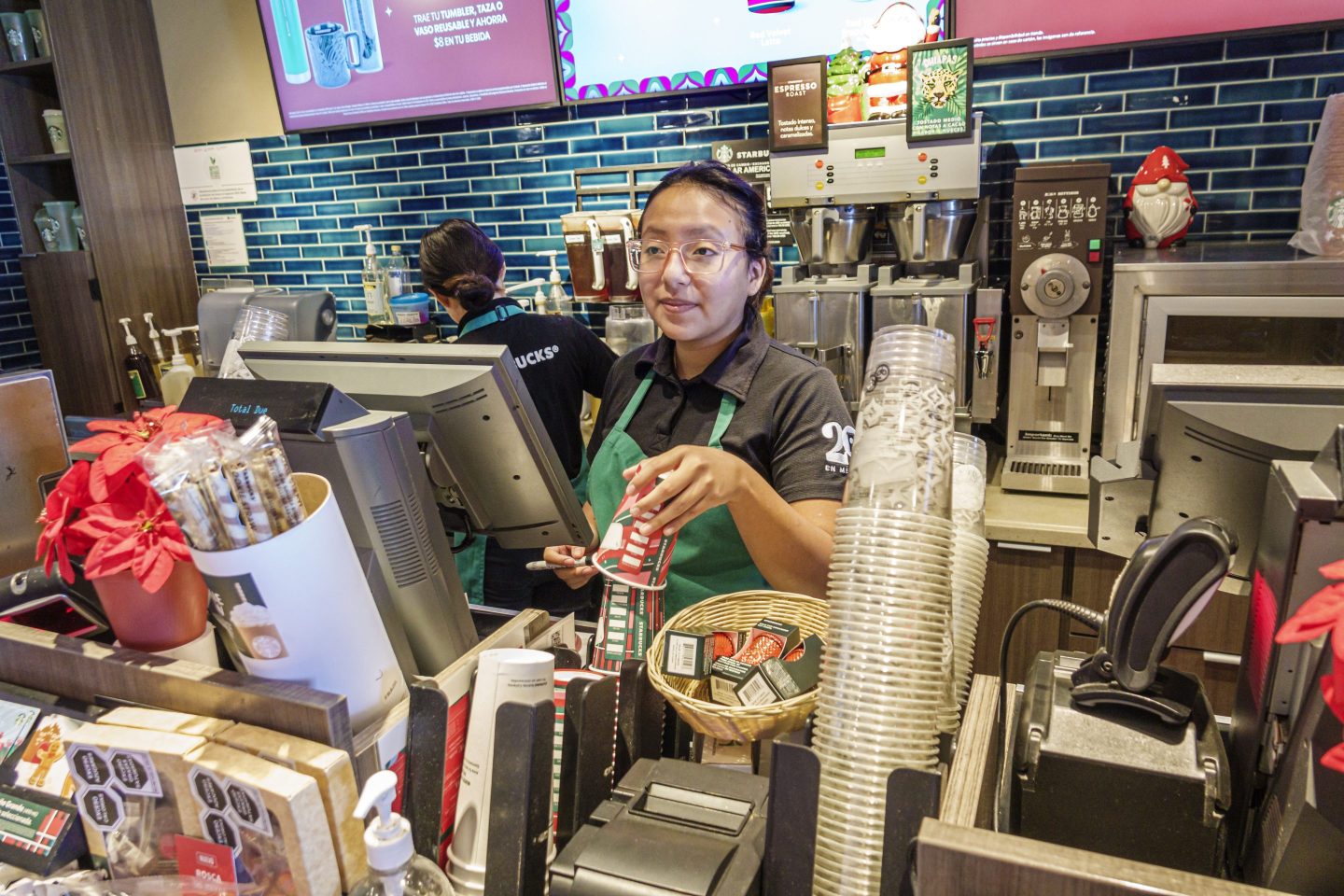
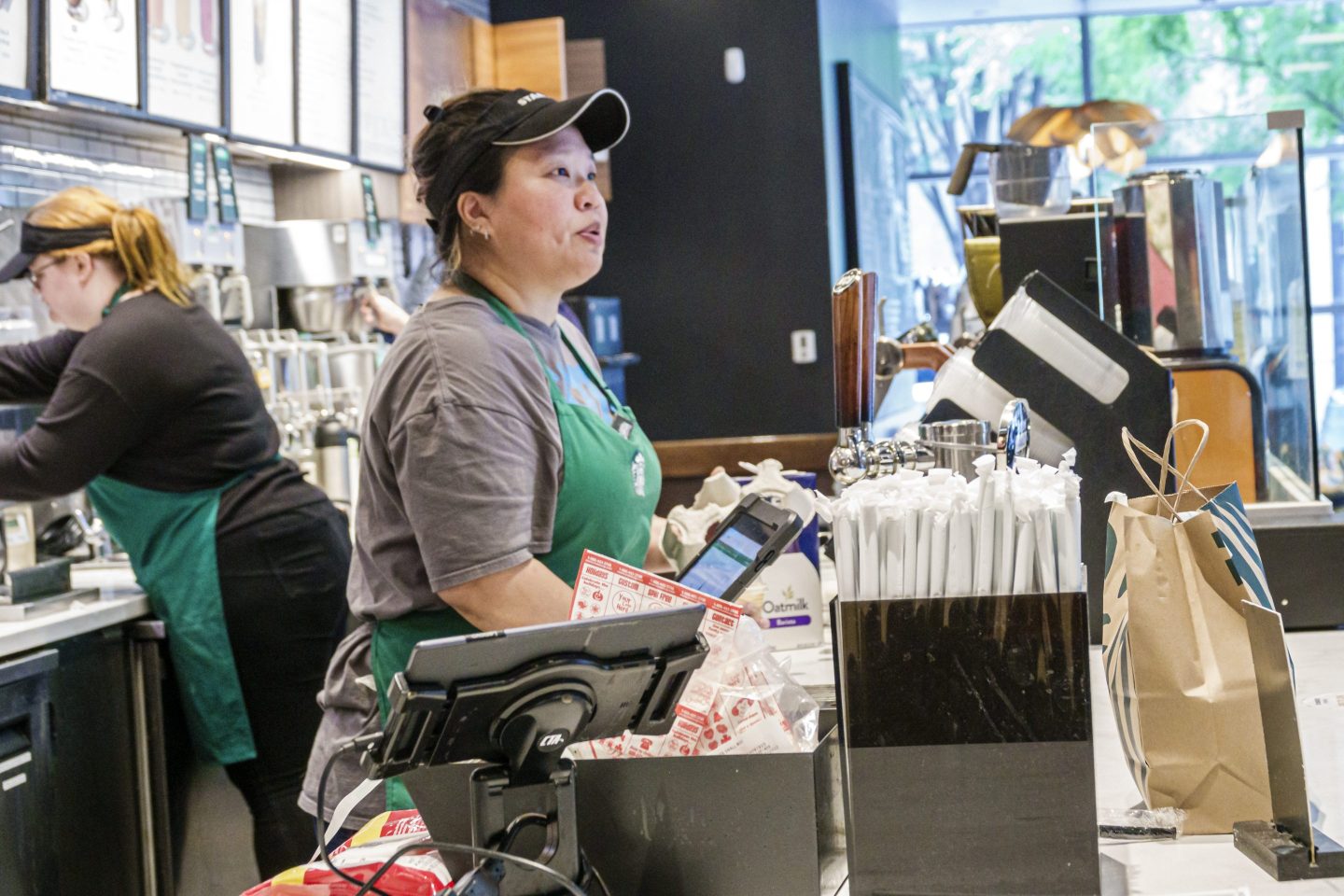
A Starbucks barista stands behind the register and grabs a drink cup from a stack.
Starbucks will begin enforcing a new policy requiring visitors to purchase something before using the store bathroom or seating.Jeffrey Greenberg/Universal Images Group—Getty Images
  • Starbucks will implement a policy next week preventing non-paying customers from using the bathroom or sitting down in coffee-shop seats. The company is training employees to deal with pushback on the policy, which includes “utilizing de-escalation tactics” where necessary, according to an employee.

Starbucks is preparing its baristas to turn away store visitors hoping to refill water bottles or use the bathroom without buying a coffee or pastry. The coffee chain’s workers, known as “partners,” completed a three-hour training on how to enforce the customer-only policy that takes effect next week. 

Recommended Video

Beginning Jan. 27, Starbucks is implementing a new code of conduct requiring customers to purchase something in order to sit down at the shop, use the bathroom, or get a water bottle refill. Ahead of the changes, the coffee chain asked employees to enforce the policy, instructing them to “utilize de-escalation tactics” if visitors refuse to comply with the new standards, a Starbucks employee told Fortune. 

During the training, workers were given a scenario on how to respond to a regular patron who frequents and sits down at a store for extended periods without buying anything, according to internal documents, Business Insider reported. Per the documents, employees should “listen to the customer’s concern and kindly reiterate the intended use of our space,” use de-escalation strategies as needed, and alert a manager to the situation.

The purpose of the training is to instill confidence in workers “encouraging them to warmly acknowledge and engage with every person in our store, treating them with kindness, respect, and assuming positive intent,” Starbucks spokesperson Jaci Anderson told Fortune in a statement.

The Starbucks employee, who works as a barista at a store in Center City, Philadelphia, told Fortune during the training, baristas were asked to “essentially keep track” of customers who used Starbucks’ amenities without purchasing anything by remembering those customers’ names and faces. Those customers would effectively be banned from the store should they try to visit again, though the employee did not say how the ban would be enforced.

Starbucks implemented its open-door policy in 2018 following the arrest of two Black men at a Philadelphia Starbucks. The men visited the store for a business meeting, but did not purchase anything as they waited for a third person to join the meeting. The store had a policy asking non-paying customers to leave, and the arrest was caught on video. It was an embarrassment for a coffee chain marketing itself as welcoming and socially conscious.

The change in the company’s code of conduct more than six years later is among a series of sweeping changes new CEO Brian Niccol is implementing to get “back to Starbucks” and become a third space. That includes adding for-here ceramic cups and comfier seating in hopes that customers—at least those willing to pay for a latte or croissant—will linger in stores longer. 

“We want everyone to feel welcome and comfortable in our stores,” Starbucks spokesperson Anderson said. “By setting clear expectations for behavior and use of our spaces, we can create a better environment for everyone.”

Employee concerns

Not all Starbucks employees are happy with the policy change. The Philadelphia Starbucks employee said in his store, the “vast majority [of baristas] dislike it,” with some believing it’s anti-homeless, particularly as public bathrooms in the U.S. remain sparse.

The employee said he also works in a “high-incident” store where customers harass or “verbally abuse” workers. There’s concern among store workers that the new policy could lead to an increase in customer discontent, but that Starbucks won’t have made system-wide changes—like allowing baristas to easily limit incoming digital orders during tense customer interactions—to handle the potential increase in stressors.

“We know that these situations are going to happen more frequently in our store,” the employee said. “And we will not be able to take the measures that we need to make ourselves safe.”

Starbucks Workers United (SBWU), which represents more than 11,000 company employees, said workers should have more of a say in vast company changes and how baristas should go about enforcing code of conduct changes. According to Starbucks, the new code of conduct addresses the issues the union has raised in the past.


“Every barista knows how enforcing Starbucks’ policies is part of our everyday responsibilities on the job,” SBWU told Fortune in a statement. “That’s why we are requesting more information from Starbucks and calling on the company to bargain over code of conduct enforcement.”
Join us at the Fortune Workplace Innovation Summit May 19–20, 2026, in Atlanta. The next era of workplace innovation is here—and the old playbook is being rewritten. At this exclusive, high-energy event, the world’s most innovative leaders will convene to explore how AI, humanity, and strategy converge to redefine, again, the future of work. Register now.
About the Author
Sasha Rogelberg
By Sasha RogelbergReporter
LinkedIn iconTwitter icon

Sasha Rogelberg is a reporter and former editorial fellow on the news desk at Fortune, covering retail and the intersection of business and popular culture.

See full bioRight Arrow Button Icon

Latest in Retail

millennial
CommentaryConsumer Spending
Meet the 2025 holiday white whale: the millennial dad spending $500+ per kid
By Phillip GoerickeDecember 12, 2025
1 day ago
McDonald
RetailRetail
Lululemon CEO Calvin McDonald to step down as quarterly profit dips 13%
By Anne D'Innocenzio and The Associated PressDecember 12, 2025
1 day ago
Sarandos
CommentaryAntitrust
Netflix, Warner, Paramount and antitrust: Entertainment megadeal’s outcome must follow the evidence, not politics or fear of integration
By Satya MararDecember 12, 2025
1 day ago
InvestingMarkets
Retail investors drive stocks to a pre-Christmas all-time high—and Wall Street sees a moment to sell
By Jim EdwardsDecember 12, 2025
1 day ago
Five panelists seated; two women and five men.
AIBrainstorm AI
The race to deploy an AI workforce faces one important trust gap: What happens when an agent goes rogue?
By Amanda GerutDecember 11, 2025
2 days ago
Oreo
RetailFood and drink
Zero-sugar Oreos headed to America for first time
By Dee-Ann Durbin and The Associated PressDecember 11, 2025
2 days ago

Most Popular

placeholder alt text
Economy
Tariffs are taxes and they were used to finance the federal government until the 1913 income tax. A top economist breaks it down
By Kent JonesDecember 12, 2025
1 day ago
placeholder alt text
Success
Apple cofounder Ronald Wayne sold his 10% stake for $800 in 1976—today it’d be worth up to $400 billion
By Preston ForeDecember 12, 2025
1 day ago
placeholder alt text
Success
40% of Stanford undergrads receive disability accommodations—but it’s become a college-wide phenomenon as Gen Z try to succeed in the current climate
By Preston ForeDecember 12, 2025
1 day ago
placeholder alt text
Economy
The Fed just ‘Trump-proofed’ itself with a unanimous move to preempt a potential leadership shake-up
By Jason MaDecember 12, 2025
21 hours ago
placeholder alt text
Economy
For the first time since Trump’s tariff rollout, import tax revenue has fallen, threatening his lofty plans to slash the $38 trillion national debt
By Sasha RogelbergDecember 12, 2025
23 hours ago
placeholder alt text
Success
At 18, doctors gave him three hours to live. He played video games from his hospital bed—and now, he’s built a $10 million-a-year video game studio
By Preston ForeDecember 10, 2025
3 days ago
Rankings
  • 100 Best Companies
  • Fortune 500
  • Global 500
  • Fortune 500 Europe
  • Most Powerful Women
  • Future 50
  • World’s Most Admired Companies
  • See All Rankings
Sections
  • Finance
  • Leadership
  • Success
  • Tech
  • Asia
  • Europe
  • Environment
  • Fortune Crypto
  • Health
  • Retail
  • Lifestyle
  • Politics
  • Newsletters
  • Magazine
  • Features
  • Commentary
  • Mpw
  • CEO Initiative
  • Conferences
  • Personal Finance
  • Education
Customer Support
  • Frequently Asked Questions
  • Customer Service Portal
  • Privacy Policy
  • Terms Of Use
  • Single Issues For Purchase
  • International Print
Commercial Services
  • Advertising
  • Fortune Brand Studio
  • Fortune Analytics
  • Fortune Conferences
  • Business Development
About Us
  • About Us
  • Editorial Calendar
  • Press Center
  • Work At Fortune
  • Diversity And Inclusion
  • Terms And Conditions
  • Site Map

© 2025 Fortune Media IP Limited. All Rights Reserved. Use of this site constitutes acceptance of our Terms of Use and Privacy Policy | CA Notice at Collection and Privacy Notice | Do Not Sell/Share My Personal Information
FORTUNE is a trademark of Fortune Media IP Limited, registered in the U.S. and other countries. FORTUNE may receive compensation for some links to products and services on this website. Offers may be subject to change without notice.